
how-air-compressor-pmsm-handles-sudden-load-shift-of-factory-compressedair-consumption, how-air-compressor-pmsm-handles-sudden-load-shift-of-factory-compressedair-consumption, /blog
EN

2026/09/16
Factory compressed air is never flat. Robotic cells spin up, bagging lines open a valve, and a whole shift of tools wakes at once, so the Air Compressor PMSM must answer a demand curve that moves in seconds rather than hours. The motor that sizes well on paper can still stumble when the load swings faster than its control loop expects. The Air Compressor PMSM solves this by matching speed to flow.
One automotive parts plant ran a fixed-speed compressor that covered the average load but sagged whenever two welding cells fired together. Line pressure dropped, pneumatic clamps released late, and a station missed its cycle. After the plant fitted an Air Compressor PMSM with a fast variable-speed drive, the pressure band held through the spike and the rejects from slow clamps disappeared. The gain came from response, not from more installed power. An Air Compressor PMSM sized to the surge, not the average, answers the worst minute of the shift instead of the calm one, which is what keeps the pressure band intact when two cells fire together.
Air tools pull hard the instant they actuate, then idle. A fixed-speed unit answers that with load-unload cycling, which wastes energy and heats the motor during the surge. An Air Compressor PMSM instead trims speed to match flow, so the surge is absorbed as a smooth torque step instead of a relay click and a pressure dip. The Air Compressor PMSM shows its value first as steadier downstream quality. An Air Compressor PMSM also trims the part-load waste that fixed-speed units burn through load-unload cycling, so the saving reaches the meter during ordinary production rather than a rare peak.
Repeated transients are a wear mode of their own. They stress parts that a steady duty rating never accounts for, and the Air Compressor PMSM earns its place by handling the swing without paying for it in lifetime.
When demand outruns supply, pressure falls and every tool loses force. A line built around a fixed-speed compressor sees these dips at every shift change, and the Air Compressor PMSM only helps if its drive reacts within the same breath. Slow reaction lets the dip reach the far end of the shop, where calibration drifts and cycle times stretch. An Air Compressor PMSM only holds the line if its drive reacts within the pressure tolerance, so the control loop, not just the motor, earns the credit for steady downstream quality.
Load-unload cycling keeps the winding near peak current far more often than the nameplate suggests. An Air Compressor PMSM avoids that by running at the speed the flow needs, so the copper stays cooler through the day. Constant hunting also shakes mounts and loosens terminals, a fault pattern that disappears once the motor stops lurching between states. An Air Compressor PMSM running at the speed the flow needs also stays quieter and cooler, which matters on a floor where the compressor sits next to the people who depend on the air.
The permanent magnet design changes the physics of the answer. Strong torque at low speed and a fast control loop let the Air Compressor PMSM track the demand step instead of fighting it.
Because the rotor field is fixed, the motor develops torque without waiting for flux to build. An Air Compressor PMSM reaches the torque the compressor needs within a fraction of a second of a demand jump, holding the pressure band through the transient. That low-speed authority is exactly what a fixed-speed induction unit lacks when the load arrives before the speed does. An Air Compressor PMSM returns that torque without slip, so pressure recovers before the far end of the line notices the demand step and the clamps release late.
The converter maps pressure setpoint to motor speed, so the Air Compressor PMSM rides the load curve instead of stepping between fixed points. Closed-loop control keeps the speed where the flow is, and the magnet motor returns the torque the map asks for without slip. The result is a compressor that feels the shift and answers it before the line notices. An Air Compressor PMSM paired with a matched converter turns a spiky demand curve into a smooth, auditable energy line that finance can actually forecast.
Specifying the unit means tying the claim to tested performance and efficiency classes. An Air Compressor PMSM should arrive with numbers a plant can verify, not a brochure phrase.
ISO 1217 defines how displacement compressors are tested, so the stated flow and power reflect real duty rather than ideal conditions. IEC 60034-30-1 places permanent magnet machines on the IE5 path, which matters because the Air Compressor PMSM runs at part load for most of the day. Citing both lets a buyer compare options on tested curves instead of nameplate peaks.
Before quoting, list the peak and average flow, the pressure band, and the surge size. An Air Compressor PMSM should come with a speed-torque curve across the band and the IE5 rating on the datasheet. In service, log pressure, motor temperature, and drive fault counts each month; a rising fault count points to a mismatch between the load step and the control tuning before a stop.
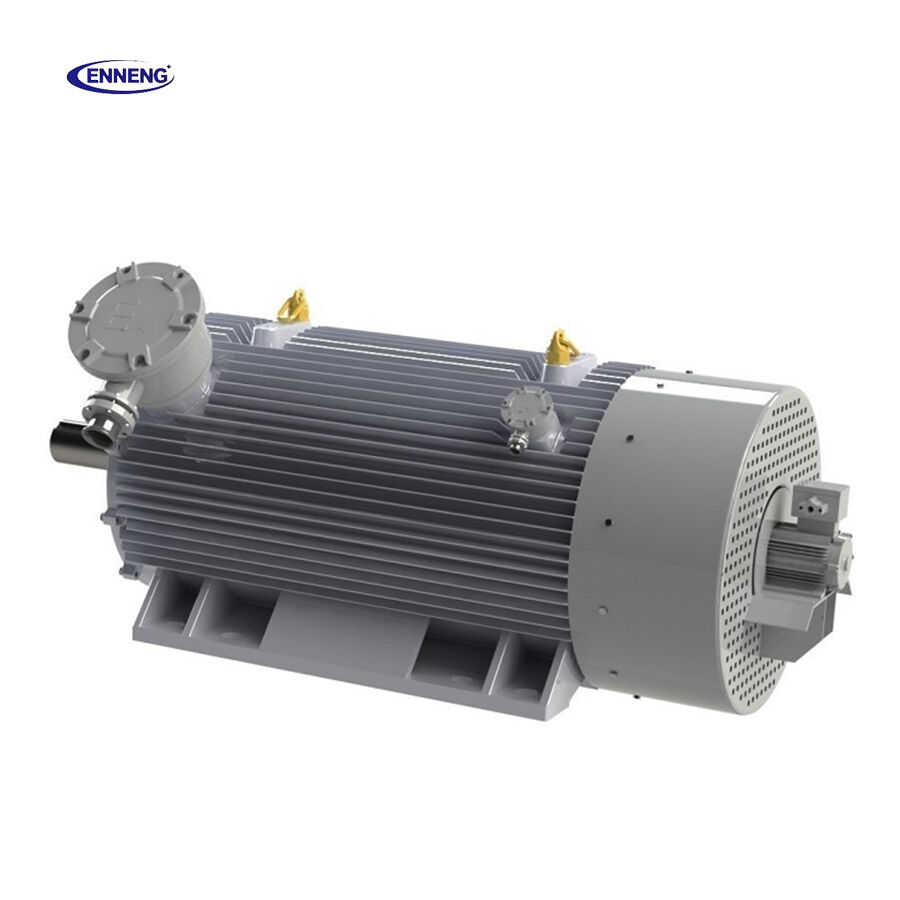
Factory air tools actuate in bursts, so flow jumps the instant a cell or valve opens and falls just as fast. A compressor sized to average load still meets a spike that arrives quicker than its control loop expects. The Air Compressor PMSM answers that with speed, not with relays, which is why the pressure band stays steady through the surge instead of sagging at every shift change.
The fixed rotor field lets the motor build torque almost instantly, so the Air Compressor PMSM reaches the speed the flow needs within a fraction of a second. Closed-loop control maps pressure to speed and the magnet motor returns the torque without slip. That quick response keeps the pressure band intact through the transient, which a fixed-speed unit cannot do once the load outruns its speed.
Fixed-speed units cycle load-unload, holding the winding near peak current and shaking mounts far more than a steady rating implies. An Air Compressor PMSM avoids that by running at the speed the flow needs, so copper stays cooler. Constant hunting loosens terminals and drifts calibration, a fault pattern that fades once the motor stops lurching between states.
ISO 1217 sets the test method for displacement compressors, so stated flow and power reflect real duty rather than ideal curves. IEC 60034-30-1 places the Air Compressor PMSM on the IE5 efficiency path, relevant because the unit runs at part load most of the day. Together they let a buyer compare options on verified data instead of nameplate peaks.
List the peak and average flow, the pressure band, and the largest single surge before quoting. An Air Compressor PMSM should arrive with a speed-torque curve across that band and the IE5 class on the datasheet. Match the drive to the motor and confirm the control loop reacts within the pressure tolerance the line requires.
Monthly logging catches drift early. Track pressure band, motor temperature, and drive fault counts, because a rising fault count signals a load-step and tuning mismatch before a stop. Inspect cooling paths and terminal tightness each quarter, and review the flow curve against the actual shift profile so the Air Compressor PMSM stays matched to the real demand.


 EN