
 EN

In a multi-compressor room, saving energy is rarely about one machine in isolation. The bigger opportunity is coordinating how units share pressure demand, rotate duty, and respond to changing flow. An Air Compressor PMSM gives the controller a useful actuator: motor speed can be adjusted rather than relying only on repeated load/unload cycles. But an Air Compressor PMSM is not an energy-saving strategy by itself. The result depends on the control logic around it.
From an application-engineering view, start with the duty profile, not the nameplate. A compressor station may look stable on a monthly energy bill while experiencing sharp short-term demand swings, unnecessary pressure band width, or one heavily loaded unit carrying too much of the operating time. Collaborative control turns those observations into shared decisions.
Why multi-unit coordination changes the value of an Air Compressor PMSM
A conventional station often assigns one compressor as the base-load machine and lets others start when pressure falls. That arrangement can work, but it may leave every unit reacting to its own local pressure signal. An Air Compressor PMSM can support a different arrangement: one trim unit continuously adjusts its speed while fixed-speed or additional variable-speed units are staged only when the trim unit reaches a defined control boundary.
The key is to give the group one pressure objective. Instead of several machines chasing slightly different setpoints, the central controller receives common pressure and flow information, evaluates available capacity, and issues commands. With that approach, an Air Compressor PMSM does not simply speed up when its own sensor sees a drop; it follows a coordinated request designed to protect the whole header.
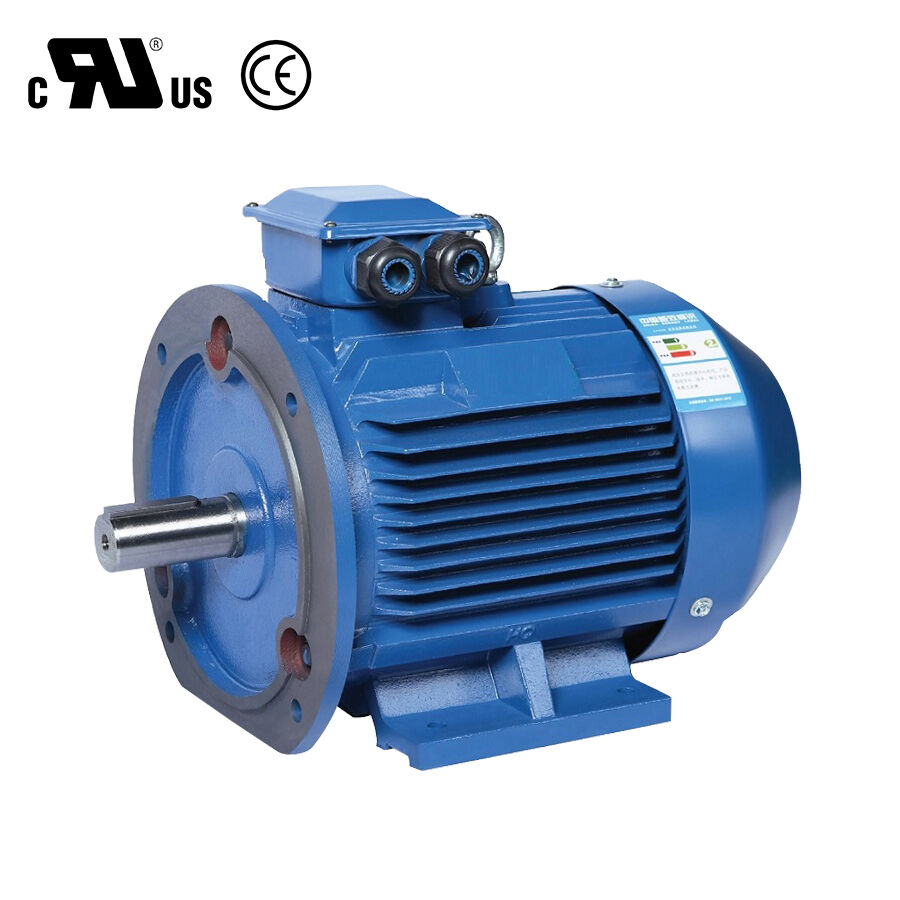
This distinction matters because compressed-air demand is not perfectly smooth. A short burst from a process line may not justify starting another compressor. Conversely, a sustained rise should not be handled by forcing one Air Compressor PMSM to run continuously at an unsuitable operating point. Coordination separates fast trimming from deliberate staging.
Build the control hierarchy before tuning speed
A practical system usually has three layers. At the field layer, each Air Compressor PMSM reports running state, speed, alarms, temperature-related limits, and available capacity. At the station layer, a sequencer compares common-header pressure with the target band and selects the most suitable combination of running units. At the supervisory layer, operations can review trends, adjust priorities, and investigate persistent deviations.
The station controller should have one authoritative pressure reference. If individual controllers retain wide, overlapping bands, the group can hunt: one Air Compressor PMSM accelerates while another unloads, then the second reloads as pressure changes again. A shared reference does not mean every machine receives the same command. It means each command is derived from the same operating objective.
- Define a normal pressure target and a narrow, realistic control band.
- Assign a trim role to the most appropriate Air Compressor PMSM for the current load range.
- Set upper and lower speed boundaries that trigger staging decisions rather than endless speed correction.
- Include minimum run time, minimum off time, and alarm interlocks in every sequence.
- Record demand, pressure, speed, and power trends before changing the logic.
Use trim-and-stage logic rather than equal-speed operation
Equal-speed control can sound fair, yet it is often less useful than clear role allocation. A trim Air Compressor PMSM should absorb routine demand variation within a planned speed window. When it approaches its upper boundary for a defined delay, the system stages another unit and brings the trim unit back toward its efficient control range. When demand stays low and the trim unit remains near its lower boundary, the controller can remove a base unit after its protection timers allow it.
That logic needs hysteresis. Without it, a brief process event may cause repeated starts and stops. Time delays, pressure recovery requirements, and capacity margins let an Air Compressor PMSM make smooth corrections while the sequencer responds only to conditions that persist. The exact settings must come from compressor maps, motor limits, process criticality, and measured demand—not from a generic template.
It is also important to rotate roles. If the same Air Compressor PMSM repeatedly serves as the trim unit, it can accumulate a disproportionate number of operating hours. A planned rotation based on hours, maintenance status, or efficiency validation can distribute duty while keeping the control philosophy consistent.
What the PMSM and drive contribute
A Permanent Magnet Motor PMSM paired with an appropriate drive can provide responsive speed control for a compressor application. In a coordinated station, that responsiveness helps an Air Compressor PMSM follow a shared pressure request more closely than a simple on/off command. The useful question, however, is not whether variable speed is inherently better. It is whether the motor, drive, air end, and control range are matched to the real load profile.
This is where teams should correct a common assumption. Peak efficiency on a datasheet is not the same as station efficiency. An Air Compressor PMSM may be technically capable of a wide speed range, but continuous operation near a lower or upper limit can affect airflow stability, cooling, lubrication, or maintenance planning depending on the compressor design. Establish accepted operating zones with the equipment supplier before allowing the sequencer to use them.
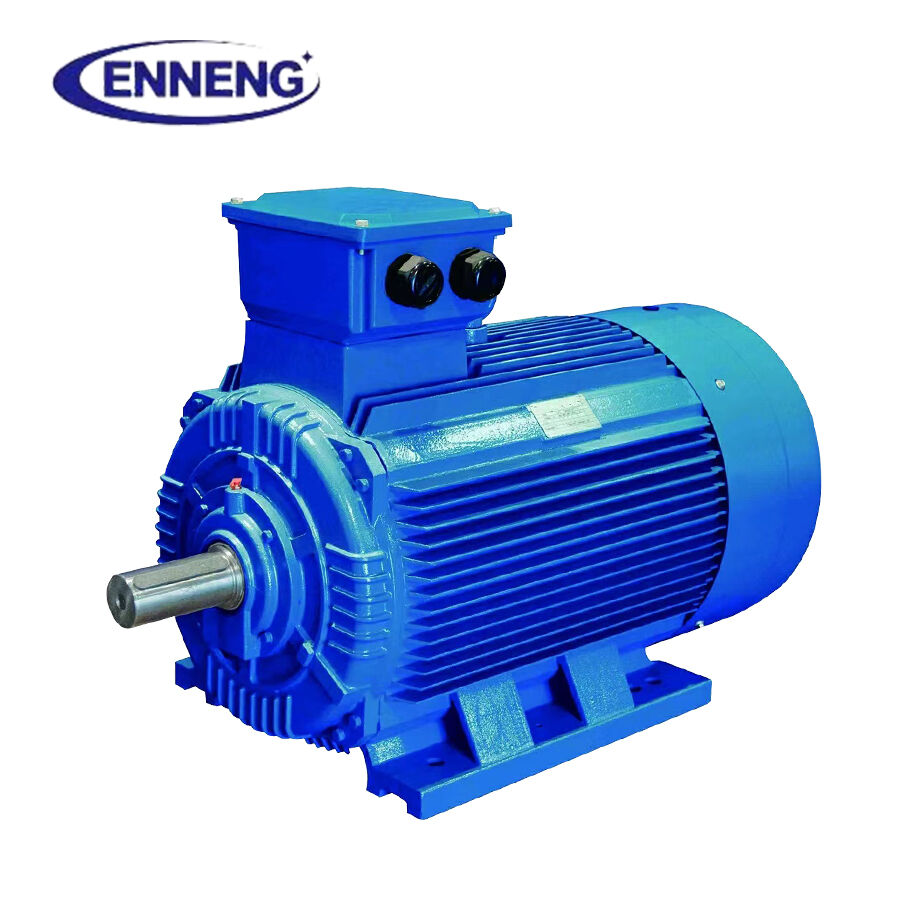
The same discipline applies to a Permanent Magnet Motor PMSM in a retrofit. Check inverter compatibility, sensor and feedback requirements, protection settings, cable conditions, and thermal limits. A speed command is only as reliable as the measurements and safeguards behind it.
Measure the station, not just the individual machine
To prove whether collaborative control is helping, collect synchronized data from the whole system. Useful records include common-header pressure, compressor running state, Air Compressor PMSM speed, flow where available, power, unload events, and fault history. Compare stable production windows before and after the change. If production mix changed at the same time, separate those effects before claiming savings.
Look for behavior as well as totals. A successful Air Compressor PMSM strategy often shows fewer conflicting commands, less pressure overshoot, fewer unnecessary transitions, and a clearer relationship between demand and delivered capacity. Those signs can appear before an organization has enough comparable operating hours to make a reliable energy-cost calculation.
|
Control signal |
Why it matters |
Typical question |
|
Common-header pressure |
Shows whether the group maintains the target |
Is the band stable without excessive overshoot? |
|
Air Compressor PMSM speed |
Reveals trim effort and control headroom |
Does the trim unit stay within its planned range? |
|
Run/load state |
Shows sequencing quality |
Are machines cycling or counteracting each other? |
|
Power and flow trend |
Supports comparable performance reviews |
Has delivered air changed relative to input power? |
Commissioning checklist for collaborative control
Before enabling automatic sequencing, verify instrument calibration, communication loss behavior, emergency fallback logic, and manual override authority. Each Air Compressor PMSM should fail to a safe local state if the supervisory controller or network becomes unavailable. The station should also document which unit can lead, which can trim, and which constraints override energy logic.
- Map demand variation over representative production periods.
- Confirm pressure sensors see the relevant common-header condition.
- Set role priorities and permitted speed ranges for every Air Compressor PMSM.
- Test staging thresholds and delays under supervised conditions.
- Review trend data, then refine one control variable at a time.
Do not overlook leakage and artificial demand. A well-tuned Air Compressor PMSM sequence can reduce wasted control action, but it cannot make an inefficient downstream air use disappear. Fixing leaks, reducing inappropriate pressure, and maintaining filters and dryers make the controller’s decisions more meaningful.
The ENNENG Customisation Advantage
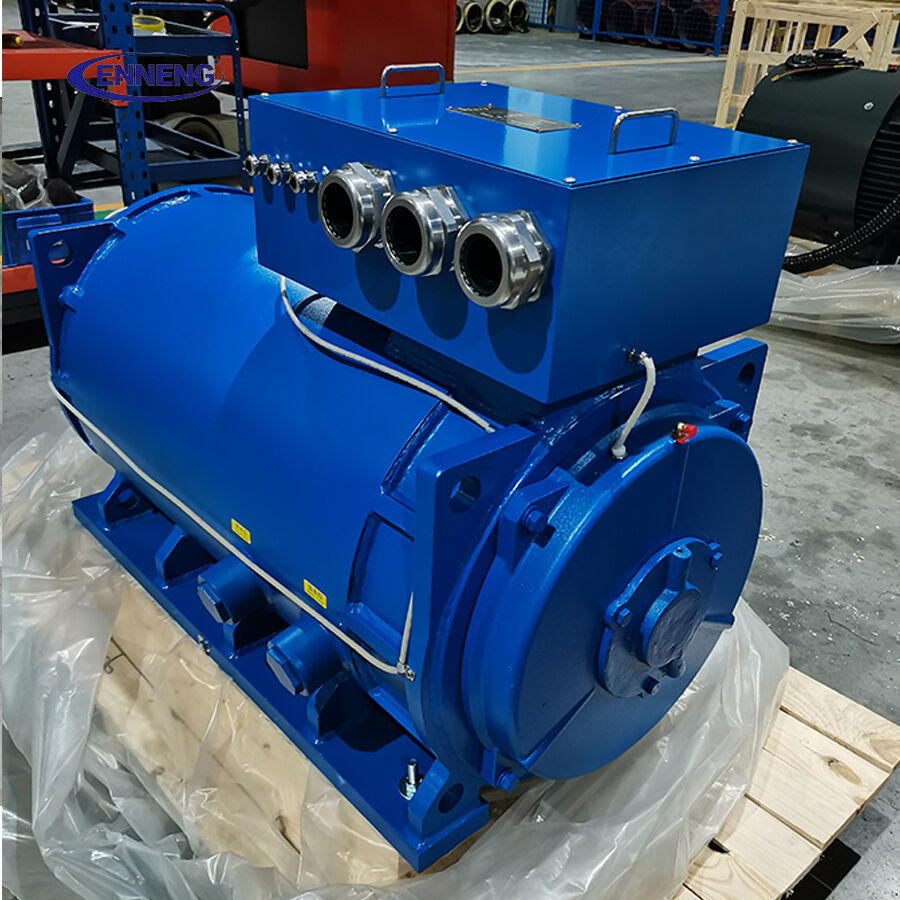
No two industrial facilities share the same spatial or mechanical constraints. ENNENG stands out because we do not just supply off-the-shelf catalogue products; we specialise in delivering a tailor-made permanent magnet motor tailored to your specific application .
Supported by our elite R&D team consisting of engineers from the National Rare Earth Permanent Magnet Engineering Centre, and backed by dozens of patents, we customise high-voltage (6kV/10kV) and low-voltage (380V/660V/1140V) solutions to match your existing footprint. From water treatment facilities and oil wells to explosion-proof mining environments, we deliver optimal performance where general-purpose motors fail .
If you are evaluating commercial permanent magnet motors for sale and need an engineered drive solution that guarantees efficiency and longevity, ENNENG is your trusted partner.Contact ENNENG Today.Speak to our technical engineering team to receive a customised drive proposal.
- WhatsApp: +86 18562780228
- E-Mail: [email protected]
- Phone: +86 532 66000559

