In petrochemical refineries, steel rolling mills, and central chilled-water plants, mechanical-draft cooling towers operate continuously in warm, moisture-saturated air streams to reject process heat. Traditional induced-draft cooling tower drivetrains place an induction motor outside the fan stack connected via a long floating composite drive shaft and flexible couplings to a right-angle spiral bevel gearbox sitting directly inside the humid exhaust plenum. Maintenance teams routinely battle catastrophic cooling tower shutdowns caused by water-emulsified gearbox lubricating oil, pitted bevel gear teeth, sheared coupling discs, and severe structural vibration triggered by thermal expansion misalignment across the long transmission shaft.
Whenever a right-angle speed reducer fails atop a 15-meter cooling tower cell, maintenance crews must rent mobile cranes, drain contaminated gear oil, rig out heavy mechanical assemblies, and realign shafts over days of costly process downtime. Replacing the entire motor-shaft-gearbox chain with a purpose-engineered Cooling Tower Direct Drive permanent magnet motor from ENNENG couples the fan hub straight to a low-speed, high-torque rotor shaft, eradicating gearbox breakdowns at the root.
Technical Highlights: Why Right-Angle Gearboxes Fail in Cooling Tower Plenums
Moisture Ingress, Oil Emulsification, and Long-Shaft Thermal Misalignment
Inside an induced-draft cooling tower cell, relative humidity remains at 100% while chemical water-treatment drift (chlorides, biocides, and scale inhibitors) constantly washes over the gearbox casing. As the right-angle bevel gearbox heats up during daytime peak cooling loads and cools down at night, pressure differentials across the input and output shaft lip seals suck humid air and water droplets into the oil sump. Just 0.2% water contamination inside mineral gear oil destroys lubricant film strength, accelerating micropitting on bevel gear teeth and spalling tapered roller bearings. Simultaneously, structural flexing of fiberglass or timber tower decks throws the long horizontal drive shaft out of alignment, hammering gearbox input bearings until catastrophic seizure occurs.
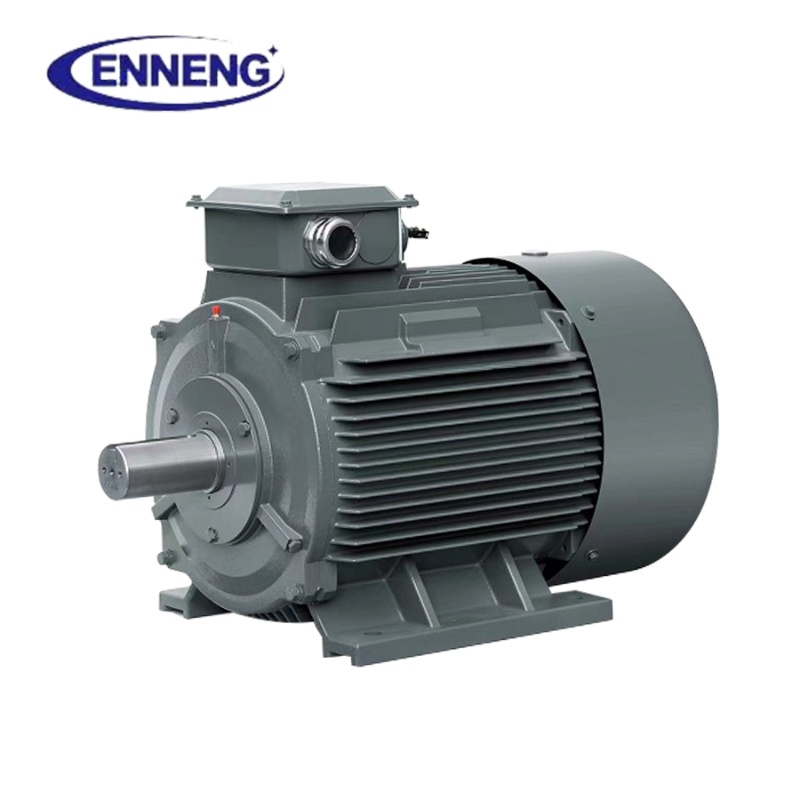
Multi-Pole Gearless Architecture of the ENNENG Cooling Tower Direct Drive
An ENNENG Cooling Tower Direct Drive motor mounts directly in the fan position and rotates natively at the exact aerodynamic speed of the large-diameter axial fan (typically 120 RPM to 250 RPM):
-
Total Elimination of Gearbox, Drive Shaft, and Couplings: Removing three of the four mechanical drivetrain links eliminates 100% of bevel gear tooth wear, oil pump failures, and coupling shear breakdowns.
-
Zero Oil Sump and Zero Basin Contamination Risk: Operating without lubricating oil sumps eliminates periodic 5-year oil changes, oil level sight-glass leaks, and environmental hazards from gear oil spilling into the cooling water basin.
-
High-Pole Synchronous Rotor Physics: Utilizing 40 to 80+ permanent magnet poles enables the Cooling Tower Direct Drive system to deliver massive starting and continuous torque directly to the fan hub with zero rotor copper loss.
|
Drivetrain Parameter
|
Legacy Motor + Shaft + Bevel Gearbox
|
ENNENG Cooling Tower Direct Drive
|
|
Mechanical Transmission Components
|
Induction Motor + Long Shaft + 2 Couplings + Gearbox
|
Single Direct-Coupled PM Motor + Fan Hub
|
|
Gearbox & Coupling Failure Risk
|
High (Seal Leaks, Oil Emulsification, Tooth Pitting)
|
Zero (No Gearbox or Intermediate Shaft)
|
|
Mechanical Transmission Loss
|
4% to 8% Lost in Bevel Gears and Oil Churn
|
0% Intermediate Transmission Loss
|
|
Routine In-Plenum Maintenance
|
Oil Sampling, Oil Changes, Laser Shaft Alignment
|
Sealed Grease Bearings Only
|
|
Unified Voltage Range
|
Fixed Single-Tap Supply Voltage
|
110V–690V Unified Voltage Range
|
|
Enclosure Corrosion & Ingress Rating
|
Vulnerable Gearbox Breathers & Shaft Seals
|
IP66 / ISO 12944 C5-M Sealed Housing
|
Core Advantages of ENNENG Cooling Tower Direct Drive Systems
Cubic-Law Variable Speed Savings Across 110V–690V Networks
Cooling tower heat rejection demand fluctuates continuously with wet-bulb ambient temperature and factory process load. Governed by the Fan Affinity Laws—where shaft power varies with the cube of rotational speed—reducing fan speed by 20% via a variable frequency drive (VFD) cuts electrical power demand by nearly 50%. Engineered across a unified voltage range of 110V–690V, an ENNENG Cooling Tower Direct Drive motor maintains ultra-high IE5 conversion efficiency and a near-unity power factor (0.95 to 1.00) across both full-speed summer peaks and 30%-speed winter modulation. Beyond cooling tower propulsion, ENNENG applies this low-speed permanent magnet technology to industrial generators across a unified 5kW–5MW power range (110V–690V) and vertical axis wind turbines spanning 1kW–10kW (focusing on 3kW, 5kW, and 10kW models).
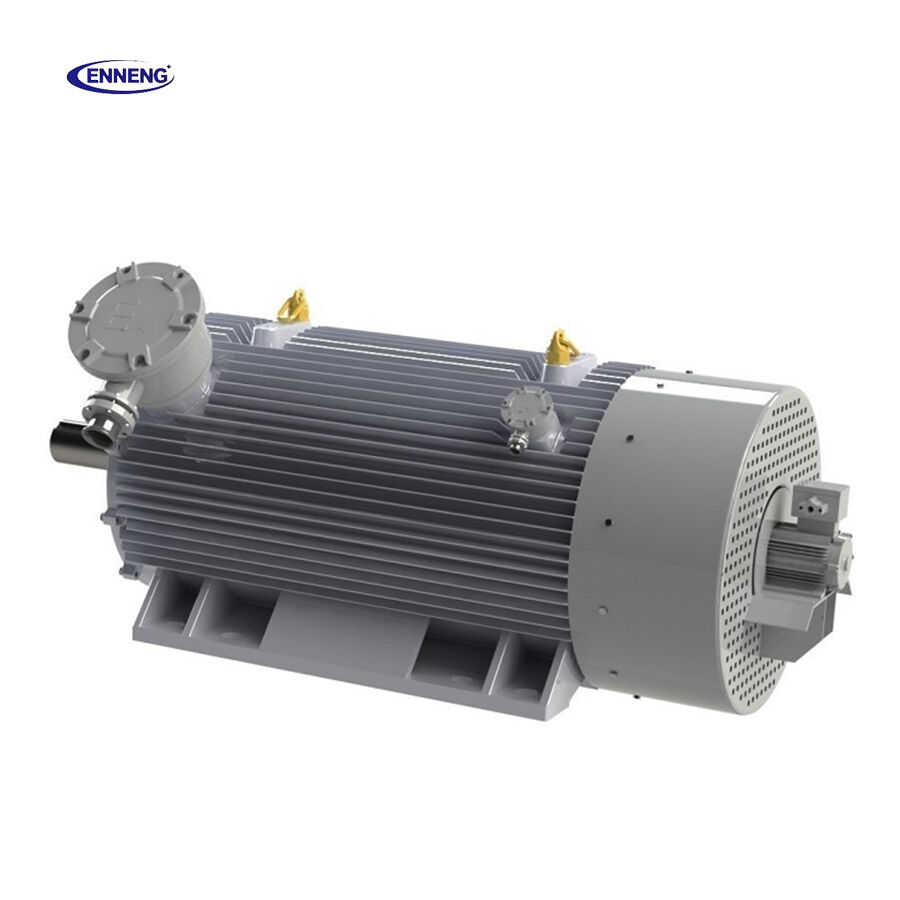
Complying with CTI STD-111,CTI ESG-152, ISO 10816-3, and ISO 12944
Industrial cooling tower drivetrains are evaluated against strict mechanical and structural vibration standards established by the Cooling Technology Institute (CTI). Replacing high-maintenance bevel reducers (governed by CTI STD-111) with an ENNENG Cooling Tower Direct Drive eliminates high-frequency gear-mesh vibration harmonics, keeping structural fan-deck vibration velocities well within CTI ESG-152 and ISO 10816-3 limits. Furthermore, motor enclosures sitting inside saturated exhaust airstreams are protected with ISO 12944 C5-M marine/chemical epoxy coatings and IEC 60034-5 IP66 labyrinth seals to withstand decades of chemical water drift.
Industrial Application Scenarios and Engineering Maintenance Guide
1. Field-Erected Counterflow and Crossflow Induced-Draft Cooling Towers
In chemical plants and power generation stations operating multi-cell field-erected cooling towers, sealing the old horizontal drive-shaft penetration hole in the fan stack after installing an ENNENG Cooling Tower Direct Drive stops parasitic air bypass and improves volumetric fan airflow efficiency.
2. Practical Selection, Inspection, and Maintenance Protocols
To ensure zero unplanned downtime when retrofitting or specifying a Cooling Tower Direct Drive system, implement these engineering practices:
-
Match Fan Hub Thrust and Aerodynamic Bending Loads: Specify heavy-duty angular-contact or spherical-roller thrust bearings inside the Cooling Tower Direct Drive motor rated to support both the dead weight of the fan assembly and upward/downward aerodynamic axial thrust.
-
Verify Structural Pedestal Stiffness and Natural Frequency: Ensure the steel support beam beneath the Cooling Tower Direct Drive motor is engineered with a natural resonant frequency at least 25% away from the nominal fan blade-pass frequency.
-
Enable VFD Flying-Start (Catch-On-The-Fly) Control: Program the VFD controller with bidirectional flying-start capability so the Cooling Tower Direct Drive smoothly synchronizes with a windmilling fan blade before ramping up to speed, preventing mechanical hub shock.
-
Route Remote Grease Lines Outside the Fan Stack: Connect stainless-steel tubing from the motor bearing grease fittings to the exterior handrail of the fan deck for safe, zero-entry lubrication.
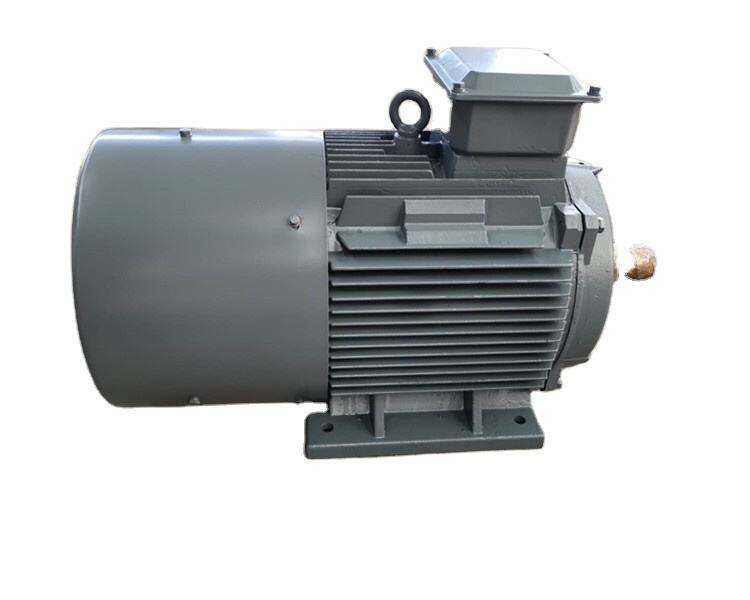
The ENNENG Customisation Advantage
Cooling tower cells vary widely in fan blade diameter (from 2 meters to over 10 meters), shaft orientation (vertical shaft-up or shaft-down), and structural pedestal dimensions. ENNENG custom-engineers each Cooling Tower Direct Drive motor across the unified 110V–690V range—tailoring custom drop-in mounting footprints that bolt directly onto existing gearbox support beams, tapered fan-hub shafts, and integrated PT100 vibration/temperature monitoring packages.
Contact ENNENG Today.
Consult the ENNENG cooling tower drive team to eliminate gearbox failures and receive a customised Cooling Tower Direct Drive retrofit proposal.
FAQ
Q: How does an ENNENG Cooling Tower Direct Drive eliminate the most common causes of cooling tower downtime?
A: In traditional cooling towers, the right-angle bevel gearbox, long composite drive shaft, and flexible couplings are responsible for the vast majority of mechanical breakdowns due to oil emulsification, seal leaks, and thermal misalignment. An ENNENG Cooling Tower Direct Drive mounts directly to the fan hub inside the airstream, removing the gearbox, shaft, and oil sump entirely.
Q: Can an ENNENG Cooling Tower Direct Drive survive the 100% humidity and chemical water drift inside the fan plenum?
A: Yes, ENNENG designs its Cooling Tower Direct Drive specifically for saturated exhaust plenums. The motor features an IEC 60034-5 IP66 totally enclosed sealed frame, multi-stage labyrinth shaft seals, Class H Vacuum Pressure Impregnated (VPI) windings, and an ISO 12944 C5-M anti-corrosion coating that resists chemical water-treatment drift.
Q: What voltage and power generation ranges does ENNENG manufacture alongside cooling tower motors?
A: ENNENG manufactures Cooling Tower Direct Drive motors and industrial rotating equipment across a unified voltage range of 110V–690V to match global plant substations. Additionally, ENNENG supplies permanent magnet generators across a unified 5kW–5MW power range and vertical axis wind turbines spanning 1kW–10kW (focusing on 3kW, 5kW, and 10kW models).

 EN


