
 EN

How Cooling Tower Direct Drive Motor Solves High-Energy-Consumption Pain Points of Aging Industrial Cooling Tower Equipment
When an aging cooling tower begins consuming more power than expected, the fan motor is rarely the only issue. A conventional drive train may include a motor, belts or a gearbox, a long shaft, couplings, and bearings. Each part adds friction, alignment work, and a possible failure point. A Cooling Tower Direct Drive retrofit changes that arrangement by coupling a low-speed, high-torque motor directly to the fan. For maintenance and energy teams, the value is not simply a newer motor; it is a simpler system that can match fan speed to actual heat-rejection demand.
As engineers evaluating permanent-magnet motor configurations, we start with the operating profile rather than the nameplate. Is the tower truly at full load all day, or does it run through cooler nights, seasonal swings, and partial process loads? That distinction determines whether a Direct Drive Motor can address the real energy and reliability problem.
Why aging cooling-tower drives become expensive
Older towers often keep working mechanically while becoming costly operationally. A worn gearbox can add loss and require lubricant management. Belts can slip or need retensioning. A long shaft and couplings require alignment, while pillow-block bearings introduce another service task. None of those items proves that a tower must be replaced, but together they create a maintenance burden that is easy to underestimate when budgets focus only on motor price.
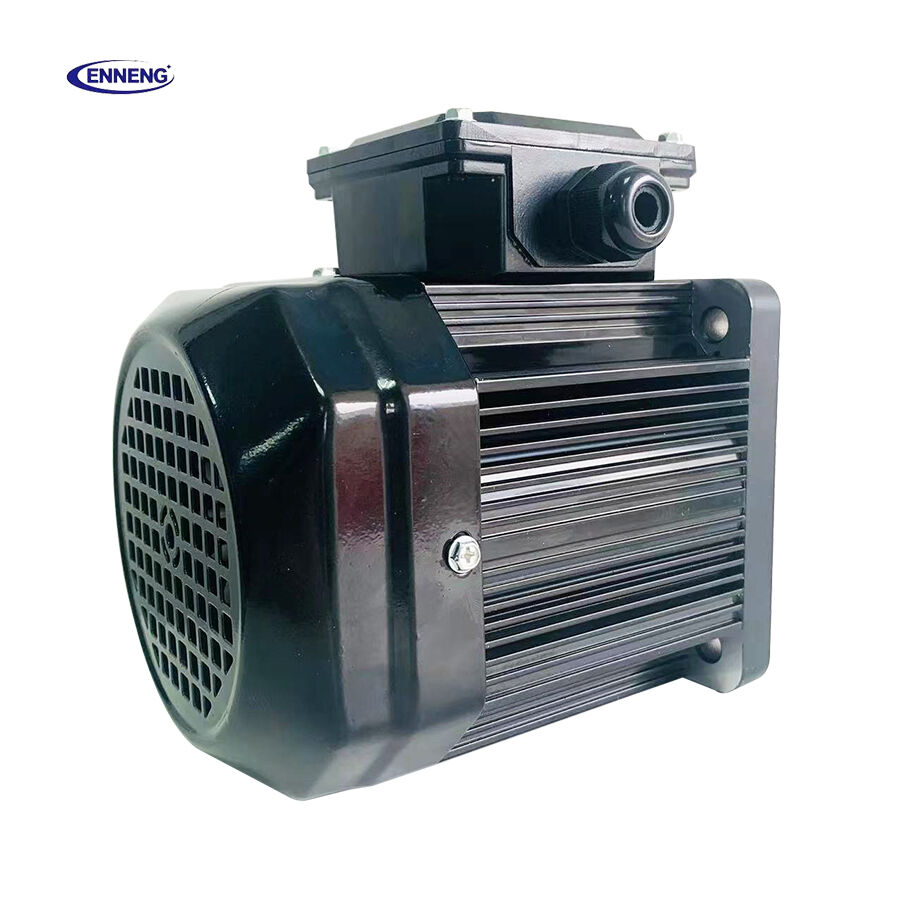
There is another issue: many legacy fan systems are operated at one or two fixed speeds even when the process does not need full airflow. The result is a familiar pattern—acceptable leaving-water temperature, but more fan power than the duty point requires. This is where a cooling tower direct drive motor has to be assessed as part of the fan-and-control system, not as an isolated component.
What changes with Cooling Tower Direct Drive
A Cooling Tower Direct Drive configuration uses a motor designed to develop torque at the fan’s required low rotational speed, so the fan can be driven without the legacy reduction train. The exact components removed depend on the tower design, but the audit normally compares the existing gearbox, belts, jackshaft, driveshaft, couplings, and bearing arrangement with the proposed direct connection.
This simplification can reduce mechanical loss and eliminate service activities associated with the removed components. It also creates a cleaner maintenance scope: technicians focus on the motor, fan, mounting, electrical connections, and controls rather than a chain of transmission parts. That does not make maintenance disappear. Wet, corrosive environments still demand correct enclosure selection, drainage, cable routing, and inspection access.
The energy mechanism: speed control matters more than a peak-efficiency claim
The important savings mechanism is usually variable speed. For a fan operating within the applicable affinity-law range, airflow changes roughly in proportion to speed while power changes approximately with the cube of speed. At 50% fan speed, the theoretical power is about 12.5% of full-speed power. That is a useful planning principle, not a site-level promise: minimum airflow, water distribution, process temperature, fan stability, and motor-drive limits must all be verified.
Put differently, the shift is from chasing a single peak-efficiency number to matching the duty cycle. A Direct Drive Motor paired with suitable speed control can let the fan follow actual condenser-water or process demand. If a tower truly needs full airflow most of the time, the control opportunity is smaller. If it spends substantial time below peak demand, the operating profile may support a much stronger business case.
How a cooling tower direct drive motor addresses common pain points
| Legacy pain point | How direct drive changes the decision | What to verify |
|---|---|---|
| Gearbox, belts, shafts, or couplings consume maintenance time | Direct fan drive can remove selected transmission components and their associated alignment or lubrication tasks. | Existing drive-train layout, fan load, mounting condition, and access for installation. |
| Fans run at fixed speed during partial load | Variable-speed operation can better align airflow with heat load. | Temperature-control logic, minimum safe speed, basin and fill performance, and fan operating range. |
| Repeated vibration or alignment calls | A simpler train reduces the number of interfaces that must remain aligned. | Fan balance, structural stiffness, baseplate condition, and resonance—not just motor condition. |
| Energy and maintenance are budgeted separately | Total cost can be assessed as one retrofit decision. | kW, operating hours, corrective-maintenance history, outage exposure, and installation scope. |
One practical caution: vibration is not necessarily a drive-train problem. In field troubleshooting, a vibration complaint may trace to fan balance, a flexible support structure, or a deteriorated mounting surface rather than the motor itself. A Cooling Tower Direct Drive retrofit should therefore include a baseline vibration survey and a post-commissioning acceptance check.
A retrofit workflow that avoids overstating savings
- Document the current duty cycle. Trend fan kW, fan status, fan speed if available, ambient wet-bulb conditions, leaving-water temperature, and process load across representative days.
- Map the mechanical system. Identify the motor, gearbox or belts, shafting, couplings, bearings, fan hub, guards, and structural interfaces. This establishes what a Cooling Tower Direct Drive installation would actually remove or retain.
- Confirm the fan requirement. Review fan diameter, target speed range, torque demand, rotation, starting behavior, and any minimum-speed restriction needed for water distribution or mechanical stability.
- Evaluate the electrical and control scope. Check supply voltage, cable routing, protective devices, control signals, alarms, and integration with the existing building or process control system.
- Build a lifecycle comparison. Compare measured kWh and maintenance records with the retrofit scope, planned outages, spare parts, and expected service access. Do not use an assumed percentage saving without matching it to the measured load profile.
- Commission and verify. Record baseline and post-retrofit kW at comparable operating conditions, plus vibration, noise, temperature response, and control stability.
Specification checks for a Direct Drive Motor in a tower environment
A suitable Direct Drive Motor must fit the tower as a system. Start with required low-speed torque and the fan inertia, then verify the available mounting geometry and the condition of the fan assembly. Ask how the motor enclosure and coatings suit moisture, drift, dust, salt, and local ambient temperature. If the site experiences high ambient temperature or restricted airflow, thermal derating must be considered before final sizing.
Also review controls early. A variable-speed direct-drive solution needs a compatible drive and control strategy, including safe start and stop behavior, fault handling, speed limits, and feedback signals. The lowest installed cost is not necessarily the lowest lifecycle cost if it omits the measurements and commissioning needed to keep the tower stable.
Where the business case is strongest—and where it needs caution
The case for Cooling Tower Direct Drive is often strongest where the existing mechanical train has recurring maintenance issues and the tower operates at varying load. It may also be attractive when a planned outage can combine mechanical renewal with control modernization. The case deserves more caution where the tower runs near full output continuously, where the fan or structure needs repair first, or where the control system cannot reliably support variable-speed operation.
There is no universally suitable configuration. A direct-drive retrofit should be selected when its simplified mechanics, controllability, and maintainability fit the site’s operating evidence. That is more defensible than treating any cooling tower direct drive motor as an automatic energy-saving device.
Engineering Consultation and Drive Upgrade Inquiries
Determining the precise operational savings of a Permanent Magnet Synchronous Motor upgrade begins with a detailed assessment of facility load profiles, feeder impedance, and utility billing structures. Transitioning production assets to permanent magnet motor systems mitigates harmonic stress, lowers apparent current demand, and elevates overall facility energy efficiency. Application specialists provide comprehensive electrical system modeling, shaft interface engineering, and turnkey drive selection support. Contact the engineering team today to review specific plant parameters and project requirements.
- WhatsApp: +86 18562780228
- E-Mail: [email protected]
- Phone: +86 532 66000559
Conclusion: turn a motor replacement into a measured system upgrade
An aging tower does not have to remain locked into high energy use and frequent drive-train work. By removing selected mechanical transmission elements and enabling fan speed to follow demand, a Cooling Tower Direct Drive approach can address both operating cost and reliability pain points. A practical next step is an audit: measure the duty cycle, inspect the mechanical train, define the control requirements, and verify post-retrofit performance against a comparable baseline. That process turns a Direct Drive Motor purchase into a practical, evidence-led upgrade decision.

