
 EN

In the modern industrial sector, project engineers and operations managers planning new-built mechanical equipment face persistent bottlenecks: soaring energy costs, frequent transmission downtime, and heavy maintenance overhead. Traditional high-speed induction motors paired with mechanical gearboxes are primary sources of energy waste and mechanical vulnerability due to rotor losses and gearbox failures. For enterprise buyers evaluating a Direct Drive Motor for new conveyors, mixers, pumps, fans, extruders, or hoists, shifting from initial purchase price to total cost of ownership (TCO) is critical to maintaining market competitiveness.
ENNENG addresses these challenges directly at ennengmotor. As a high-tech enterprise specialising in the R&D, design, and manufacturing of high-efficiency Permanent Magnet Motor solutions, ENNENG provides engineered drive systems that eliminate rotor excitation losses and speed reducers. Across a unified generator and motor power range of 5kW-5MW and voltage range of 110V-690V—alongside vertical axis wind turbine applications rated at 1kW-10kW (focusing on 3kW, 5kW, and 10kW models)—ENNENG helps industrial clients worldwide achieve green production while lowering operational overhead.
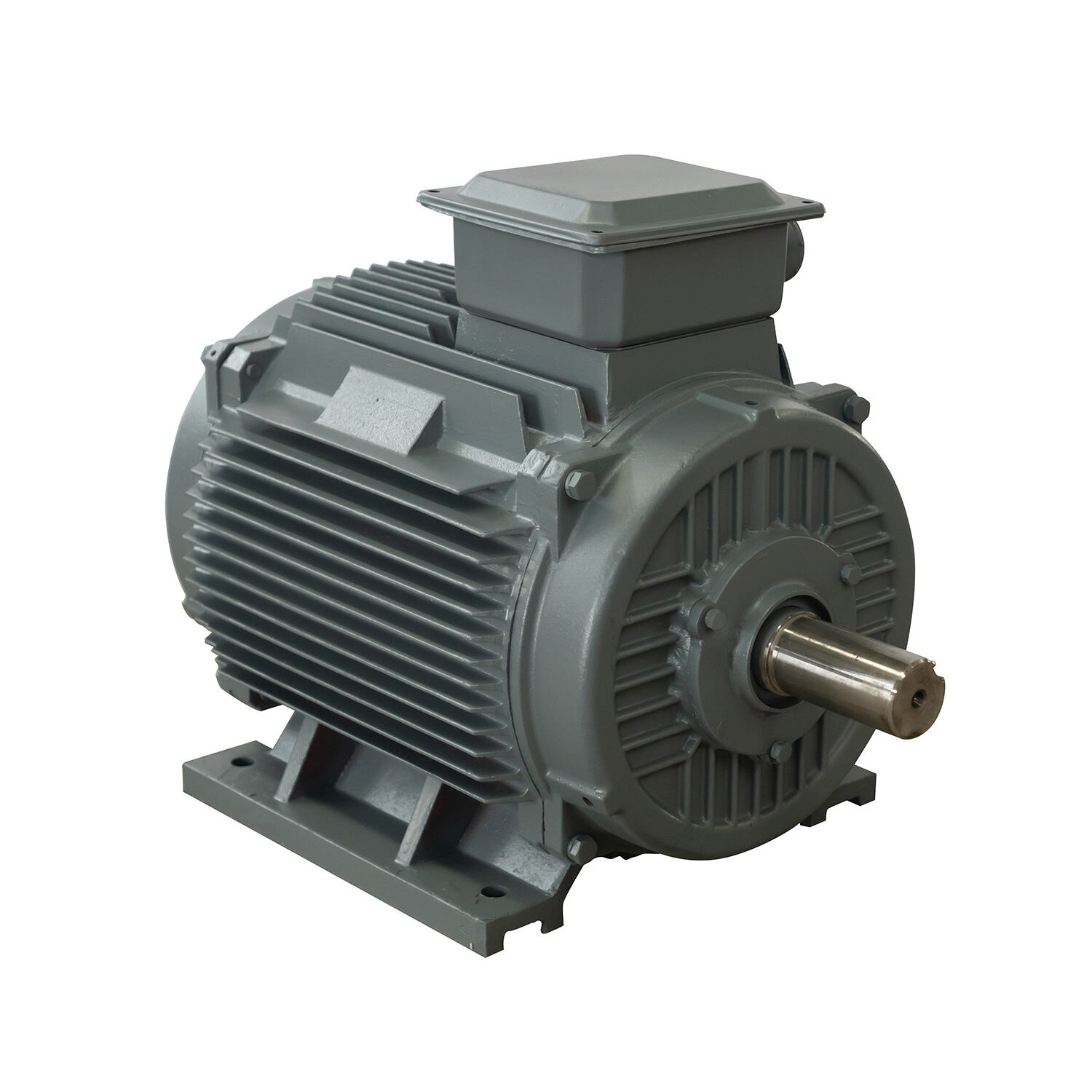
Technical Highlights: Direct Drive Motor vs. Induction Drivetrain
To understand the lifecycle TCO benefits of modern equipment design, project teams must examine the physical and operational differences between a traditional induction drivetrain and an advanced synchronous Direct Drive Motor.
The Mechanics of Synchronisation and Eliminating Rotor Copper Losses
A synchronous Direct Drive Motor operates at a speed directly locked to the frequency of the stator's rotating magnetic field. Unlike asynchronous induction motors that experience "slip" to induce current, a synchronous Gearless Motor maintains absolute speed consistency regardless of load changes. In a standard asynchronous motor, current is continuously induced into the rotor windings, resulting in significant "rotor copper loss" and excess heat. In contrast, an ENNENG Permanent Magnet Motor utilises high-performance NdFeB (Neodymium Iron Boron) permanent magnets embedded in the rotor, providing the air-gap magnetic field without drawing grid excitation current and eliminating rotor-side copper losses.
Superior Efficiency, Optimised Power Factor, and Compact Footprint
Choosing a high-efficiency Direct Drive Motor from ENNENG offers clear technical advantages in efficiency, power factor, and thermal performance under IEC 60034-30-1 IE5 standards. An industrial Direct Drive Motor maintains high efficiency across 25% to 120% of rated load, achieving rated efficiency 2% to 5% higher than asynchronous motors even under partial loads. Furthermore, the motor achieves a power factor of 0.95 to 1.0 compared to asynchronous motors peaking around 0.86, reducing system operating current by over 10%, minimising line losses, and eliminating reactive power compensation hardware. Because zero rotor copper loss lowers operating temperature rise by 20K, ENNENG builds each Direct Drive Motor one or two frame sizes smaller, saving critical installation space.
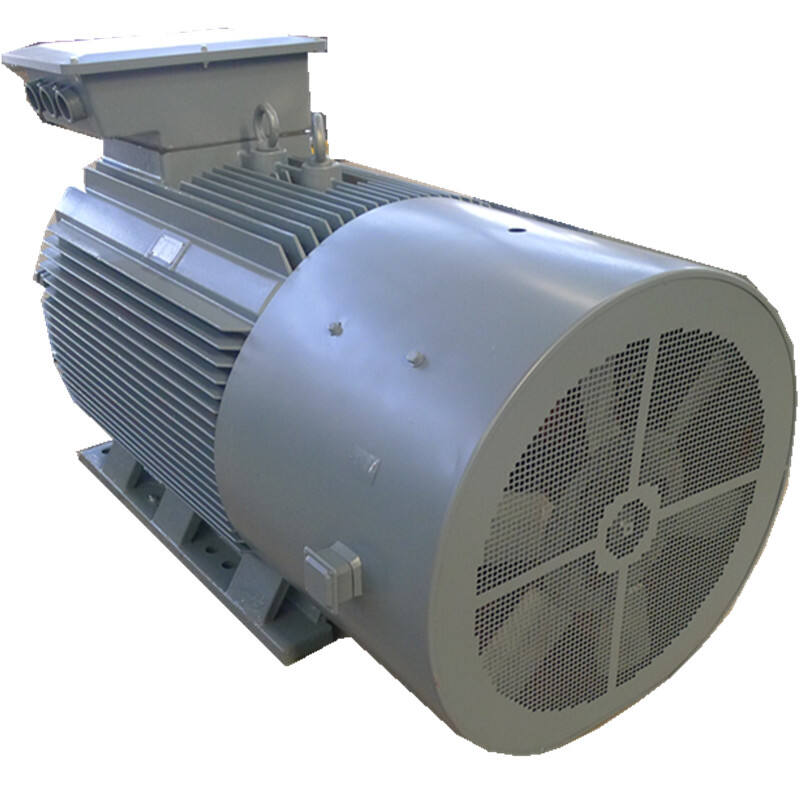
Direct Drive and Gearless Architecture: Maximising Mechanical Reliability
One of the most valuable aspects of integrating an industrial Permanent Magnet Motor into new-built machinery is implementing low-speed, high-torque direct-drive systems.
Eliminating the Reducer and System-Level Advantages of Direct Drive
Traditional drive trains rely on a high-speed motor coupled with a mechanical speed reducer (gearbox) or belts to achieve low operating speeds. However, motor + reducer configurations generate vibration, require extensive guarding under OSHA 1910.219, suffer from high failure rates, and demand constant manual maintenance. By increasing the number of permanent magnet rotor poles, ENNENG designs a Gearless Motor and Low Speed High Torque Motor to operate reliably at rated speeds down to single digits, coupling directly to the driven load and eliminating the gearbox via enneng. By removing the gearbox, the Direct Drive Motor system delivers key benefits:
• Reduced Failure Rates: Fewer rotating parts mean fewer potential points of mechanical failure, eliminating gearbox oil changes and belt tensioning for an almost maintenance-free drive system.
• Low Noise and Vibration: Operating at low speeds with no gear mesh results in minimal vibration compliant with ISO 10816 and ISO 20816 limits and decibel levels below 55 dB.
• Enhanced Dynamic Response: Paired with a specialised variable frequency drive (VFD) system meeting ANSI/NEMA MG 1 Part 31 and NFPA 70 standards, the Direct Drive Motor achieves exceptional control accuracy and starting torque.
Application Case Studies: ENNENG Solutions in Demanding Industries
ENNENG's engineering capabilities are proven across leading industrial groups, including Sinopec, Shandong Gold Mine, and Linglong Tire.
1. Rubber Tire Machinery and Industrial Air Compressor Systems
Traditional rubber tire processing equipment utilised high-speed asynchronous motors with complex gearboxes, suffering from high energy consumption and heavy maintenance cycles. ENNENG introduced low-speed, high-torque Direct Drive Motor systems to replace legacy drives, achieving a verified electricity saving rate of 7% to 40% while eliminating unscheduled gearbox downtime. Similarly, in industrial air compressor systems, ENNENG's variable frequency Permanent Magnet Motor units feature a low temperature rise design (under 60K) and match motor speed dynamically to compressed air demand, achieving soft starts and electricity savings of up to 50% to quickly recover the initial investment.
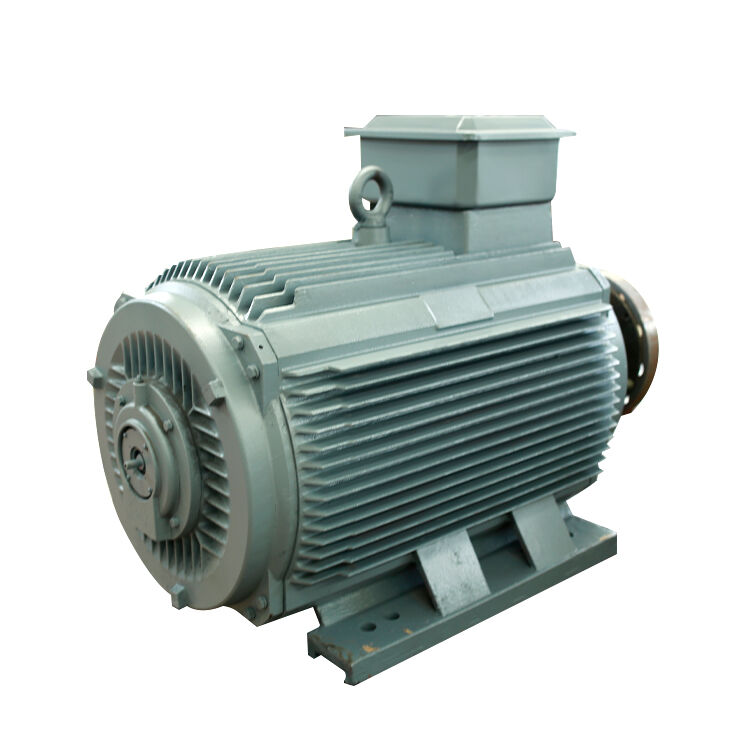
The ENNENG Customisation Advantage
No two industrial facilities share identical spatial or mechanical constraints. ENNENG specialises in delivering a tailor-made Direct Drive Motor and Gearless Motor engineered for each specific application. Supported by engineers from the National Rare Earth Permanent Magnet Engineering Centre and dozens of patents, ENNENG customises unified 5kW-5MW and 110V-690V solutions (including 380V/660V/1140V and 6kV/10kV adaptations) to match existing footprints in water treatment, oil wells, and mining environments. Before commissioning, engineers should confirm continuous torque, load inertia, thermal derating, and routine bearing and cooling inspection intervals.
Contact ENNENG Today
Speak to the technical engineering team via contact to receive a customised Direct Drive Motor proposal:
• WhatsApp: +86 18562780228
• E-Mail: [email protected]
• Phone: +86 532 66000559
• Address: Haichuang New Energy & New Materials Industrial Park, No. 1 Guiding Road, Licang District, Qingdao, Shandong, China
• Website: www.ennengmotor.com
FAQ
Q: Can an ENNENG Direct Drive Motor replace standard asynchronous motors directly?
A: Yes. General and standard type permanent magnet motors adopt universal frame sizes and customisable mounting flanges that match widely used asynchronous drivetrains, making new-build design selection and replacement exceptionally convenient. By coupling the Direct Drive Motor straight to the load shaft, projects eliminate intermediate gearboxes and reduce frame size by one to two steps.
Q: Why does a permanent magnet Gearless Motor require a specialised controller?
A: Because the rotor of a Gearless Motor contains permanent magnets with fixed magnetic poles, the motor must be driven by a dedicated controller or Variable Frequency Drive (VFD) to synchronise the stator's rotating magnetic field with the rotor's speed, providing smooth soft starts and precise closed-loop torque control under ANSI/NEMA MG 1 Part 31.
Q: How does eliminating the gearbox with a Direct Drive Motor improve safety and maintenance?
A: Eliminating the mechanical gearbox reduces rotating transmission components, making the Direct Drive Motor a safer industrial option under OSHA 1910.219 guarding standards. A Gearless Motor removes the risk of gear tooth wear, shaft misalignment, and lubrication oil leaks, resulting in an ultra-quiet system below 55 dB that is virtually maintenance-free.

