
 EN

For an OEM team, choosing a Direct Drive Motor is not simply a component substitution. It is a decision to redesign the path between torque generation and the driven load. When a gearbox, belt, pulley, or coupling is removed, the machine may have fewer parts, a shorter stack-up, and fewer interfaces to align. It also places new demands on torque sizing, bearing loads, thermal design, controls, and service access. A more useful question is whether a Direct Drive Motor makes the whole machine easier to build, validate, and support.
Start with the mechanical architecture, not the motor catalog
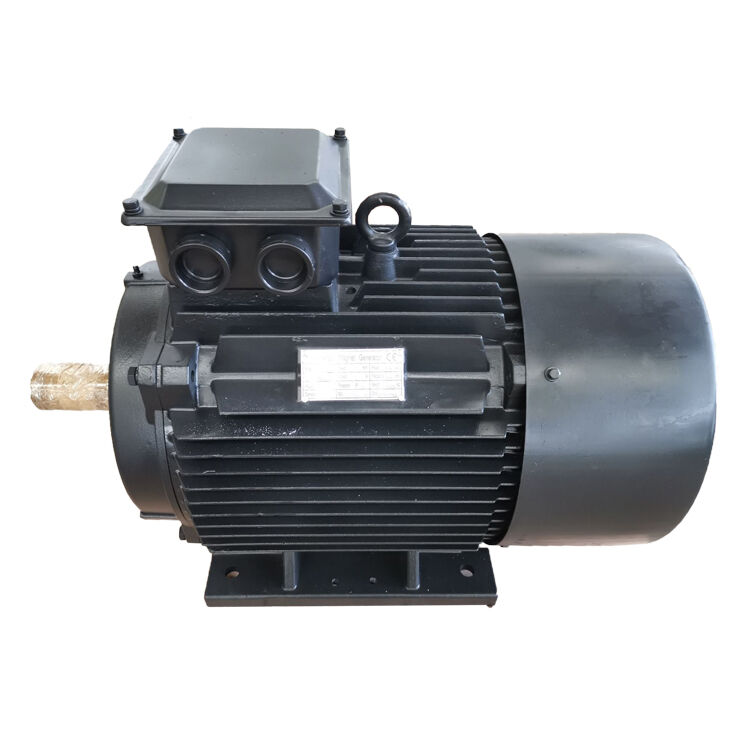
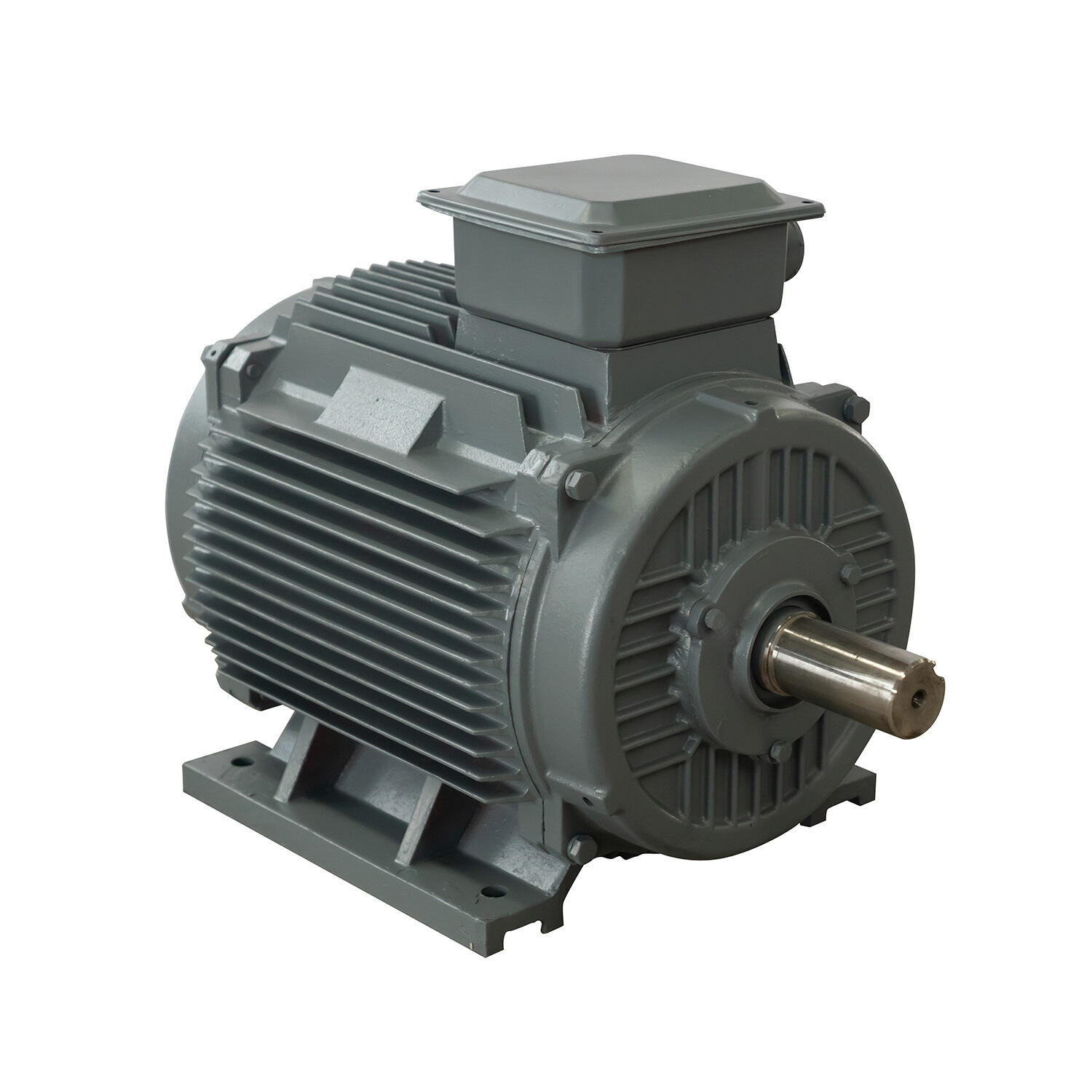
A Direct Drive Motor transfers torque to the load without an intermediate speed-reduction or belt-drive stage. That definition matters because direct drive is an architecture, not one universal motor construction. A permanent-magnet synchronous machine, torque motor, outer-rotor motor, or another suitable topology may be used depending on the load, speed range, envelope, and control approach.
In a conventional power train, the motor shaft, coupling, reducer or pulley set, driven shaft, bearings, guards, and mounting plates each create interfaces. Each interface adds dimensions, tolerance accumulation, assembly steps, and possible sources of vibration. A Direct Drive Motor can compress that chain. For an OEM building a pump, fan, conveyor, rotary table, mixer, winding machine, or custom process module, that can mean fewer purchased parts and a more compact layout.
There is an important qualification: fewer transmission parts do not automatically mean a simpler machine. The rotor and driven member may become one integrated assembly, so the designer must make shaft, hub, bearing, housing, and sealing decisions earlier. A Direct Drive Motor simplifies the arrangement only when those decisions are treated as a system.
Where a Direct Drive Motor removes mechanical work
1. It shortens the tolerance chain
Every pulley, belt, gearbox, and separate coupling introduces concentricity, runout, backlash, or alignment checks. With a Direct Drive Motor, the OEM can often establish one primary rotational axis from the motor support through the driven component. That can reduce fixture complexity during assembly and simplify the drawing package for outsourced fabrication.
For example, instead of designing a motor base, belt tension adjustment, two pulley diameters, a guarded belt path, and a driven-shaft support, a team may design a motor interface and one load-support arrangement. The resulting bill of materials is shorter. More importantly, the commissioning sequence can become easier to define.
2. It eliminates ratio-selection hardware
A reducer or belt ratio is normally selected to reconcile a motor’s preferred speed with the process speed. A Direct Drive Motor moves that matching task into electromagnetic sizing and control selection. This can be valuable when the load must operate at low speed with high torque, reverse frequently, index accurately, or fit inside a tight axial envelope.
That does not make the ratio question disappear. It changes form. Gearboxes reduce the load inertia reflected to the motor by the square of the ratio, so removing a reducer changes the inertia and acceleration calculation that the motor must carry. An OEM should calculate the real load inertia, required acceleration, cycle duty, peak torque, and continuous torque before assuming a Direct Drive Motor will improve response.
3. It can reduce backlash and compliance
Belt elasticity, gearbox backlash, coupling torsion, and worn mechanical interfaces can make positioning behavior harder to predict. A correctly sized Direct Drive Motor removes several of those elements from the torque path. The practical benefit may be smoother reversal, cleaner indexing, and a control loop that reflects the load more directly.
Still, direct coupling exposes other forms of compliance. A flexible machine frame, thin mounting flange, weak hub, or poorly supported load can dominate the result. In practice, a Direct Drive Motor is often most successful when the structural designer checks modal stiffness as carefully as the electrical engineer checks current limits.
Design changes OEMs must make deliberately
Torque and speed must be specified at the load
With a Direct Drive Motor, specify the application in load-side terms: speed range, peak torque, continuous torque, acceleration time, dwell time, external radial and axial forces, and expected cycle count. Avoid selecting from rated power alone. A low-speed machine can demand substantial torque even when average power looks modest.
Ask a practical question early: what happens at the slowest operating speed, at the highest process load, and after the enclosure has warmed? A Direct Drive Motor that meets a nominal point but cannot reject heat across the actual duty cycle may create a more difficult enclosure than the transmission it replaced.
Bearing responsibility may move into the motor interface
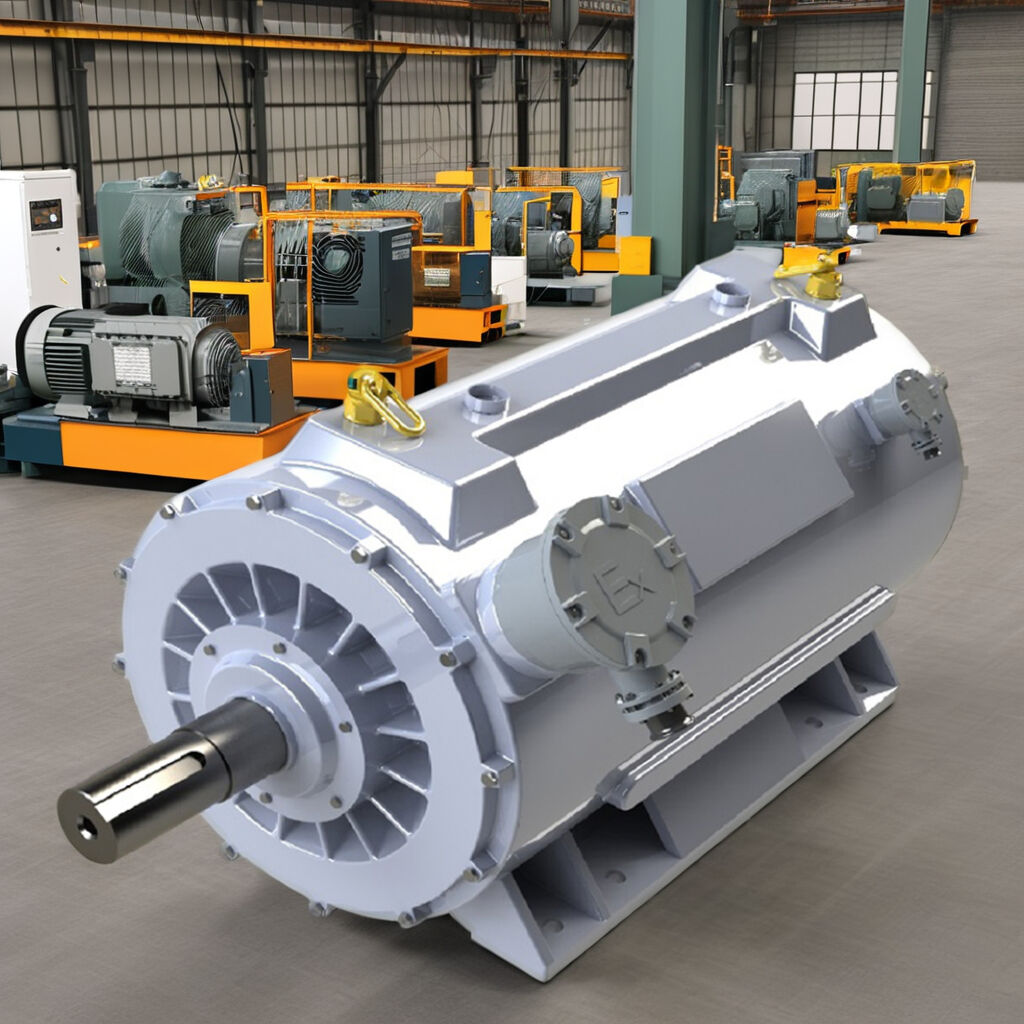
In a geared system, separate shafts and gearbox bearings often absorb radial, axial, or overturning loads. In a Direct Drive Motor arrangement, those loads may reach the motor bearings unless the OEM provides an independent load-bearing structure. This is especially important for large fans, vertical loads, eccentric tooling, belt remnants, and cantilevered discs.
A sound design distinguishes torque transmission from load support. The Direct Drive Motor may deliver torque while a dedicated bearing set carries process forces. That choice can preserve bearing life, simplify replacement, and reduce uncertainty during validation.
Controls become part of the mechanical design
A Direct Drive Motor frequently operates with a compatible variable frequency drive or servo drive, feedback device, and tuned control loop. The mechanical team does not need to become drive specialists, but it should reserve space for cabling, feedback routing, grounding, heat dissipation, and safe maintenance. A layout that is mechanically compact but leaves no path for shielded cables or drive cooling is not genuinely simplified.
For variable-speed applications, OEMs should also confirm which efficiency and compliance framework applies in the destination market. IEC 60034-30-2 addresses efficiency classes for variable-speed AC motors outside the scope of IEC 60034-30-1. The exact requirement depends on the equipment and market, so it should be verified for the finished machine rather than assumed from a motor label.
How a Gearless Motor changes service and risk
A Gearless Motor can remove lubrication schedules, gear wear inspection, belt tension adjustment, and some replacement parts. For machines in awkward locations or with high downtime cost, that reduction can improve the service plan. But serviceability must be designed in: consider access to fasteners, rotor removal clearance, lifting points, feedback connectors, and the sequence for replacing seals or bearings.
The same logic applies to a Direct Drive Motor. Fewer parts can reduce routine maintenance, yet an integrated rotor-load assembly may require more thoughtful disassembly. A well-planned OEM design makes common inspections simple and separates wear items from high-value motor parts where possible.
Use the simplification to improve the machine, not just reduce parts
For original equipment manufacturers, the strongest case for a Direct Drive Motor is often architectural: it can remove interfaces that create tolerance, backlash, noise, and maintenance work. It is not a universal replacement for a gearbox or belt system. High torque, low speed, large inertia, external loads, and thermal limits can make a conventional transmission the better engineering choice.
When the application supports it, however, a Direct Drive Motor lets the OEM design around a shorter, more transparent torque path. Start with the load, map the supporting structure, validate the drive system, and review assembly and service before freezing the housing. That is how a compact concept becomes a manufacturable Direct Drive Motor machine rather than a difficult integration project.
If you are evaluating commercial permanent magnet motors for sale and need an engineered drive solution that guarantees efficiency and longevity, ENNENG is your trusted partner.Contact ENNENG Today.Speak to our technical engineering team to receive a customised drive proposal.
- WhatsApp: +86 18562780228
- E-Mail: [email protected]
- Phone: +86 532 66000559

