
how-direct-drive-motor-solves-the-problem-of-transmissionlink-energy-loss-of-traditional-mechanical-equipment, how-direct-drive-motor-solves-the-problem-of-transmissionlink-energy-loss-of-traditional-mechanical-equipment, /blog
EN

2026/10/15
In large-scale pulp and paper mills, chemical mixing vessels, and municipal wastewater agitation tanks, complex mechanical drive trains consisting of high-speed induction motors, fluid couplings, V-belts, and multi-stage reduction gearboxes run continuously under heavy torsional stress. Maintenance technicians frequently contend with overheated reducer oil sumps, stretched drive belts, and premature bearing failure caused by slight angular misalignments across long intermediate drive shafts. Every time a gearbox oil seal fails or a mechanical coupling shears under peak load, the entire production line suffers costly unscheduled downtime and labor-intensive mechanical overhauls.
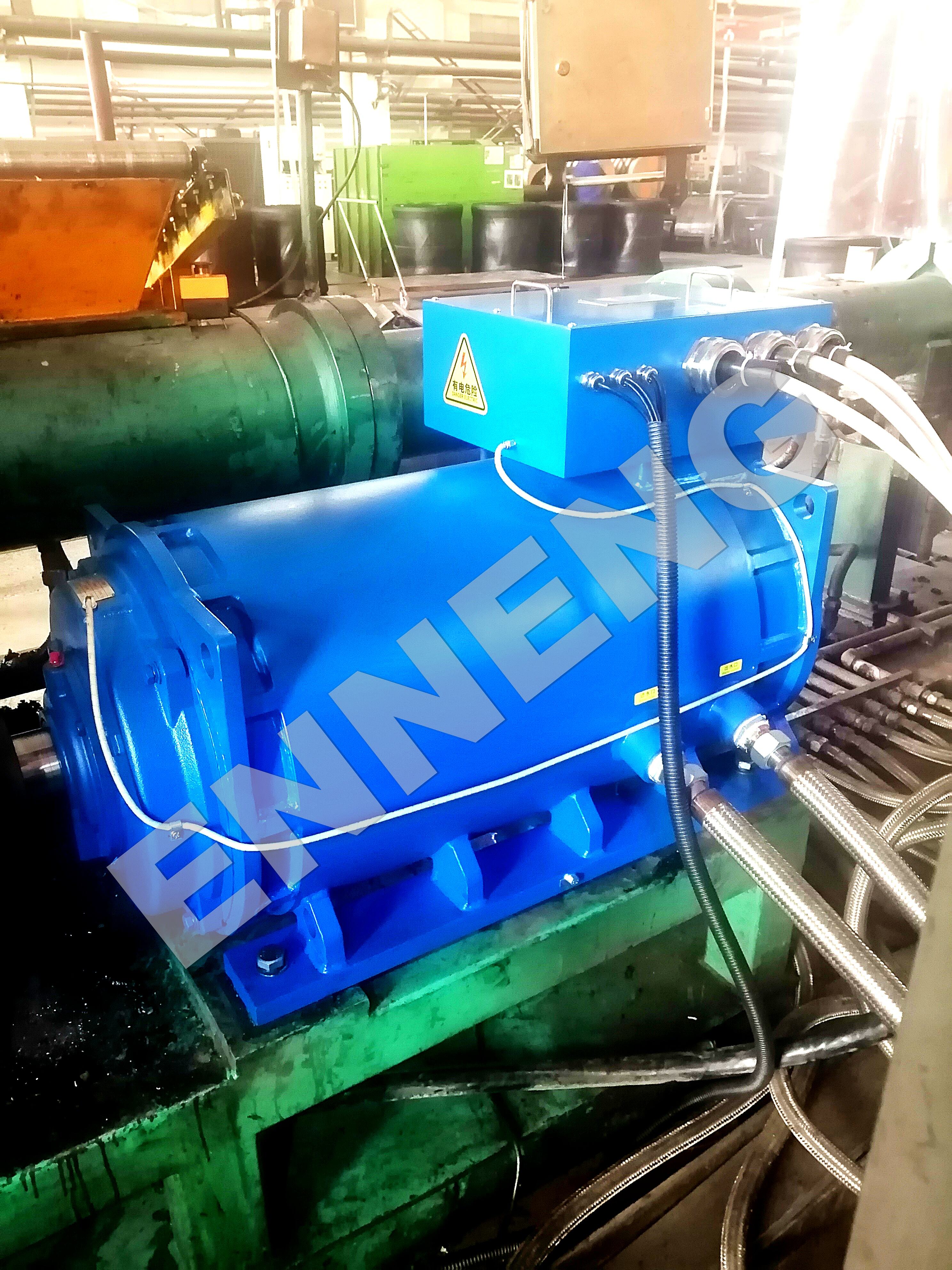
Traditional mechanical power transmission relies on stepping down high motor rotational speeds through multiple layers of gears, chains, or pulleys to generate the low-speed torque required by heavy industrial machinery. Each intermediate mechanical link acts as a parasitic energy sink, converting valuable electrical kilowatts into wasted friction heat, structural vibration, and acoustic noise. Upgrading to an engineered Direct Drive Motor from ENNENG removes these intermediate transmission stages completely, coupling massive rotational torque straight to the driven equipment shaft.
When a standard four-pole or six-pole asynchronous motor operating at 1500 RPM or 1000 RPM drives a slow-moving industrial agitator, rotary kiln, or bulk conveyor pulley, a multi-stage reduction gearbox is required to bridge the speed gap. Inside the gearbox housing, meshing spur, helical, or bevel gear teeth experience continuous sliding and rolling friction under high contact pressure. At the same time, high-viscosity lubricating oil churning inside the sump creates substantial hydrodynamic drag. According to mechanical transmission benchmarks, each loaded gear mesh forfeits approximately 2% of transmitted power, while right-angle bevel or worm gear stages can lose between 5% and 15% of input energy. When combined with V-belt slippage (typically 3% to 5% loss) and flexible coupling hysteresis, traditional multi-link drivetrains routinely waste 8% to 18% of total electrical input before mechanical work ever reaches the production shaft.
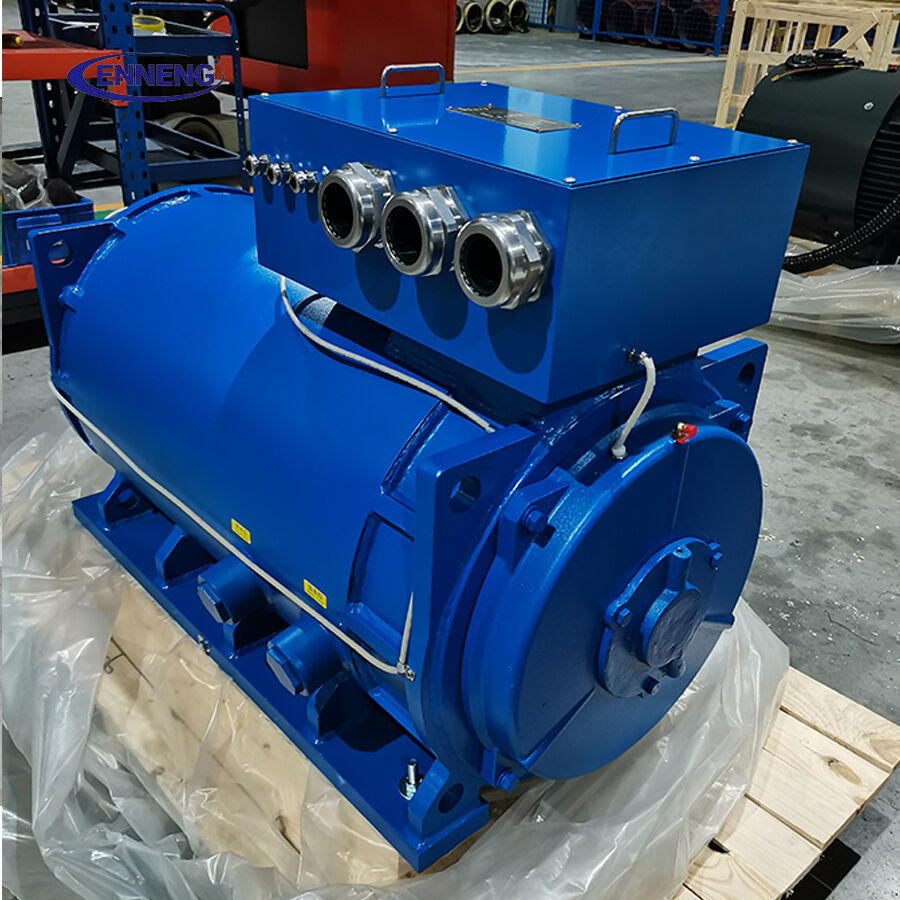
A Direct Drive Motor engineered by ENNENG solves transmission-link energy waste by fundamentally redesigning the electromagnetic core to produce high torque at native low speeds. Rather than relying on mechanical gear ratios to multiply torque, the Direct Drive Motor incorporates a high pole-pair count and an optimized stator slot-to-pole magnetic circuit:
Beyond eliminating external mechanical reducers, an ENNENG Direct Drive Motor removes the internal reactive magnetizing penalties associated with legacy drive topologies. Operating across a unified voltage range of 110V–690V, these gearless propulsion systems maintain a high power factor across both full and partial loads, lowering feeder cable current draw and reducing thermal strain on factory distribution transformers. Furthermore, removing auxiliary gearbox oil circulation pumps and heat exchangers cuts secondary plant electrical loads. Alongside heavy industrial propulsion drives, ENNENG applies this direct-coupled electromagnetic engineering across its power generation portfolio, manufacturing industrial generators across a unified 5kW–5MW power range (110V–690V) and vertical axis wind turbines spanning 1kW–10kW, with a main focus on 3kW, 5kW, and 10kW distributed energy systems.
Industrial drivetrain retrofits are governed by rigorous international mechanical and electrical efficiency standards. Conventional motor-gearbox skids require complex compliance evaluations under ANSI/AGMA 6013 for gear tooth pitting resistance and ISO 10816-3 for coupled bearing housing vibration severity—where high-frequency gear-mesh sidebands frequently trigger maintenance alarms. Transitioning to a gearless Direct Drive Motor eliminates gearbox vibration spectra entirely, simplifying compliance with ISO 10816-3 Class I and Class II vibration limits. Electrically, deploying a synchronous Direct Drive Motor directly supports compliance with IEC 60034-30-2 efficiency classifications for variable-speed rotating machines while helping plant operators satisfy OSHA 29 CFR 1910.95 occupational noise exposure thresholds by eliminating high-decibel gear whine.
In chemical processing reactors, pulp washers, and inclined mineral conveyors, legacy drivetrains suffer from frequent reducer oil leaks and sheared couplings during heavy-load startups. Replacing the motor-and-reducer skid with an ENNENG Direct Drive Motor eliminates gearbox oil sumps completely, frees up critical floor space on elevated service platforms, and delivers controlled breakaway torque without mechanical shock.
Implementing a gearless Direct Drive Motor in heavy industrial facilities requires disciplined selection and preventative care protocols:
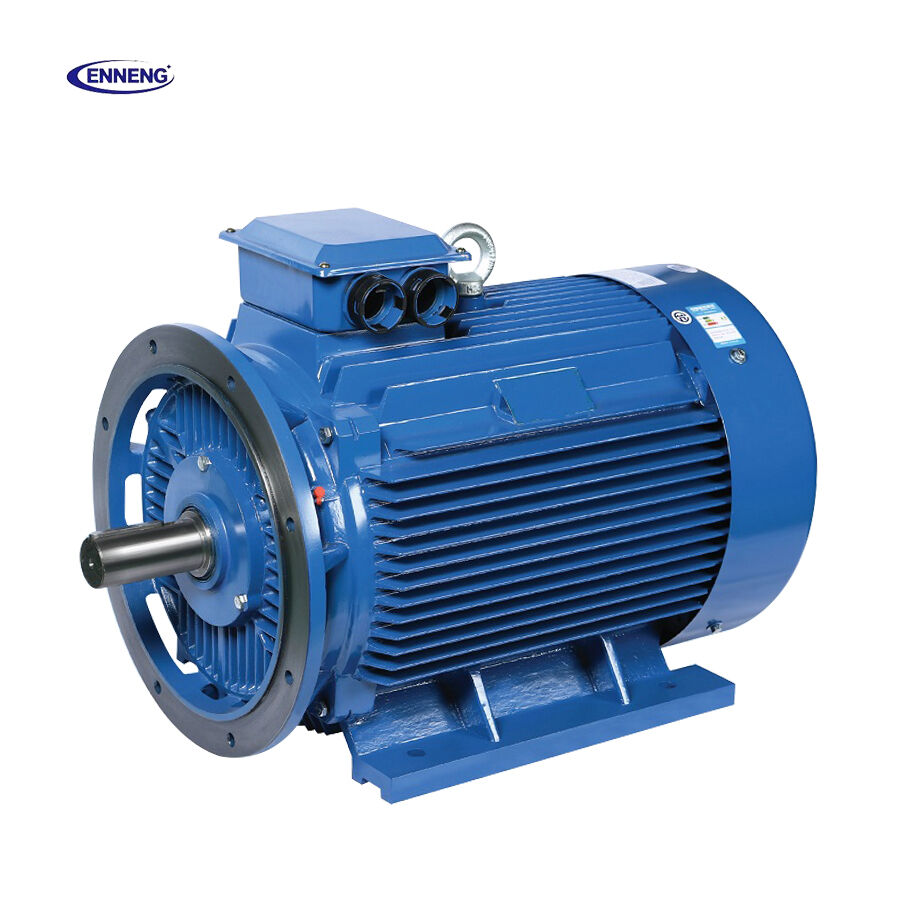
Every industrial production line presents distinct shaft mounting interfaces, ambient operating temperatures, and speed-torque profiles. ENNENG provides both standard drop-in frame configurations and fully customized Direct Drive Motor geometries—tailoring hollow-shaft or solid-shaft couplings, flange dimensions, and cooling topologies across the unified 110V–690V range to integrate seamlessly into existing machinery without structural modifications.
Consult the ENNENG technical engineering team to evaluate your machinery speed-torque parameters and receive a customised gearless drive proposal.
WhatsApp: +86 18562780228
E-Mail: [email protected]
Phone: +86 532 66000559
A: A Direct Drive Motor achieves high low-speed torque through an advanced multi-pole electromagnetic design and optimized rotor geometry. By substantially increasing the number of magnetic poles and maximizing air-gap flux density, the motor acts as an electromagnetic lever. When paired with a vector-controlled frequency drive, the Direct Drive Motor produces full rated breakaway and continuous running torque directly at low RPM without needing mechanical gear teeth or belt pulleys.
A: Traditional drivetrains using multi-stage helical, bevel, or worm gearboxes combined with V-belts or fluid couplings typically lose 8% to 18% of input electrical power to gear mesh friction, oil churning, and belt slip. Installing an ENNENG Direct Drive Motor eliminates all intermediate mechanical transmission stages, transferring power directly to the load shaft and recovering those wasted kilowatts across continuous 24/7 industrial duty cycles.
A: ENNENG engineers industrial Direct Drive Motor units and rotating electrical machinery across a unified voltage range of 110V–690V to match global factory distribution networks. For industrial power generation and energy recovery applications, ENNENG manufactures generators across a unified power range of 5kW–5MW, alongside vertical axis wind turbine systems spanning 1kW–10kW (with a primary focus on 3kW, 5kW, and 10kW configurations).


 EN