
how-energy-saving-motor-solution-helps-manufacturing-plants-hit-carbonreduction-kpis, how-energy-saving-motor-solution-helps-manufacturing-plants-hit-carbonreduction-kpis, /blog
EN

2026/10/09
Heavy industrial manufacturing facilities face aggressive regulatory mandates and corporate sustainability frameworks demanding rapid reductions in Scope 2 greenhouse gas emissions. In an automotive stamping and metal fabrication complex operating over three hundred continuous pumping, hydraulic, and conveyor circuits, electric motor systems accounted for eighty-two percent of total factory electrical demand. Plant management struggled to achieve mandated five-year carbon abatement goals while utilizing aging induction motors characterized by elevated rotor slip and low partial-load efficiency. Deploying a comprehensive Energy Saving Motor Solution based on permanent magnet synchronous technology lowered baseline electrical consumption by 18.4 percent, enabling the enterprise to exceed its annual carbon reduction targets. Modernizing electric motor infrastructure represents the fastest, most capital-effective operational lever for manufacturing facilities to hit aggressive decarbonization milestones.
|
Drive Classification |
Electric Loss Ratio |
Scope 2 Carbon Impact |
Operational Lifespan Efficiency |
|
Standard IE1 Induction |
12% - 16% Total Loss |
High Carbon Baseline |
Steep Part-Load Drop |
|
High Efficiency IE2 |
9% - 12% Total Loss |
~7% Carbon Reduction |
Moderate Part-Load Drop |
|
Premium Efficiency IE3 |
6% - 8% Total Loss |
~13% Carbon Reduction |
Moderate Efficiency Curve |
|
Energy Saving Motor Solution (IE4/IE5 PM) |
3% - 4% Total Loss |
Up to 25% Carbon Reduction |
Flat Broad Curve (25%-120% Load) |
Industrial electric motors consume more than sixty percent of all electrical power utilized across the global manufacturing sector. Conventional induction machines rely on electromagnetic induction to transfer energy into rotor conductors, generating continuous internal Joule losses (I2R) that dissipate as wasted thermal radiation. An Energy Saving Motor Solution based on rare-earth permanent magnets creates instantaneous rotor flux without consuming secondary electrical current. Eliminating rotor electrical resistance losses lowers operating temperatures, boosts mechanical efficiency up to 96.8 percent, and directly reduces plant megawatt-hour procurement from carbon-intensive electrical grids.
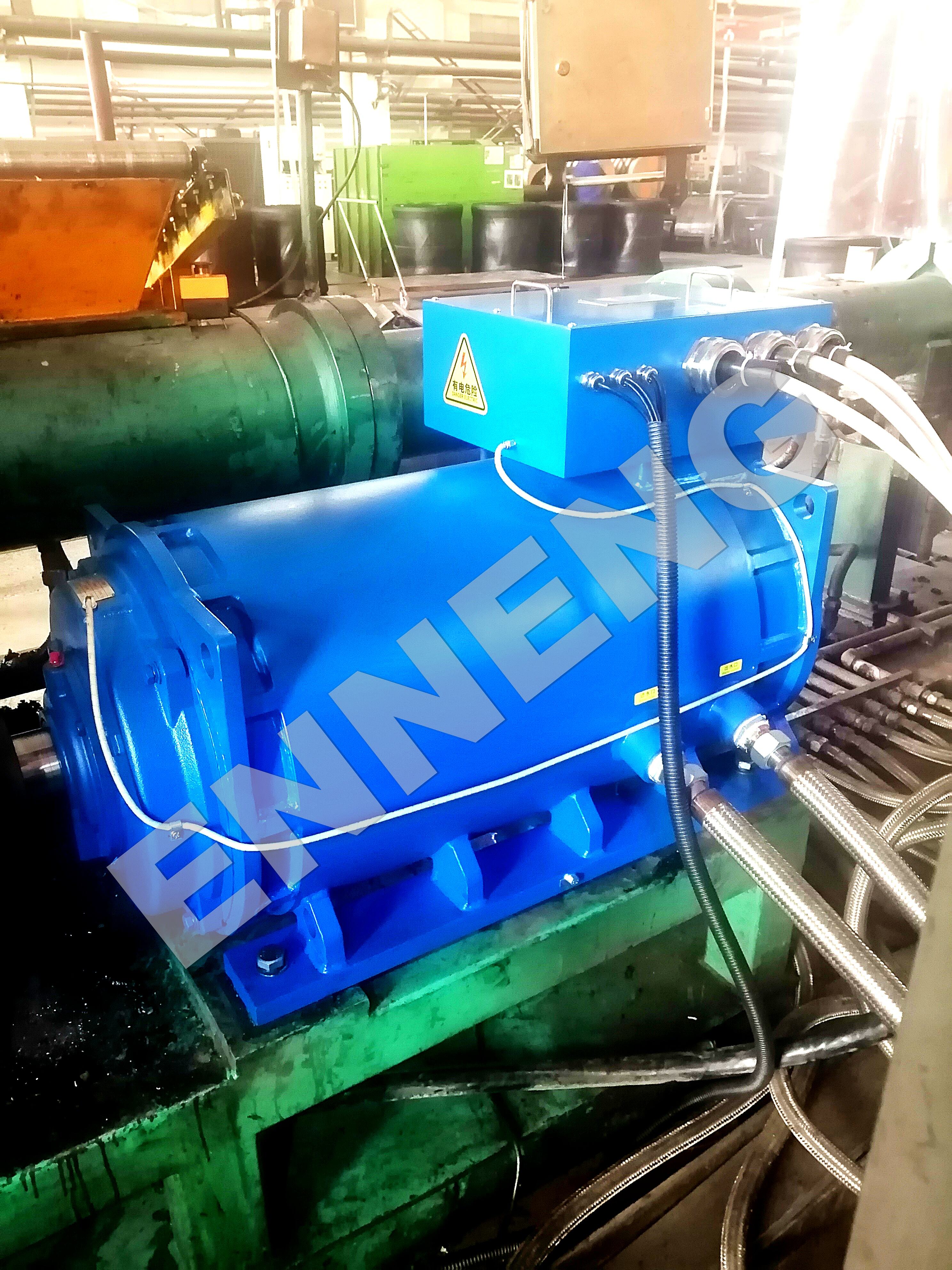
Asynchronous motors draw reactive excitation current from factory electrical mains to magnetize rotor aluminum or copper bars. This continuous electrical current circulation generates parasitic resistive heat inside the rotor core. An Energy Saving Motor Solution utilizes neodymium permanent magnets to maintain constant rotor magnetic flux without external current flow. Eliminating rotor copper losses lowers operating temperatures by 15 to 25 degrees Celsius, delivering immediate 3 to 7 percent efficiency gains over standard induction drives across continuous production schedules.
Industrial manufacturing equipment rarely operates under static full-load conditions. Process equipment such as extruders, industrial agitators, cooling water pumps, and ventilation blowers routinely modulate between 30 percent and 70 percent of nominal nameplate ratings. Standard induction motors experience catastrophic efficiency declines when loaded below half capacity. An advanced Energy Saving Motor Solution exhibits an exceptionally flat efficiency curve, sustaining peak energy conversion efficiency from 25 percent to beyond 115 percent load. This performance characteristic ensures manufacturing equipment saves substantial power during partial-load operation.
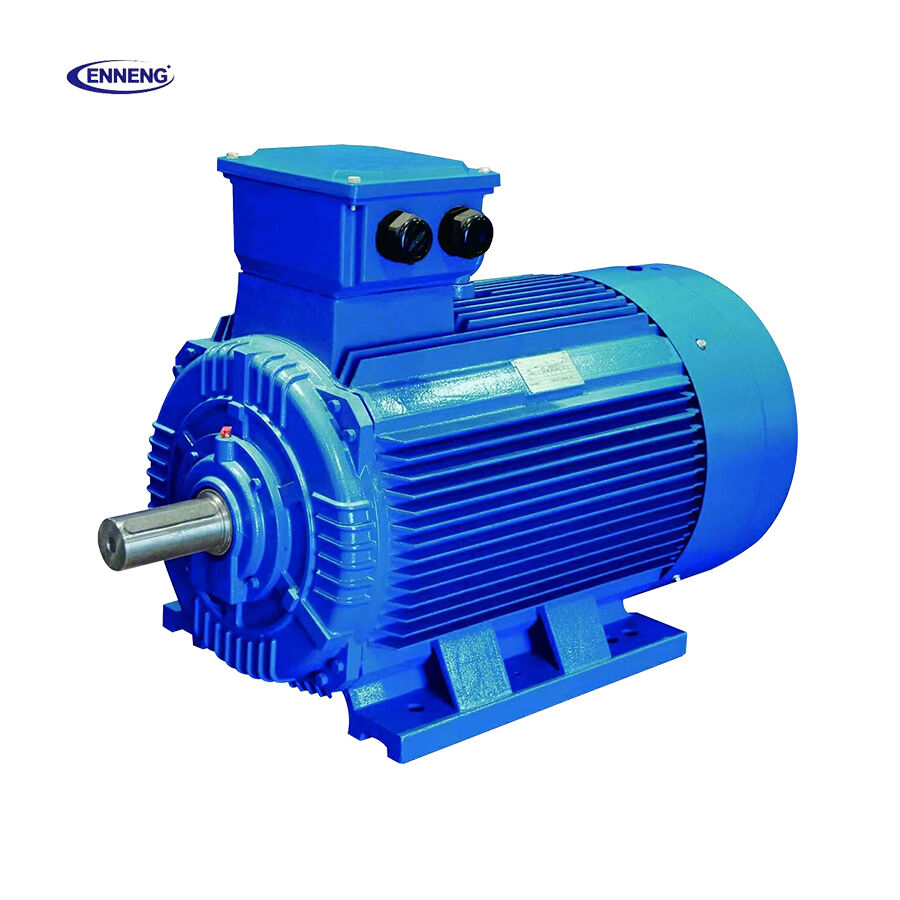
Low electrical power factor strains plant transformers, increases resistive losses along factory distribution wiring, and triggers costly utility penalty charges. Standard induction motors frequently operate at power factors between 0.75 and 0.84 during partial-load cycles. Implementing an Energy Saving Motor Solution delivers an operating power factor between 0.96 and 0.99 across full speed ranges. Operating near unity power factor eliminates reactive power circulation, unburdens plant switchgear, and cuts indirect grid-level carbon emissions.
Achieving corporate carbon reduction KPIs requires dependable drive hardware engineered for severe industrial service. ENNENG manufactures advanced low-speed and high-speed permanent magnet synchronous motor systems engineered to satisfy super-premium IE4 and ultra-premium IE5 efficiency standards. Implementing an ENNENG Energy Saving Motor Solution enables manufacturing plants to reduce active electrical power consumption by 10 to 40 percent compared to legacy induction assets.
|
Implementation Metric |
Conventional Motor Replacement |
ENNENG Energy Saving Motor Solution |
|
Conversion Efficiency Rating |
IE2 / IE3 Standard |
IE4 / IE5 Ultra-Premium Standards |
|
Operational Voltage Flexibility |
380V - 440V Rigid |
110V to 690V Unified Versatility |
|
Stator Operating Temperature Rise |
Class B (80K) |
Lower than 60K |
|
Direct Drive Potential |
Very Limited (Requires Gears) |
Complete Gearless Low-Speed High-Torque |
The unified manufacturing matrix developed by ENNENG covers broad industrial power ratings from 5kW up to 5MW, with complete voltage versatility spanning 110V to 690V. Operating with an internal temperature rise below 60K protects winding insulation, minimizes radiant factory heat, and slashes auxiliary air conditioning loads in motor control centers.
Conventional motor drivetrains integrate external speed reducers, pulleys, belts, and couplings to match driven load speeds. Mechanical transmission components consume between 5 and 20 percent of total motor output through gear friction, bearing drag, and belt flexure. An ENNENG Energy Saving Motor Solution couples high-torque permanent magnet motors directly to driven shafts, eliminating intermediate gearboxes completely. Removing mechanical transmissions captures immediate double-digit energy savings while eradicating gear lubricant disposal requirements.
Connecting permanent magnet motors to dedicated variable frequency controllers allows continuous process optimization. In fluid pumping and ventilation installations, fan and pump power demands follow the Affinity Laws, varying with the cube of operating speed. An ENNENG Energy Saving Motor Solution modulates shaft speed precisely to match real-time production requirements, capturing massive exponential energy savings during non-peak production shifts.
Corporate greenhouse gas accounting and motor efficiency testing are regulated by rigorous international protocols. Motor electrical efficiency classifications are governed by IEC 60034-30-1, establishing statutory performance thresholds for IE1 through IE4 ratings. Testing and loss-segregation methodologies must comply with IEC 60034-2-1, utilizing precision digital torque transducers and power analyzers to verify authentic efficiency metrics.
Corporate carbon tracking must adhere to the Greenhouse Gas Protocol Corporate Standard and ISO 14064-1, which govern the quantification and reporting of greenhouse gas emissions. Deploying an Energy Saving Motor Solution provides auditable Scope 2 carbon reductions verifiable under ISO 50001 energy management certification systems. Electrical installation safety must conform to NFPA 70 National Electrical Code rules, while field vibration thresholds must meet ISO 10816-3 Zone A criteria, ensuring vibration velocity remains below 1.4 mm/s RMS.
Meeting sustainability KPIs requires methodical energy auditing and disciplined equipment deployment.
Begin by installing three-phase digital power analyzers on critical continuous-duty motor circuits across the plant. Record real-time active power (kW), apparent power (kVA), power factor, and load percentages over full operating weeks. Prioritize motor assets displaying running load factors below 60 percent, where existing induction motors operate at depressed electrical efficiencies.
Evaluate whether driven machinery can transition to a direct-drive configuration. When sizing the Energy Saving Motor Solution, match motor torque output directly to actual measured process demand rather than oversized legacy nameplate ratings. Sizing motors accurately reduces capital expenditure and ensures the new drive operates at optimal electrical efficiency.
Establish predictive maintenance routines following motor commissioning. Conduct annual winding insulation resistance tests using a 1000V DC megohmmeter and monitor bearing vibration spectra quarterly using calibrated accelerometers. Install automated energy monitoring meters to track kilowatt-hour reductions continuously, converting verified energy savings into certified carbon abatement data for corporate ESG reporting.
To review complete permanent magnet motor lines, explore the ENNENG Products Catalog and review systems via ENNENG Motor Solutions.
For technical inquiries regarding plant energy audits and motor decarbonization calculations, contact ENNENG:
A: Electrical power consumed by industrial motors generates indirect Scope 2 greenhouse gas emissions at the regional power grid. For every 10,000 kWh conserved by an Energy Saving Motor Solution, corporate carbon footprint decreases by approximately 4 to 8 metric tons of CO2 equivalent, depending on local grid emission factors. These verified savings directly satisfy annual sustainability audit benchmarks.
A: Asynchronous induction motors require continuous excitation current, causing electrical efficiency to drop sharply below half load. Permanent magnet motors utilize intrinsic magnetic fields that require zero excitation current. As a result, an Energy Saving Motor Solution preserves superior efficiency from 25 percent to 120 percent load, maximizing energy savings during process throttling.
A: On continuous-duty equipment operating 6,000 to 8,000 hours annually, energy savings of 10 to 40 percent combined with eliminated gearbox maintenance typically deliver full capital payback within 1.5 to 3 years. Over a twenty-year operating lifespan, energy savings exceed the initial motor procurement price by more than ten times.


 EN