
 EN

Industrial motor renovation is rarely a simple swap. A replacement can look efficient on paper yet still create a shutdown, a coupling problem, an unstable drive, or savings that no one can verify. An Energy Saving Motor Solution is most useful when it is treated as an engineering and commissioning process rather than a catalogue choice. The aim is not to promise a universal percentage reduction; it is to make the new motor, driven equipment, controls, and operating conditions work together with fewer surprises.
For plant teams, the first useful question is not “Which motor has the highest efficiency class?” It is “What does this machine actually do across a normal week?” Pumps, fans, compressors, conveyors, and mixers can have very different torque, speed, and start-up demands. That distinction is where many renovation risks begin.
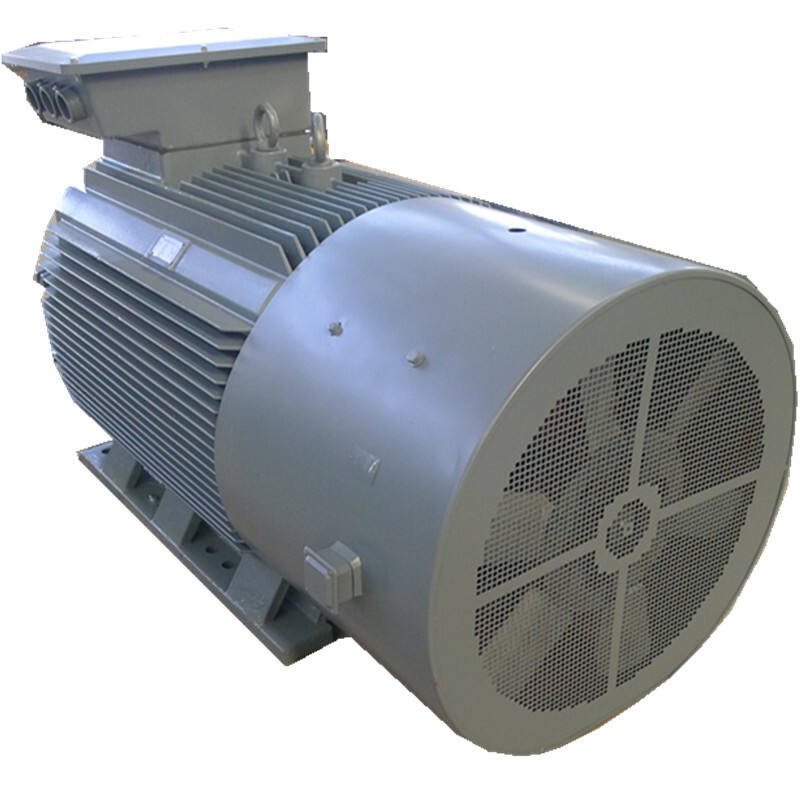
Why industrial motor renovations go wrong
Most renovation failures are predictable. A team may specify from rated power alone, approve projected savings without a measured baseline, or leave mechanical and control checks until the installation window. The purchase decision often starts with unit price, but the cost that matters during a retrofit is the cost of lost production, rework, and repeat commissioning.
An effective Energy Saving Motor Solution turns those risks into a sequence of questions that can be answered before release to production. It asks for load evidence, interface dimensions, drive parameters, ambient conditions, and a post-installation test plan. That is more disciplined than simply replacing an older induction motor with a newer unit of the same kW rating.
Risk 1: Choosing efficiency class without checking the application
IE4/IE5 Efficiency Motor discussions are valuable, but the label is not a substitute for application matching. IEC 60034-30-1 provides an efficiency-class framework for certain single-speed electric motors. Requirements and applicability can vary by market, motor type, power range, and system configuration. For example, regulatory requirements cited by the IEC for particular power ranges are not automatically a rule for every site or export destination.
A practical Energy Saving Motor Solution therefore begins by confirming the applicable standard, the intended duty, and the buyer’s compliance requirement. It also separates a motor efficiency classification from whole-system energy performance. A high-efficiency motor will not correct an oversized pump, a throttled flow path, a poorly controlled process, or a load that rarely operates near the condition assumed in the calculation.
- Identify the target market and the relevant efficiency or safety requirements.
- Confirm rated speed, torque range, service factor, cooling method, enclosure, and ambient limits.
- Ask whether the process runs at constant load, variable torque, frequent starts, or extended partial load.
Risk 2: Estimating savings from nameplate data instead of operating data
Saving forecasts become hard to defend when they compare only nameplate efficiency. The more useful comparison is measured input power, operating hours, speed or flow demand, and load profile before the retrofit. U.S. Department of Energy guidance on VFD evaluation similarly stresses understanding a motor’s load profile during peak periods when evaluating potential savings.
This is where an Energy Saving Motor Solution should include a baseline plan. Record representative production states rather than one convenient reading. Capture electrical input, process output, runtime, and any changes in pressure, flow, temperature, or material throughput that affect the load. The post-retrofit result can then be assessed against comparable conditions.
There is an important nuance: partial-load efficiency can be relevant, especially on variable-duty equipment, but it does not prove savings by itself. The claim becomes credible only when the application and measurement boundary are stated. That approach protects engineering teams from both disappointed expectations and internal disputes over project value.
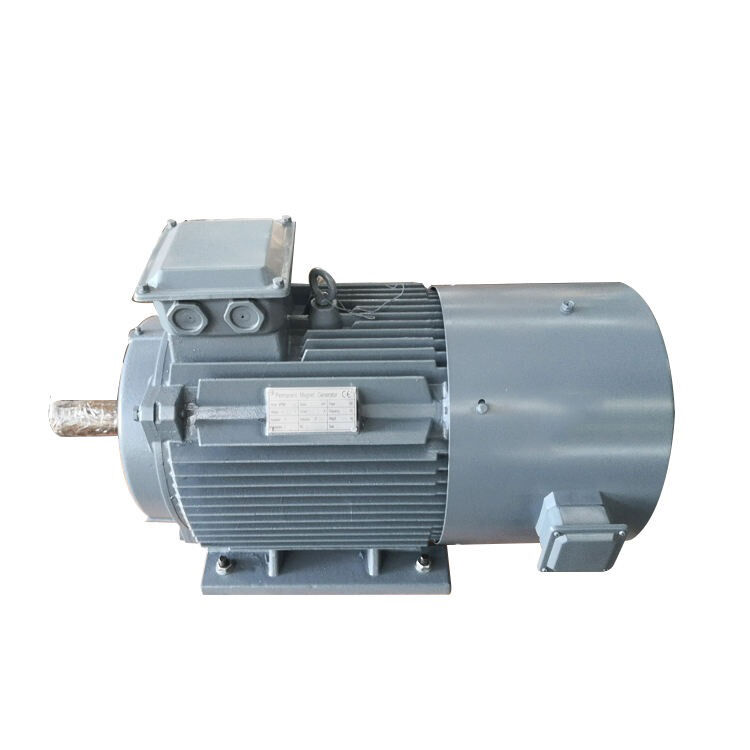
Risk 3: Missing mechanical fit and installation constraints
A motor can meet the electrical requirement and still delay a project because the shaft, frame, flange, foot pattern, coupling, baseplate, or cable entry does not match the existing installation. Mechanical adaptation is sometimes possible, but it should be designed and approved before the outage—not discovered when the old motor is already removed.
Use the Energy Saving Motor Solution review to create a dimensional verification sheet. Compare the existing motor and proposed replacement for mounting arrangement, shaft dimensions, keyway, center height, overall envelope, weight, coupling alignment requirements, and access for lifting and maintenance. If an adapter or base modification is required, include it in the method statement, schedule, and acceptance criteria.
Risk 4: Treating the motor and VFD as independent purchases
Permanent magnet motor systems and variable-frequency drives require a compatible control approach. Not every legacy drive is configured for every motor technology, and control settings, feedback requirements, cable length, switching characteristics, protection functions, and start/stop behavior can all affect commissioning. A VFD can support energy-optimized operation on the right variable-load process, but only when the motor-drive package is specified as a system.
Before ordering, ask the supplier and controls team to document the proposed motor control mode, voltage and current limits, speed range, parameter set, protection logic, and field commissioning responsibilities. An Energy Saving Motor Solution should also define what happens during a drive fault, power interruption, bypass operation, and restart. These details are less exciting than a headline efficiency claim, but they prevent some of the most expensive retrofit delays.
Risk 5: Ignoring the real operating environment
Temperature, dust, moisture, altitude, vibration, and ventilation affect the safe continuous operating point. A rating that is reasonable in a clean, ventilated room may need reconsideration in a hot enclosure or dusty process area. Cooling, ingress protection, bearing arrangements, and maintenance access should be selected for the actual environment, not only for the drawing.
For that reason, an Energy Saving Motor Solution should have an environmental checklist signed off by operations and maintenance. It should identify ambient temperature, enclosure ventilation, contamination, washdown or corrosion exposure, altitude where relevant, and expected vibration. This helps the specification address reliability and maintenance as well as energy use.
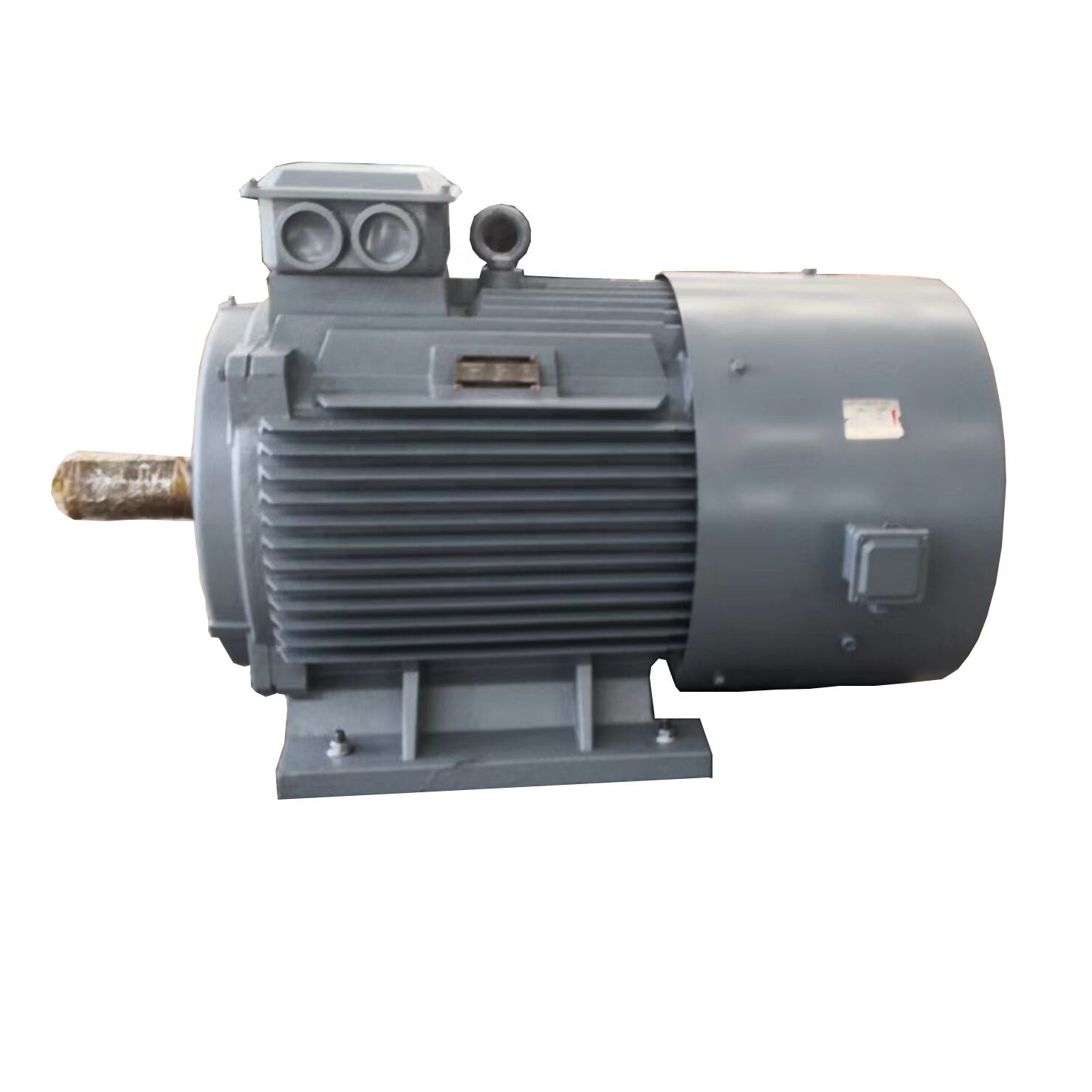
A renovation checklist that makes the solution auditable
- Define the process objective. State whether the priority is energy reduction, capacity, reliability, compliance, or a combination.
- Measure the baseline. Collect representative electrical and process data before the outage.
- Validate application fit. Check torque-speed behavior, duty cycle, starts, partial-load operation, and driven-equipment condition.
- Verify interfaces. Approve electrical, mechanical, environmental, and VFD compatibility details before procurement.
- Plan commissioning. Assign parameter setting, alignment, rotation checks, protection tests, and acceptance measurements.
- Compare like with like. Review post-installation energy and process performance under comparable operating conditions.
How to use an Energy Saving Motor Solution with less project risk
The strongest renovation projects do not treat an Energy Saving Motor Solution as a single product promise. They use it as a controlled decision path: understand the load, select the motor and drive for that load, verify the installation interfaces, and document the result. For an IE4/IE5 Efficiency Motor, that means checking the applicable class and configuration alongside—not instead of—system conditions.
ENNENG can support pre-sales application discussion for permanent magnet motor configurations, including review of load profile, operating environment, voltage, mounting, and integration requirements. Before requesting a proposal, prepare the existing motor nameplate, driven-equipment details, measured operating data, drawings or photos of the mounting interface, and VFD information. A more complete input package makes it easier to identify the risks early and to evaluate whether an Energy Saving Motor Solution fits the renovation scope.

