
how-high-efficiency-motor-supplier-carries-out-fieldsimulation-test-for-specialspec-motor-prototypes, how-high-efficiency-motor-supplier-carries-out-fieldsimulation-test-for-specialspec-motor-prototypes, /blog
EN

2026/09/20
Field-Simulation Testing for Special-Spec Prototypes
Special-spec motors and generators rarely behave like their catalogue curves suggest, because the duty they face is unique to one application. ENNENG, a High Efficiency Motor Supplier, treats every custom prototype as a hypothesis that must be proven before volume production begins. The team starts with field simulation, reproducing the real operating conditions in the lab so unexpected losses surface early, when a design change still costs little.
One illustrative project involved a permanent-magnet generator built to recover waste heat from an industrial exhaust stream, rated in the 5kW to 5MW range with voltage inside the 110V to 690V envelope. ENNENG logged the plant's exhaust thermal profile for two weeks, then built a simulator that drove the prototype through the same speed and torque swings the real site would impose. The early runs exposed a resonance near part-load that a static bench test would never have revealed, so the design was corrected before tooling.
A nameplate-only test runs a motor at a few fixed points and calls it validated, but real duty is never fixed. The failure modes that matter live between the rated points, where load ramps, voltage dips, and cooling transients push windings to overheat and magnets toward demagnetization. ENNENG, a High Efficiency Motor Supplier, rejects the shortcut for special-spec work, because field simulation forces the prototype through those in-between states so the design is corrected on the bench.
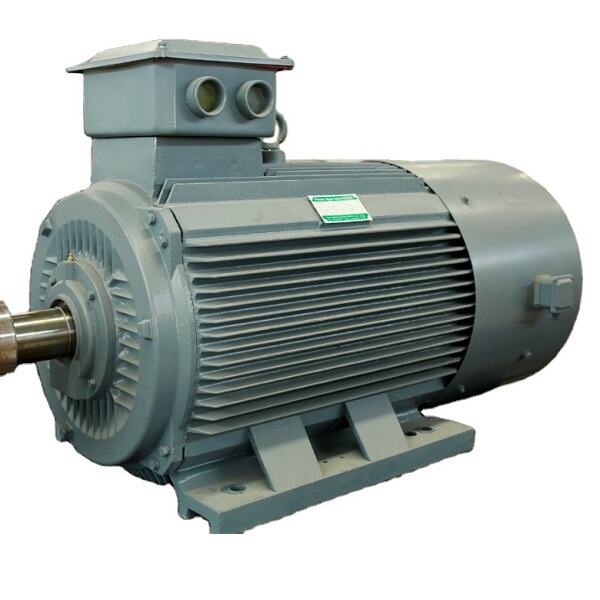
A credible rig is built around the customer's duty. ENNENG, a High Efficiency Motor Supplier, starts from the recorded load profile and reconstructs it with controllable sources and sinks, so the prototype meets the exact stresses it will later face.
A High Efficiency Motor Supplier such as ENNENG begins by reproducing torque and speed with a dynamometer or back-to-back rig through its recorded duty cycle, including start-stop events and overload peaks. Holding each step long enough for thermal equilibrium gave measured efficiency a quick sweep could not produce.
Heat decides the lifespan of a special-spec machine more than any efficiency figure. ENNENG, a High Efficiency Motor Supplier, models the cooling path and stresses it with reduced airflow, high ambient temperature, and supply voltage at the ends of the 110V to 690V range, confirming insulation and magnet grade stay safe and treating the 3kW, 5kW, and 10kW vertical-axis wind models as distinct thermal cases.
Simulation alone is not proof. ENNENG, a High Efficiency Motor Supplier, couples a digital twin with physical measurement so predictions and reality are reconciled before sign-off.
The digital twin forecasts temperature, loss, and vibration at each duty point while the rig records the actual values. ENNENG, a High Efficiency Motor Supplier, compares the two traces and tunes the model until they agree within a conservative margin, then trusts it to predict sites the rig cannot physically replicate.
Acceptance cannot rest on a single vendor's word. A High Efficiency Motor Supplier validates special-spec prototypes against IEC 60034-1 for general performance, IEC 60034-3 for turbine-type generators, and IEC 60034-30-1 for efficiency classification, with ISO 9001 governing the test process so results are repeatable and IEEE guidance informing the dynamometer procedure. Under IEC 60034-30-1 the same scale exposes why a permanent-magnet design beats a conventional one:
|
Basis: IEC 60034-30-1 |
Induction Motor |
Permanent-Magnet Motor (IE5) |
|
Rotor loss below rated |
Copper loss plus magnetizing current; efficiency off-load |
No rotor copper loss; fixed magnet field holds efficiency |
|
Part-load efficiency |
Bends down as load drops |
Stays flat across the duty band |
|
Efficiency class reach |
Typically IE3 to IE4 |
IE5 at the same frame size |
|
What the test proves |
Class only at the rated point |
Class across the simulated duty profile |
A High Efficiency Motor Supplier keeps every run logged against that documented baseline.
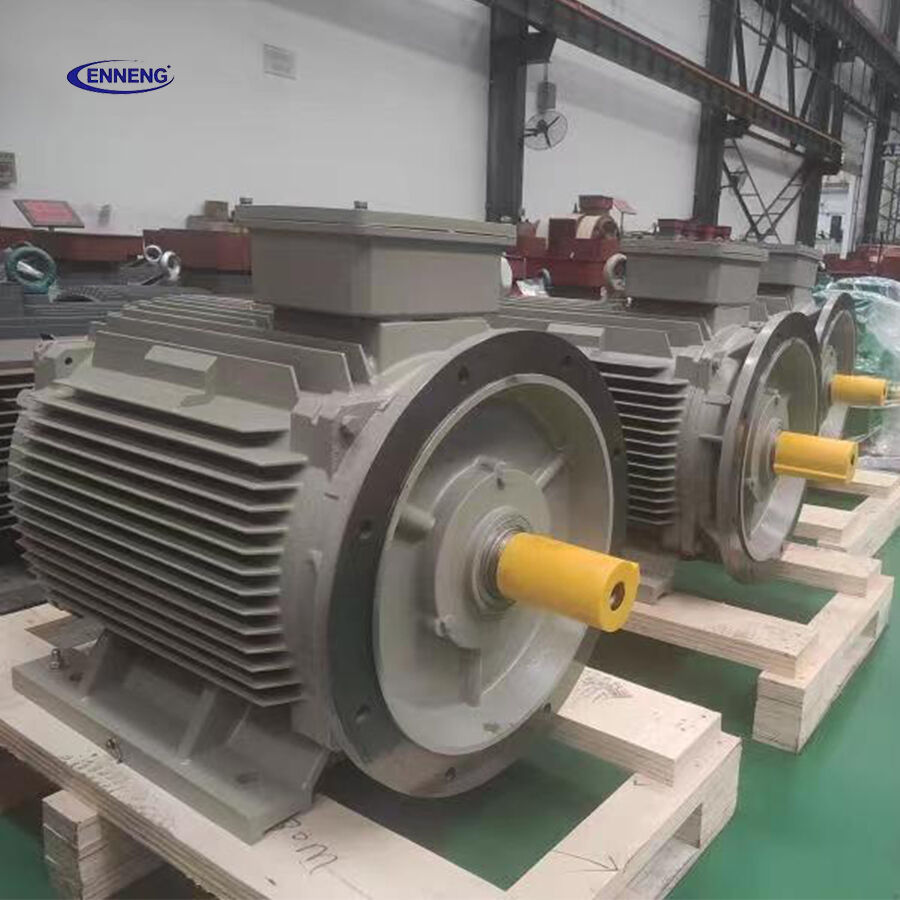
A validated prototype protects the customer long after the test ends, because the same data supports better specification and care. A High Efficiency Motor Supplier hands the duty-matched results to engineering so the volume units are built to the real job. ENNENG follows this discipline across OEM/ODM motor programs built under ISO 9001 and CE for customers in more than 20 countries.
Buyers should supply a measured duty profile, not just a nameplate, when ordering a custom machine. A High Efficiency Motor Supplier uses that profile to set the efficiency class, cooling method, and voltage inside the 110V to 690V and 5kW to 5MW envelope, and the field-simulation report becomes the reference both sides sign against.
After delivery, the same thresholds from the test guide maintenance. A High Efficiency Motor Supplier recommends logging winding temperature and vibration against the validated baseline and investigating any sustained drift early, and for generators in the 5kW to 5MW range, periodic checks of cooling airflow and terminal voltage keep the unit inside the tested envelope.
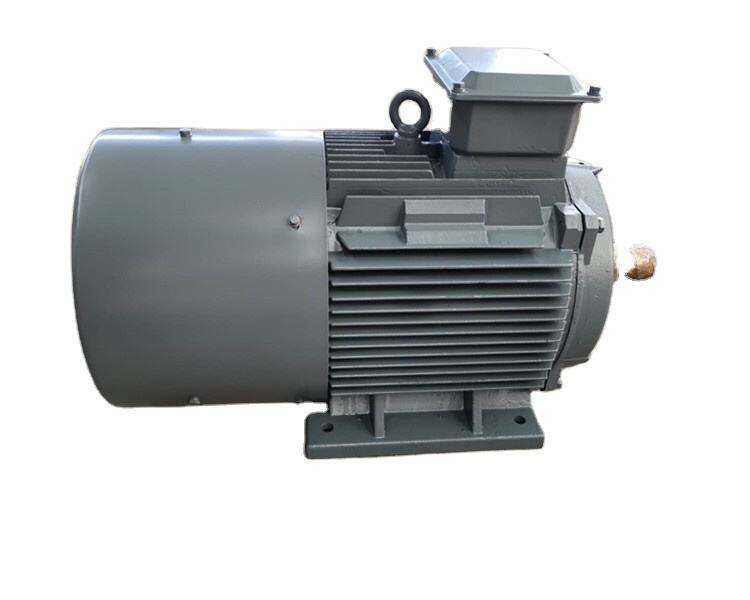
Talk to ENNENG About Your Special-Spec Prototype
A custom machine should be proven against your real duty before volume production, not assumed from a nameplate. ENNENG runs field-simulation campaigns and builds ENNENG Permanent Magnet Motor (PMSM) and generator prototypes under ISO 9001 and CE for customers in more than 20 countries.
Share the measured duty profile with ENNENG, and the engineering team returns a validated prototype plan with a test report you can sign against before any tooling commitment.
A: A High Efficiency Motor Supplier reconstructs the customer's real duty in the lab using a dynamometer or back-to-back rig. The prototype is driven through recorded speed, torque, and thermal swings rather than fixed points. This exposes part-load resonance, voltage sensitivity, and cooling limits that a nameplate test misses. The result is a validated design before volume production begins.
A: A digital twin predicts temperature, loss, and vibration at every duty point, while the rig records the actual values. A High Efficiency Motor Supplier compares the two traces and tunes the model until they agree within a conservative margin. Once aligned, the twin can predict sites the rig cannot physically reach. The closed loop turns a single test into a reusable, trustworthy design tool.
A: Special-spec prototypes are checked against IEC 60034-1 for general performance and IEC 60034-3 for turbine-type generators, with IEC 60034-30-1 defining efficiency class. ISO 9001 governs the test process and record-keeping so results are repeatable. IEEE guidance informs the dynamometer procedure. A High Efficiency Motor Supplier cites these documents so procurement can accept the validated machine without relying on vendor claims.
A: A vertical-axis wind-turbine PM generator often sits in the 1kW to 10kW band, with 3kW, 5kW, and 10kW as the main promoted models. The unified generator envelope spans 5kW to 5MW in power and 110V to 690V in voltage. A High Efficiency Motor Supplier selects the rating that matches the recovered energy and site conditions, then field-simulates it against the customer's measured duty profile.
A: Buyers should share a measured duty profile, not only a nameplate, when ordering a custom machine. A High Efficiency Motor Supplier uses that profile to set efficiency class, cooling method, and voltage within the 110V to 690V and 5kW to 5MW envelope. Matching the spec to actual run hours prevents oversizing. The field-simulation report becomes the signed reference for acceptance.
A: After delivery, the prototype's tested thresholds guide upkeep. A High Efficiency Motor Supplier recommends logging winding temperature and vibration against the validated baseline and investigating any sustained drift early. For generators in the 5kW to 5MW range, periodic checks of cooling airflow and terminal voltage keep the unit inside its tested envelope. The report acts as the acceptance benchmark for years of reliable operation.


 EN