
 EN

Automated automotive assembly plants operating continuous paint shop exhaust blowers 8,400 hours annually often face severe operational bottlenecks when unverified custom motors suffer early bearing failure or winding burnouts. Operating engineers relying on specialized drive hardware require absolute mechanical precision and thermal reliability across every production run. Selecting a certified high efficiency motor supplier ensures that custom drive systems withstand continuous industrial duty cycles through rigorous, stage-by-stage quality assurance protocols.
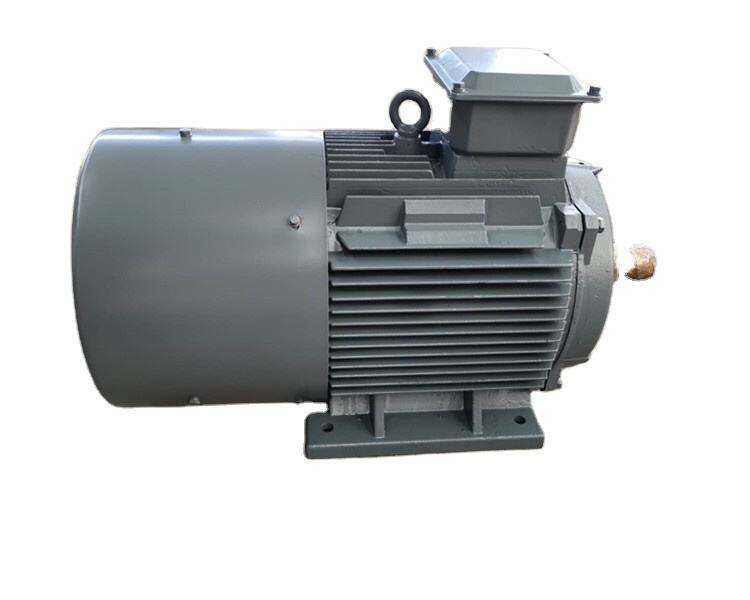
Substandard electromagnetic components and unverified stator insulation lead to catastrophic phase-to-ground faults, excessive harmonic heating, and expensive facility downtime. These manufacturing deficiencies create thermal hot spots and elevated vibration that rapidly compromise driven industrial machinery. ENNENG operates as a dedicated high efficiency motor supplier, engineering comprehensive quality verification frameworks that eliminate production defects and guarantee peak performance across mission-critical equipment.
Design Verification and Metallurgical Quality Assurance
Custom industrial drive engineering begins long before raw laminations reach the production floor. A qualified high efficiency motor supplier conducts exhaustive finite element electromagnetic modeling and thermal fluid simulations to validate torque density, magnetic saturation limits, and cooling flow paths. Every custom motor specification undergoes comprehensive peer engineering evaluations to match customer load curves and mounting boundaries. By scrutinizing electrical parameters early, a high efficiency motor supplier establishes a verified baseline that prevents costly redesigns and mechanical mismatches during manufacturing.
Incoming Magnetic Material and Electrical Steel Validation
Electromagnetic efficiency depends directly on the metallurgical consistency of incoming raw materials. A responsible high efficiency motor supplier inspects every batch of cold-rolled non-oriented silicon steel coils to verify magnetic permeability and core loss values per kilogram. Metallurgical testing laboratories within a premier high efficiency motor supplier verify lamination thickness tolerances down to micrometers, ensuring minimal eddy-current dissipation in the stator core.
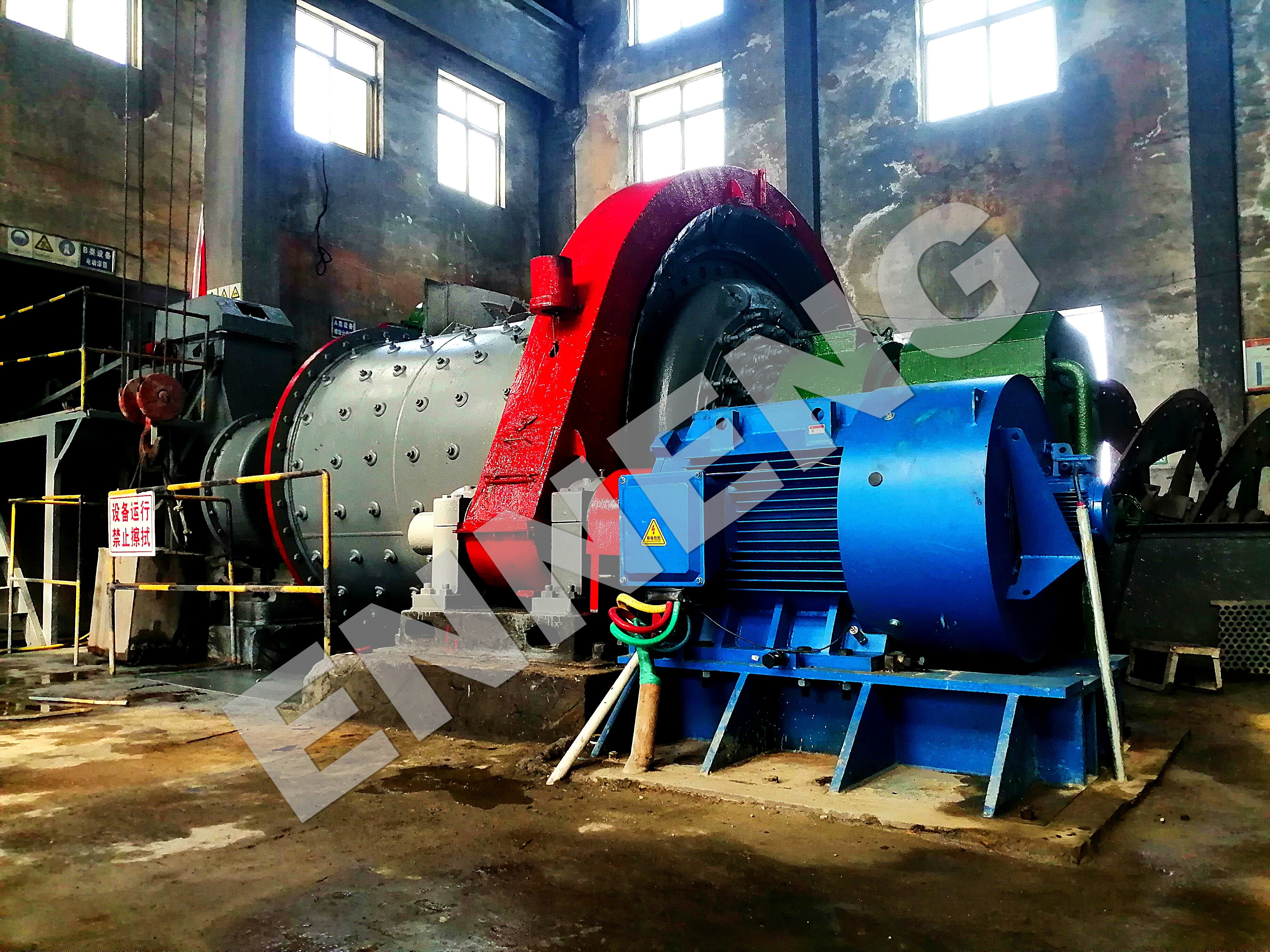
Suppliers reject raw coils exhibiting surface oxidation, burrs, or irregular grain structures before stamping operations begin. By enforcing strict incoming metallurgical inspections, a high efficiency motor supplier guarantees that laminated stator stacks maintain optimal magnetic flux paths. A dedicated high efficiency motor supplier protects customer investments by auditing supplier raw material certifications against international metallurgical benchmarks.
Rotor Permanent Magnet Coercivity and Thermal Flux Testing
Integrating high-performance rare-earth magnetic alloys requires rigorous quality control protocols. A premier high efficiency motor supplier tests incoming neodymium-iron-boron magnetic segments for remanence, coercivity, and maximum energy product using specialized permeameters. Environmental test chambers operated by a high efficiency motor supplier expose sample permanent magnets to elevated thermal thresholds up to 180°C to verify thermal demagnetization resistance.
Surface coating adhesion represents another vital checkpoint for a high efficiency motor supplier, as electroplated nickel or epoxy barrier layers must endure corrosive plant atmospheres. A quality-focused high efficiency motor supplier rejects magnetic lots displaying micro-cracks or coating porosity. Enforcing precise magnetic grading allows a high efficiency motor supplier to ensure that rotor assemblies generate consistent air-gap flux density across prolonged production campaigns.
Precision In-Process Assembly and Insulation Integrity Controls
Converting validated materials into finished machinery demands stringent in-process manufacturing oversight. A reliable high efficiency motor supplier monitors every production phase with calibrated optical metrology, automated coil winding tension controllers, and serialized assembly tracking.
Stator Winding Automation and Vacuum Pressure Impregnation Verification
Stator manufacturing requires automated winding machines to maintain exact turn counts, slot fill factors, and uniform copper wire tension. A specialized high efficiency motor supplier conducts intermediate surge comparison tests and DC resistance measurements between each phase prior to stator impregnation. Following winding insertion, a high efficiency motor supplier utilizes automated vacuum pressure impregnation systems to saturate the entire stator assembly with solventless Class H resin.
This process eliminates internal micro-voids, locks winding conductors against electrodynamic forces, and provides complete moisture protection. A leading high efficiency motor supplier monitors resin viscosity, temperature cycles, and autoclave pressure profiles in real time. Through disciplined impregnation standards, a high efficiency motor supplier ensures the dielectric integrity required for inverter-fed duty across harsh industrial installations.
Dynamic Rotor Balancing and Mechanical Air-Gap Tolerance Precision
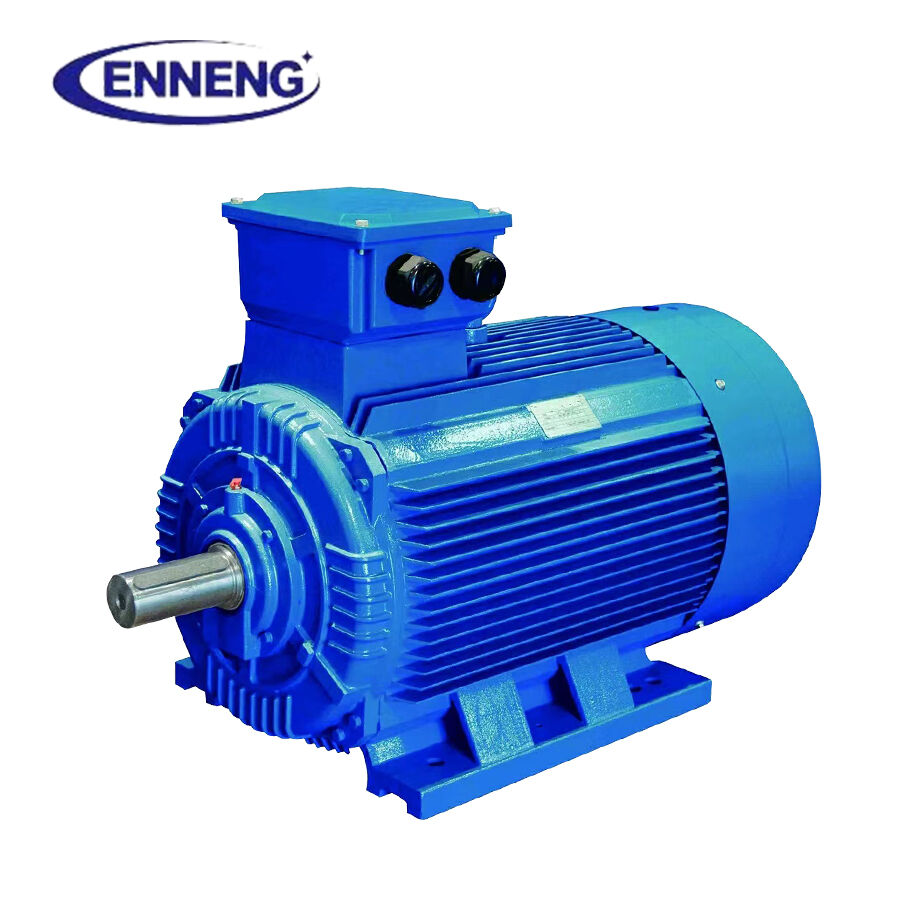
Mechanical alignment and rotating balance dictate long-term bearing health and operational acoustic levels. A skilled high efficiency motor supplier balances finished permanent magnet rotor assemblies on digital dynamic balancing machines across multiple planes. Balancing technicians at a high efficiency motor supplier eliminate mechanical runout to prevent destructive shaft whirling and centrifugal bearing overload.
Precise assembly fixtures operated by a high efficiency motor supplier position the magnetized rotor concentric within the stator bore, maintaining uniform electromagnetic air gaps. Quality control technicians at a high efficiency motor supplier measure radial air-gap uniformity around the complete 360-degree circumference using precision non-magnetic feeler gauges. Maintaining tight dimensional tolerances enables a high efficiency motor supplier to optimize torque output while preventing unbalanced magnetic pull.
|
Quality Control Phase |
Testing Methodology |
ENNENG Acceptance Threshold |
|
Raw Lamination Steel |
Epstein frame core loss testing |
Ultra-low core loss (<2.5 W/kg at 1.5T) |
|
Permanent Magnet Alloys |
High-temperature thermal demagnetization |
Zero irreversible loss up to 180°C |
|
Unified Voltage Scope |
Dielectric withstand & surge testing |
Unified 110V to 690V industrial rating |
|
Power Rating Scope |
Dynamometer full-load performance |
Unified 5kW to 5MW industrial capacity |
|
Stator Winding Insulation |
Vacuum pressure impregnation analysis |
100% void-free Class H resin saturation |
|
Dynamic Rotor Balancing |
Multi-plane balance correction |
ISO 1940 Grade G1.0 or G2.5 precision |
|
Frame Ingress Protection |
Enclosure seal and hydrostatic tests |
Complete IP55, IP56, or IP66 compliance |
Advanced manufacturing capabilities at ENNENG motor products cover unified voltage ratings from 110V to 690V and power ranges spanning 5kW to 5MW. For remote off-grid monitoring and industrial renewable installations, ENNENG also manufactures vertical axis wind turbine systems rated from 1kW to 10kW, emphasizing 3kW, 5kW, and 10kW platforms to ensure reliable utility generation.
International Testing Standards, Factory Acceptance, and Asset Maintenance
Verifying performance parameters demands full compliance with established global electrical and manufacturing standards. A certified high efficiency motor supplier executes type tests and routine production tests strictly adhering to IEC 60034-1 rating requirements and IEC 60034-2-1 efficiency measurement methodologies. Electrical safety evaluations conducted by a high efficiency motor supplier comply with NFPA 70 wiring mandates and OSHA 1910 Subpart S electrical safety regulations.
Quality management systems maintained by a high efficiency motor supplier operate under rigorous ISO 9001 certified auditing controls. Every custom unit undergoes full-load dynamometer testing where a high efficiency motor supplier records thermal heat runs, efficiency points, power factor curves, and harmonic distortion profiles. Customers receive comprehensive factory acceptance test certificates verifying that the machine meets every contracted parameter before palletizing.
Routine field reliability requires pairing custom machinery with proactive maintenance protocols. Technicians should execute regular vibration spectrum monitoring adhering to ISO 10816 standards to catch early bearing fatigue or coupling misalignment. Electrical teams should measure winding insulation resistance and polarization index values annually in accordance with IEEE 43 guidelines. Keeping cooling air passages and cast-iron frame fins free of heavy industrial dust ensures optimal convective heat dissipation throughout decades of operation.
Strategic Consultation and Custom Engineering Support
Partnering with an experienced high efficiency motor supplier ensures that specialized industrial equipment delivers predictable efficiency, continuous uptime, and reduced operational expenditures. Direct engineering collaboration enables industrial facilities to tailor motor electrical characteristics, shaft configurations, and cooling geometries to unique operating requirements. A dedicated high efficiency motor supplier provides complete application engineering, structural vibration assessments, and lifecycle economic modeling. Contact technical specialists today to discuss custom drive requirements and initiate quality-verified production planning.
- WhatsApp: +86 18562780228
- E-Mail: [email protected]
- Phone: +86 532 66000559
FAQ
Q: How does a high efficiency motor supplier verify permanent magnet stability before final assembly?
A: A high efficiency motor supplier tests sample permanent magnets in heated fluxmeter fixtures to measure magnetic coercivity and residual induction across temperatures exceeding 150°C. By evaluating thermal demagnetization curves against strict design limits, a high efficiency motor supplier ensures magnetic domains remain completely stable during continuous, heavy-load industrial operation.
Q: What insulation tests does a high efficiency motor supplier perform on inverter-duty windings?
A: A high efficiency motor supplier performs high-voltage dielectric withstand tests, inter-turn surge comparison tests, and partial discharge evaluations on completed stator windings. These comprehensive electrical stress assessments verify that vacuum-pressure-impregnated insulation withstands continuous high-frequency pulse-width-modulated voltage spikes without dielectric breakdown or premature insulation degradation.
Q: Why is full-load dynamometer testing essential for a high efficiency motor supplier?
A: Dynamometer testing allows a high efficiency motor supplier to simulate true industrial operating loads, recording precise electrical efficiency, shaft torque, operating temperature rise, and power-factor metrics under controlled conditions. This empirical documentation confirms that custom motor designs fulfill contractual performance guarantees prior to factory release.

