
 EN

How High Efficiency Motor Supplier Conducts Sample Verification Tests for Special Custom-Motor Technical Demands
For a custom motor, a catalog value is only a starting point. The real question is whether the motor will meet the agreed duty cycle, interface limits, and thermal conditions after it is built. A capable High Efficiency Motor Supplier treats the pre-production sample as a controlled engineering checkpoint, not as a display unit. That approach gives the buyer evidence before the design is frozen and before production materials are committed.
From an application-engineering perspective, the most useful sample program starts with the load profile rather than a generic efficiency claim. A pump, fan, traction drive, or compact machine may operate far below rated load for much of its life. The verification plan should therefore reflect the actual operating window, including starts, stops, overload events, ambient conditions, and the mechanical system connected to the shaft.
Why a Sample Must Represent the Intended Motor
A custom sample cannot verify a final design if critical elements are substituted without being documented. Before testing begins, the High Efficiency Motor Supplier and buyer should lock a sample specification sheet: motor topology, rated voltage and frequency or controller supply, power and speed targets, winding data, shaft and flange drawings, feedback devices, cooling method, protection needs, and acceptance tolerances.
This is especially important in Custom PM Motor Design. Magnet grade, rotor geometry, winding turns, controller settings, and cooling details interact. Evaluating one component in isolation without considering the complete drive system can produce a technically correct sample that still performs poorly in the installed machine. The goal is not to prove that every measured value is ideal; it is to prove that the configuration is traceable and relevant to the use case.
Step 1: Turn the Technical Request into a Test Matrix
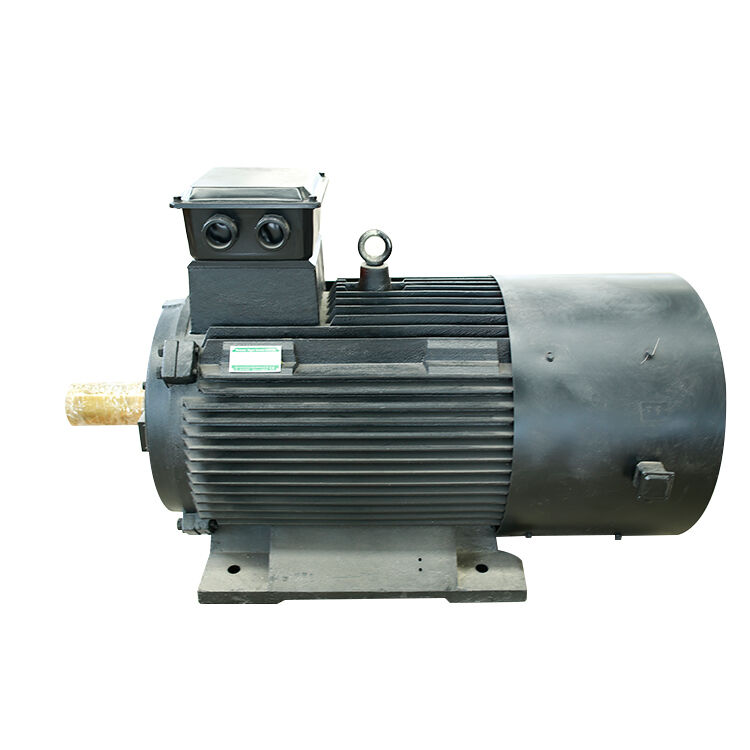
Good verification begins with a matrix that converts each special requirement into a measurable check. The matrix should identify the method, instrument or fixture, condition, acceptance criterion, owner, and record to retain. It also separates routine checks from application-specific checks so neither side assumes the other has covered them.
| Requirement area | Sample verification question | Typical evidence |
|---|---|---|
| Electrical interface | Does the sample match the specified winding, resistance, insulation arrangement, and connection method? | Winding record, resistance readings, insulation and dielectric test record where applicable |
| Performance window | Does speed, torque, current, and input power behave as expected at agreed operating points? | Controlled load-test data and test conditions |
| Thermal behavior | Does temperature stabilize within the agreed limit under the relevant load and cooling condition? | Temperature-rise record with sensor locations and ambient conditions |
| Mechanical fit | Do shaft, mounting, runout, vibration, and noise characteristics suit the assembly? | Dimensional inspection and functional fixture observations |
| System integration | Does the motor work with the planned controller, load, feedback, and duty cycle? | Integration trial, parameter record, and exception log |
A High Efficiency Motor Supplier should invite the buyer to review this matrix before the sample is tested. The reason efficiency behaves as expected is not a slogan; it depends on losses, load point, supply conditions, and the measurement method. IEC 60034-2-1 is commonly referenced for methods that determine losses and efficiency in rotating electrical machines, but the applicable method and acceptance criteria should be agreed for the particular motor and application.
Step 2: Confirm Build Traceability Before Power Is Applied
Before a powered test, the supplier should inspect the sample against the approved drawing and bill of materials. Key items include lamination stack dimensions, magnet installation, winding connection, bearing arrangement, shaft geometry, encoder or sensor position, terminal configuration, and cooling path. Photographs, serial identification, and revision-controlled drawings make later comparisons meaningful.
This step is easy to underestimate. Once you start accounting for ambient temperature and installation constraints, a nameplate rating can look quite different from the performance a customer should plan for on site. If the sample uses a different fan, housing, winding wire, or magnet material than the proposed production motor, the test report should say so plainly and explain whether another sample or a limited verification is needed.
Step 3: Run No-Load, Load, and Duty-Cycle Tests
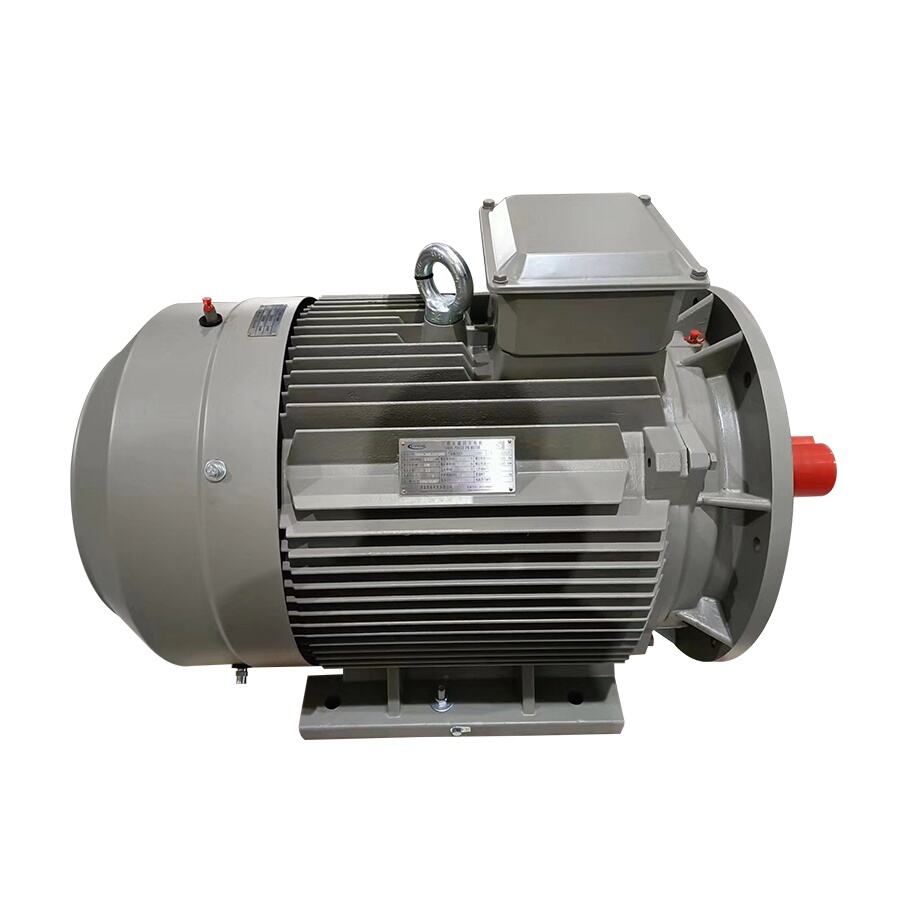
The next phase checks how the sample behaves electrically and mechanically. At minimum, the test sequence normally establishes a safe baseline through no-load operation, verifies rotation and feedback direction, and then records behavior at the agreed load points. For a variable-duty application, the planned partial-load points matter as much as the rated point. A High Efficiency Motor Supplier should not present a single favorable operating point as though it represents the entire duty cycle.
The test record should state the supply source, controller parameters, load device, torque and speed measurement approach, ambient conditions, stabilization period, and calibration status where available. That context allows engineers to distinguish a repeatable result from an isolated demonstration. When a buyer needs a special acceleration profile, intermittent overload, low-speed torque, or back-EMF limit, it belongs in this same controlled sequence.
Step 4: Evaluate Thermal Margin and Protection Functions
Thermal verification is where many custom requests become practical engineering decisions. The sample should be run at the agreed critical condition long enough to observe stabilization, with temperature measured at defined locations. The relevant limit depends on the insulation system, cooling arrangement, ambient environment, and duty cycle; it should not be inferred from a generic motor category.
Protection and integration functions deserve a separate check. Depending on the design, these may include thermal sensor response, resolver or encoder signals, phase identification, braking behavior, ingress-protection features, and controller fault handling. If a planned requirement cannot be reproduced on the sample fixture, the High Efficiency Motor Supplier should log it as an open item rather than declaring blanket compliance.
Step 5: Review Exceptions, Then Freeze the Production Baseline
Sample verification has value only if the findings change the production decision. At the review, classify each item as accepted, accepted with a controlled deviation, pending retest, or requiring design change. Compare the tested sample configuration against the proposed production configuration one line at a time. This protects both parties from the common mistake of approving a result while quietly changing the condition that produced it.
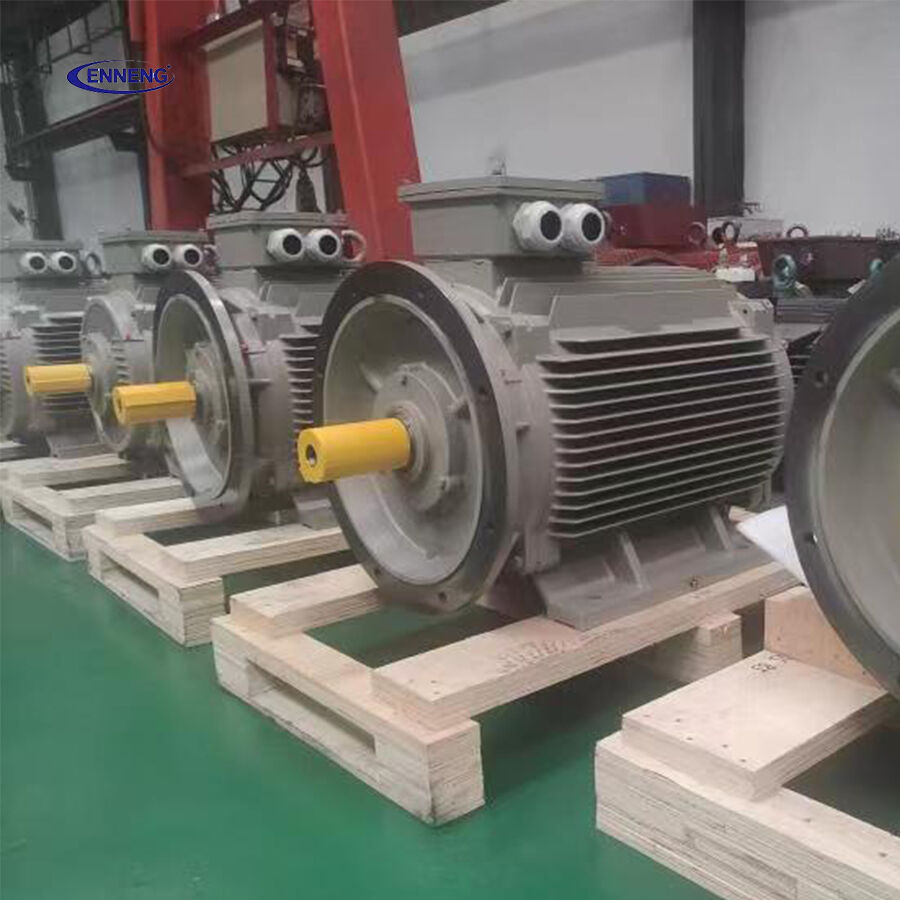
For Custom PM Motor Design, a well-run review also clarifies what will be repeated in production: incoming material checks, winding resistance verification, electrical safety checks, functional rotation checks, and any agreed end-of-line performance screening. Sample-level tests can be deeper than production tests, but the production plan must still preserve the characteristics that made the sample acceptable.
Questions Buyers Should Ask Before Approving a Sample
- Which drawing revision, material choices, and controller parameters were used for this sample?
- Which operating points and ambient conditions were tested, and which were not?
- How were torque, speed, temperature, and electrical input measured?
- What acceptance criteria were agreed before the test, and what deviations appeared?
- Which sample findings will be carried into the production control plan?
- What conditions would require a retest after a design, material, or supplier change?
A Practical Standard for Supplier Communication
The most useful outcome is not an idealized-looking report; it is a shared, auditable decision. A High Efficiency Motor Supplier that provides the controlled sample specification, test matrix, raw observations, exceptions, and production carryover plan makes technical review faster for both engineering and procurement teams. There is no universal test package: the right scope depends on the consequence of failure, the application duty, and the special requirement being validated.
For projects involving Custom PM Motor Design, ask for verification early enough that the results can still shape the winding, cooling, mechanics, or control settings. Doing so turns the sample from a late-stage formality into evidence for a more dependable production release.
The ENNENG Customisation Advantage
Supported by our elite R&D team consisting of engineers from the National Rare Earth Permanent Magnet Engineering Centre, and backed by dozens of patents, we customise high-voltage (6kV/10kV) and low-voltage (380V/660V/1140V) solutions to match your existing footprint. From water treatment facilities and oil wells to explosion-proof mining environments, we deliver optimal performance where general-purpose motors fail .
If you are evaluating commercial permanent magnet motors for sale and need an engineered drive solution that guarantees efficiency and longevity, ENNENG is your trusted partner.Contact ENNENG Today.Speak to our technical engineering team to receive a customised drive proposal.
- WhatsApp: +86 18562780228
- E-Mail: [email protected]
- Phone: +86 532 66000559

