
 EN

For an overseas buyer, a high-efficiency motor is not a finished decision when the purchase order is released. It is the start of a working relationship: drawings need to be checked, operating assumptions need to be challenged, installation questions arrive across time zones, and the maintenance team needs clear answers long after shipment. That is why a sound way to assess a High Efficiency Motor Supplier is not to compare a nameplate value alone. It is to examine whether the supplier can keep technical communication stable from application review through operation.
This matters because motor systems have a large operating footprint. The IEA 4E Electric Motor Systems Platform reported that electric motor systems represented 53% of global electricity consumption in 2023, with a 72% share in industry. For a global industrial customer, an efficiency decision therefore has to connect to duty cycle, control method, documentation, and service response—not simply an attractive figure on a quotation.
Why technical support is part of motor efficiency
An IE4/IE5 Efficiency Motor can be a sensible option when the application, load profile, and controls support the choice. More precisely, the class on a datasheet does not by itself predict site-level savings. Ambient temperature, altitude, voltage quality, driven equipment, and partial-load operation all influence the result. A reliable High Efficiency Motor Supplier starts with those boundaries instead of treating the highest available class as the answer to every project.
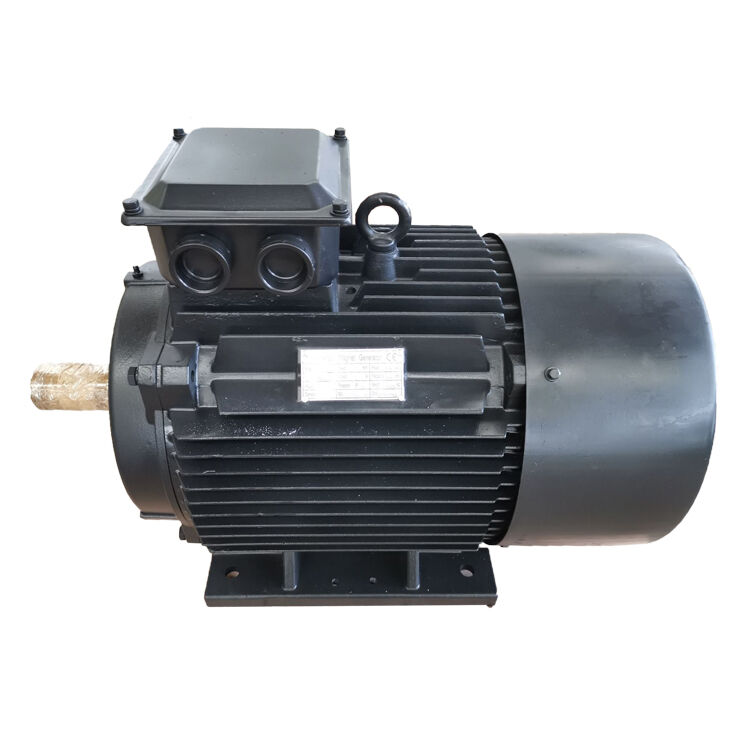
IEC 60034-30-1 provides the recognized framework for IE efficiency classifications, and regional rules may place additional requirements on particular motor ranges. Global customers should ask their supplier to identify the applicable standard, intended operating conditions, and documents needed for the destination market. This prevents a late-stage mismatch between a specified IE4/IE5 Efficiency Motor, the system design, and local compliance expectations.
The support chain global buyers should expect
1. Application review before the quotation is frozen
Stable support begins when the supplier asks useful questions: What equipment will the motor drive? Is the load constant, variable, or cyclic? Will a variable-frequency drive be used? What are the local power conditions and ambient limits? A technically capable High Efficiency Motor Supplier turns those answers into an application record rather than relying only on a requested power rating.
This review is especially valuable for pumps, fans, compressors, and other variable-duty equipment. The shift that changes how a buyer specifies a motor is realizing that peak efficiency at rated load matters only if the duty cycle actually reaches that point. A supplier should help the buyer distinguish a laboratory rating from a relevant operating estimate without promising energy savings that have not been validated for the site.
2. Clear, version-controlled technical documents
For international projects, confusion often comes from small differences between a drawing revision, a wiring diagram, and the motor delivered. A dependable High Efficiency Motor Supplier should establish a single technical contact, confirm document versions, and make the approval path visible before production. The customer should be able to identify the agreed model designation, mounting arrangement, cooling method, voltage/frequency, terminal configuration, and required test or inspection records.
That discipline is not administrative overhead. It gives procurement, engineering, and operations teams the same reference point when a question appears months later. For custom orders, it also reduces the risk that an unapproved change is discovered only during commissioning.
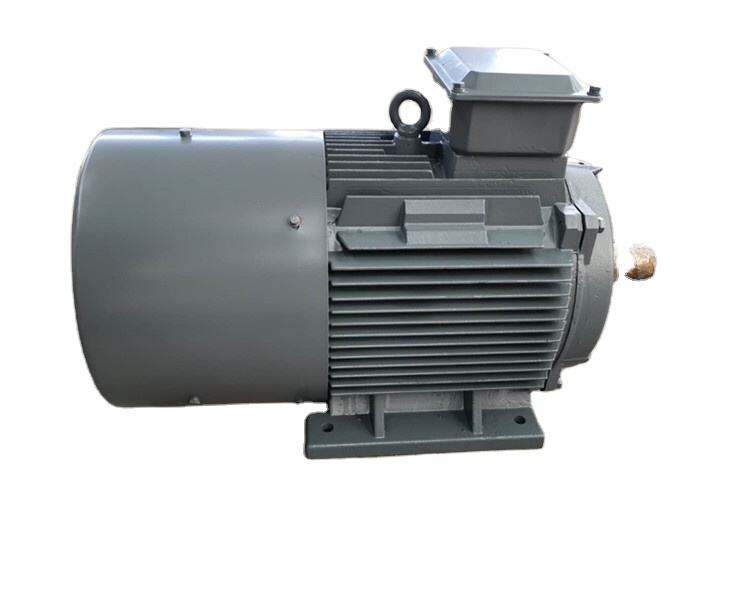
3. Practical commissioning assistance
Support becomes real when equipment reaches the site. Global customers benefit when a High Efficiency Motor Supplier can provide a concise commissioning checklist that covers handling, insulation checks, alignment, grounding, rotation direction, VFD parameter coordination, and initial observation points. The checklist should identify when local qualified personnel must intervene; remote technical guidance is useful, but it is not a substitute for safe site procedures.
Good commissioning communication is also conditional. If ambient conditions stay inside the confirmed application range, the planned performance basis may be reasonable. If the site is hotter, higher, dustier, or electrically less stable than expected, the supplier and customer should revisit derating and protection assumptions before treating the nameplate rating as a field result.
4. A repeatable path for troubleshooting
When a motor alarm or abnormal temperature occurs, response speed matters, but response structure matters too. The most useful support process asks for the facts needed to isolate the issue: model and serial information, wiring and drive settings, load behavior, ambient conditions, photos or measurements, and the sequence of events. This gives the High Efficiency Motor Supplier a basis for technical analysis rather than encouraging guesswork over email.
Buyers should ask in advance how urgent cases are triaged, which communication channels are used, what information is required for a warranty review, and how corrective actions are documented. A clear escalation route makes support more stable across continents and shifts.
How ENNENG frames support for global industrial customers
ENNENG is a Qingdao-based manufacturer focused on permanent magnet motors and new-energy generation equipment for customers in Asia, Europe, and North America. Its site information identifies PMSM motors, generators, VFDs, OEM/ODM services, ISO 9001 and CE certification, and IE5-oriented industrial solutions. Those stated capabilities should be treated as a starting point for a project discussion, not as a replacement for application-specific validation.
For buyers evaluating a High Efficiency Motor Supplier, the practical value is a focused conversation between design, manufacturing, and the customer’s operating team. In-house motor design and winding capability can make application-specific communication more direct, while the final specification must still be confirmed against the actual duty cycle, control system, destination requirements, and agreed documents.
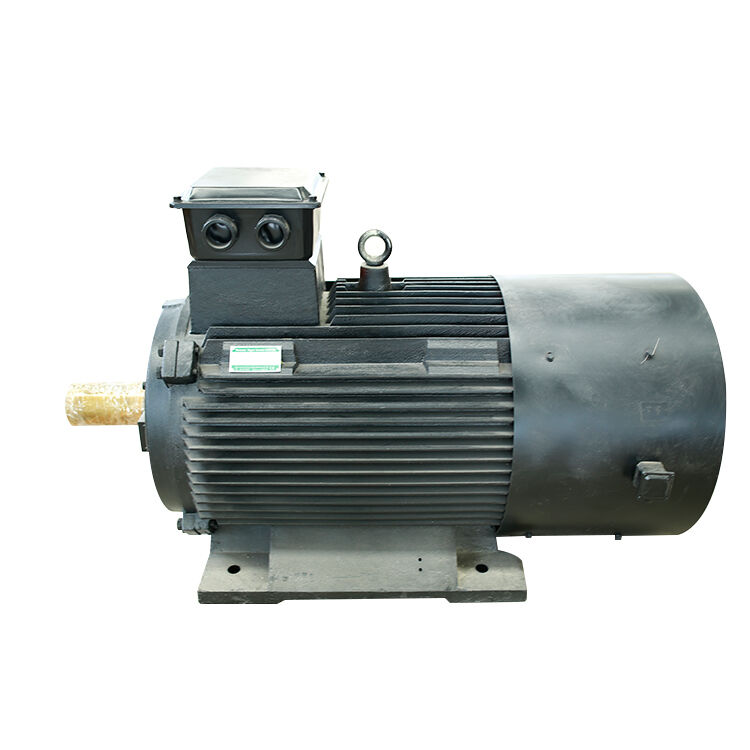
A pre-order checklist for stable support
- Define the driven load, duty cycle, environment, and control method.
- Confirm whether an IE4/IE5 Efficiency Motor is appropriate for the application and destination-market requirements.
- Request a documented specification review, including all critical mechanical and electrical interfaces.
- Agree on document versions, approval contacts, response channels, and escalation responsibilities.
- Ask for commissioning guidance and the information required for future troubleshooting.
- Clarify how warranty questions, replacement parts, and technical changes will be handled after delivery.
Choose a partner, not only an efficiency class
Efficiency class remains important, and an IE4/IE5 Efficiency Motor may be an appropriate part of a lifecycle energy strategy. Yet global industrial customers gain more confidence when the supplier can connect efficiency to the application and remain technically reachable after the order. Evaluate the support workflow with the same care used for electrical and mechanical specifications. That approach helps turn a motor purchase into a more predictable operating decision.
If you are evaluating commercial permanent magnet motors for sale and need an engineered drive solution that guarantees efficiency and longevity, ENNENG is your trusted partner.Contact ENNENG Today.Speak to our technical engineering team to receive a customised drive proposal.
- WhatsApp: +86 18562780228
- E-Mail: [email protected]
- Phone: +86 532 66000559

