
how-mining-industrial-motor-improves-running-stability-under-largedust-underground-mine-environment, how-mining-industrial-motor-improves-running-stability-under-largedust-underground-mine-environment, /blog
EN
2026/10/15
Deep inside subterranean coal seams, hard-rock metallic ore drifts, and aggregate crushing chambers, dense clouds of abrasive silica dust, conductive mineral particulates, and high ambient humidity continuously assault armored face conveyors, slurry dewatering pumps, and auxiliary ventilation fans. Underground maintenance crews frequently battle burned-out stator windings, grounded terminal boxes, and seized rotor bearings when thick mineral dust cakes onto motor cooling fins and penetrates worn shaft seals. In confined underground haulage tunnels, a single motor failure halts ore extraction tonnage and creates severe ventilation and occupational safety hazards.
Conventional general-purpose industrial motors rely on high-velocity external fans that inadvertently draw airborne rock and coal dust directly across housing ribs, forming a hardened thermal insulating crust that traps internal heat. Combined with the high rotor copper losses of legacy asynchronous designs and standard single-lip shaft seals, this dust buildup triggers rapid thermal runaway and mechanical bearing lockups. Deploying a purpose-engineered Mining Industrial Motor from ENNENG neutralizes particulate ingress and thermal blanketing, ensuring uninterrupted running stability across the harshest underground mining environments.
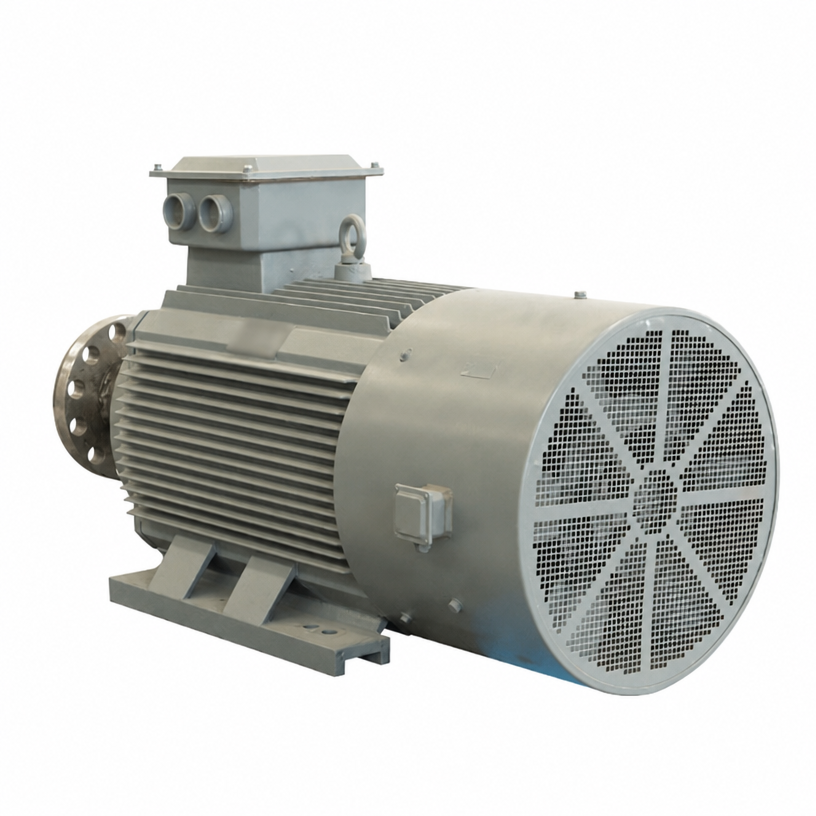
During continuous longwall shearing, rock bolting, and primary jaw crushing, airborne dust concentrations in underground mines reach extreme levels. When fine mineral dust settles onto the exterior cast-iron frame of a standard motor and mixes with ambient condensation or hydraulic oil mist, it solidifies into a dense insulating layer. Because traditional asynchronous induction motors generate massive internal heat from induced rotor bar currents, blocking surface heat transfer across the frame ribs causes internal stator winding temperatures to spike rapidly. According to electrical insulation physics, every 10°C rise above rated thermal limits cuts winding insulation life in half, leading to brittle varnish, turn-to-turn short circuits, and explosive ground faults.
The core stability advantage of an ENNENG Mining Industrial Motor begins inside its electromagnetic circuit and extends to its heavy-duty mechanical enclosure:
Underground mining conveyors and crushers frequently stop under full rock loads, requiring immense breakaway torque to restart. An ENNENG Mining Industrial Motor delivers high starting and overload torque smoothly from zero RPM without needing maintenance-heavy fluid couplings. Engineered across a unified voltage range of 110V–690V to accommodate diverse underground transformer substations, the Mining Industrial Motor operates with a near-unity power factor that lowers stator line current—minimizing I2R heating and voltage drop across long subterranean trailing cables. Beyond underground propulsion drives, ENNENG supports comprehensive mine site infrastructure with industrial generators rated across a unified 5kW–5MW range (110V–690V) and vertical axis wind turbines spanning 1kW–10kW (focusing on 3kW, 5kW, and 10kW models) for surface mine ventilation monitoring and remote camp microgrids.
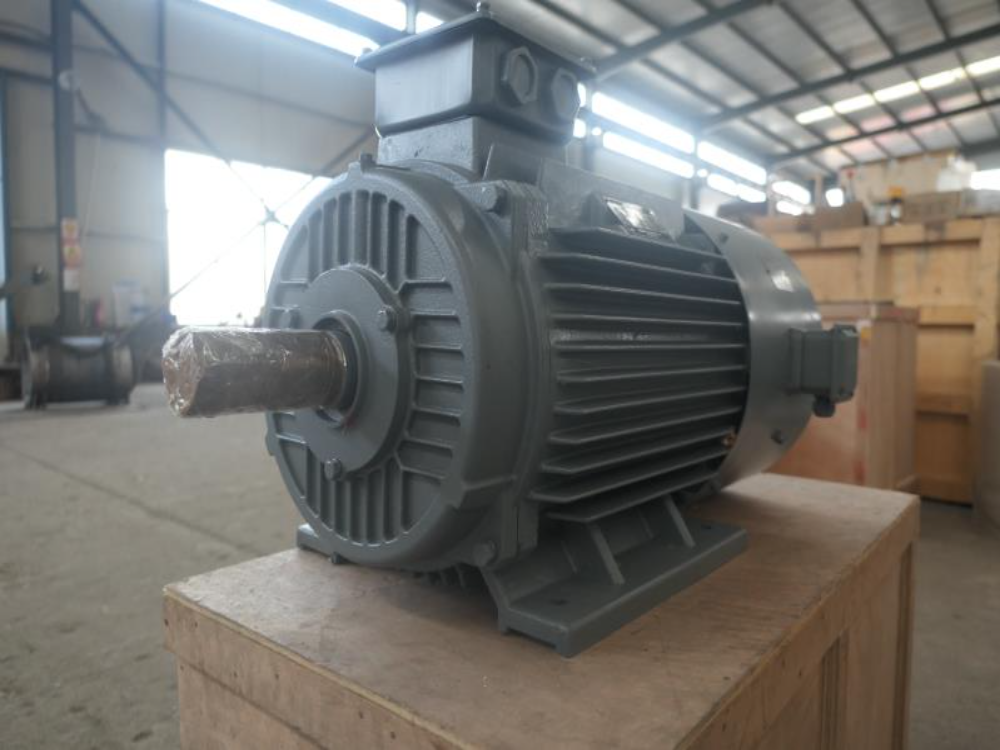
Electrical rotating machinery operating in dust-laden mining atmospheres must adhere to uncompromising international safety and enclosure standards. ENNENG Mining Industrial Motor housings are constructed and verified in strict compliance with IEC 60034-5 and NEMA MG 1 Part 5 enclosure classifications, achieving IP65 and IP66 dust-tight protection levels that completely prevent particulate ingress under vacuum test conditions. Additionally, maintaining low external frame surface temperatures directly supports compliance with NFPA 70 (National Electrical Code) Class II hazardous location guidelines and ISO 80079-36 explosive dust atmosphere standards, ensuring that accumulated coal or sulfide dust layers never approach smoldering ignition temperatures.
In subterranean haulage drifts and deep-shaft dewatering stations, abrasive rock slurry and airborne quartz dust rapidly destroy standard open-drip-proof or basic fan-cooled motors. Installing a totally enclosed ENNENG Mining Industrial Motor prevents moisture and conductive dust from tracking across terminal lugs while maintaining continuous rotational stability under shock loading.
Maximizing motor longevity and haulage uptime in high-dust underground mines requires disciplined engineering selection and maintenance routines:
Underground mine drifts impose severe space constraints, non-standard mounting footprints, and specialized transformer voltages. ENNENG custom-engineers its Mining Industrial Motor series with compact high-power-density frames, reinforced cast-iron terminal boxes, custom shaft extensions, and tailored voltage windings across the unified 110V–690V spectrum to bolt directly onto existing mining machinery.
Contact ENNENG Today.
Consult the ENNENG mining engineering team to request technical drawings and a customised Mining Industrial Motor quotation for your subterranean equipment.
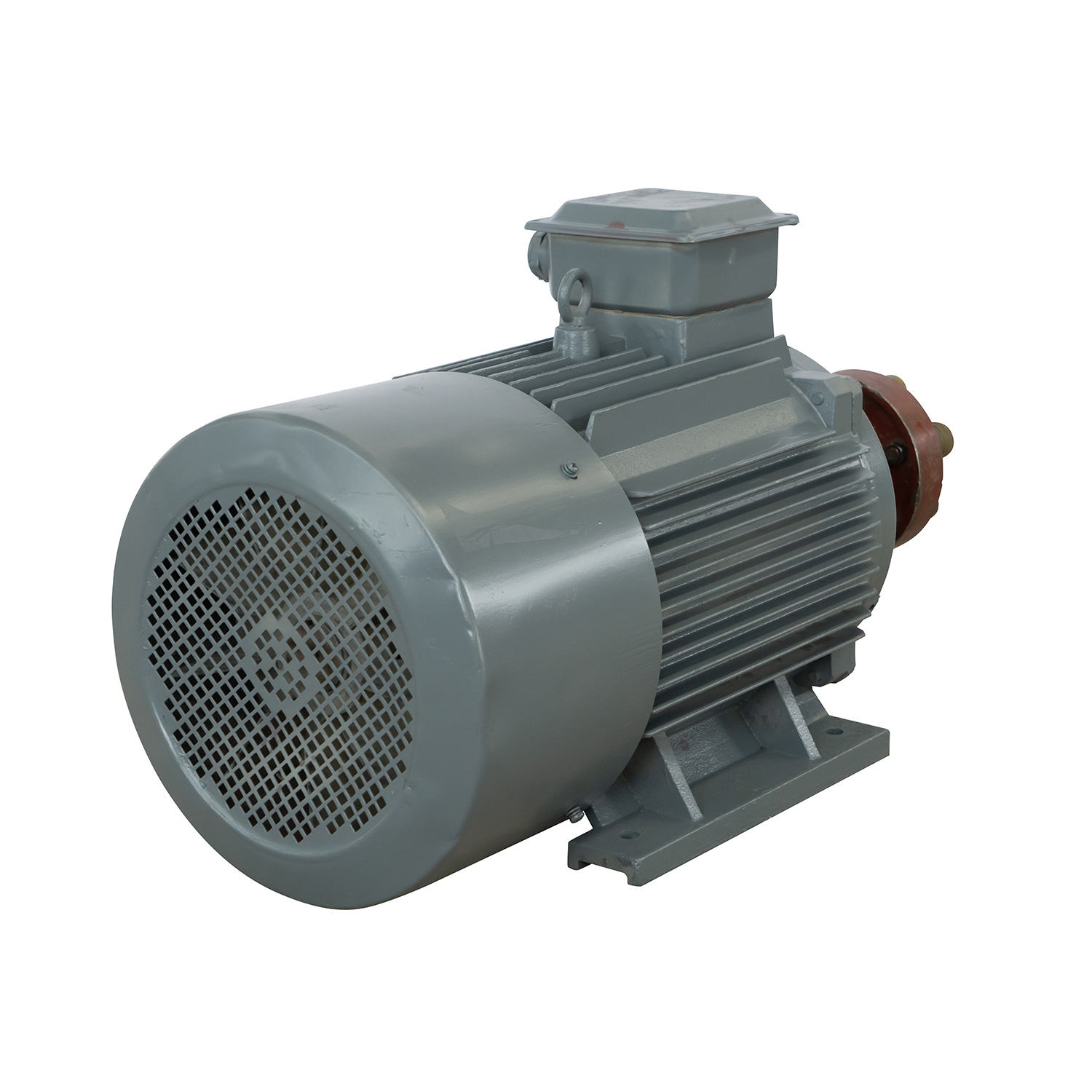
A: Standard lip seals wear out rapidly when exposed to abrasive silica and rock dust, allowing grit to contaminate bearing grease. An ENNENG Mining Industrial Motor utilizes IP65/IP66 rated cast-iron enclosures equipped with multi-stage labyrinth seals, axial flingers, and purgeable grease chambers. This mechanical barrier blocks micron-level dust ingress and allows maintenance crews to flush contaminants outward during routine lubrication.
A: Thick layers of coal or mineral dust caked onto a motor casing act as thermal insulation, blocking convective heat dissipation into the mine air. Because an ENNENG Mining Industrial Motor eliminates rotor copper losses, it generates far less internal heat than conventional induction motors. This wide thermal safety margin prevents stator insulation breakdown and keeps surface temperatures safely below dust ignition limits.
A: ENNENG manufactures its Mining Industrial Motor series and rotating electrical equipment across a unified voltage range of 110V–690V to match underground distribution transformers. For surface processing plants and remote mine power stations, ENNENG also supplies permanent magnet generators across a unified 5kW–5MW power range and vertical axis wind turbines from 1kW–10kW (focusing on 3kW, 5kW, and 10kW models).

 EN