
 EN

Remote mining shafts at Shandong Gold Mine, offshore and coastal petrochemical stations at Sinopec, and high-load rubber processing lines at Linglong Tire frequently rely on islanded power architectures where utility grid backup is unavailable. In standalone industrial micro-grid projects, forcing an uncoordinated generator to chase rapid load transients or draining battery banks during prolonged generation deficits creates severe hidden dangers: DC/AC bus voltage collapse, deep-discharge battery degradation, rotor excitation overheating, and intermediate gearbox failures.
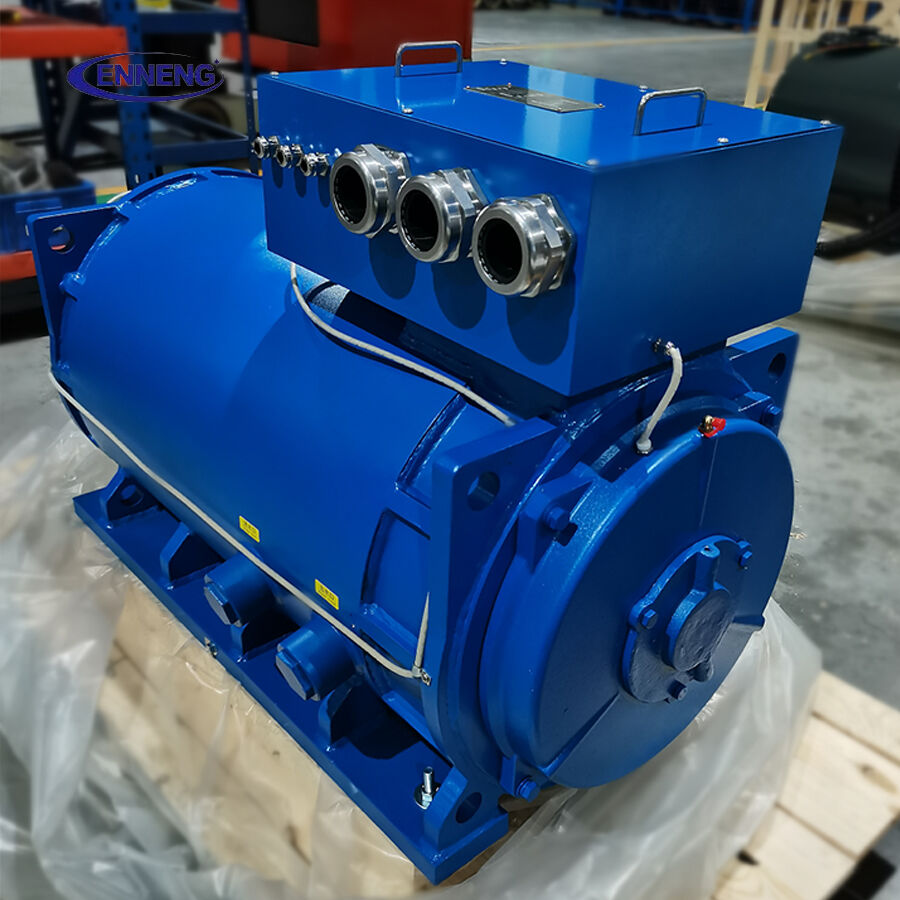
ENNENG resolves these micro-grid stability bottlenecks through high-efficiency permanent magnet generation and drive solutions at enneng By embedding high-performance NdFeB (Neodymium Iron Boron) permanent magnets directly in the rotor, an ENNENG Permanent Magnet Generator PMG eliminates field excitation windings and rotor copper losses entirely. Across a unified generator power range of 5kW-5MW and a unified voltage range of 110V-690V—alongside specialised vertical axis wind turbine applications rated at 1kW-10kW (with a primary engineering focus on 3kW, 5kW, and 10kW units)—ENNENG enables micro-grid integrators to pair sustained mechanical power conversion with fast-acting battery energy storage systems (BESS).
Technical Highlights: Complementary Roles of PMG and Energy Storage
In an islanded industrial micro-grid, a Permanent Magnet Generator PMG and a battery storage unit must operate under a unified dispatch hierarchy rather than competing on isolated nameplate ratings.
1. Synchronised Power Conversion and Eliminating Excitation Losses
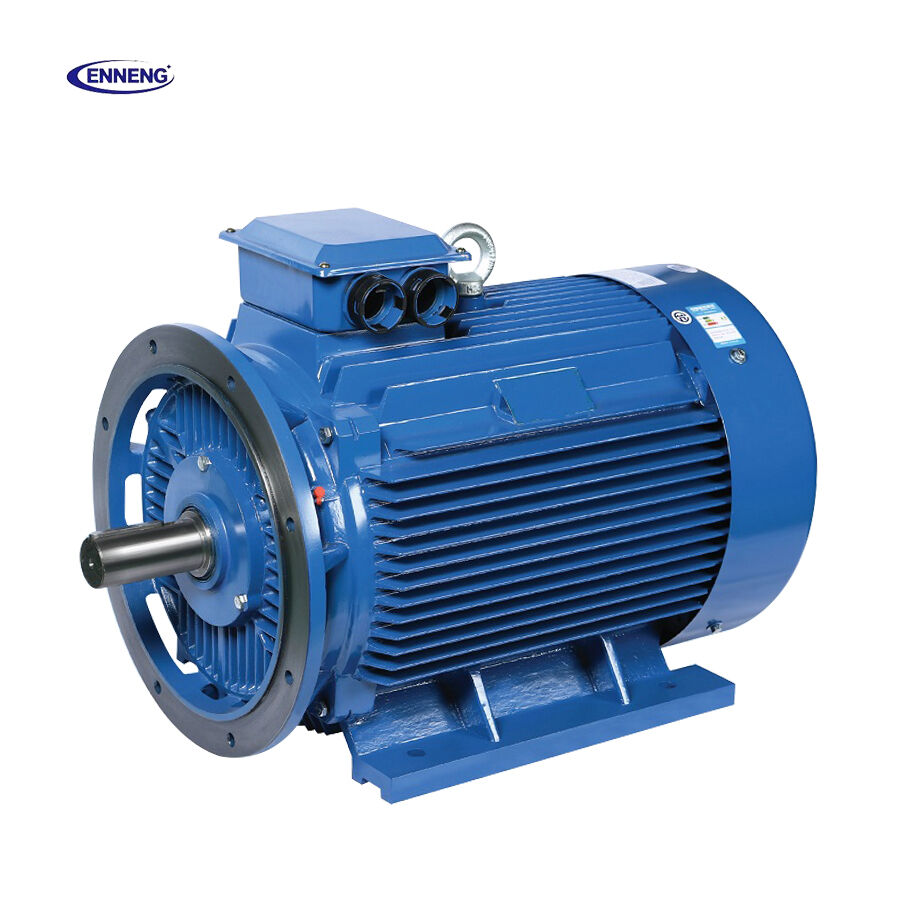
A synchronous Permanent Magnet Generator PMG converts mechanical torque from wind turbines, hydro runners, or gas-driven shafts into electrical output locked directly to rotor speed without slip. Unlike wound-field synchronous or induction generators that draw reactive excitation current and suffer high rotor copper heat, an ENNENG Low Speed Permanent Magnet Generator generates a stable air-gap magnetic field passively. This design achieves IEC 60034-30-1 IE5 efficiency benchmarks across 25% to 120% of rated load, improving conversion efficiency by 2% to 5% and maintaining a power factor of 0.95 to 1.0. Meanwhile, the bidirectional storage inverter reacts within milliseconds to absorb load steps while the generator ramps smoothly to cover sustained energy demand.
2. Five-Stage Micro-Grid Dispatch Sequence and Bus Protection
Coordinating an Industrial Micro-Grid Generator with battery packs requires real-time telemetry across DC/AC bus voltage, battery state of charge (SoC), and prime-mover availability:
• Stage 1 – Maintain SoC Reserve Bands: Establish upper and lower SoC boundaries so the battery retains headroom to absorb sudden wind or hydro surges from the Permanent Magnet Generator PMG while preserving emergency ride-through capacity.
• Stage 2 – Buffer Fast Transients via Storage: When a heavy industrial motor starts, the bidirectional battery inverter injects instantaneous reactive and active power first, preventing bus frequency droop and generator hunting.
• Stage 3 – Allocate Sustained Load to the PMG: Once transient demand stabilises, the micro-grid controller shifts continuous base load to the Permanent Magnet Generator PMG and directs surplus output to recharge storage.
|
Micro-Grid Operating Role |
ENNENG Permanent Magnet Generator PMG |
Battery Energy Storage System (BESS) |
|
Primary Dispatch Function |
Sustained bulk energy generation (5kW-5MW; Wind 1kW-10kW) |
Millisecond transient buffering and grid-forming reference |
|
Voltage & Efficiency Profile |
110V-690V unified; IE5 flat efficiency across 25%-120% load |
Bidirectional DC/AC conversion compliant with IEC 62109-2 |
|
Thermal & Excitation Design |
Zero rotor copper loss; temperature rise 20K lower (<60K) |
Temperature-controlled cell racks with BMS SoC limits |
|
Mechanical & Acoustic Traits |
Gearless direct coupling; <55 dB noise; ISO 20816 compliant |
Solid-state power electronics; zero rotating wear |
Managing Load-Side Permanent Magnet Motor PMSM Equipment
Standalone micro-grid sizing must also account for how load-side Permanent Magnet Motor PMSM machinery interacts with islanded inverters and generator feeders.
1. Reducing Starting Current and Harmonic Stress on Islanded Buses
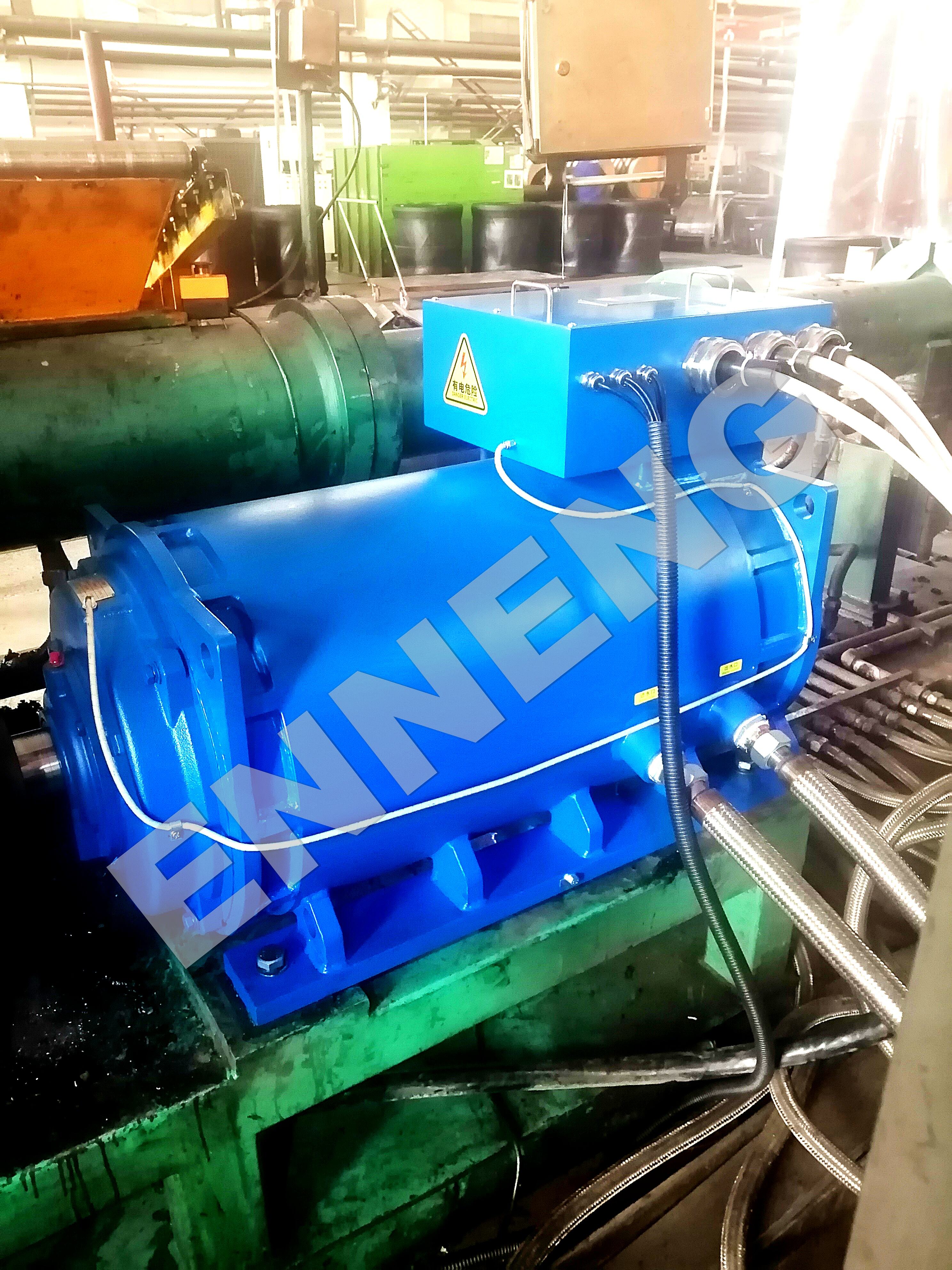
Replacing legacy asynchronous load motors with an ENNENG Permanent Magnet Motor PMSM directly eases micro-grid capacity constraints. Because a Permanent Magnet Motor PMSM operates at a 0.95 to 1.0 power factor and eliminates rotor copper losses, line current drops by more than 10% and operating temperature rise is 20K lower (staying under 60K), allowing frames one to two sizes smaller. In rubber tire mixing lines, deploying low-speed direct-drive PMSM units cuts electricity draw by 7% to 40%, while variable-frequency air compressor installations save up to 50% energy—substantially reducing the required kWh reserve of the standalone battery bank.
2. Electrical Architecture, Direct-Drive Coupling, and Safety Standards
Whether the Permanent Magnet Generator PMG feeds a common DC bus via an active rectifier or an AC bus through a grid-following converter, system protection must comply with IEC 62109-2 converter safety rules, NFPA 70 grounding codes, and ANSI/NEMA MG 1 Part 31 inverter-duty insulation limits. Increasing rotor pole counts allows ENNENG generators and motors at enneng to couple directly to low-speed turbines or driven shafts without intermediate gearboxes, eliminating oil leaks, reducing OSHA 1910.219 guarding complexity, and keeping vibration within ISO 10816 and ISO 20816 thresholds.
Commissioning Checklist and ENNENG Customisation Advantage
Supported by specialists from the National Rare Earth Permanent Magnet Engineering Centre and dozens of patents, ENNENG customises each Permanent Magnet Generator PMG and Permanent Magnet Motor PMSM for harsh island, desert, oilfield, and mining micro-grids. Before handover, field engineers should execute three commissioning checks:
• Multi-SoC Transition Testing: Verify seamless load-sharing and curtailment transitions between the synchronous generator and battery inverter at low, medium, and high SoC thresholds.
• Staged Load-Step & Fail-Safe Checks: Apply stepped motor starts to confirm bus voltage recovery, harmonic filtering, and safe fail-over if controller communication drops.
• Preventative Thermal & Bearing Care: Inspect insulated bearings, verify IP55/IP65 enclosure seals, and clear cooling channels to maintain temperature rise below 60K.
Contact ENNENG Today
Speak to the technical engineering team via enneng to request a customised Permanent Magnet Generator PMG micro-grid proposal:
• WhatsApp: +86 18562780228
• E-Mail: [email protected]
• Phone: +86 532 66000559
FAQ
Q: How does a Permanent Magnet Generator PMG coordinate with battery storage during sudden micro-grid load steps?
A: During an abrupt industrial load step, the battery energy storage inverter responds within milliseconds to stabilise bus voltage and frequency, while the Permanent Magnet Generator PMG ramps output smoothly to supply sustained power. This coordinated division prevents mechanical shaft shock, avoids converter overcurrent trips, and preserves battery state of charge across standalone micro-grid operations.
Q: What power and voltage specifications does ENNENG offer for standalone micro-grid generators?
A: ENNENG manufactures Permanent Magnet Generator PMG systems across a unified 5kW-5MW power range and 110V-690V operating voltage range, alongside vertical axis wind turbine generators rated at 1kW-10kW with a primary focus on 3kW, 5kW, and 10kW units. Custom high-voltage 6kV/10kV and low-voltage 380V/660V/1140V configurations are also engineered to match exact site footprints.
Q: How does using a Permanent Magnet Motor PMSM on micro-grid loads reduce storage sizing requirements?
A: Replacing standard asynchronous load motors with an ENNENG Permanent Magnet Motor PMSM raises system power factor to 0.95–1.0 and reduces line current by over 10%. Achieving 7% to 40% verified electricity savings in heavy machinery and up to 50% in variable-speed air compressors lowers peak micro-grid demand and reduces required battery storage capacity.

