
how-permanent-magnet-generator-pmg-handles-poweroutput-fluctuation-of-wasteheatrecovery-industrial-facilities, how-permanent-magnet-generator-pmg-handles-poweroutput-fluctuation-of-wasteheatrecovery-industrial-facilities, /blog
EN

2026/09/16
Waste-heat recovery turns process off-gas, steam, or exhaust into electricity, but the source never holds still. A Permanent Magnet Generator PMG on such a line must accept a fluctuating speed and still deliver clean power. The value is exactly this tolerance, because the heat source answers to the process, not to the grid.
One cement line piped kiln off-gas to an organic Rankine cycle that fed a Permanent Magnet Generator PMG. Kiln load swung with the raw mix, so generator speed rose and fell through the day. The unit tracked the variation and kept the export steady enough for the site bus, recovering energy that had always gone up the stack rather than to the meter. A Permanent Magnet Generator PMG on the recovery line turned a variable off-gas stream into a steady export, so the plant booked the saving as real kilowatt-hours rather than a theoretical one on paper.
A factory process is a moving target; batch changes, temperature swings, and feed rate shifts all move the recovered flow. A Permanent Magnet Generator PMG that assumes a fixed speed would waste most of the available heat. Because the source is the master and the generator is the slave, the unit must follow rather than dictate the operating point across the shift. The generator that tries to set its own speed against a process source only wastes the available heat, so following the load is the whole design point of the machine.
The variation is not harmless; it tests the machine and the grid connection. A Permanent Magnet Generator PMG only helps if it rides the swing without damaging either side of the link. Both sides of the connection must stay protected for the saving to count.
When input speed moves, output voltage and frequency move with it unless the converter holds them. A Permanent Magnet Generator PMG without tight control lets the bus sag or surge, stressing downstream loads. The unit needs a converter that regulates the link so the site sees stable power even as the kiln breathes through its daily cycle of charge and draw. Without that regulation, the bus sags or surges and stresses every downstream load, which is why the converter, not just the rotor, earns the credit for stable power.
Speed swings also load the rotor through torque steps that a steady duty never sees. A Permanent Magnet Generator PMG with a stiff shaft and good balance handles the transient without cracking the coupling. Poor balance turns every swing into a vibration event, so the unit must be built and balanced for the variable duty, not for a single rated speed on a test bench. A unit balanced only for a nameplate speed would crack its coupling on the first hard swing, because the real duty is a moving target from the first day.
The permanent magnet design is well suited to a moving source. A Permanent Magnet Generator PMG keeps authority across the speed range the process demands, which is where the saving lives.
A wound-field machine can lose excitation and slip out of step; the Permanent Magnet Generator PMG has no field winding to fail. The rotor field is fixed, so the unit stays synchronized as speed varies, which is why it suits a source that never sits still. The unit therefore keeps generating through the swing instead of dropping out at the hard step that defeats an induction or wound unit. Where a wound-field machine can lose excitation and fall out of step, the permanent magnet rotor stays locked, which is the property that suits a never-steady source.
The converter maps the varying input to a steady output, so the Permanent Magnet Generator PMG exports clean power despite the moving source. Closed-loop control holds voltage and frequency while the rotor follows the process speed. The unit thus turns an unsteady heat stream into a usable, grid-friendly supply for the plant instead of a fluctuating one. Closed-loop control holds voltage and frequency while the rotor tracks the process, so the export stays within grid limits even as the kiln charge shifts through the day.
Specifying the unit means tying the claim to generator and grid rules. A Permanent Magnet Generator PMG should arrive with numbers a plant can verify before the recovery line is commissioned and the heat is committed.
IEC 60034-3 covers synchronous generators, so the Permanent Magnet Generator PMG is rated for the real duty, not a fixed point. IEC 61400-21 addresses power quality from variable-speed machines, relevant because the input never holds still. Citing both lets a plant confirm the unit meets grid and performance rules before the recovery line is commissioned and the heat is committed.
Before quoting, log the speed range, power, and source profile the line will see. A Permanent Magnet Generator PMG should come with a power-speed curve and the balance class on the datasheet. In service, watch bearing temperature, vibration, and output power quality each month; a drifting power factor predicts converter or balance trouble before the recovery line trips and the heat is lost.
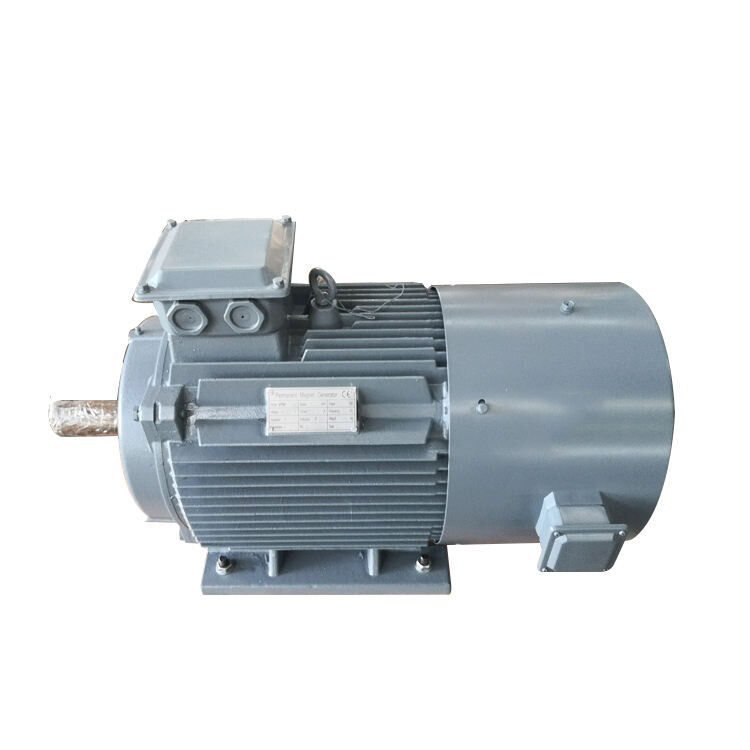
A factory process is a moving target, so batch changes, temperature swings, and feed shifts all move the recovered flow that drives the generator. A Permanent Magnet Generator PMG that assumes a fixed speed would waste most of the available heat. Because the source masters the operating point, the generator must follow the process rather than hold a single set speed through the shift.
The converter maps the varying input to a steady output, so the Permanent Magnet Generator PMG exports clean power despite the moving source. Closed-loop control holds voltage and frequency while the rotor follows process speed. The unit therefore turns an unsteady heat stream into a usable, grid-friendly supply instead of a fluctuating one that stresses the site bus.
Without tight control, output voltage and frequency drift with speed and stress downstream loads, while speed swings load the shaft through torque steps. A Permanent Magnet Generator PMG built for fixed speed would crack its coupling and vary its export. Poor balance turns every swing into a vibration event, so the unit must be designed for the variable duty from the start.
IEC 60034-3 covers synchronous generators, so the Permanent Magnet Generator PMG is rated for the real duty rather than a fixed point. IEC 61400-21 addresses power quality from variable-speed machines, relevant because the input never holds still. Citing both lets a plant confirm grid and performance compliance before the recovery line is commissioned.
Log the speed range, power, and source profile before quoting, then set the control loop to the real variation. A Permanent Magnet Generator PMG specified this way avoids overspeed and the loss that comes with it. Oversizing hides inefficiency, so the match should follow the measured heat profile, not a rounded safety margin the process never reaches in service.
Monthly checks on bearing temperature, vibration, and output power quality catch drift early. A drifting power factor in a Permanent Magnet Generator PMG predicts converter or balance trouble before the recovery line trips. Inspect cooling paths each quarter and review the source profile against the original assessment so the unit keeps riding the swing as the process shifts through the year.


 EN