
how-pmsm-for-industrial-fans-reduces-the-comprehensive-maintenance-cost-of-largesize-ventilation-equipment, how-pmsm-for-industrial-fans-reduces-the-comprehensive-maintenance-cost-of-largesize-ventilation-equipment, /blog
EN

2026/10/15
In automotive paint booths, subterranean mine ventilation shafts, steel mill baghouse dust collectors, and petrochemical cooling towers, large-diameter axial and centrifugal fans operate round the clock to maintain critical airflow and environmental safety. Facility maintenance teams managing traditional belt-driven or gearbox-driven blowers spend thousands of labor hours annually tensioning stretched V-belts, replacing worn sheaves, repairing leaking right-angle speed reducers, and rebalancing impellers damaged by mechanical drive vibration. Because large ventilation units are frequently mounted on elevated structural mezzanines or inside hazardous exhaust ducts, every mechanical repair requires crane rigging, confined-space permits, and costly production halts.
Conventional ventilation drivetrains pair high-speed four-pole asynchronous motors with mechanical belt pulleys or reduction gearboxes to step shaft speed down to the optimal aerodynamic RPM of large fan impellers. These intermediate mechanical transmission links introduce radial shaft overhung loads, belt dust contamination, and severe torsional shock during direct-on-line startups. Deploying a purpose-engineered PMSM for Industrial Fans from ENNENG eliminates belts and gearboxes through direct impeller coupling, drastically reducing comprehensive maintenance expenses and mechanical downtime across large-scale ventilation assets.
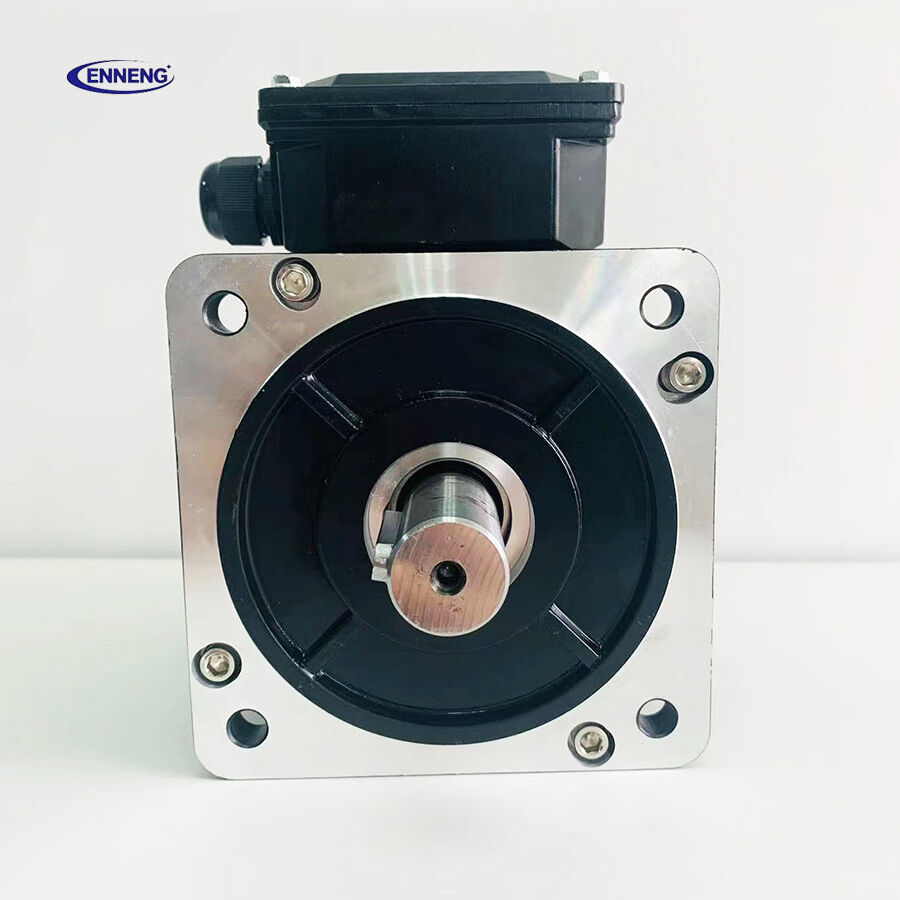
In a traditional belt-driven centrifugal or axial fan, transmitting high kilowatt power across V-belts requires tight static belt tension between the motor pulley and the fan shaft sheave. This continuous radial tension pulls sideways on both the motor drive-end bearing and the fan pillow-block bearings, accelerating rolling-element fatigue spalling and shaft deflection. Furthermore, newly installed V-belts stretch rapidly during initial run-in and gradually slip under humid or dusty airflow conditions—generating frictional heat, rubber particulate contamination, and unbalanced aerodynamic pulsation that forces maintenance crews into repetitive realignment cycles.
An ENNENG PMSM for Industrial Fans eradicates transmission maintenance bottlenecks by coupling the fan impeller directly to a high-torque, low-speed synchronous rotor shaft:
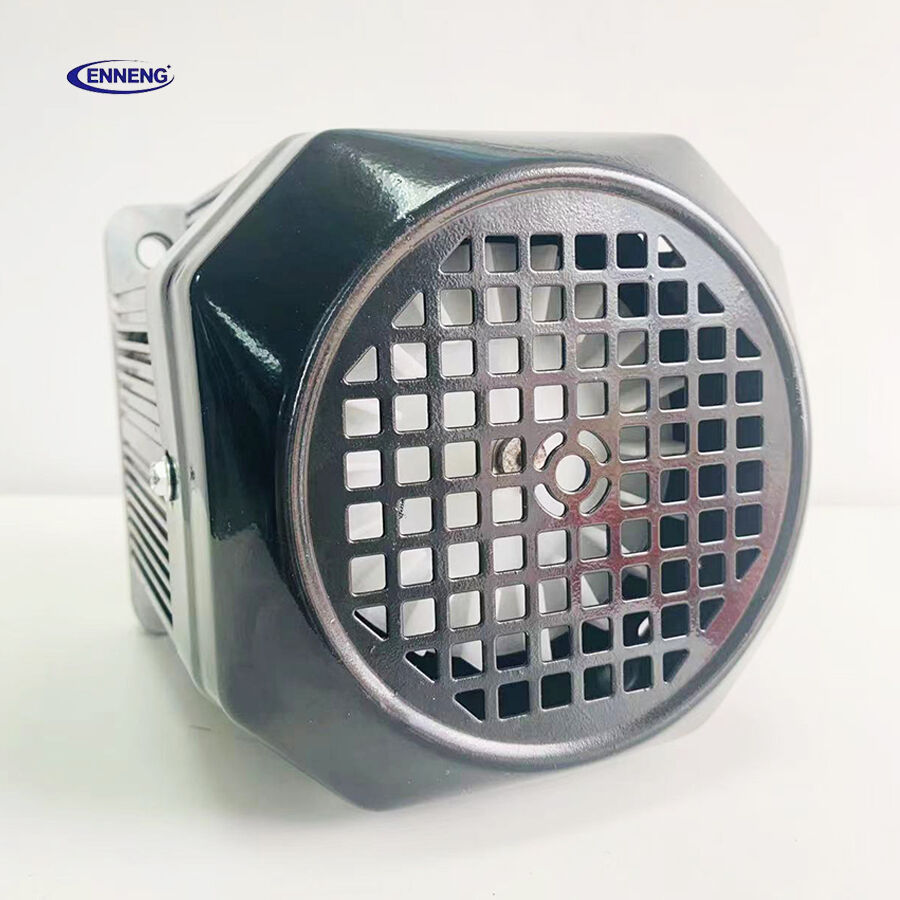
Starting a high-inertia industrial fan wheel across the line with a conventional induction motor generates inrush currents up to 700% of rated current and violent torsional shock that cracks fan hub welds and shears keys. Controlled via a variable frequency drive across a unified voltage range of 110V–690V, an ENNENG PMSM for Industrial Fans executes smooth, current-limited ramp startups and modulates impeller RPM precisely according to real-time duct pressure demand. By following the Fan Affinity Laws—where a 20% speed reduction cuts power consumption by Nearly 50%—the system slashes electricity bills alongside mechanical maintenance costs. Beyond industrial ventilation drives, ENNENG applies this permanent magnet engineering to industrial generators across a unified 5kW–5MW power range (110V–690V) and vertical axis wind turbines spanning 1kW–10kW (focusing on 3kW, 5kW, and 10kW models).
Large industrial ventilation equipment is governed by strict international mechanical balance and energy efficiency standards. ISO 14694 and ANSI/AMCA 204 establish stringent balance quality grades (such as G6.3 and G2.5 under categories BV-3 and BV-4) and bearing housing vibration velocity thresholds for industrial fans. By removing eccentric belt sheaves, worn intermediate couplings, and asynchronous slip harmonics, an ENNENG PMSM for Industrial Fans reduces baseline RMS vibration velocity well below ISO 14694 alarm limits, preventing fatigue cracks on fan casings and structural support frames. Furthermore, ultra-high motor and drive efficiency directly elevates the Fan Energy Index (FEI) calculated under ANSI/AMCA Standard 208.
In wet-type industrial cooling towers and high-temperature metallurgical baghouse exhausters, right-angle gearboxes and V-belt drives suffer from rapid corrosion, water ingress, and belt glazing. Retrofitting these units with a totally enclosed, direct-coupled ENNENG PMSM for Industrial Fans eliminates oil-sump contamination and rooftop mechanical overhaul hazards.
To minimize comprehensive lifecycle maintenance costs when deploying a PMSM for Industrial Fans, follow these engineering guidelines:
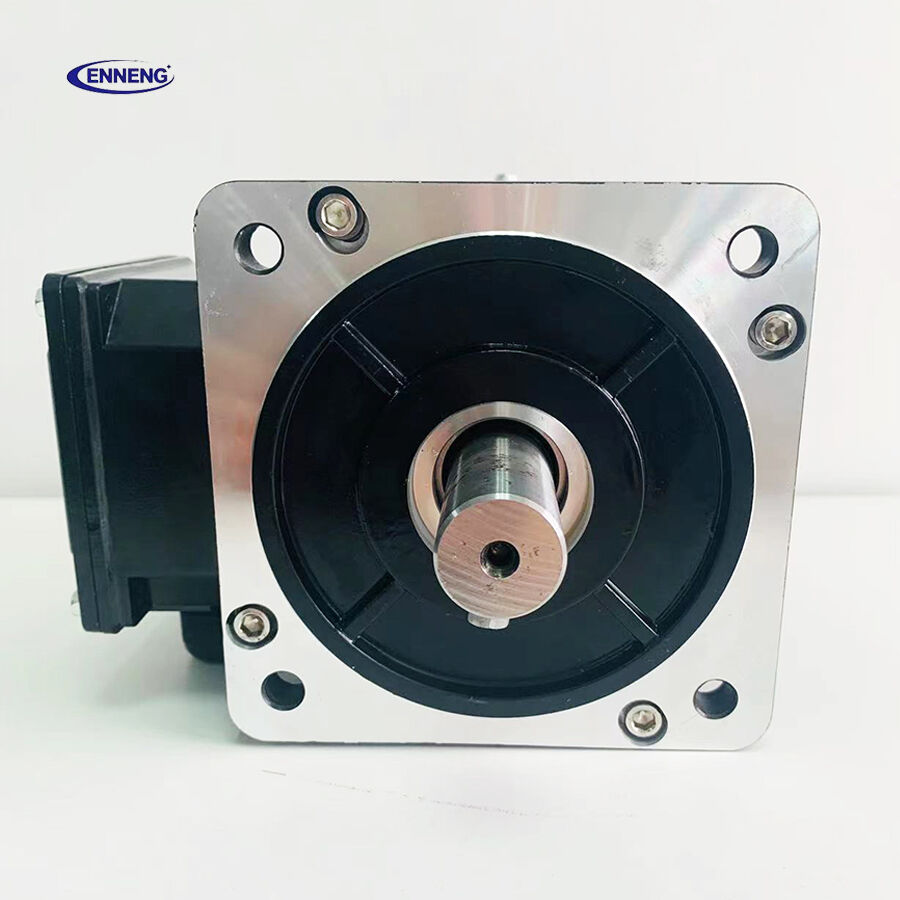
Industrial fan housings vary widely between bifurcated axial ducts, rooftop cooling cells, and heavy-duty centrifugal scrolls. ENNENG custom-engineers its PMSM for Industrial Fans series across the unified 110V–690V range—tailoring tapered or cylindrical shaft extensions, reinforced thrust bearings for vertical-shaft cooling tower fans, and custom mounting pedestals to fit existing fan shrouds without ductwork reconstruction.
Contact ENNENG Today.
Consult the ENNENG ventilation drive engineering team to evaluate your fan airflow parameters and receive a customised PMSM for Industrial Fans proposal.
A: Belt-driven industrial fans require high radial belt tension to prevent pulley slippage, which places continuous sideways bending stress on motor and fan bearings. An ENNENG PMSM for Industrial Fans couples directly to the fan impeller without belts or sheaves, eliminating radial overhung belt loads and rotor copper heat transfer, which significantly extends bearing and seal service life.
A: Worn V-belts, misaligned sheaves, and gearbox tooth wear are primary sources of excessive vibration in large ventilation blowers. By utilizing a gearless, direct-coupled ENNENG PMSM for Industrial Fans with low torque ripple and synchronous speed control, mechanical transmission vibration is eliminated, keeping fan housing vibration levels safely within ISO 14694 BV-3 and BV-4 limits.
A: ENNENG manufactures PMSM for Industrial Fans and industrial drive systems across a unified voltage range of 110V–690V to match global plant power supplies. In addition to ventilation motors, ENNENG produces permanent magnet generators spanning a unified 5kW–5MW power range and vertical axis wind turbines rated from 1kW–10kW (focusing on 3kW, 5kW, and 10kW models).


 EN