
 EN

At a crusher line, pump skid, marine auxiliary set, or other vibration-intensive installation, a motor can appear sound on a bench and still become the weak point after coupling. The useful question is not simply whether a motor is ‘vibration resistant.’ It is whether the motor, driven equipment, base, coupling, controls, and duty cycle work as one stable system. For buyers comparing a Rare Earth Motor Manufacturer, that distinction turns a vague reliability claim into a practical engineering review.
ENNENG designs and manufactures permanent magnet motors and generators, including application-specific winding work. That matters when a project needs Custom PM Motor Design: vibration performance is influenced by the complete specification, not by a single catalogue checkbox. The discussion below explains what to examine before release, during factory acceptance, and after installation.
First, separate vibration resistance from site vibration
A motor’s vibration resistance describes how well its rotor, bearings, housing, winding system, fasteners, and electrical connections tolerate the loads expected in service. Site vibration is broader. It can be introduced by an unbalanced driven load, a misaligned coupling, a flexible base, pipe strain, resonance in a supporting structure, or a variable-speed operating point that coincides with a natural frequency.
This distinction prevents a common mistake: treating a high field reading as proof that the motor alone is defective. Sometimes it is. But a motor can also be transmitting vibration created elsewhere, or be installed in a system that magnifies a small excitation. A Rare Earth Motor Manufacturer should therefore ask for the application context before promising an outcome: motor speed range, mounting arrangement, driven equipment, coupling type, start/stop frequency, ambient conditions, and the expected shock or vibration source.
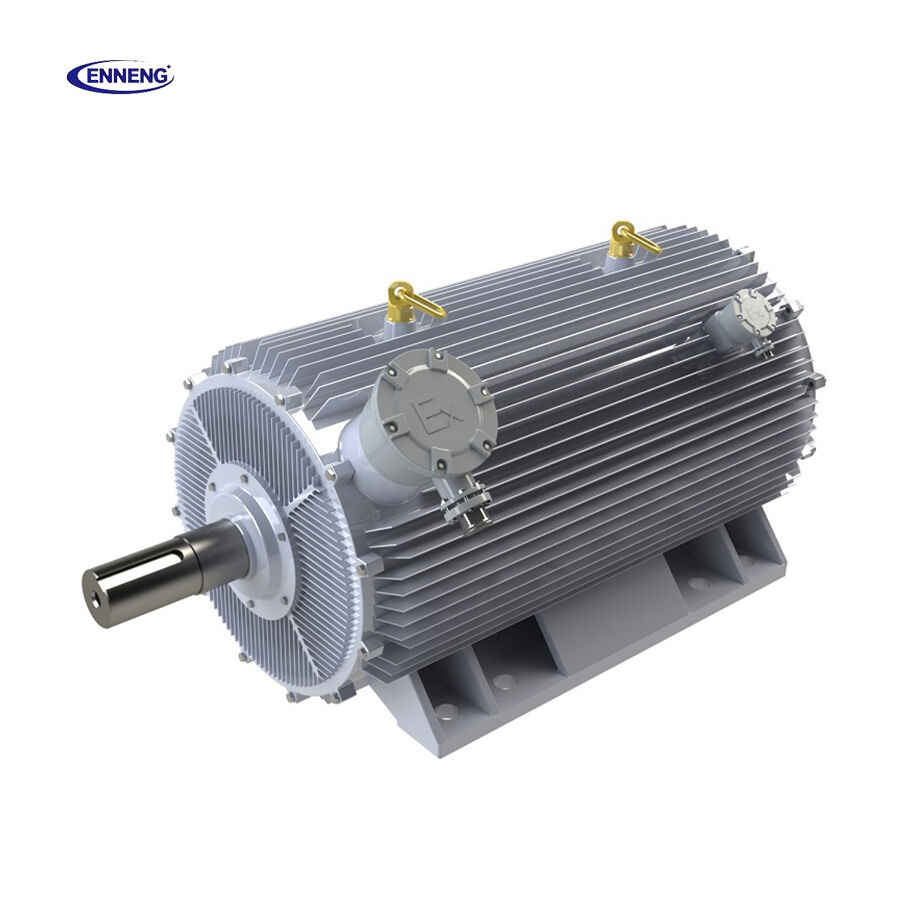
Where vibration resistance is built into a permanent magnet motor
Rotor retention and dynamic balance
Permanent magnet rotors must keep magnetic elements and retaining features secure under rotational and cyclic loads. Rotor geometry, retention method, shaft fit, and balancing practice all influence behavior. A balanced rotor helps reduce internally generated excitation, but it does not cancel vibration arriving through the base or coupling. For a vibration-intensive site, specify the operating speed range rather than naming only a nominal speed; the range is where critical speeds and resonant responses need attention.
Bearing selection and housing stiffness
Bearing arrangement is a system decision. Radial load, axial load, lubrication approach, expected contamination, and shaft deflection should be evaluated together. Housing rigidity and the machining relationship between bearing seats also affect how loads are shared. If the machine is mounted on a structure that flexes, a bearing selected only from a nameplate power calculation may not address the real operating condition.
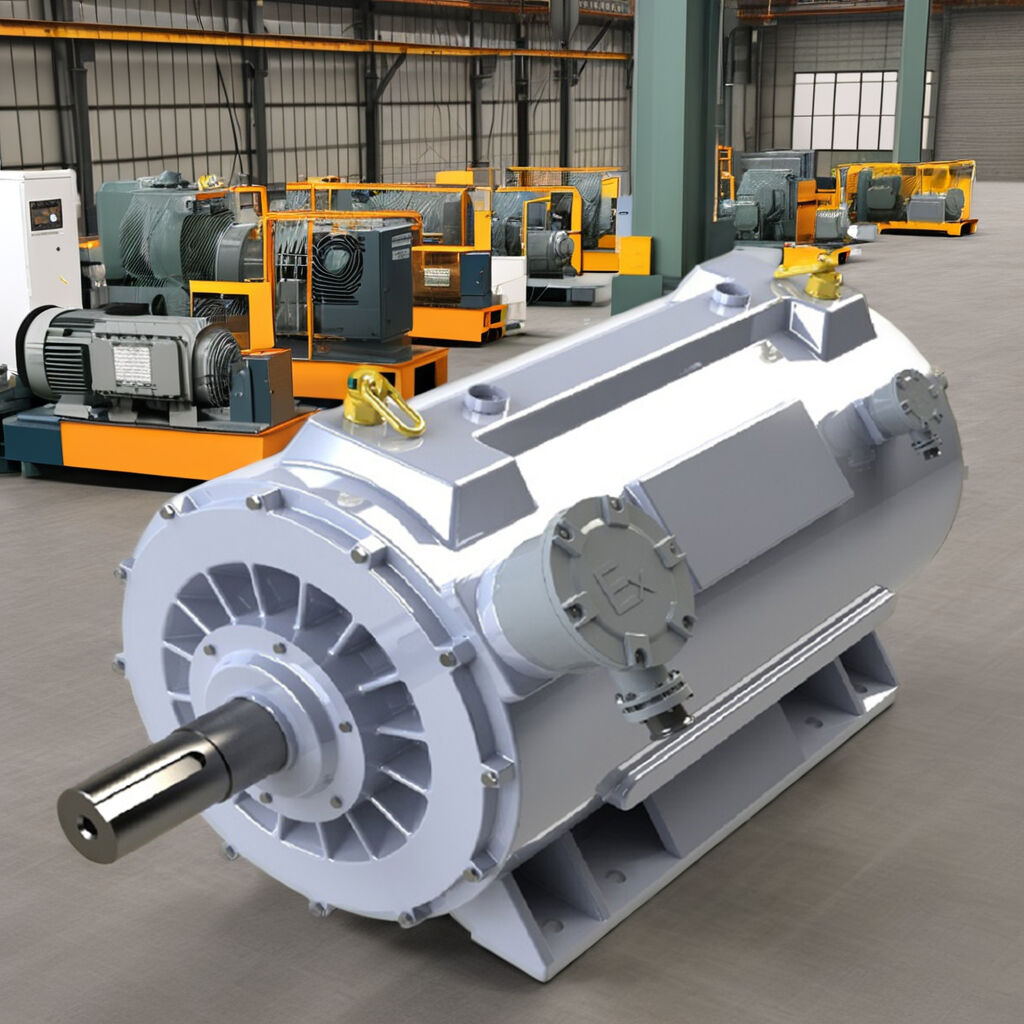
Windings, terminals, and leads
Repeated motion can fatigue unsupported leads and loosen terminations. In a Custom PM Motor Design review, confirm how winding ends, lead exits, terminal hardware, and cable support are arranged for the actual orientation and cable routing. This is particularly relevant when the motor is paired with a VFD, because cable routing, grounding, and control settings can complicate troubleshooting even when the mechanical installation is acceptable.
Why installation can outweigh the motor specification
A site team may replace a motor and see the same vibration signature return. That is often a clue to inspect the installation before changing another motor. The most productive checks are usually straightforward:
- Base and mounting: Verify flatness, bolt condition, torque practice, shim quality, and whether the support has enough stiffness for the machine and speed range.
- Alignment: Check coupling alignment under expected thermal conditions, not only at a cold, uncoupled state.
- Driven equipment: Inspect impeller, fan, gearbox, belt, or load balance. A motor cannot correct an excitation created downstream.
- Resonance: Compare vibration across the operating speed range. A sharp increase at one speed can point to a structural or system resonance rather than an all-speed motor defect.
- Electrical operation: Review VFD settings, acceleration ramps, and operating points so mechanical resonance is not repeatedly crossed or held for long periods.
The shift here is from evaluating components in isolation to evaluating system integration. It may sound obvious, yet it is the point most likely to be lost when a site is under pressure to restart production.
Use standards correctly: factory acceptance is not field acceptance
Standards can make a vibration discussion more disciplined, provided they are applied to the right machine class and test condition. ISO 20816-3 provides a framework for evaluating vibration of certain coupled industrial machine types above 15 kW, with assessment depending on machine group and support class. It should be used with the relevant project specification rather than treated as a universal number for every motor.
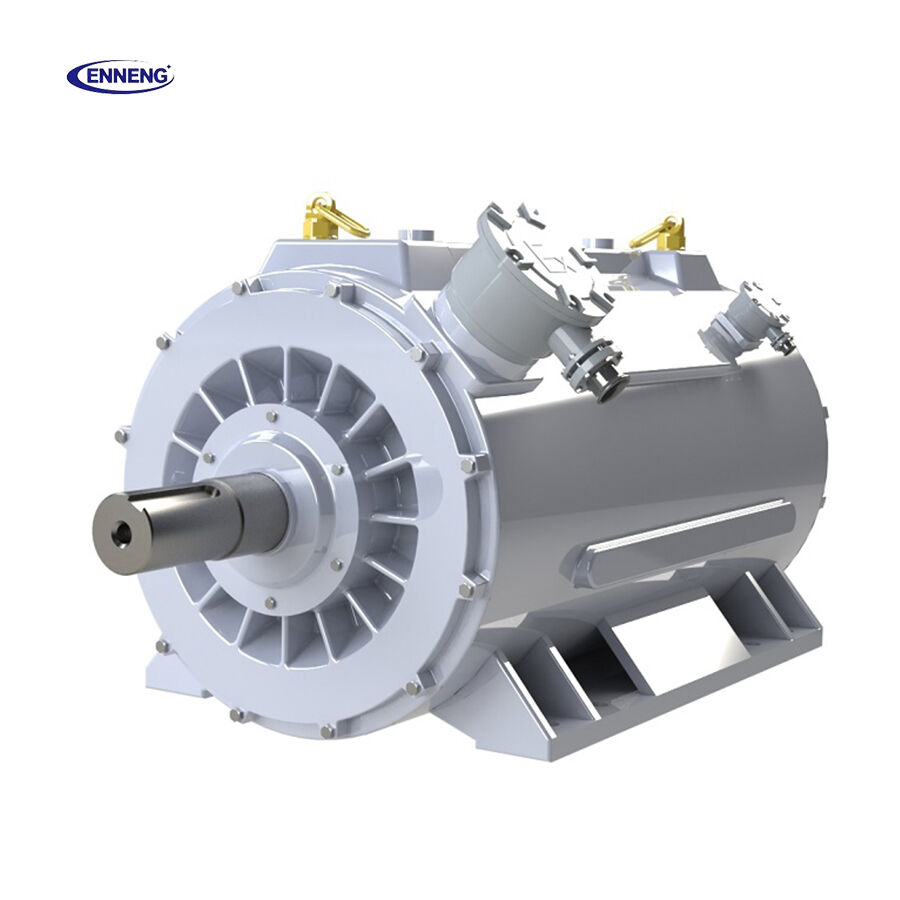
Likewise, factory motor vibration checks and installed-system readings answer different questions. NEMA MG 1 Part 7 is associated with motor and generator vibration requirements, while factory limits are commonly assessed under defined no-load, uncoupled conditions. A coupled machine on a flexible skid, with process piping and a variable load, needs a site acceptance plan of its own. In other words, a factory result establishes a baseline; it does not eliminate the need for commissioning measurements.
A practical validation plan for vibration-intensive sites
Before ordering, give the Rare Earth Motor Manufacturer a concise application sheet. Include rated and operating speed, load inertia, radial and axial loads, coupling type, mounting orientation, environmental exposure, VFD use, expected duty cycle, and known vibration sources. This lets the manufacturer assess whether a standard configuration is suitable or whether Custom PM Motor Design is justified.
- Define the measurement locations and operating conditions for factory acceptance.
- Record a baseline after installation at no load and under normal process load.
- Trend values at consistent points and speeds instead of comparing isolated readings from different conditions.
- Investigate changes alongside alignment, mounting, process, and control changes.
- Agree on the applicable standard, alarm logic, and escalation path before commissioning is complete.
Specificity is valuable here. ‘Low vibration’ is not a complete requirement. A useful requirement states the machine arrangement, speed range, support condition, measurement method, and acceptance context. If ambient temperature, corrosion, or shock loading is unusually severe, those conditions should be documented as well; a configuration that is reasonable on a rigid indoor base may need adjustment elsewhere.
The ENNENG Customisation Advantage
No two industrial facilities share the same spatial or mechanical constraints. ENNENG stands out because we do not just supply off-the-shelf catalogue products; we specialise in delivering a tailor-made permanent magnet motor tailored to your specific application .
Supported by our elite R&D team consisting of engineers from the National Rare Earth Permanent Magnet Engineering Centre, and backed by dozens of patents, we customise high-voltage (6kV/10kV) and low-voltage (380V/660V/1140V) solutions to match your existing footprint. From water treatment facilities and oil wells to explosion-proof mining environments, we deliver optimal performance where general-purpose motors fail .
If you are evaluating commercial permanent magnet motors for sale and need an engineered drive solution that guarantees efficiency and longevity, ENNENG is your trusted partner.Contact ENNENG Today.Speak to our technical engineering team to receive a customised drive proposal.
- WhatsApp: +86 18562780228
- E-Mail: [email protected]
- Phone: +86 532 66000559
Choose evidence over a blanket claim
The most reliable way to improve vibration resistance is not to search for a universally ‘rugged’ motor. It is to match the motor and the installation to the real load path. A capable Rare Earth Motor Manufacturer can contribute by reviewing application inputs, defining a test baseline, and supporting Custom PM Motor Design where the standard build does not fit the duty. The site team remains essential: stable mounting, sound alignment, appropriate controls, and repeatable measurements complete the reliability case.
For projects involving permanent magnet motors, start the conversation with the operating conditions that cause concern. That gives engineering and procurement a clearer basis for comparing configurations, commissioning the equipment, and protecting uptime after handover.

