
 EN

Heavy metallurgical processing facilities operating continuous kiln exhaust drives 8,400 hours annually expose motor assemblies to ambient temperatures surpassing 60°C. Plant engineers specifying custom drive machinery in these thermal zones frequently observe accelerated flux decay and thermal tripping in standard rotor packages. Ensuring uninterrupted mechanical torque under extreme thermal loading requires selecting a Permanent Magnet Synchronous Motor built with verified magnet-steel grades, robust retention mechanics, and thermal modeling.
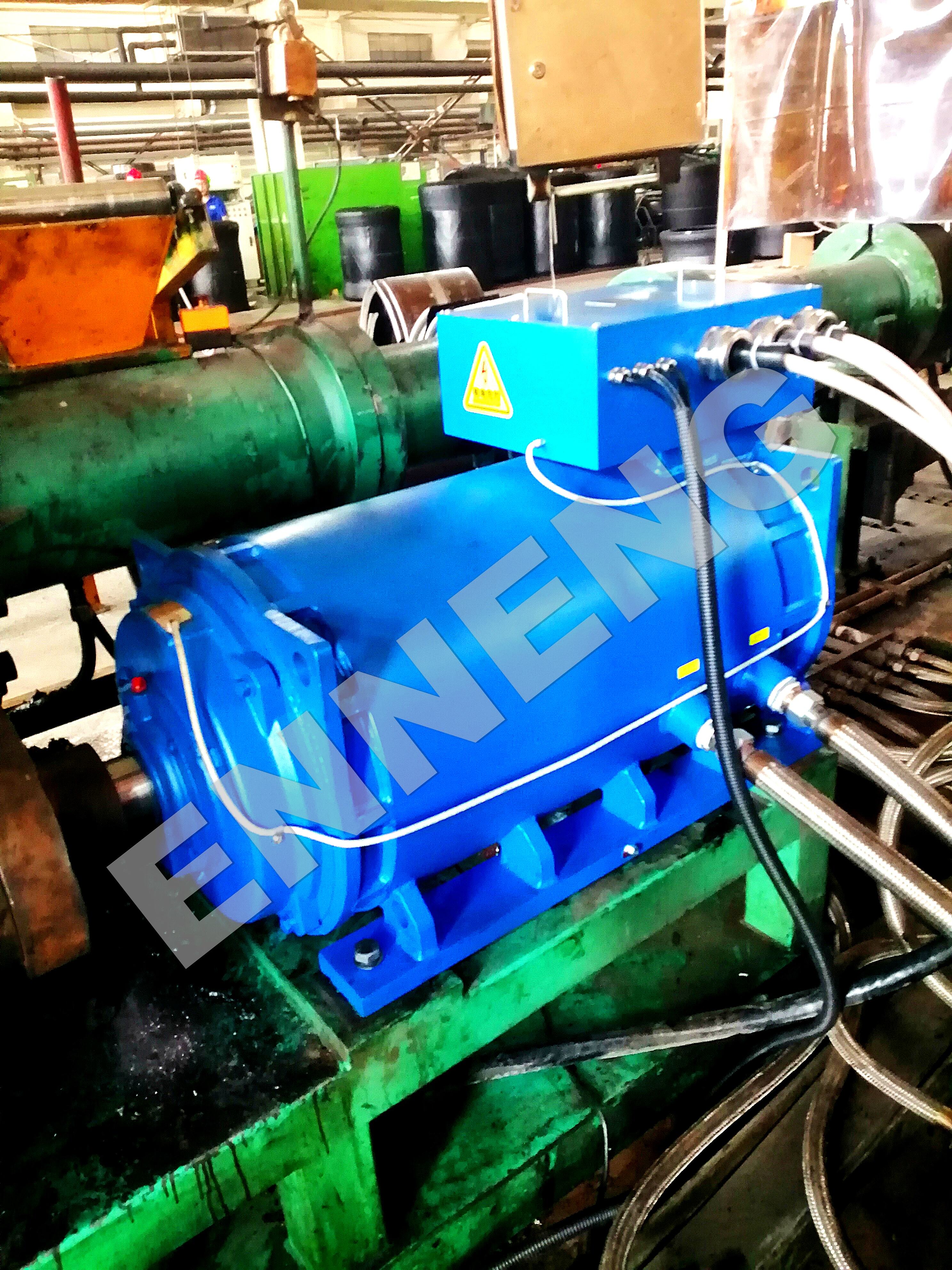
Standard industrial drive packages operating in high-heat zones risk irreversible demagnetization when localized rotor temperatures surpass the thermal thresholds of conventional magnetic materials. Flux degradation produces elevated stator currents, increased copper heating, and catastrophic rotor failure during unexpected load surges. ENNENG engineers advanced permanent magnet solutions with high-coercivity rare-earth alloys that maintain magnetic stability across demanding thermal environments.
Thermal Dynamics and Demagnetization Risks in High-Heat Environments
Selecting an optimal magnet grade for a Permanent Magnet Synchronous Motor requires evaluating actual rotor core temperatures rather than ambient air conditions alone. While nameplate ratings assume standard factory ambient ceilings of 40°C, radiant heat from furnaces and process piping creates elevated microclimates within motor compartments. Specifying an effective Energy Saving Motor Solution demands calculating total internal heat generation, including stator copper dissipation, stator core hysteresis, and rotor eddy-current losses.
Rotor Operating Temperatures Versus Boundary Ambient Limits
The rotor core of a PM Synchronous Motor operates inside an enclosed electromagnetic environment where heat dissipation relies primarily on air-gap convection and conduction through the shaft. Even though a Permanent Magnet Synchronous Motor eliminates secondary rotor slip losses, high-frequency harmonic flux from inverter switching induces localized eddy currents within rotor laminations and magnet blocks. Under heavy continuous duty, localized magnet temperatures can exceed ambient air readings by 40°C to 60°C.
Neglecting these internal thermal gradients leads to premature thermal degradation. When specifying a custom Permanent Magnet Motor PMSM, engineers must request comprehensive finite element thermal simulations that map worst-case rotor hot spots. Evaluating magnet temperatures during sustained overload cycles, reduced ventilation periods, and low-speed continuous torque operations ensures that the selected magnetic alloy retains adequate thermal safety margins throughout decades of factory service.
Intrinsic Coercivity and Demagnetization Knee-Point Analysis
Irreversible demagnetization represents the most critical structural risk for any Permanent Magnet Synchronous Motor subjected to high operational temperatures. As internal magnet temperature climbs, the intrinsic coercivity of rare-earth magnetic materials declines, shifting the knee point of the demagnetization curve into the active operating quadrant. If transient fault currents, sudden field-weakening commands, or process overloads push the magnetic working point below this critical knee, permanent flux loss occurs immediately.
A degraded Permanent Magnet Synchronous Motor draws higher phase current to sustain required shaft torque, creating a destructive feedback loop of escalating thermal rise and accelerated demagnetization. Preventing magnetic collapse requires specifying a PM Synchronous Motor with high intrinsic coercivity grades that keep the demagnetization knee well outside maximum electrical fault boundaries under peak operating temperatures.
Magnet-Steel Metallurgy and Rotor Construction Standards
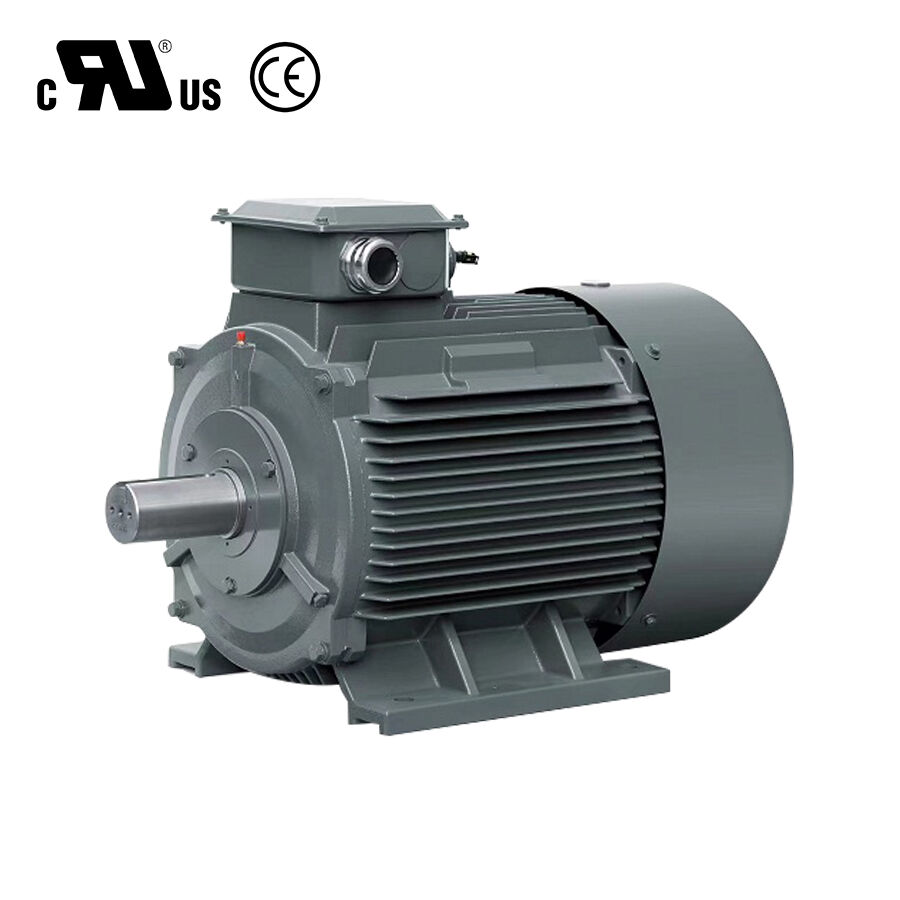
Matching the proper magnetic alloy to specific industrial requirements dictates the operational reliability and physical footprint of a custom Permanent Magnet Synchronous Motor. Industrial designers evaluate neodymium-iron-boron and samarium-cobalt formulations to balance flux density against thermal stability.
Comparing High-Coercivity NdFeB Grades and SmCo Formulations
Neodymium-iron-boron materials offer superior remanence and energy products, enabling compact motor designs with exceptional power density. Standard NdFeB grades suffer rapid coercivity decline above 80°C, making them unsuitable for severe industrial environments. Advanced high-temperature NdFeB formulations incorporate dysprosium and terbium additives to enhance magnetic domain stability, producing specialized thermal classifications designed for harsh environments:
|
Magnet Material Grade |
Max Continuous Temp |
Intrinsic Coercivity (Hcj) |
Remanence (Br) |
Relative Corrosion Risk |
|
NdFeB - Standard N Series |
Up to 80°C |
≥ 955 kA/m |
1.40 to 1.45 T |
High (requires heavy plating) |
|
NdFeB - SH Series |
Up to 150°C |
≥ 1592 kA/m |
1.32 to 1.38 T |
Moderate (requires barrier coat) |
|
NdFeB - UH / EH Series |
Up to 180°C - 200°C |
≥ 1990 - 2388 kA/m |
1.22 to 1.30 T |
Controlled via epoxy/nickel layers |
|
NdFeB - TH Series |
Up to 220°C |
≥ 2626 kA/m |
1.12 to 1.20 T |
Controlled via multi-layer plating |
|
SmCo - 2:17 Series |
Up to 300°C - 350°C |
≥ 1592 - 2000 kA/m |
1.05 to 1.15 T |
Very Low (naturally stable) |
For ultra-high-temperature installations exceeding 200°C, samarium-cobalt (Sm2Co17) provides superior magnetic reversibility and exceptionally low reversible temperature coefficients. While SmCo alloys exhibit lower remanence than NdFeB grades, their magnetic output remains stable up to 350°C. A custom Permanent Magnet Motor PMSM engineered for severe environments utilizes these advanced alloys to preserve stable shaft torque under severe thermal exposure.
Mechanical Retention, Sleeving, and Thermal Expansion Engineering
Selecting magnet materials represents only half of the rotor design challenge; the physical retention system must also withstand severe thermal expansion. In a high-speed PM Synchronous Motor or a high-torque Direct Drive Motor, centrifugal forces combine with mismatched thermal expansion coefficients between steel rotor cores and brittle magnetic blocks. High temperatures degrade standard epoxy adhesives, creating severe risks of magnet detachment inside the air gap.
High-integrity rotors utilize segmented magnet geometries encapsulated within non-magnetic stainless steel sleeves, titanium containment shells, or high-tension carbon-fiber bandages. Precision engineering ensures that mechanical interference fits accommodate differential thermal expansion without crushing magnet segments or losing pre-stress retention at operational speeds. ENNENG motor products feature specialized rotor encapsulation rated across unified voltage ranges from 110V to 690V and unified power ratings from 5kW to 5MW. For decentralized plant monitoring and off-grid utility systems, ENNENG also supplies vertical axis wind turbine systems rated from 1kW to 10kW, emphasizing 3kW, 5kW, and 10kW platforms to secure reliable power generation.
Engineering Standards, Dynamic Validation, and Field Maintenance
Custom motor manufacturing requires strict compliance with international testing frameworks to ensure operational longevity. Electrical insulation systems must satisfy IEC 60034-1 thermal class criteria, utilizing Class H or Class N insulation rated for 180°C to 200°C continuous service. Industrial efficiency ratings must conform to IEC TS 60034-30-2 guidelines for converter-fed variable-speed machines. Upgrading legacy drives to an Energy Saving Motor Solution supports corporate carbon reduction mandates under ISO 50001 energy management frameworks.
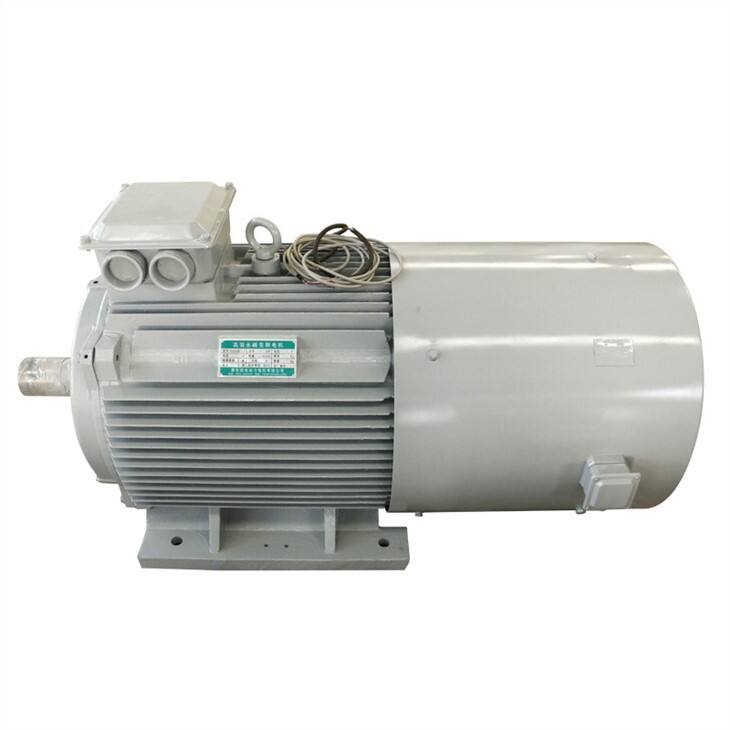
Electrical installations must adhere to NFPA 70 National Electrical Code standards for conductor ampacity and disconnect protection, while plant maintenance protocols must strictly follow OSHA 1910 Subpart S industrial electrical safety mandates. Rotating equipment balancing and vibration tolerances must comply with ISO 1940 Grade G1.0 and ISO 10816 vibration severity benchmarks.
Factory validation requires rigorous dynamometer heat-run testing under simulated full-load and overload conditions. Quality assurance teams record back-electromotive force (back-EMF) voltages across identical operating temperatures before and after thermal stress cycles. A back-EMF variation of less than one percent confirms that magnetic flux remains stable without irreversible demagnetization. Field maintenance routines must include annual winding insulation resistance measurements per IEEE 43, periodic infrared thermal imaging across bearing housings, and scheduled air-gap concentricity inspections to guarantee decades of dependable mechanical performance.
Engineering Consultation and Custom Motor Inquiries
Selecting the ideal magnet-steel formulation for an ultra-high-temperature Permanent Magnet Synchronous Motor requires analyzing driven load profiles, inverter carrier frequencies, and cooling medium dynamics. Modernizing production assets with an advanced Permanent Magnet Synchronous Motor reduces electricity consumption, eliminates thermal breakdowns, and delivers dependable torque under severe operating conditions. Technical specialists provide comprehensive electromagnetic finite element modeling, rotor dynamics analysis, and turnkey drive selection support. Contact the engineering department today to evaluate high-temperature operational parameters and initiate project specifications.
- WhatsApp: +86 18562780228
- E-Mail: [email protected]
- Phone: +86 532 66000559
FAQ
Q: What distinguishes reversible flux loss from irreversible demagnetization in a permanent magnet motor?
A: Reversible flux loss occurs naturally as magnet temperature increases, causing a temporary reduction in magnetic flux that restores fully when the rotor cools. Irreversible demagnetization occurs when elevated operating temperatures combine with strong reverse magnetic fields, permanently disrupting magnetic domains. When irreversible loss occurs, the motor permanently loses torque output and requires rotor re-magnetization or full replacement.
Q: Why is back-EMF measurement vital during factory testing of a custom permanent magnet synchronous motor?
A: Back-electromotive force is directly proportional to total rotor magnetic flux and rotational speed. By measuring open-circuit back-EMF voltage before and after simulated full-load thermal heat runs, quality control engineers confirm magnetic domain stability. Any permanent reduction in measured back-EMF reveals irreversible demagnetization, ensuring that defective rotor assemblies are identified and corrected prior to factory dispatch.

