
 EN

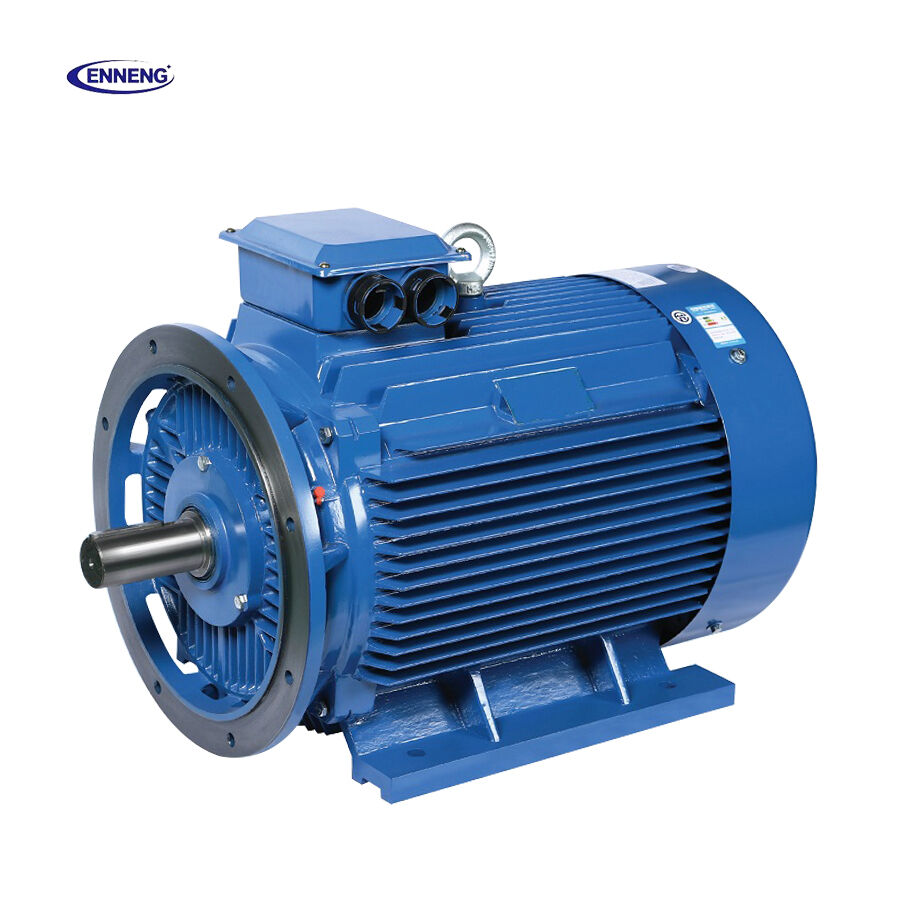
Hot rolling mill pumping stations operating high-pressure descaling pumps 8,400 hours annually often face severe ambient thermal exposure exceeding 50°C. Plant engineers deploying high-efficiency pumping equipment in restricted pump galleries frequently confront severe thermal degradation and reduced motor reliability. Upgrading to a Centrifugal Pump Motor IE5 optimizes hydraulic efficiency, but sustaining continuous output requires selecting an appropriate cooling method matched to high-temperature operating conditions.
Elevated ambient temperatures reduce air density and diminish the convective cooling capacity of standard motor frame fins, leading to excessive stator heat and premature winding degradation. Poor ventilation combined with reflective radiant heat from furnace lines significantly elevates the risk of thermal trips and unexpected production outages. ENNENG supplies robust industrial drive technology designed to conquer extreme thermal environments while maintaining peak electromagnetic efficiency across demanding industrial pumping applications.
Thermal Realities in High-Temperature Industrial Pump Environments
Operating a Centrifugal Pump Motor IE5 in a hot manufacturing bay introduces distinct thermodynamic challenges that standard equipment datasheets rarely reflect. Standard industrial motors follow nominal performance baselines calculated around a 40°C ambient ceiling at sea level. Exceeding this boundary requires thermal de-rating to prevent internal winding temperatures from crossing insulation limits. An Energy Saving Motor Solution must account for both localized ambient temperature spikes and the reduced heat transfer capabilities of high-temperature cooling air.
Ambient Heat Buildup and Thermal De-rating Constraints
Enclosed pump rooms, boiler feed galleries, and metallurgical workshops regularly accumulate trapped process heat that creates microclimates 10°C to 15°C hotter than general factory floors. In these hot zones, an induction machine or Centrifugal Pump Motor IE5 struggles to transfer internally generated heat to the passing airflow. When ambient air reaches 50°C or 55°C, the allowable temperature rise of Class F insulation evaluated with Class B limits becomes severely restricted, forcing plant operators to de-rate standard nameplate power by 8% to 15%. Deploying an advanced Permanent Magnet Motor PMSM design mitigates these de-rating penalties because the rotor generates virtually zero secondary resistive heat losses, leaving substantial thermal headroom within the stator assembly.
Low-Speed Operating Dynamics and Airflow Deficits Under VFD Control
Centrifugal pumping infrastructure relies heavily on variable frequency drives to modulate water flow according to varying manufacturing demands. Operating a Centrifugal Pump Motor IE5 at low rotational speeds alters the thermodynamic performance of traditional cooling systems. When pump speeds drop to 30 Hz or 20 Hz during low-flow recirculation, conventional shaft-mounted cooling fans experience a cubic reduction in volumetric airflow. Consequently, convective heat dissipation collapses precisely when the inverter introduces high-frequency harmonic heating into the stator core. Specifying an optimized Centrifugal Pump Motor IE5 requires verifying that the selected thermal management configuration maintains adequate cooling mass flow across the complete operational speed curve.
Technical Evaluation of IEC Cooling Configurations for Centrifugal Pump Drives
IEC 60034-6 establishes standardized cooling designations that dictate how heat dissipates from industrial electrical machinery. Selecting the correct cooling circuit for a Centrifugal Pump Motor IE5 requires evaluating installation boundaries, ambient particulate contamination, and process duty profiles.
IC411 Surface Cooling Capabilities and Operational Boundaries
The IC411 designation describes a totally enclosed fan-cooled arrangement where an external fan mounted directly on the non-drive end of the motor shaft forces ambient air across external frame ribs. An IC411 Centrifugal Pump Motor IE5 offers solid mechanical reliability, structural simplicity, and self-contained operation without external electrical auxiliaries. In clean industrial environments where pump units run consistently at rated operational speeds, IC411 provides sufficient heat extraction.
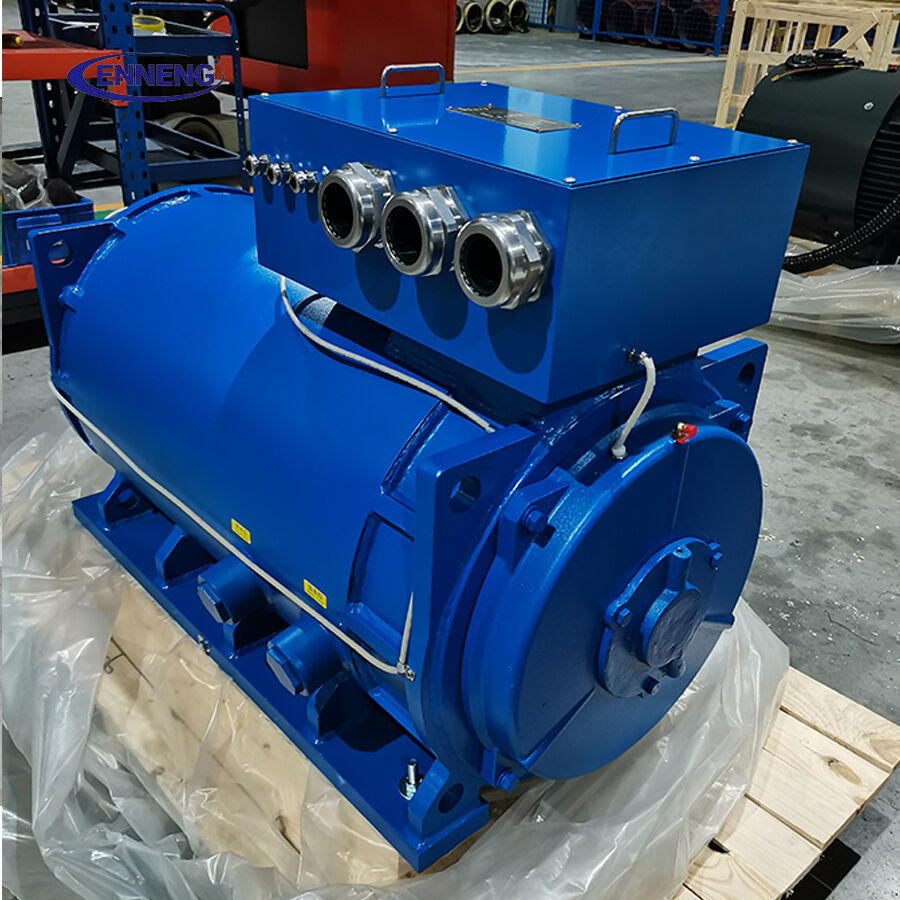
However, utilizing IC411 in high-temperature workshops presents acute operational vulnerabilities during prolonged partial-speed cycles. Because cooling performance scales directly with motor shaft RPM, operating a variable-speed Centrifugal Pump Motor IE5 below 60% of base speed in a 50°C environment leads to rapid internal heat accumulation. Furthermore, airborne oil mist, scales, and workshop dust adhere to frame cooling ribs, creating an insulating layer that impairs thermal conductivity and triggers premature thermal protective shutdowns.
IC416 Independent Forced Air and Alternative Heat Exchanger Options
Specifying an IC416 cooling configuration resolves the low-speed airflow deficit by utilizing an auxiliary, constant-speed electric blower to propel cooling air over the frame ribs independently of rotor RPM. An IC416 Centrifugal Pump Motor IE5 delivers constant volumetric airflow whether the pump runs at 100 RPM or 3,000 RPM, allowing continuous full-torque operation in severe ambient heat without thermal throttling. Industrial plants seeking a dependable Energy Saving Motor Solution for variable-flow wastewater or boiler feeding rely on IC416 forced ventilation to prevent thermal overloads across wide modulation windows.
|
Performance Parameter |
IC411 Self-Cooled TEFC |
IC416 Force-Ventilated |
IC71W / IC81W Water-Cooled |
|
Airflow Mechanism |
Shaft-mounted external fan |
Auxiliary electric motor blower |
External liquid cooling jacket |
|
Low-Speed Cooling Performance |
Diminishes with reduced shaft RPM |
Constant across all operating speeds |
Unaffected by motor speed variation |
|
Sensitivity to Ambient Air Heat |
High (directly uses hot workshop air) |
High (requires clean, filtered air intake) |
Low (isolated from ambient air temperature) |
|
Standard Voltage Scope |
Unified 110V to 690V |
Unified 110V to 690V |
Unified 110V to 690V |
|
Power Rating Capacity |
Unified 5kW to 5MW |
Unified 5kW to 5MW |
Unified 5kW to 5MW |
|
Maintenance Requirement |
Periodic fin and cowl cleaning |
Auxiliary fan maintenance and filtration |
Water filtration and piping inspection |
|
Best Application Scenario |
Fixed-speed pumps, clean ambient air |
Broad-range VFD variable-flow pumping |
Extreme ambient heat, dusty environments |
Where ambient workshop air carries extreme thermal loads or excessive particulate contamination, advanced liquid-cooled IC71W designs eliminate atmospheric heat exchange entirely. ENNENG motor products are engineered across unified voltage ratings from 110V to 690V and power capacities from 5kW to 5MW, offering tailored IC411, IC416, and liquid cooling architectures to satisfy demanding industrial pumping projects. In remote off-grid monitoring scenarios, ENNENG also provides vertical axis wind turbine systems rated from 1kW to 10kW, emphasizing 3kW, 5kW, and 10kW configurations to generate clean power for standalone process telemetry.
Technical Consultation and Cooling Integration Services
Determining the ideal thermal arrangement for a Centrifugal Pump Motor IE5 in high-temperature environments requires evaluating process duty cycles, ambient air quality, and inverter modulation parameters. Collaborating with an experienced High Efficiency Motor Supplier guarantees that your pumping infrastructure receives optimized electromagnetic engineering and verified thermal protection. Application engineers perform comprehensive fluid dynamic assessments, thermal modeling, and drive-package sizing to ensure reliable plant operation. Contact the technical team today to discuss pumping specifications and customized cooling solutions.
- WhatsApp: +86 18562780228
- E-Mail: [email protected]
- Phone: +86 532 66000559
FAQ
Q: How does ambient temperature above 40°C affect centrifugal pump motor IE5 sizing?
A: When ambient workshop air exceeds the standard 40°C rating, convective heat dissipation declines, necessitating a formal thermal de-rating of motor output power. Operating in 50°C to 55°C conditions typically forces a standard motor to de-rate by 8% to 15% to keep internal winding temperatures below Class F limits. Specifying an oversized frame or an advanced permanent magnet motor with Class H insulation preserves full shaft output without thermal degradation.
Q: When is an IC416 cooling configuration necessary over IC411 for a centrifugal pump motor IE5?
A: An IC416 independent forced-air cooling system becomes necessary when a centrifugal pump operates across a wide speed range under variable frequency drive control, particularly below 60% of base speed. Because an IC411 shaft-driven fan loses volumetric airflow as speed drops, low-speed operation generates rapid heat accumulation. An IC416 auxiliary electric blower delivers constant cooling airflow regardless of shaft speed, ensuring continuous full-torque pumping capability in hot workshops.
Q: How does permanent magnet motor PMSM architecture assist cooling in hot environments?
A: A permanent magnet motor PMSM features high-energy permanent magnets embedded in the rotor assembly, completely eliminating the secondary rotor currents and resistive slip losses inherent to standard induction machines. Running without rotor I²R losses decreases total internal thermal dissipation and lowers frame operating temperatures by up to 20°C. This lower thermal baseline provides crucial operating headroom when operating in severe industrial workshop ambient temperatures.

