How to Solve the Problem of Insufficient Output Torque of Centrifugal Pump Motor IE5 Under Special Working-Condition
Industrial pumping installations are rapidly upgrading to ultra-premium efficiency standards to reduce severe life-cycle power costs. In chemical processing complexes, municipal water distribution booster stations, and mining tailings circuits, plant engineers are deploying modern Centrifugal Pump Motor IE5 units to replace aging induction drives. However, under non-standard or demanding operational states—such as cold-liquid startups, sudden fluid viscosity spikes, slurry settling, or elevated static head pressures—operators occasionally encounter insufficient output torque during initial acceleration or speed modulation. Resolving this issue requires understanding the unique electromechanical characteristics of permanent magnet drives and implementing calibrated drive control strategies.
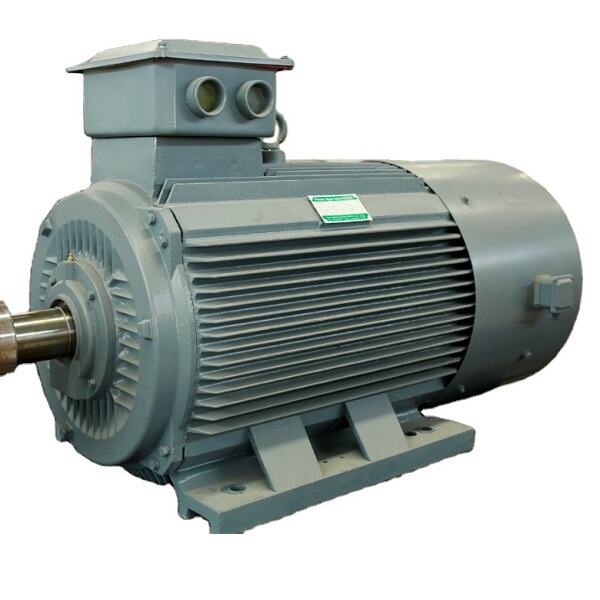
Severe Hydraulic Starting States and Torque Demands
Static Breakaway Resistance in Slurry and Viscous Fluid Transport
Industrial pumping circuits in chemical manufacturing, mining tailings management, and pulp handling frequently subject centrifugal pumps to non-ideal fluid dynamics. Centrifugal pumps are traditionally characterized by quadratic torque-speed curves where starting torque is minimal. However, during real-world special working conditions—such as cold-liquid restarts, settling of dense particulate slurries, or pumping against high static head pressure with closed discharge lines—static mechanical resistance surges dramatically. The pump impeller requires substantial breakaway torque at zero shaft speed to dislodge settled solids and overcome fluid inertia.
Synchronization Failures and Inverter Overcurrent Tripping
When a Centrifugal Pump Motor IE5 encounters extreme static breakaway resistance without optimized drive parameterization, electromechanical synchronization fails. Unlike induction motors that produce torque through slip, a synchronous permanent magnet motor requires synchronous alignment between stator and rotor fields. If initial acceleration torque is insufficient, the rotor fails to lock into synchronism, generating severe angular vibration, motor stall, and instant inverter overcurrent (OC) tripping. Repeated starting attempts overheat stator windings and stress pump mechanical seals. To overcome these harsh conditions, ENNENG engineers robust industrial Centrifugal Pump Motor IE5 solutions across 5kW to 5MW power platforms and 110V to 690V operating ranges, delivering superior low-speed torque capability.
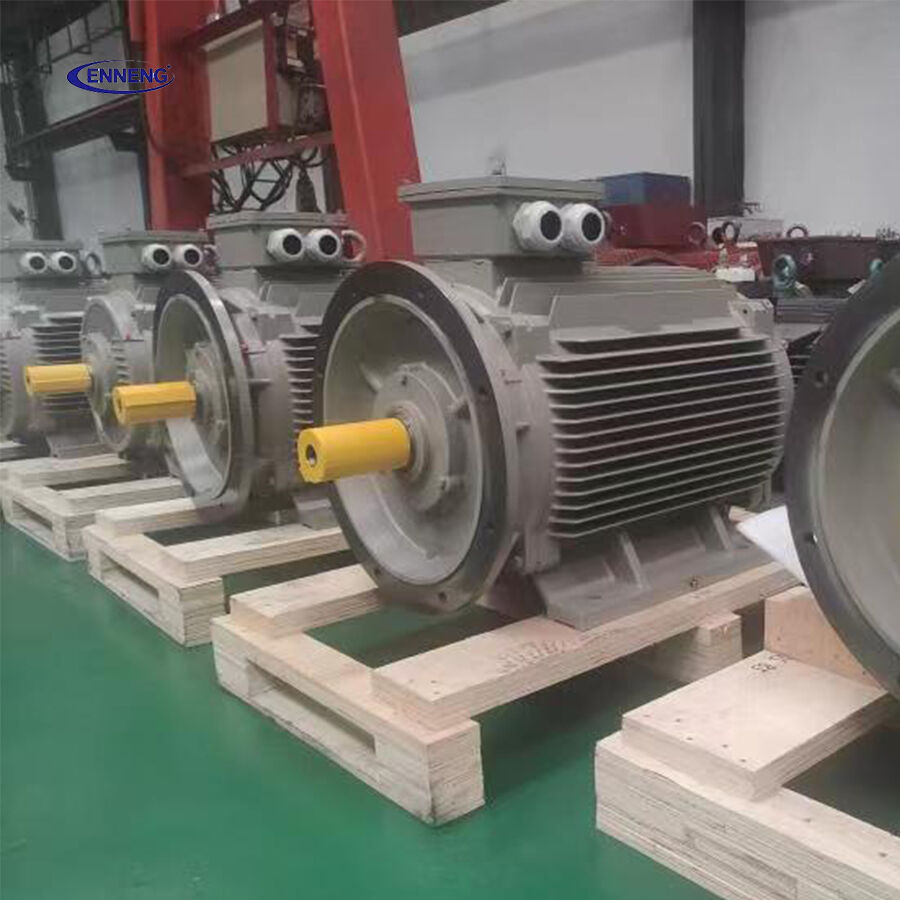
Electromagnetic Reluctance Synthesis and Vector Inverter Control
Interior Permanent Magnet (IPM) Construction and Reluctance Torque
Insufficient starting torque in PM pump motors is fundamentally resolved through rotor architecture. Conventional surface permanent magnet (SPM) designs generate torque purely through magnetic alignment. In contrast, ENNENG Centrifugal Pump Motor IE5 platforms utilize Interior Permanent Magnet (IPM) topologies. Magnets are embedded inside the rotor electrical steel laminations, creating physical magnetic saliency where quadrature-axis inductance exceeds direct-axis inductance (Lq > Ld). This electromagnetic saliency generates substantial reluctance torque alongside permanent magnet torque. By combining both torque components, an ENNENG IPM motor delivers up to 200% rated starting torque at low speeds without excessive current draw.
Field-Oriented Control (FOC) and High-Frequency Injection Algorithms
Operating an IE5 PM motor in sensorless pumping applications requires precise rotor position tracking at near-zero speeds. Because back-EMF approaches zero during startup, conventional drive estimation fails. Implementing High-Frequency Injection (HFI) algorithms in the variable frequency drive allows the controller to detect rotor saliency position accurately under zero-speed locked conditions. Applying Maximum Torque Per Ampere (MTPA) control ensures current vectors are injected at optimal angles, overcoming heavy fluid inertia smoothly before transitioning into ultra-premium IE5 operating efficiency.
|
Operational State
|
Generic Induction Motor (IE3)
|
Standard SPM Motor
|
ENNENG IPM Pump Motor (IE5)
|
|
Breakaway Torque (0-5 Hz)
|
120% - 135% (High Slip Draw)
|
100% - 110% (Position Loss)
|
180% - 210% (MTPA Enhanced)
|
|
Torque Mechanism
|
Pure Induction Slip
|
Pure Magnetic Flux
|
Magnetic + Reluctance Torque
|
|
Nominal Energy Efficiency
|
93.0% Full Load
|
95.8% Full Load
|
97.2% (IE5 Ultra-Premium)
|
|
Stator Temp Rise at Start
|
Rapid Resistive Heating
|
Moderate Thermal Rise
|
Low (Embedded PT100 Safe)
|
|
Frequency Tracking Method
|
Open-Loop V/f
|
Sensorless Back-EMF
|
High-Frequency Injection (HFI)
|
Hydraulic Standards Compliance and Pumping Field Guidelines
Adherence to ANSI/HI 9.6.4 and ISO 1940-1 Standards
Pumping drivetrain integrity requires adherence to strict mechanical vibration standards. Hydraulic Institute standard ANSI/HI 9.6.4 specifies allowable vibration limits for centrifugal pumps to avoid cavitation and seal breakdown. ENNENG Centrifugal Pump Motor IE5 units undergo dynamic balancing in accordance with ISO 1940-1 Grade G2.5, minimizing hydraulic pulsations across wide speed variations. Efficiency benchmarks strictly follow IEC 60034-30-2, ensuring verifiable energy performance under both nominal and throttled flow rates. For corrosive washdown pumping environments, enclosures satisfy IP55 or IP66 ingress protection.
Commissioning and Preventative Maintenance Procedures
- Starting Current Limit Calibration: Program inverter short-term current limits to 150%–180% for 10 seconds to allow the motor to clear static fluid resistance without nuisance tripping.
- Dynamic Temperature Protection: Wire internal PT100 thermal sensors to inverter analog inputs, configuring automated current derating if stator temperatures exceed 130°C.
- Precision Laser Alignment: Verify shaft concentricity between the motor and pump impeller shaft to prevent radial bearing overload.
-
Fluid Density and Impeller Inspection: Inspect pump casing wear rings and clean sediment during seasonal plant turnarounds to prevent mechanical binding.
Contact Us
Overcoming low-speed torque limitations while maintaining ultra-premium pump operating efficiency demands specialized electromagnetic design and advanced drive commissioning. Engineering specialists at ENNENG provide comprehensive pump duty audits, hydraulic load profiling, and customized IE5 motor selections. Contact our fluid drive team to optimize challenging pumping operations:
FAQ
Q: Why does an IE5 PM motor experience insufficient starting torque in fluid pumping?
A: Insufficient starting torque in an IE5 PM motor typically results from mismatched low-frequency drive parameterization rather than electromagnetic motor capability. If the variable frequency drive lacks accurate initial rotor position estimation or applies conservative current limits during sensorless starting, the motor cannot overcome static fluid inertia and pipeline friction, leading to starting failure.
Q: How does IPM rotor construction resolve low-speed torque bottlenecks?
A: Interior Permanent Magnet (IPM) construction embeds magnets inside the rotor core, creating distinct magnetic saliency between direct and quadrature axes. This architecture produces significant reluctance torque alongside magnetic torque. Driven by field-oriented control with low-speed voltage boost, the motor generates up to 200% breakaway torque without rotor overheating.
Q: Will continuous high-viscosity pumping cause permanent magnet demagnetization?
A: High-viscosity pumping will not cause demagnetization if thermal protection parameters are properly integrated. ENNENG utilizes high-temperature NdFeB/SmCo magnetic grades stable up to 180°C. By monitoring embedded stator PT100 temperature sensors and calibrating inverter overload curves, the motor stays well within safe thermal thresholds during demanding industrial cycles.

 EN


