
 EN

How to verify real-world energy-saving performance of a custom permanent magnet synchronous motor after field installation
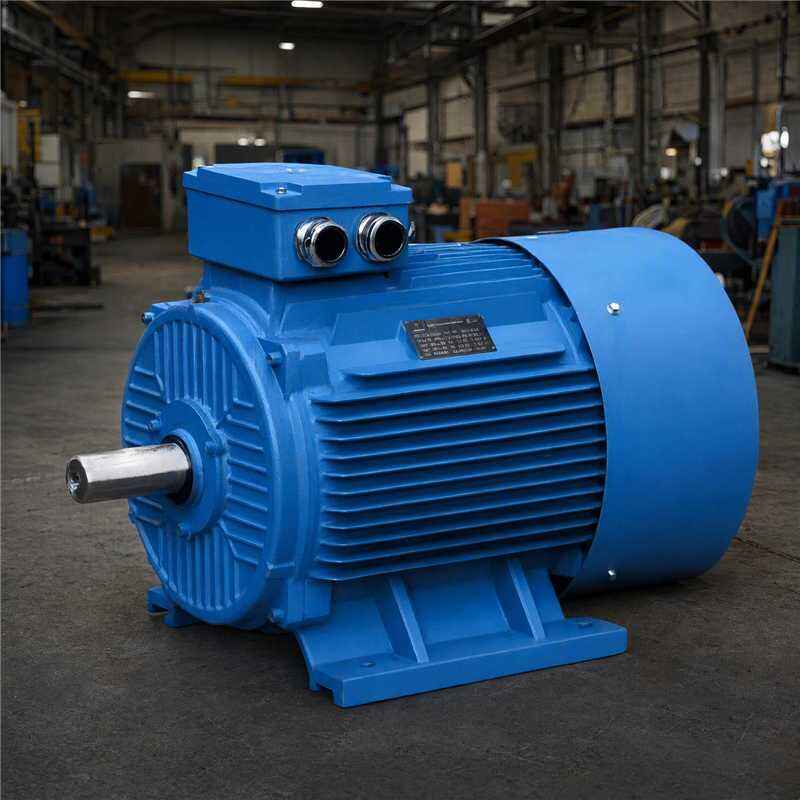
A custom Permanent Magnet Synchronous Motor can look excellent on a datasheet and still disappoint in a plant if the comparison is not controlled. The practical question after installation is not “does the new motor draw fewer amps?” It is whether the process delivers the same useful output with less energy, under comparable operating conditions. This field guide gives maintenance, process, and energy teams a repeatable way to answer that question without overstating the result.
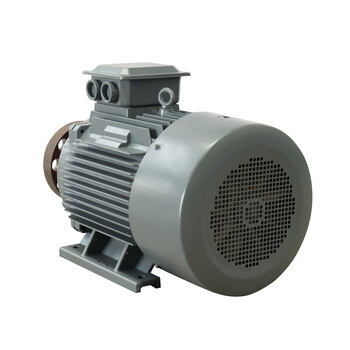
From a commissioning perspective, begin with the load profile rather than the motor label. A PM Synchronous Motor may change speed behavior, control settings, acceleration, or transmission losses. Those changes can be valuable, but they must be visible in the measurement plan. For a custom Permanent Magnet Motor PMSM, define the system boundary, stabilize production, collect matched data, and report what changed alongside the energy result.
Start with a claim that can actually be verified
Write one sentence before installing instruments: “At equivalent production output and operating conditions, this Permanent Magnet Synchronous Motor system uses less electrical energy per unit of useful work than the approved baseline.” That sentence prevents a common error: comparing a lightly loaded new motor against a heavily loaded old motor.
Choose a boundary that includes every component affected by the project. For a direct-coupled Direct Drive Motor, that may include the drive, motor, cooling, and the driven machine. For a retrofit that retains a gearbox, include the gearbox and any changed lubrication or cooling equipment. A narrow boundary can make a result look better while missing energy moved elsewhere in the line.
- Energy input: kWh at the selected electrical boundary.
- Useful output: tonnes pumped, metres conveyed, parts produced, air delivered, or another process-specific unit.
- Normalization variables: speed, pressure, flow, product grade, ambient temperature, shift pattern, and run time.
- Comparison rule: only compare records that meet the same operating-window criteria.
Build a credible baseline before declaring savings
If pre-installation data exists, inspect it before choosing a baseline period. Remove records from shutdowns, maintenance trials, abnormal material batches, and unusual production campaigns. If the former motor has already been removed, reconstruct the baseline from recent historian records, utility submeter data, and production logs; label the reconstruction clearly rather than presenting it as a direct test.
Use an energy performance indicator such as kWh per tonne, kWh per 1,000 units, or kWh per cubic metre. ISO 50001 promotes a structured approach to monitoring, measurement, analysis, documentation, and reporting of energy performance, while ISO 50006 provides guidance for energy performance indicators and baselines. In practice, a practical indicator is one the operations team can verify from routine records.
A simple baseline table is often more useful than a complicated model:
| Field | Baseline record | Post-installation record |
|---|---|---|
| Electrical energy | kWh for the observation window | kWh for the same window |
| Useful output | Process-unit total | Process-unit total |
| Operating window | Speed, load, material, setpoints | Matched values or stated adjustment |
| Energy indicator | kWh ÷ useful output | kWh ÷ useful output |
Instrument the motor system, not just one electrical reading
Install a suitable three-phase power meter at the defined boundary and record real power, energy, voltage, current, power factor, and timestamps. Confirm current-transformer ratio, phase assignment, time synchronization, and logging interval before the test starts. When available, use the same meter and settings for both periods. Spot readings can help diagnose a Permanent Magnet Synchronous Motor, but interval data is stronger evidence for an energy claim.
Record process data at the same cadence: speed command, actual speed, torque or pressure where relevant, throughput, reject rate, and downtime state. A PM Synchronous Motor may reduce energy at partial load, but an increase in throughput can raise total kWh while improving kWh per unit. Both observations can be true, which is why total consumption alone is not a sufficient KPI.
IEC 60034-2-1:2024 establishes methods for determining rotating-machine efficiency from tests and for obtaining specific losses. Treat that as a useful test-method reference, not permission to claim laboratory-grade motor efficiency from a field logger. A field study should state that it verifies system energy performance under operating conditions.
Run matched operating windows and check the data
- Allow the installation to settle after commissioning and tune the controller only under documented conditions.
- Collect enough normal operating windows to cover representative shifts, loads, and product states.
- Pair pre- and post-installation records with similar output, speed, pressure, and material conditions; document any adjustment.
- Calculate energy per unit for each window, then compare the averages and the spread—not only the highest-performing shift.
- Investigate outliers. A jam, changed setpoint, sensor fault, or unexpected cooling load belongs in the log.
For a Direct Drive Motor application, add mechanical observations such as coupling condition, bearing temperature, vibration trend, and any eliminated transmission stage. Do not automatically assign all changes to the motor. The project result may be a system effect from control, mechanical layout, and the custom Permanent Magnet Motor PMSM working together.
Calculate and communicate savings honestly
For matched records, calculate: energy intensity = kWh / useful output. Then calculate the change: (baseline intensity − post-installation intensity) / baseline intensity × 100%. Keep total kWh and production output beside the percentage. If operating conditions are not sufficiently matched, report the data as an observed trend and schedule a further verification period instead of publishing a savings percentage.
Include uncertainty in plain language. State meter accuracy where known, how many operating windows were compared, which variables were controlled, and which could not be controlled. This makes an Energy Saving Motor Solution decision more credible to finance and operations teams than a single headline number. It also creates a reusable template for the next Permanent Magnet Synchronous Motor installation.
Engineering Consultation and System Integration
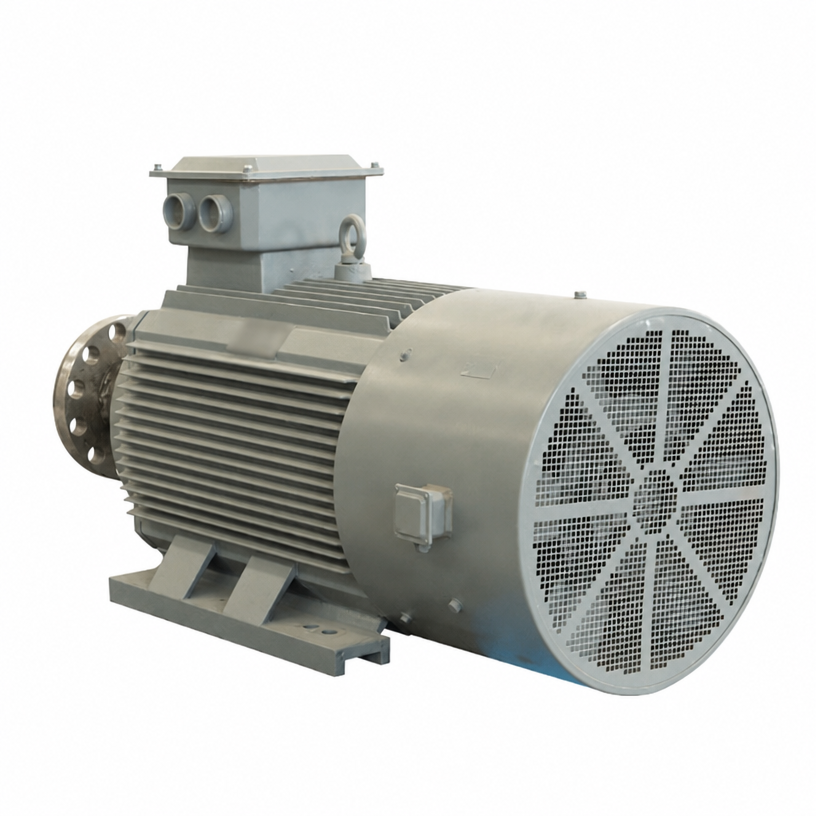
Upgrading high-vibration machinery with an advanced direct drive motor lowers plant acoustic noise, eliminates gearbox maintenance costs, and maximizes continuous operational reliability. Collaborating with an established high efficiency motor supplier guarantees proper low-speed torque sizing, verified torsional vibration modeling, and complete electrical drive package integration. Technical specialists perform detailed structural resonance analyses, acoustic surveys, and custom mechanical flange adaptations to modernize challenging industrial drivetrains. Inquire today to evaluate industrial equipment parameters and specify customized direct drive solutions.
- WhatsApp: +86 18562780228
- E-Mail: [email protected]
- Phone: +86 532 66000559
Field verification report checklist
- Project scope, motor identification, drive configuration, and system boundary.
- Baseline and post-installation dates, operating windows, and excluded records.
- Meter model, location, configuration checks, and data interval.
- Production/output source and normalization variables.
- Energy-intensity results, total-energy context, outlier treatment, and uncertainty notes.
- Actions: retain settings, investigate a deviation, or extend the monitoring period.
The strongest post-installation conclusion is specific and limited: under the defined boundary and matched operating conditions, the custom Permanent Magnet Synchronous Motor system achieved a measured change in energy intensity. That is evidence an engineering team can audit, improve, and use when evaluating the next Energy Saving Motor Solution.

