
 EN

IE5 Efficiency Motor vs IE4 in Industrial Production
Continuous chemical processing plants operating centrifugal circulating pumps 8,400 hours annually often encounter severe thermal stress and escalating utility bills on aging motor lines. Plant engineers evaluating equipment replacements must navigate the critical choice between Super Premium IE4 induction machinery and Ultra-Premium IE5 permanent magnet synchronous technology. Choosing the proper equipment class requires examining mechanical duty cycles, inverter compatibility, installation parameters, and total lifecycle costs rather than merely reviewing nameplate ratings.
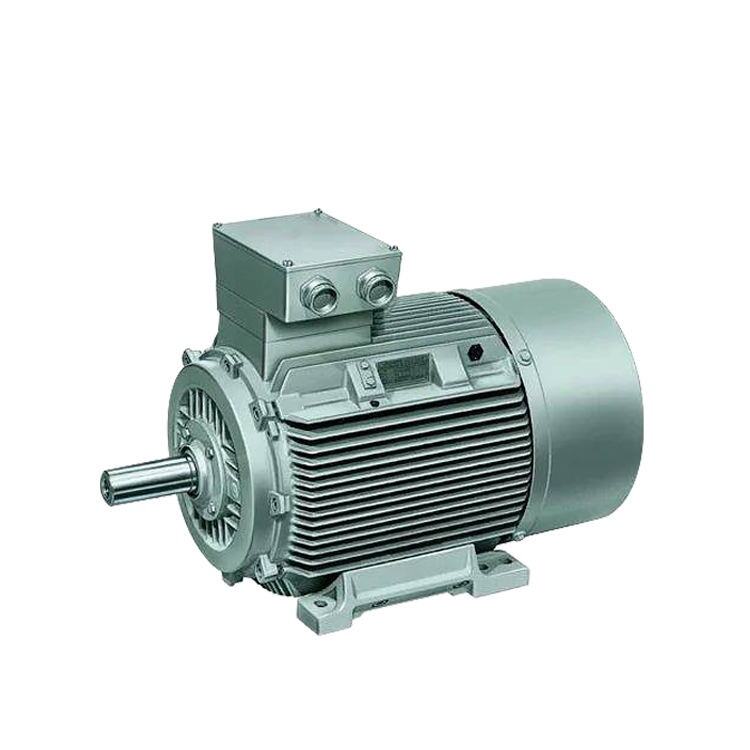
Standard squirrel-cage induction equipment running continuously under fluctuating loads produces significant rotor heat and elevated parasitic losses. These thermal burdens accelerate bearing degradation, deteriorate winding insulation, and provoke unplanned facility shutdowns. ENNENG engineers advanced permanent magnet drive technologies that mitigate these operational hazards while optimizing electrical efficiency across demanding industrial environments.
Industrial Operating Realities and Energy Loss Profiles
Selecting an effective energy saving motor solution requires examining real plant duty profiles rather than relying strictly on nameplate efficiency ratings. Machinery running continuously under stable full-load conditions presents an entirely distinct operational profile from equipment subjected to cyclic starts, variable speeds, or extended partial-load intervals. An IE4 efficiency motor provides solid baseline reliability for steady processes, whereas an IE5 efficiency motor delivers superior energy conservation in continuous, energy-dense operations where electrical power costs dominate lifecycle expenditures.
Continuous Duty Cycles and Heat Dissipation in Industrial Machinery
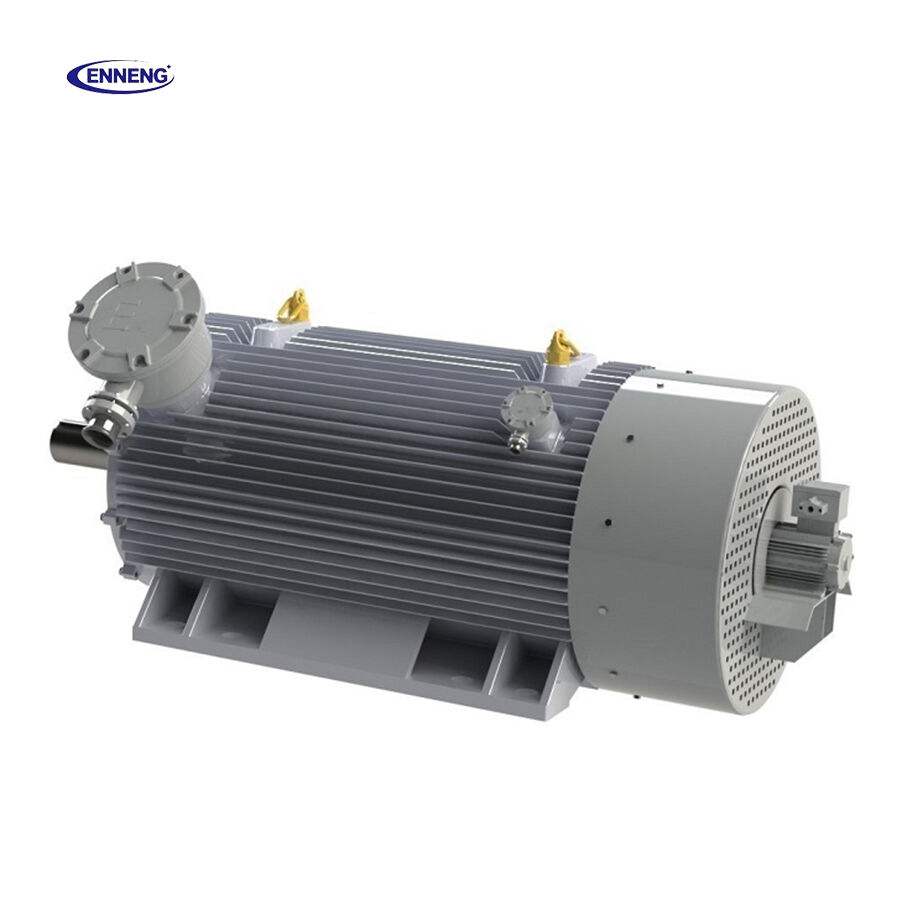
Heavy industrial machinery such as exhaust blowers, boiler feed pumps, and rotary compressors generate immense thermal energy over extended production runs. Running an IE4 efficiency motor under continuous duty produces measurable slip losses as current traverses rotor conductors, generating internal heat that dissipates into surrounding mechanical structures. In contrast, an IE5 efficiency motor incorporates high-grade permanent magnets within the rotor assembly, eliminating secondary slip currents and decreasing operating frame temperatures by 15°C to 20°C. Lower internal operating heat directly extends lubricant lifespan, protects winding insulation integrity, and minimizes unexpected mechanical failures during high-volume manufacturing campaigns.
Inverter Integration and Power Supply Fluctuations
Industrial power networks frequently experience voltage unbalance, transient surges, and harmonic distortion that diminish motor performance and elevate stator winding stresses. An IE4 efficiency motor operating direct-on-line remains vulnerable to voltage dips that drive up current draw and trigger thermal protective relays. Conversely, an IE5 efficiency motor operated through a variable frequency drive provides superior operational resilience by decoupling rotor dynamics from supply line disturbances.
Matching converter-fed drives with modern winding systems demands robust insulation capable of withstanding steep voltage wave fronts. ENNENG motor products feature advanced vacuum pressure impregnation insulation systems rated from 110V to 690V across power capacities spanning 5kW to 5MW, preventing partial discharge damage under aggressive pulse-width modulation frequencies. For decentralized renewable industrial monitoring installations, ENNENG also supports vertical axis wind turbine systems rated from 1kW to 10kW, emphasizing 3kW, 5kW, and 10kW platforms to ensure dependable off-grid plant telemetry.
Electromechanical Contrasts Between IE4 and IE5 Drive Systems
Distinguishing between an IE4 efficiency motor and an IE5 efficiency motor requires analyzing rotor magnetic physics, electrical losses, and speed regulation mechanisms. While manufacturers achieve IE4 Super Premium ratings through increased active copper volume or specialized rotor slot geometries, IE5 Ultra-Premium efficiency relies primarily on permanent magnet synchronous motor architecture.
Rotor Flux Generation and Secondary Loss Mechanisms
The fundamental electromechanical distinction between an IE4 efficiency motor and an IE5 efficiency motor centers on how the rotor creates magnetic excitation. In traditional induction machines, the stator must supply both magnetizing current and torque-producing current, resulting in continuous resistive losses within the rotor bars. An IE5 efficiency motor bypasses secondary excitation losses entirely because embedded rare-earth magnets establish persistent rotor flux without consuming electrical power. This structural difference eliminates rotor I²R losses, allowing the IE5 efficiency motor to deliver lower operating impedance and substantially higher torque density across standard industrial frame configurations.
Part-Load Operating Curves and Dynamic Speed Regulation
Manufacturing processes rarely run driven equipment at full nameplate capacity continuously. Centrifugal fans and variable-flow slurry pumps routinely operate at 40% to 70% capacity to match batch processing requirements. An IE4 efficiency motor exhibits a steep drop in efficiency when load levels dip below 50% of nominal rating, leading to excessive energy waste during throttled operations. An IE5 efficiency motor maintains an exceptionally flat efficiency curve from 25% to 120% of rated capacity. The permanent magnet synchronous architecture sustains optimal magnetic flux alignment across broad operating speeds, maximizing energy savings during extended low-load intervals.
|
Performance Parameter |
Standard IE4 Induction Motor |
ENNENG IE5 Efficiency Motor |
|
Motor Technology |
Squirrel-cage induction rotor |
Permanent magnet synchronous motor |
|
Rotor Loss Mechanism |
Resistive secondary I²R slip losses |
Zero rotor excitation losses |
|
Partial-Load Efficiency (40%) |
Moderate drop (3% to 6% reduction) |
Flat performance curve (>96% sustained) |
|
Standard Voltage Scope |
Unified 110V to 690V |
Unified 110V to 690V |
|
Standard Output Capacity |
Unified 5kW to 5MW |
Unified 5kW to 5MW |
|
Operating Temperature Rise |
Standard Class B to Class F |
Ultra-low Class A to Class B |
|
Starting & Control Method |
Direct-on-line or standard VFD |
Inverter-driven vector control |
Selection Standards, Mechanical Retrofits, and Lifecycle Care
Specifying industrial drive systems requires strict alignment with global engineering guidelines. International standard IEC 60034-30-1 defines efficiency thresholds for grid-connected induction equipment, while IEC TS 60034-30-2 specifies criteria for converter-fed variable-speed machines, establishing the Ultra-Premium baseline realized by an IE5 efficiency motor. Facility energy audits governed by ISO 50001 recommend upgrading continuous-duty machinery to permanent magnet solutions to achieve verified greenhouse gas reductions. Furthermore, electrical retrofits must comply with NFPA 70 conductor sizing protocols and OSHA 1910 Subpart S safety requirements regarding disconnect accessibility, enclosure protection, and thermal boundary limits.
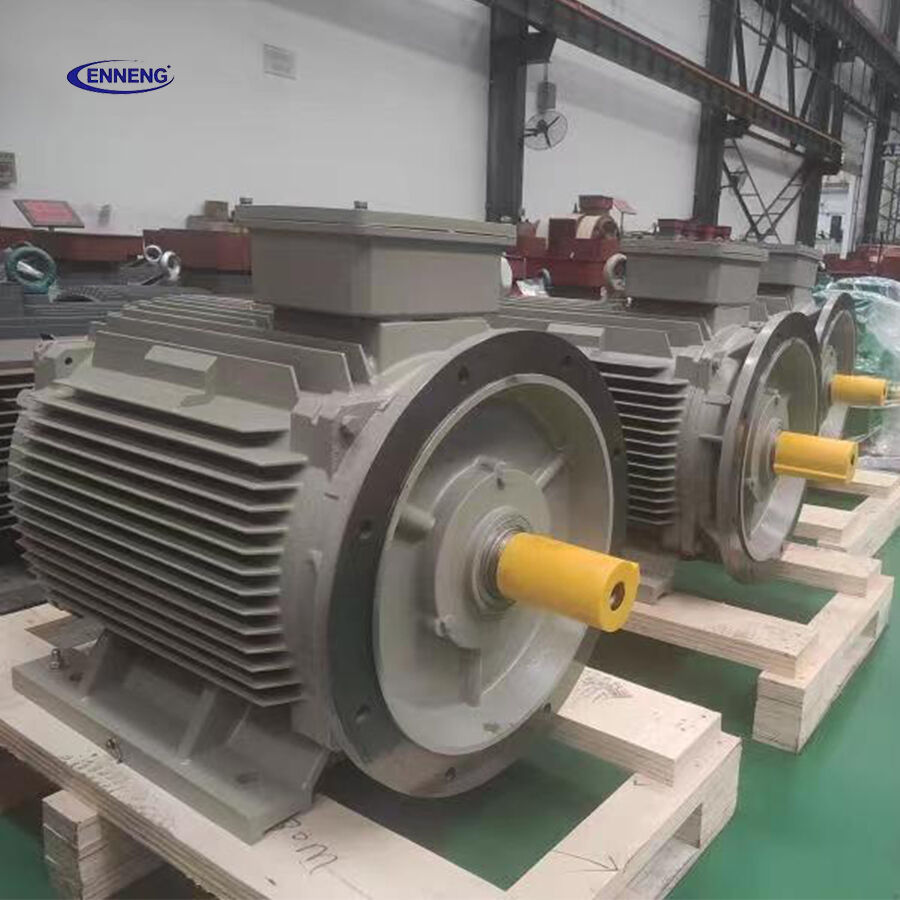
Plant engineers undertaking a retrofit from induction units to an IE5 efficiency motor must evaluate physical frame dimensions, shaft centerlines, and coupling alignment to avoid premature bearing fatigue. Technicians must verify that existing variable frequency drives possess dedicated permanent magnet motor control algorithms before commissioning. Diagnostic maintenance programs should incorporate periodic vibration spectrum analysis, thermal imaging, and insulation resistance testing adhering to IEEE 43 guidelines. Utilizing clean, dry compressed air during maintenance cycles keeps motor cooling fins free of industrial contaminants, preserving heat dissipation efficiency.
Engineering Consultation and Motor Selection Inquiries
Selecting the correct drive architecture requires analyzing equipment load factors, local electricity tariffs, and operational schedules. Upgrading critical production assets to high-efficiency drive solutions reduces operational expenditures while elevating long-term process reliability. Technical specialists provide complete application engineering, vibration evaluations, and lifecycle cost modeling to support seamless equipment integration. Inquire today to optimize facility efficiency and mechanical performance.
- WhatsApp: +86 18562780228
- E-Mail: [email protected]
- Phone: +86 532 66000559
FAQ
Q: How does an IE5 efficiency motor reduce internal operating temperatures compared to an IE4 model?
A: An IE5 efficiency motor incorporates high-strength permanent magnets in the rotor assembly, which eliminates the rotor slip currents and resistive I²R heat losses inherent to induction machinery. Operating without secondary rotor losses lowers frame and bearing temperatures by up to 20°C. This reduced thermal stress prolongs winding insulation life, preserves bearing lubrication, and enhances overall mechanical reliability in continuous operations.
Q: What industrial production scenes deliver the fastest capital recovery when upgrading to an IE5 efficiency motor?
A: Production environments with high annual operating hours, such as continuous chemical processing pumps, industrial refrigeration compressors, and wastewater aeration blowers running over 6,000 hours per year, deliver the fastest financial payback. Because electrical consumption represents over 90% of total lifecycle expenditures, the efficiency gains of an IE5 efficiency motor offset initial capital investments within twelve to twenty-four months.
Q: Can an industrial plant operate an IE5 permanent magnet motor without a variable frequency drive?
A: Standard permanent magnet synchronous motors lack squirrel-cage rotor bars for line starting and require a compatible variable frequency drive with specialized vector control algorithms to synchronize rotor magnetic poles during acceleration. Certain hybrid line-start permanent magnet models exist for direct-on-line operation, but dedicated inverter control remains the standard method to harness the complete speed-range efficiency benefits of an IE5 efficiency motor.

