
 EN

When a Permanent Magnet Motor PMSM begins to vibrate abnormally after installation, the tempting response is to blame the motor. In practice, that is often the wrong starting point. A Permanent Magnet Motor PMSM sits inside a system of foundations, couplings, driven equipment, cables, control settings, and process loads. The useful question is not “what part should we replace?” but “what changed, at what frequency, and under which operating condition?”
From a field-engineering viewpoint, start with the duty cycle and physical installation. A motor that is quiet uncoupled but rough only when the pump, fan, conveyor, or compressor is engaged is giving you a system-level clue. This diagnostic approach also helps teams avoid a costly stop-and-swap cycle with a PM Synchronous Motor that may not be at fault.
First, establish whether the vibration is genuinely abnormal
A Permanent Magnet Motor PMSM should be assessed against its own commissioning baseline, operating speed, load, mounting arrangement, and measurement locations. Do not compare one machine casually with another of a different frame, foundation, or driven load. ISO 20816-3:2022 provides in-situ vibration evaluation guidance for many industrial machines above 15 kW, including flexibly coupled electric motors, and it emphasizes both overall vibration and frequency content.
Record readings at the drive-end and non-drive-end bearing housings in horizontal, vertical, and axial directions. Then note speed, load, temperature, controller mode, and process condition. A Permanent Magnet Motor PMSM that becomes rough only during acceleration tells a different story from one that vibrates steadily at rated speed. If the trend is rising quickly, if guards are moving, or if personnel safety is in doubt, isolate the equipment according to the site procedure and involve qualified maintenance staff.
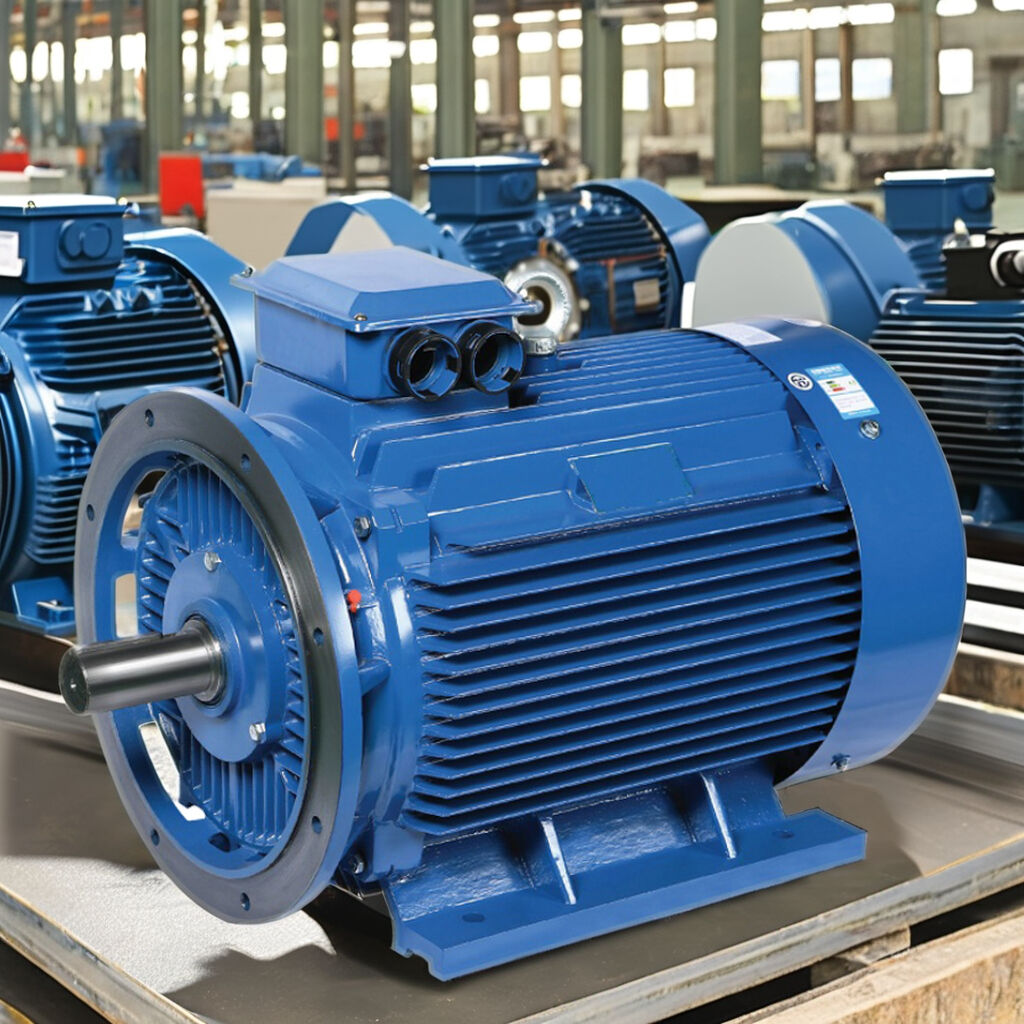
Mechanical causes: the first layer to check
Unbalance in the rotating assembly
Imbalance is common when a driven fan accumulates material, a pulley is damaged, a coupling element is uneven, or a rotor has been altered after service. It commonly produces a strong once-per-revolution component and radial vibration. The Permanent Magnet Motor PMSM may transmit that force faithfully even though its electromagnetic system is healthy. Inspect the complete rotating train, not just the motor shaft.
Misalignment, soft foot, and loose structure
Angular or parallel misalignment can create elevated radial and axial vibration after a Permanent Magnet Motor PMSM is coupled to its load. Soft foot is equally easy to miss: tightening one mounting bolt can distort the frame and change vibration dramatically. Check mounting surfaces, bolt torque according to the approved procedure, baseplate rigidity, grout condition, and pipe strain. A resonance-prone skid or thin guard can amplify an otherwise modest excitation.
Bearing condition and lubrication
Roughness, contamination, incorrect grease quantity, electrical discharge damage, or poor fits can make bearing-related vibration appear before temperature alarms do. On a Permanent Magnet Motor PMSM, compare bearing temperature, acoustic character, and vibration spectra over time rather than relying on a single overall value. Bearing replacement should follow evidence, because a new bearing will not cure external misalignment or a flexible base.
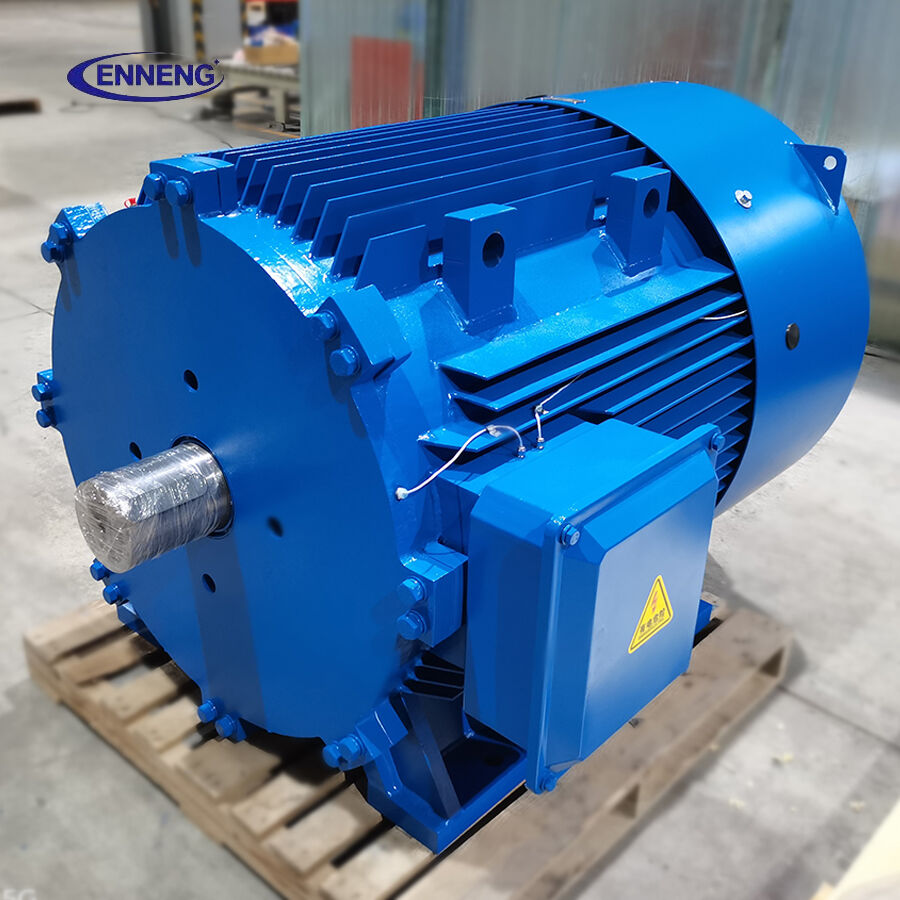
Electrical and electromagnetic causes that mechanical checks can miss
A Permanent Magnet Motor PMSM uses a permanent-magnet rotor, so air-gap symmetry and control quality matter. Rotor eccentricity can alter the air gap and contribute to unbalanced magnetic pull. Research on PMSM vibration identifies electromagnetic force and eccentricity among contributors to vibration and noise; that is why a mechanically sound installation can still show a speed- or load-dependent problem.
Review phase-current balance, supply quality, grounding and shielding practices, encoder or resolver feedback, parameter settings, and inverter switching behavior with competent electrical personnel. A Permanent Magnet Motor PMSM that is smooth on line-frequency bypass testing but rough under a particular variable-frequency-drive setting may point toward tuning, current harmonics, or a control interaction. Conversely, do not alter protective limits simply to make a vibration symptom disappear.
Driven equipment and process conditions matter
The motor is only half the machine train. A Permanent Magnet Motor PMSM driving a fan can react to blade fouling, airflow instability, or a damaged impeller. With a pump, cavitation, suction restrictions, misaligned pipework, or a changing fluid condition may dominate the vibration signature. With conveyors or mixers, changing load distribution and gearbox condition can be decisive.
Run a controlled comparison where site rules allow: no-load versus coupled, low versus rated speed, and stable process versus the condition that triggers the complaint. If vibration follows process flow rather than motor speed, focus downstream. If it follows speed regardless of process, inspect the rotating system and electrical excitation more closely. This is more informative than replacing a Permanent Magnet Motor PMSM based on overall severity alone.
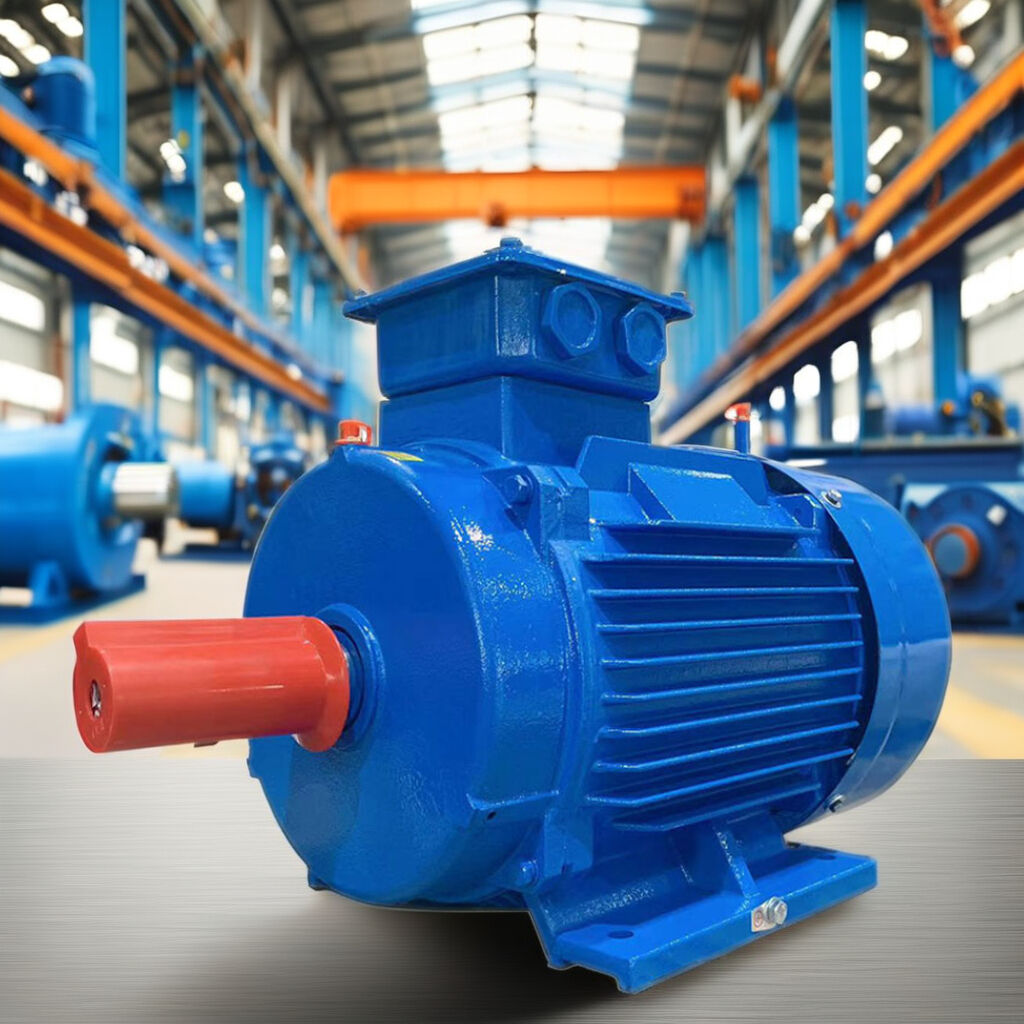
The ENNENG Customisation Advantage
No two industrial facilities share the same spatial or mechanical constraints. ENNENG stands out because we do not just supply off-the-shelf catalogue products; we specialise in delivering a tailor-made permanent magnet motor tailored to your specific application .
Supported by our elite R&D team consisting of engineers from the National Rare Earth Permanent Magnet Engineering Centre, and backed by dozens of patents, we customise high-voltage (6kV/10kV) and low-voltage (380V/660V/1140V) solutions to match your existing footprint. From water treatment facilities and oil wells to explosion-proof mining environments, we deliver optimal performance where general-purpose motors fail .
If you are evaluating commercial permanent magnet motors for sale and need an engineered drive solution that guarantees efficiency and longevity, ENNENG is your trusted partner.Contact ENNENG Today.Speak to our technical engineering team to receive a customised drive proposal.
- WhatsApp: +86 18562780228
- E-Mail: [email protected]
- Phone: +86 532 66000559
What results should prompt escalation?
Escalate when vibration rises rapidly, repeats at a harmful operating point, coincides with bearing heat, affects foundation integrity, causes repeated trips, or cannot be tied to a clear mechanical cause. A Permanent Magnet Motor PMSM can be efficient and reliable, but no motor benefits from continued operation with a growing structural or electrical fault. Ask the motor manufacturer or a vibration specialist for the machine-specific acceptance criteria, spectral interpretation, and safe test limits.
The durable fix begins with evidence: identify whether the excitation comes from balance, alignment, bearing condition, structure, electromagnetic behavior, or the driven process. Once that distinction is clear, maintenance teams can correct the real source instead of treating every vibration issue as a failed Permanent Magnet Motor PMSM.

