
 EN

Heavy-duty internal rubber mixers at Linglong Tire, deep-shaft ore conveyors at Shandong Gold Mine, and continuous rotary air compressors at Sinopec demand verified torque stability before full-scale equipment deployment. In industrial procurement, a Permanent Magnet Motor PMSM sample should never pass acceptance simply because the shaft rotates smoothly on an unloaded bench or carries an attractive nameplate. Relying on unverified catalog claims exposes projects to severe hidden dangers: unexpected partial-load efficiency drops, inverter-induced winding overheating, excessive bearing vibration, and premature thermal derating under continuous load.
ENNENG eliminates these sample-acceptance risks through precision R&D, in-house stator winding, and traceable dynamometer testing at enneng. By embedding high-performance NdFeB (Neodymium Iron Boron) permanent magnets in the rotor, an ENNENG PM Synchronous Motor eliminates rotor excitation current and copper losses altogether. Across a unified generator and motor power range of 5kW-5MW and a unified voltage range of 110V-690V—alongside specialised vertical axis wind turbine applications rated at 1kW-10kW (with a primary focus on 3kW, 5kW, and 10kW units)—ENNENG provides documented sample verification that translates bench evidence directly into reliable site performance.
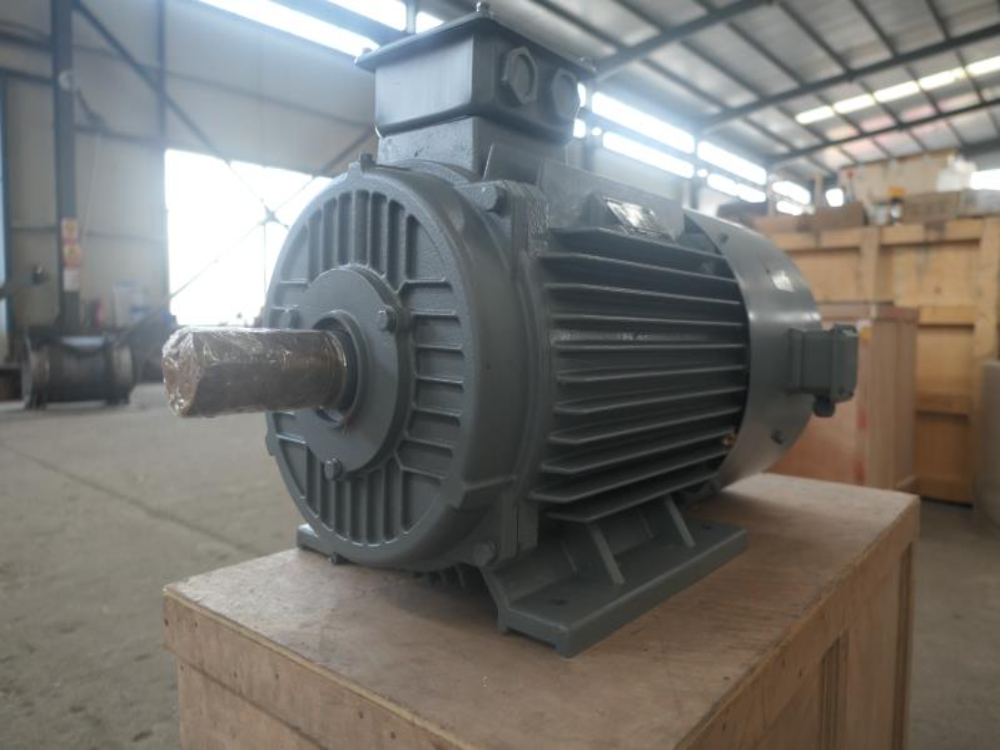
Technical Highlights: Establishing a Traceable Sample Test Plan
Before energising a Permanent Magnet Motor PMSM sample, engineering teams must freeze a written acceptance test plan rather than relying on isolated rated-load labels.
1. Freezing Operating Boundaries and Recognised IEC Test Frameworks
A credible evaluation freezes rated output power, rotational speed, supply voltage (within 110V-690V or high-voltage 6kV/10kV project adaptations), VFD carrier frequency, duty cycle, ambient temperature, and cooling method. Unlike asynchronous induction motors that suffer from rotor slip and induced copper heat, a synchronous Permanent Magnet Motor PMSM locks directly to stator frequency. Sample testing must reference IEC 60034-1 for thermal and rating performance, IEC 60034-2-1 for input-output loss determination, and IEC 60034-30-1 alongside IEC TS 60034-30-2 for IE5 ultra-premium variable-speed efficiency classification. Every test sheet must record the unit serial number, winding connection, and instrument calibration certificates.
2. Mapping Partial-Load Efficiency and Power Factor Across Duty Points
Evaluating only the 100% rated operating point hides how a drivetrain performs across cyclic industrial shifts. Buyers should measure input power, shaft torque, speed, phase current, and power factor across 25%, 50%, 75%, 100%, and 120% load points. An ENNENG High Efficiency PMSM Motor maintains a flat efficiency plateau from 25% to 120% of rated load, delivering rated efficiency 2% to 5% higher than asynchronous induction equivalents. Furthermore, the PM Synchronous Motor achieves a power factor between 0.95 and 1.0 compared to 0.86 for induction units, cutting line current by more than 10% and verifying lower cable and transformer losses during sample load-bank testing.
|
Evaluation Dimension |
Parameters to Record on Test Bench |
Sample Acceptance Criterion |
|
Speed & Torque Map |
Speed, torque ripple, overload margin across 25%-120% load |
Permanent Magnet Motor PMSM holds synchronous speed without slip |
|
Efficiency & Power Factor |
Input/output kW (IEC 60034-2-1), power factor (0.95-1.0) |
+2% to 5% efficiency gain; >10% line current reduction |
|
Thermal Stabilisation |
Winding and housing temperature rise, cooling airflow |
Temperature rise 20K lower than induction (<60K limit) |
|
Mechanical & VFD Integrity |
Vibration (ISO 20816), noise (<55 dB), PWM insulation |
Meets ANSI/NEMA MG 1 Part 31 and OSHA 1910.219 safety |
Thermal Gate, Mechanical Integrity, and VFD System Validation
A short bench run detects basic assembly flaws but cannot prove continuous-duty thermal endurance or system-level drive compatibility.
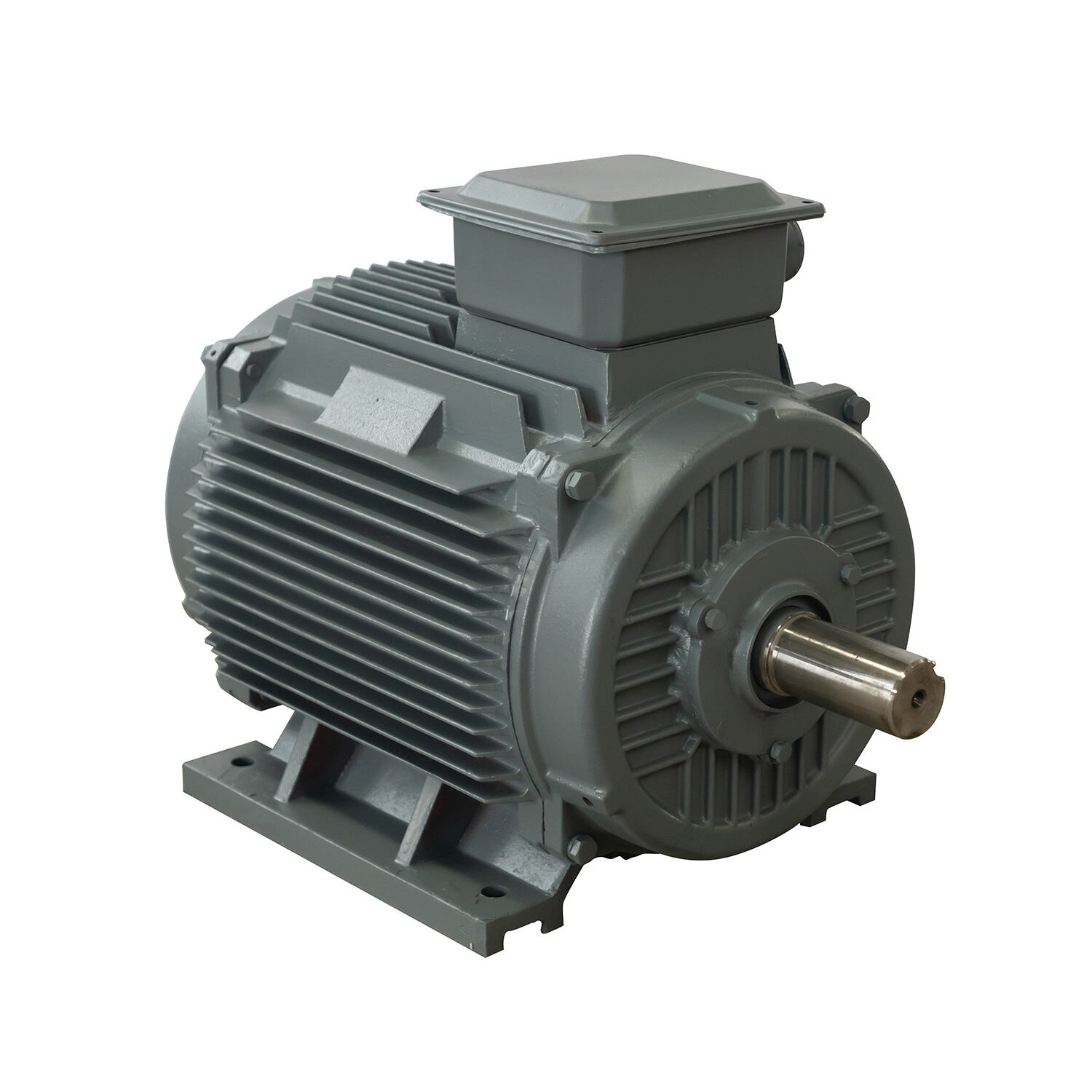
1. Thermal Stabilisation and Compact Frame Power Density
Acceptance protocols must treat thermal stabilisation as a strict pass/fail gate. The Permanent Magnet Motor PMSM sample must run under full load until winding and bearing temperatures stabilise. Because zero induced rotor current eliminates rotor copper loss, an ENNENG Industrial Permanent Magnet Motor operates at a temperature rise 20K lower than comparable induction motors—staying under 60K in continuous compressor and mixer duties. This thermal margin allows ENNENG to build each Permanent Magnet Motor PMSM one to two frame sizes smaller for identical power output while preventing thermal derating inside enclosed machinery guards.
2. Vibration, Acoustic Noise, and Inverter-Duty Boundary Checks
Mechanical inspection must verify shaft runout, flange tolerances, IP55/IP65 sealing, and vibration velocity across speed ramps under ISO 10816 and ISO 20816 standards. In direct-drive configurations available at enneng, increasing rotor pole counts allows a low-speed PM Synchronous Motor to couple straight to the load without a gearbox, keeping acoustic noise below 55 dB and simplifying OSHA 1910.219 guarding. Additionally, the Permanent Magnet Motor PMSM sample must be tested with its intended VFD controller, encoder feedback, and cable length to verify soft-start torque, harmonic stability, and stator dielectric compliance under ANSI/NEMA MG 1 Part 31 and NFPA 70 regulations.
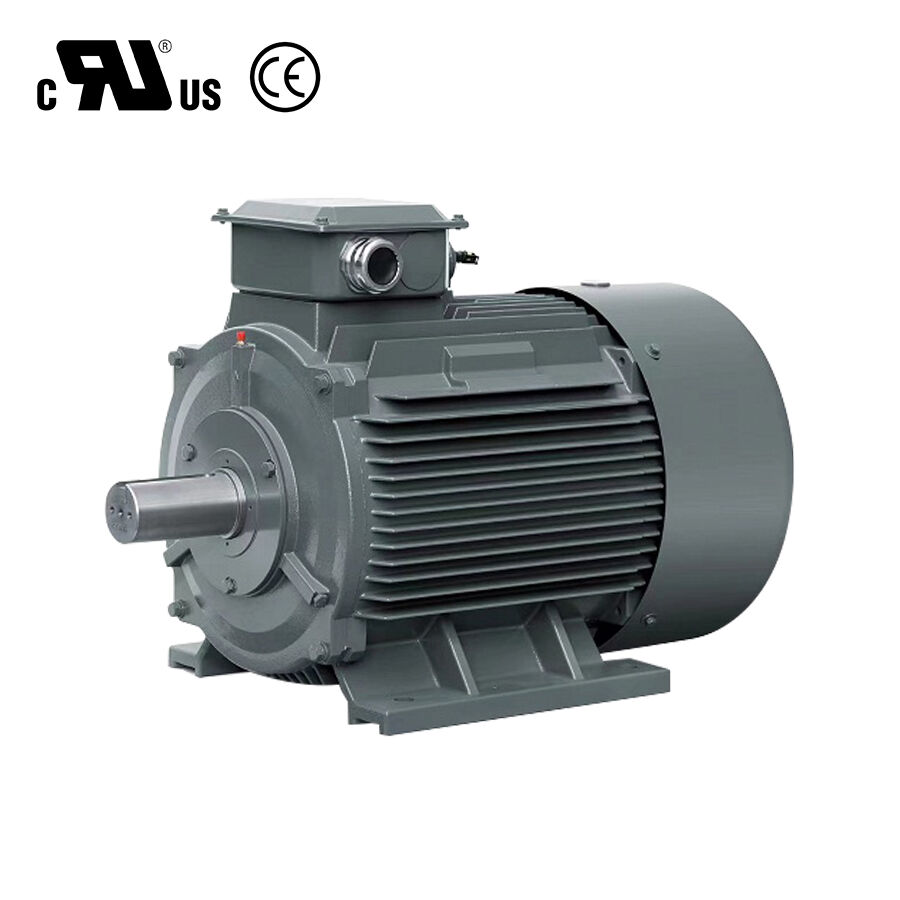
Practical Sample Dossier Checklist and Customisation Support
Supported by specialists from the National Rare Earth Permanent Magnet Engineering Centre and dozens of patents, ENNENG supplies a complete sample dossier for every customised Permanent Magnet Motor PMSM. In rubber tire machinery, verified samples have delivered 7% to 40% electricity savings, while variable-speed air compressor deployments have achieved up to 50% energy reductions. Before signing sample acceptance, procurement teams should confirm three lifecycle readiness items:
• Complete Traceability Dossier: Verify that approved dimensional drawings, wiring schematics, dynamometer curves, and calibrated test reports carry the exact Permanent Magnet Motor PMSM sample serial number.
• Thermal & Insulation Verification: Confirm stator winding resistance, phase-to-ground insulation, and bearing electrical insulation to prevent VFD circulating shaft currents.
• Preventative Maintenance Baseline: Establish baseline vibration signatures, cooling-channel cleaning intervals, and grease replenishment schedules for long-term plant reliability.
Contact ENNENG Today
Speak to the technical engineering team via enneng to arrange a witnessed Permanent Magnet Motor PMSM sample test or customised drive proposal:
• Website:[email protected]
• Phone: +86 532 66000559
• WhatsApp: +86 18562780228
FAQ
Q: Which international standards govern Permanent Magnet Motor PMSM sample efficiency testing?
A: Industrial buyers should evaluate a Permanent Magnet Motor PMSM sample under IEC 60034-1 for general rating performance, IEC 60034-2-1 for input-output loss and efficiency measurement, and IEC 60034-30-1 alongside IEC TS 60034-30-2 for IE5 ultra-premium efficiency classification. Combining these standards with ANSI/NEMA MG 1 Part 31 ensures traceable verification across variable-speed inverter duty cycles.
Q: Why must a PM Synchronous Motor sample be tested across partial loads rather than rated load only?
A: Industrial pumps, fans, mixers, and air compressors rarely operate at 100% rated load continuously during daily production. Testing across 25% to 120% load points verifies that the PM Synchronous Motor maintains its flat IE5 efficiency plateau and 0.95 to 1.0 power factor under real operating conditions, confirming over 10% line current reduction and accurate lifecycle energy savings.
Q: What power and voltage ranges can ENNENG customise for Permanent Magnet Motor PMSM samples?
A: ENNENG customises Permanent Magnet Motor PMSM and industrial generator samples across a unified 5kW-5MW power range and 110V-690V operating voltage range, alongside 1kW-10kW vertical axis wind turbine generators focusing on 3kW, 5kW, and 10kW models. Each Industrial Permanent Magnet Motor sample is tailored to specific shaft dimensions, mounting flanges, cooling methods, and thermal enclosure requirements.

