Mechanical Misalignment and Abnormal Noise in Permanent Magnet Motor PMSM
Continuous manufacturing operations depend on rotating equipment operating under strict acoustic and thermal parameters. In a chemical processing facility running heavy slurry agitation, an unexpected acoustic resonance appeared immediately following the commissioning of a newly mounted drive system. Diagnostic vibration monitoring identified mechanical misalignment that transformed normal magnetic flux interactions into severe structural vibrations and high-decibel squealing. When installation procedures neglect fundamental geometric tolerances, the intrinsic magnetic stiffness of a Permanent Magnet Motor PMSM magnifies mechanical anomalies, turning minor baseline imperfections into destructive operational disruptions.
|
Quality Parameter
|
Standard Tolerance
|
Acoustic Consequence
|
|
Angular Misalignment
|
< 0.05 mm/100 mm
|
2x running speed harmonic hum
|
|
Parallel Offset
|
< 0.05 mm
|
High-frequency rattle and bearing chatter
|
|
Foundation Soft Foot
|
< 0.02 mm
|
Variable electromagnetic howling
|
|
Dynamic Imbalance
|
ISO G1.0 - G2.5
|
1x rotational harmonic rumble
|
Mechanical alignment between the driven machine and a Permanent Magnet Motor PMSM requires tighter tolerances than standard induction machinery. Because rare-earth rotors maintain permanent magnetic excitation without slip, any angular or parallel eccentricity alters the air gap symmetrically across the stator circumference. This geometric shift produces unbalanced magnetic pull, generating elevated sound pressure levels across broad frequency bands. Precision laser alignment minimizes these forces and preserves acoustic design thresholds.

Angular and Parallel Shaft Deviation Dynamics
Shaft angularity forces the rotor shaft to experience periodic bending moments during every revolution. In a Permanent Magnet Motor PMSM, the permanent magnetic field interacts with the mechanical deflection, intensifying the mechanical hum at double the operating frequency. Parallel offset creates a continuous radial shear load against the drive-end bearing assembly, causing rolling elements to track unevenly along bearing raceways. Coupling selection must accommodate thermal expansion without transmitting axial preloads into the internal permanent magnet assembly.
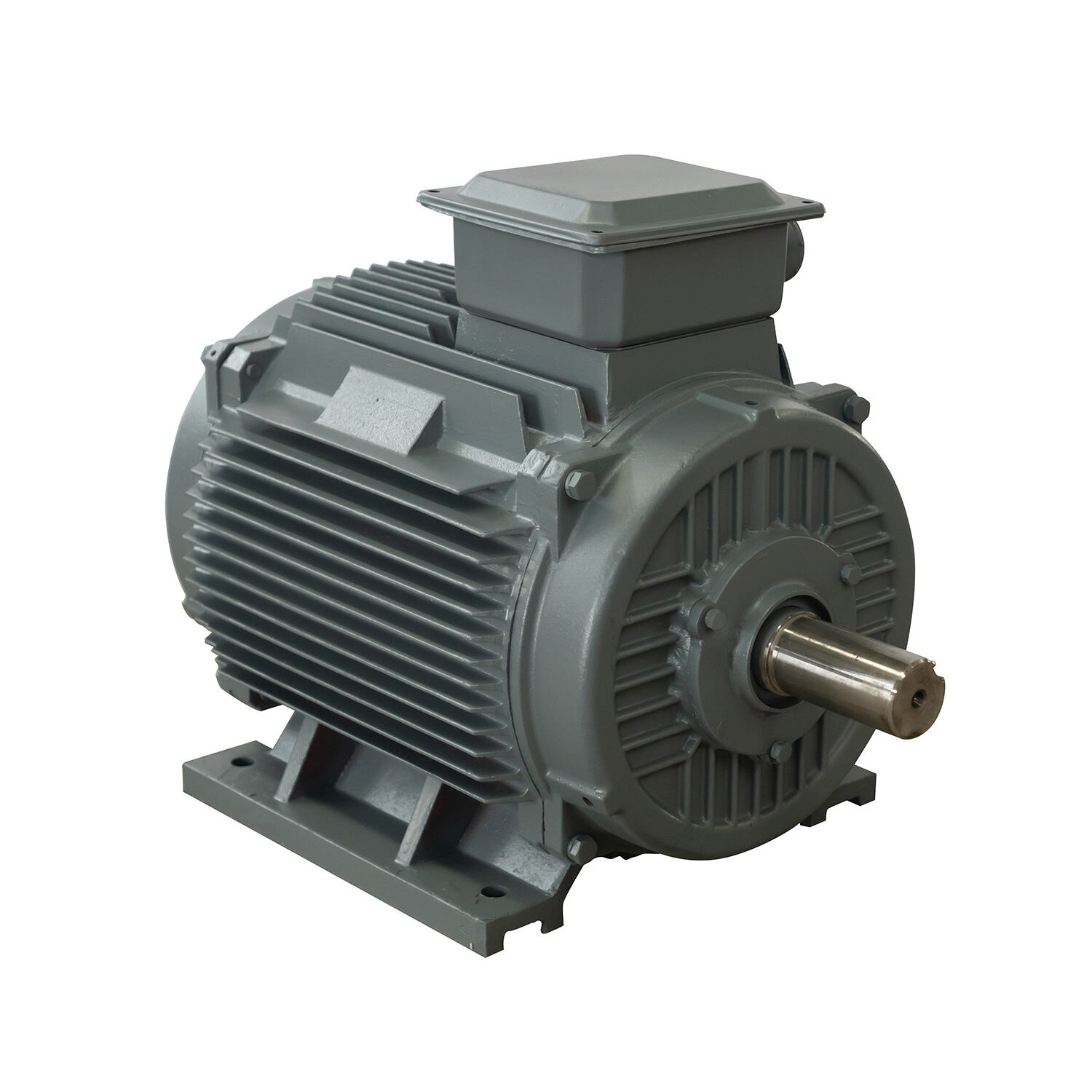
Foundation Flatness and Soft Foot Phenomenon
Structural support plates often contain microscopic warping or uneven paint finishes that induce soft foot conditions when anchor bolts are torqued. Bolting down a motor foot on an uneven surface twists the stator core housing out of round. In a Permanent Magnet Motor PMSM, a stator deflection of even 0.03 mm causes uneven magnetic reluctance around the rotor perimeter, triggering noticeable acoustic howling during speed acceleration. Rectifying soft foot through stainless steel shimming eliminates housing stress and suppresses acoustic radiation.
Mechanical Resonances in Baseplate Structures
Every welded steel baseplate possesses natural resonance frequencies that must avoid coincidence with motor rotational and pole-pass frequencies. When structural stiffness is insufficient, the rotor excitation of a Permanent Magnet Motor PMSM transfers mechanical energy straight into the skid frame, causing secondary acoustic radiation. Damping pads, structural gussets, and concrete grouting modify the mechanical impedance of the mounting frame, preventing ambient sound levels from exceeding plant boundary guidelines.
Electromagnetic and Air Gap Eccentricity Triggered by Mounting Deficiencies
Securing proper concentricity during field assembly remains essential to stable permanent magnet operation. Industrial pump stations and grinding mills subject motors to substantial external loads, which reveal mounting flaws immediately. ENNENG provides advanced low-speed and high-torque direct-drive synchronous equipment engineered to resist mechanical deformation under severe duty cycles. Integrating an ENNENG Permanent Magnet Motor PMSM into production lines ensures exceptional mechanical stability across voltages spanning 110V to 690V.
|
Operating Condition
|
Standard Asynchronous Drive
|
ENNENG Permanent Magnet Motor PMSM
|
|
Voltage Range
|
380V - 440V
|
110V - 690V Unified
|
|
Rotor Heat Generation
|
Moderate to High
|
Negligible (Synchronous Operation)
|
|
Acoustic Signature at Low RPM
|
Audible slip buzz
|
Ultra-low mechanical tone
|
|
Continuous Torque Density
|
Standard Base Envelope
|
High Volumetric Efficiency
|
Dynamic eccentricity occurs when the center of the rotor does not coincide with the center of rotation, often caused by uneven bearing seating or overtightened drive belts. The high flux density of neodymium iron boron magnets produces powerful magnetic attraction toward the narrower air gap side. This dynamic force pulsates with every revolution, generating pulsating electromagnetic noise that traditional sound enclosures struggle to attenuate.
Static Air Gap Variations During Flange Installation
Improper tightening sequences on motor mounting flanges tilt the rotor axis relative to the stator bore. A Permanent Magnet Motor PMSM running with static eccentricity exhibits stationary magnetic saturation along one sector of the stator lamination pack. The resulting radial magnetic force produces low-frequency airborne noise that propagates through ventilation pathways and surrounding structures. Cross-pattern torque tightening alongside dial indicator verification prevents angular tilt during flange bolting.
Bearing Preload and Housing Fit Inaccuracies
Tolerances on bearing housings dictate internal radial clearance during full thermal equilibrium. Excessive press fitting during installation pinches the bearing rolling elements, creating severe race contact noise and high-frequency screeching. Conversely, loose fit tolerances allow outer rings to spin inside bearing end-shields, exciting high-amplitude vibration modes across the entire Permanent Magnet Motor PMSM frame. Correct interference selection ensures quiet operation and prolonged lubrication grease integrity.
Authoritative Standards and Regulatory Compliance Benchmarks
Acoustic emissions and mechanical vibrations in industrial installations must adhere to standardized global criteria. The International Electrotechnical Commission outlines acceptable sound power limits through IEC 60034-9, which defines rigorous testing methodologies for rotating electrical machines across various frame ratings. Meanwhile, ISO 10816-3 and ISO 20816-3 categorize vibration severity thresholds for machines operating in coupled conditions.
Under ISO 10816-3, newly commissioned rigid-mounted industrial motors must operate within Zone A limits, maintaining vibration velocity below 1.4 mm/s RMS. When installation errors elevate vibration into Zone C or Zone D (exceeding 4.5 mm/s RMS), accelerated degradation of the bearing races and permanent magnet bonding occurs. Furthermore, OSHA standard 1910.95 enforces continuous noise exposure caps of 90 dBA over an eight-hour shift, making acoustic mitigation in high-capacity motor rooms a legal necessity. Aligning every Permanent Magnet Motor PMSM with ANSI/ASA S2.75 standards guarantees compliance with occupational health regulations and mechanical preservation rules.
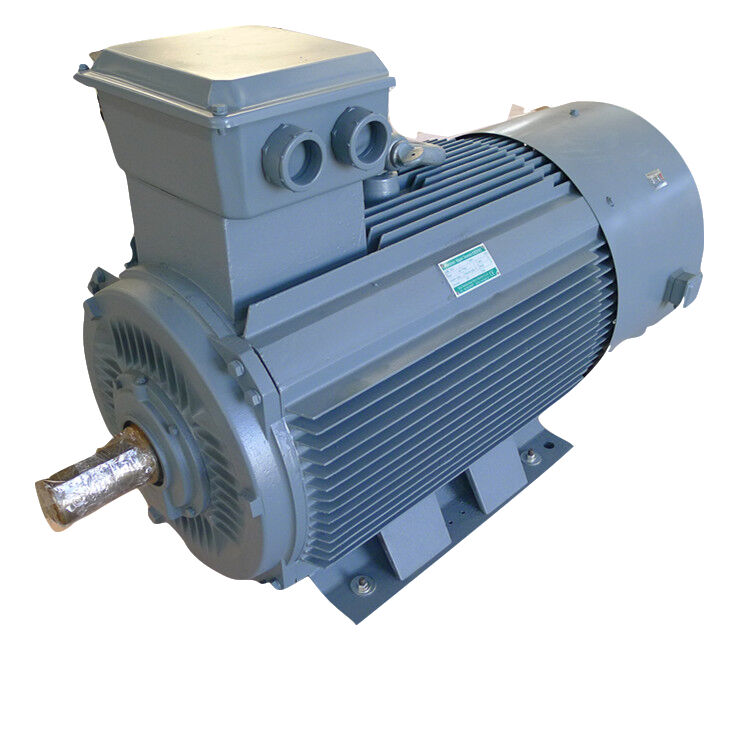
Comprehensive Installation and Maintenance Guidelines
Pre-Installation Verification Protocols
Before bolting equipment to foundations, engineers must measure shaft runout using calibrated dial test indicators. Total indicated runout on the shaft extension of a Permanent Magnet Motor PMSM should never exceed 0.015 mm. Technicians must check baseplate planarity using precision straight edges or optical leveling instruments, ensuring coplanarity within 0.05 mm across all mounting pads to avoid internal stresses.
Precision Coupling and Fastener Torque Specifications
Employ laser alignment equipment to set angular and radial offsets simultaneously across both horizontal and vertical axes. Fasteners must undergo multi-stage tightening using calibrated torque wrenches in accordance with grade 8.8 or 10.9 fastener ratings. Flexible couplings must maintain designated axial spacing to allow thermal rotor expansion without exerting compressive forces against the internal thrust bearings of the Permanent Magnet Motor PMSM.
Routine Maintenance and Diagnostic Surveillance
Implement monthly acoustic spectrum monitoring and triaxial vibration data collection across all bearing housings. Frequency spectrum analysis distinguishes mechanical unbalance peaks from high-frequency bearing defect tones or electromagnetic pole-pass harmonics. Periodic re-torquing of foundation fasteners and baseline checks of lubricant composition ensure reliable performance across prolonged industrial production schedules.
To inspect specialized permanent magnet configurations, review available industrial designs on the ENNENG Products Catalog and explore system options through ENNENG Motor Solutions.
Industrial engineers and plant managers seeking to modernize motor efficiency or resolve persistent acoustic anomalies are invited to submit detailed technical specifications for specialized engineering review.
-
WhatsApp: +86 18562780228
-
E-Mail: [email protected]
-
Phone: +86 532 66000559
-
Address: Haichuang New Energy & New Materials Industrial Park, No. 1 Guiding Road, Licang District, Qingdao, Shandong, China
-
Website: www.ennengmotor.com
FAQ
Q: Why does a Permanent Magnet Motor PMSM produce louder humming after a belt replacement?
A: Incorrect belt tensioning introduces significant radial overhung load upon the shaft extension, bending the rotor slightly off its magnetic center. This mechanical deflection induces dynamic air gap eccentricity, which magnifies unbalanced magnetic pull and excites stator core resonance frequencies. Verifying belt tension with sonic frequency gauges restores designated concentricity and silences abnormal acoustic emissions.
Q: Can variable frequency drive settings cause mechanical noise in a Permanent Magnet Motor PMSM?
A: Drive parameter mismatches directly impact motor acoustics. Suboptimal carrier frequencies or improperly tuned current loop proportional-integral gains produce current ripples that translate into high-frequency torque pulsations. When these electromagnetic pulsations align with mechanical housing resonance, audible screeching occurs. Adjusting inverter carrier frequencies away from natural structural frequencies effectively suppresses the noise.
Q: How does soft foot condition permanently damage a Permanent Magnet Motor PMSM?
A: Uneven foot contact distorts the cylindrical geometry of the stator casing when anchor bolts are torqued down. This structural distortion creates non-uniform air gap clearances and pinches bearing outer rings, accelerating mechanical fatigue and localized overheating. Over time, the resulting cyclic stress causes bearing raceway spalling and permanent magnet demagnetization under concentrated hot spots.

 EN


