In municipal water distribution stations, pharmaceutical cleanroom HVAC systems, and automated plastic injection molding plants, centrifugal pumps, blowers, and hydraulic power units rarely run at 100% nameplate load. Instead, seasonal weather changes and fluctuating production schedules force industrial drive motors to spend 65% to 80% of their annual operating hours running between 30% and 70% partial load. Plant engineers who replaced legacy IE2 or IE3 induction motors with asynchronous IE4 motors frequently notice that actual monthly kilowatt-hour bills fall short of projected energy-saving targets during off-peak operation.
The underlying cause of this performance gap lies in how different electromagnetic motor topologies behave when mechanical torque demand drops below the full-load design point. While an asynchronous IE4 induction motor achieves super-premium efficiency at 100% rated load, its fixed reactive magnetizing current causes efficiency and power factor to degrade rapidly under light loads. Upgrading to an ultra-premium IE5 Efficiency Motor engineered by ENNENG eliminates rotor magnetizing penalties, preserving flat, peak-level energy efficiency across the entire partial-load operating spectrum.
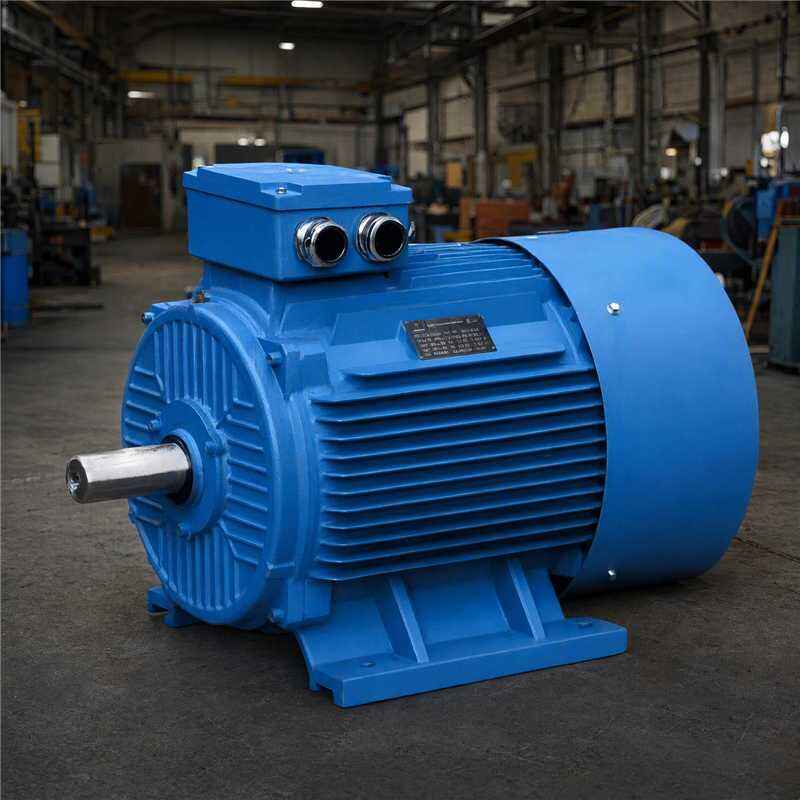
Technical Highlights: Electromagnetic Differences Between IE4 and IE5
Fixed Reactive Magnetizing Current in Asynchronous IE4 Motors
Most line-fed and inverter-fed IE4 motors on the market rely on squirrel-cage asynchronous induction technology, utilizing enlarged copper or cast-aluminum rotor cages and thinner silicon-steel laminations to trim full-load losses. However, the fundamental physics of an induction motor requires the stator winding to draw continuous reactive magnetizing current from the AC supply to establish an air-gap magnetic field and induce current into the rotor bars. Typically, this no-load magnetizing current equals 30% to 45% of the motor’s full-load rated current. When a cooling pump or fan throttles down to 40% partial load, active torque current drops, but the reactive magnetizing current remains virtually unchanged—creating disproportionate stator copper losses (I2R) and dragging partial-load efficiency down sharply.
Loss-Free Rotor Excitation in the ENNENG IE5 Efficiency Motor
An ENNENG IE5 Efficiency Motor overcomes the partial-load penalty by utilizing a permanent magnet synchronous rotor architecture:
-
20% Total Loss Reduction Over IE4: Defined under IEC TS 60034-30-2 as the highest ultra-premium efficiency classification, an IE5 Efficiency Motor cuts total electromagnetic and mechanical losses by roughly 20% compared to an IE4 baseline.
-
Zero Rotor Magnetizing Current Draw: High-energy permanent magnets embedded within the rotor core supply a constant, self-sustained magnetic field without drawing reactive excitation current from the factory grid.
-
Flat Partial-Load Efficiency Plateau: Because rotor copper losses and magnetizing losses are absent, the IE5 Efficiency Motor maintains peak-level electrical conversion efficiency even when mechanical load drops between 25% and 60% of rated capacity.
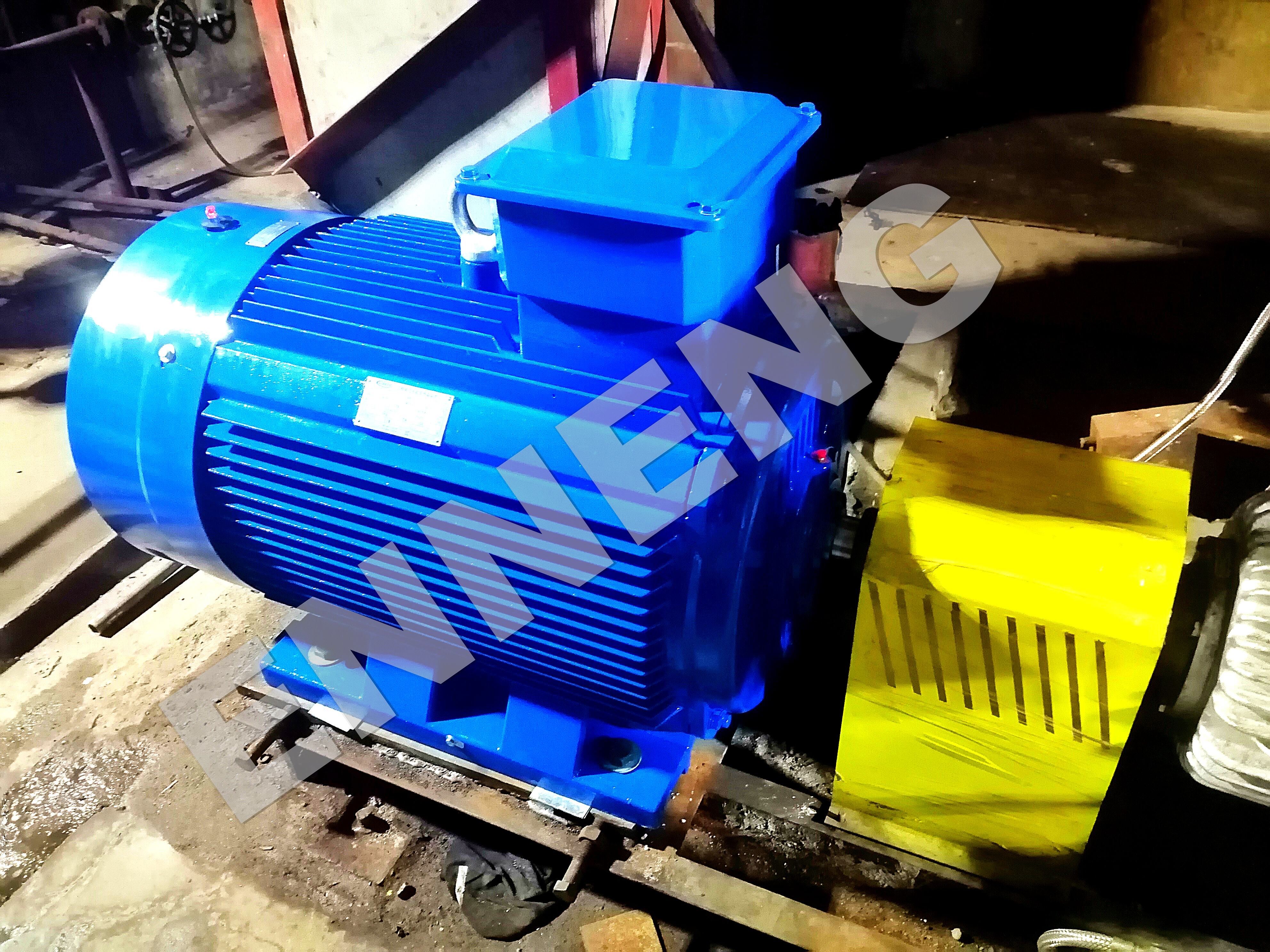
Core Advantages of ENNENG IE5 Efficiency Motor Systems
Superior Kilowatt-Hour Savings and Transformer Capacity Relief
In centrifugal pump, fan, and compressor applications governed by the Affinity Laws, reducing shaft speed by 30% reduces mechanical power demand to roughly 34% of rated capacity. At this 34% partial-load operating point, an ENNENG IE5 Efficiency Motor delivers a decisive efficiency advantage over asynchronous IE4 units, generating substantial cumulative kilowatt-hour savings across 8,000-hour annual duty cycles. Furthermore, operating across a unified voltage range of 110V–690V, the IE5 Efficiency Motor maintains a near-unity power factor at partial load—eliminating unproductive reactive current (kVAR) on factory switchgear and freeing up kilovolt-ampere (kVA) capacity on plant distribution transformers. Alongside industrial drive motors, ENNENG applies this ultra-high partial-load efficiency to permanent magnet generators spanning a unified 5kW–5MW power range (110V–690V) and vertical axis wind turbines from 1kW–10kW, focusing on 3kW, 5kW, and 10kW renewable generation models.
Complying with IEC TS 60034-30-2 and ISO 50001 Energy Audits
Unlike single-speed line-fed standards that only evaluate motor efficiency at 100%, 75%, and 50% load at rated speed, IEC TS 60034-30-2 specifically governs variable-speed AC motors by mandating efficiency testing across seven standardized partial-load and partial-speed operating points (including 25% torque at 50% speed). Specifying an ENNENG IE5 Efficiency Motor tested in accordance with IEC 60034-2-1 and IEC TS 60034-30-2 provides verifiable partial-load loss data required for ISO 50001 corporate energy management audits, EU Ecodesign compliance, and utility energy-efficiency rebate programs.
Industrial Application Scenarios and Engineering Maintenance Guide
1. Variable-Flow Pumping Stations and Modulating HVAC Chiller Loops
In municipal water booster stations and industrial cleanroom cooling loops, flow demand fluctuates dramatically between daytime peak production and nighttime standby shifts. Retrofitting throttling pumps and fans with an ENNENG IE5 Efficiency Motor eliminates off-peak magnetizing power waste and rapidly accelerates capital payback.
2. Practical Selection, Inspection, and Maintenance Protocols
To maximize electrical savings when upgrading industrial fluid and air handling equipment to IE5 technology, implement these engineering steps:
-
Conduct a 7-Day Load Factor Audit: Attach a portable power quality analyzer to existing pump, compressor, or blower panels to log real-time load percentages; prioritize assets spending over 50% of running hours below 70% load for an immediate IE5 Efficiency Motor retrofit.
-
Verify IEC Frame Drop-In Compatibility: Select ENNENG IE5 Efficiency Motor models built to standardized IEC 60072 mounting dimensions so technicians can bolt the new motor directly onto existing pump skids without baseplate modifications.
-
Enable Maximum Torque Per Ampere (MTPA) Control: During variable frequency drive commissioning, activate MTPA vector optimization so the drive dynamically minimizes stator current at every partial-load torque point.
-
Inspect Cooling Airflow and Bearing Insulation: Ensure motor fan cowls remain clear of process debris and verify bearing health via routine vibration checks to preserve low-friction mechanical efficiency over decades of service.
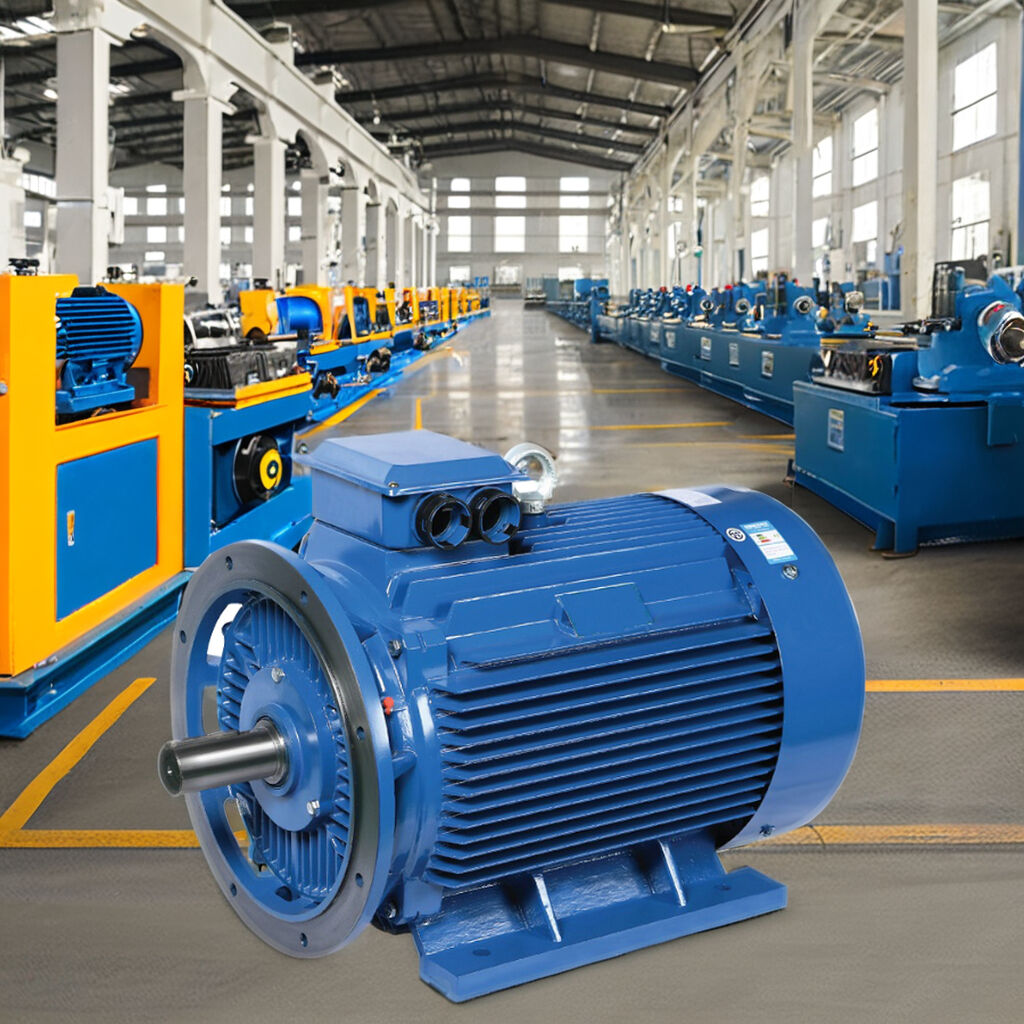
The ENNENG Customisation Advantage
Retrofitting legacy plant machinery requires exact mechanical alignment and electrical compatibility. ENNENG manufactures its IE5 Efficiency Motor series in both standard IEC drop-in frames and custom-engineered configurations across the unified 110V–690V voltage range—adapting shaft dimensions, flange mountings, and thermal protection sensors to guarantee a seamless upgrade for any industrial pump, fan, or compressor.
Contact ENNENG Today.
Consult the ENNENG energy solutions engineering team to calculate your partial-load kilowatt-hour savings and receive a customised IE5 Efficiency Motor proposal.
FAQ
Q: Why does an IE5 Efficiency Motor save significantly more electricity than an IE4 motor at 40% load?
A: An asynchronous IE4 induction motor must continuously draw 30% to 45% of its rated current just to magnetize the rotor core, even when mechanical load drops to 40%. This fixed magnetizing current creates heavy stator copper losses at light loads. An ENNENG IE5 Efficiency Motor uses permanent magnets for lossless rotor excitation, maintaining a flat efficiency curve and near-unity power factor across all partial loads.
Q: How does IEC TS 60034-30-2 verify the partial-load performance of an IE5 Efficiency Motor?
A: IEC TS 60034-30-2 establishes efficiency classes for variable-speed motors by measuring losses across a matrix of seven distinct speed and torque points rather than just full-load rated speed. To achieve the IE5 Efficiency Motor classification, total motor losses must be reduced by roughly 20% compared to IE4 limits across both constant-torque and variable-torque partial-load operating zones.
Q: What voltage and power generation ranges does ENNENG manufacture alongside IE5 motors?
A: ENNENG manufactures IE5 Efficiency Motor units and industrial rotating machines across a unified voltage range of 110V–690V for global compatibility. In the power generation sector, ENNENG supplies high-efficiency permanent magnet generators across a unified power range of 5kW–5MW, as well as vertical axis wind turbine systems spanning 1kW–10kW (with a core focus on 3kW, 5kW, and 10kW models).

 EN


