
 EN

High-speed synthetic yarn spinning mills running multi-spindle texturing frames 8,400 hours annually require absolute rotational synchronization across hundreds of individual winding positions. Commissioning engineers introducing advanced drive systems to replace legacy induction units often discover that connecting line power without executing systematic drive matching produces severe speed hunting and broken filaments. Operating a high-performance textile machinery PM motor demands a structured post-installation debugging routine encompassing static electrical checks, dynamic parameter tuning, and closed-loop pole calibration.
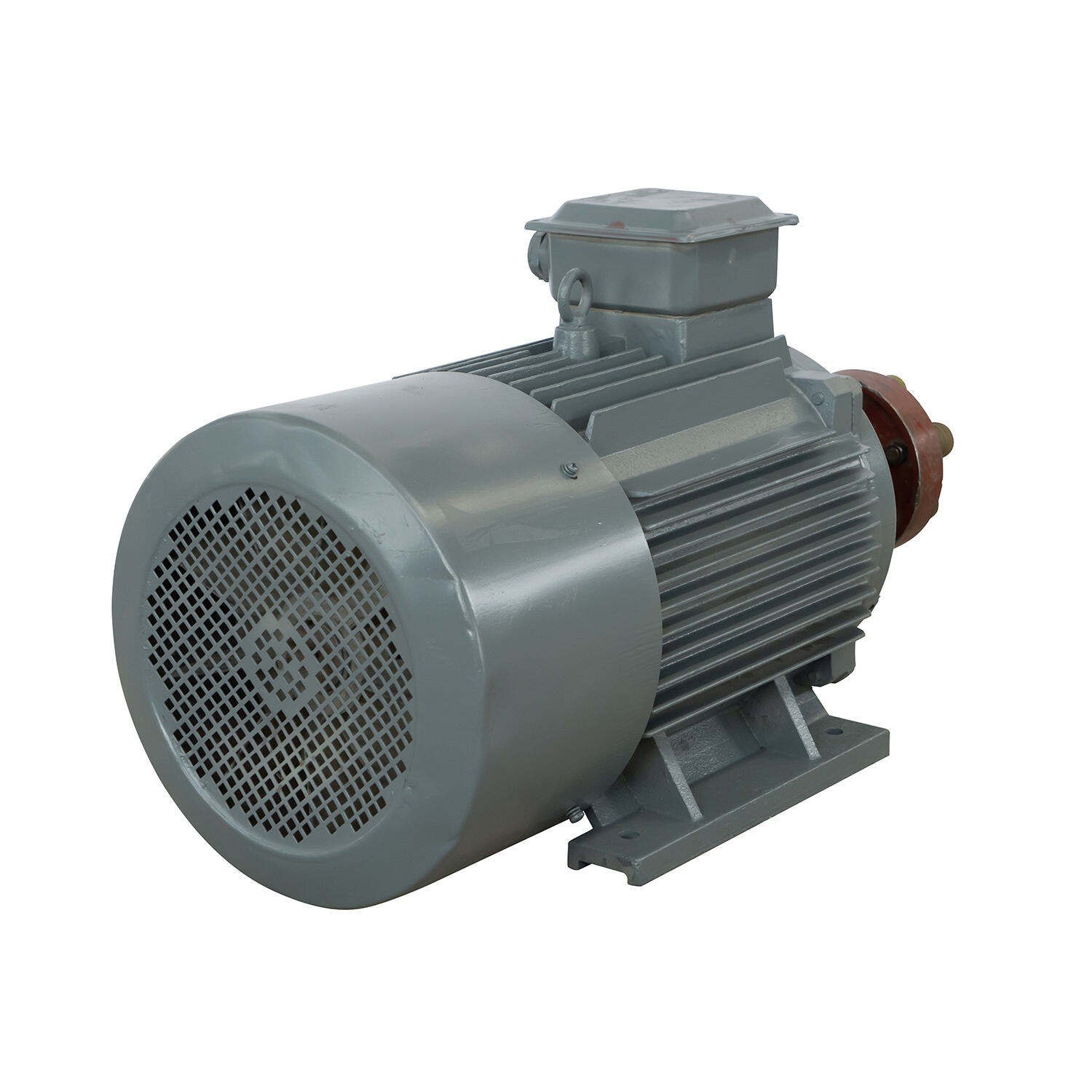
Skipping preliminary drive calibration generates erratic stator current ripples, excessive harmonic heating, and nuisance inverter overcurrent tripping during high-speed take-up cycles. These control anomalies lead to tension variations, fabric striping, and unplanned production halts across continuous textile operations. ENNENG supplies advanced permanent magnet drive technologies and specialized engineering support designed to eliminate startup instability and guarantee smooth mechanical synchronization across complex textile production lines.
Pre-Commissioning Electrical Inspection and Mechanical Alignment
A successful energy saving motor solution depends on completing fundamental mechanical and dielectric verifications prior to applying control power. Moving from conventional asynchronous machinery to a high-efficiency textile machinery PM motor introduces high magnetic flux densities and narrow air-gap tolerances that require meticulous mechanical positioning.
Stator Dielectric Testing and Insulation Resistance Verification
Before connecting inverter leads, technicians must verify winding dielectric integrity using a calibrated 500V or 1,000V megohmmeter. Transit vibration and humid factory conditions inside dyeing and weaving facilities can introduce moisture into terminal enclosures, lowering insulation resistance. For a textile machinery PM motor, phase-to-phase and phase-to-ground insulation resistance must exceed 10 megohms under ambient factory temperatures. If moisture ingress is detected, technicians must dry the stator windings before energizing the drive. Logging baseline insulation values provides an essential benchmark for predictive maintenance evaluations throughout the operational lifespan of the machine.
Precision Shaft Alignment and Mechanical Runout Inspection
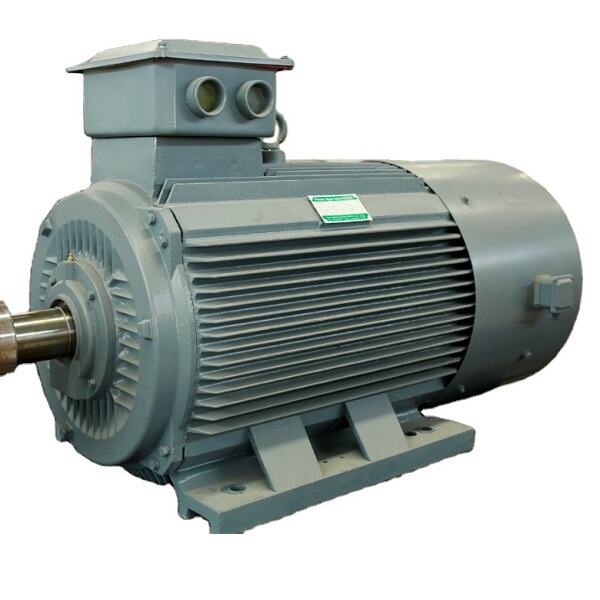
Textile winding shafts, draw rolls, and spindle packages demand strict mechanical alignment to prevent uneven yarn tension. Technicians commissioning a textile machinery PM motor must verify that the motor shaft rotates freely by hand without magnetic cogging drag or mechanical binding. Direct-coupled spinning positions require dual-plane laser alignment to maintain radial runout below 0.03 millimeters and axial end-play within 0.02 millimeters. Installing a custom PM motor design onto distorted or non-coplanar machine baseplates induces soft-foot conditions that twist the stator core, generating high-frequency mechanical vibration that damages fine yarn filaments.
Drive Parameter Calibration and Closed-Loop Feedback Tuning
A permanent magnet synchronous machine cannot operate using standard scalar voltage-to-frequency control modes configured for induction machinery. Driving a textile machinery PM motor requires matching inverter electrical models to physical machine characteristics through disciplined parameter entry and auto-tuning routines.
Inverter Auto-Tuning and Motor Equivalent Circuit Matching
Commissioning engineers must program precise nameplate values into the inverter, including rated voltage, phase current, base frequency, nominal rotational speed, and back-electromotive force constants. For a custom PM motor design, parameters must correspond to the specific winding configuration rather than generic catalog data. Once nameplate data is stored, the inverter must execute a comprehensive auto-tuning routine to identify stator resistance and d-axis and q-axis inductances. Decoupling the textile machinery PM motor from the driven roll during auto-tuning ensures accurate rotational parameter estimation, eliminating current waveform distortion during subsequent acceleration ramps.
|
Commissioning Parameter |
Standard Asynchronous Drive Baseline |
ENNENG Textile Machinery PM Motor |
|
Control Algorithm |
Open-loop scalar V/Hz or flux vector |
High-speed closed-loop field-oriented control |
|
Pole Calibration Requirement |
None (rotor field induced slip) |
High-precision magnetic pole zero alignment |
|
Speed Regulation Precision |
±0.5% to ±1.0% speed drift |
Ultra-precise ±0.01% steady-state regulation |
|
Standard Voltage Scope |
Standard 380V to 480V limits |
Unified 110V to 690V industrial range |
|
Standard Output Scope |
Fixed commercial capacities |
Unified 5kW to 5MW industrial capacity |
|
Encoder Feedback Protocol |
Incremental TTL / HTL pulse encoder |
Absolute EnDat, BiSS-C, or high-accuracy resolver |
|
Partial-Load Efficiency |
Severe drop below 50% load rating |
Flat Ultra-Premium curve from 25% to 120% load |
High-performance manufacturing capabilities at ENNENG motor products cover unified voltage ratings from 110V to 690V and power ranges from 5kW to 5MW to satisfy diverse textile processing specifications. For decentralized plant utility systems and remote industrial monitoring installations, ENNENG also supplies vertical axis wind turbine systems rated from 1kW to 10kW, emphasizing 3kW, 5kW, and 10kW platforms to ensure reliable utility generation.
Magnetic Pole Alignment and Encoder Zero-Point Calibration
Operating a textile machinery PM motor under closed-loop field-oriented control requires precise spatial alignment between the rotor permanent magnet poles and the feedback sensor. Because a PM synchronous motor develops maximum reluctance and magnetic torque when stator current vectors maintain a 90-degree spatial angle to rotor flux, improper encoder zeroing produces high starting current surges, directional oscillation, or immediate overcurrent trips. Engineers must execute a dedicated pole-position detection routine via the drive interface, verifying that the electrical zero position matches the feedback encoder reference channel before commanding full rotational velocity.
Staged Trial Operations, Multi-Axis Synchronization, and Maintenance
Transitioning a textile machinery PM motor into active service requires staged no-load trials followed by full-load operational validation across all production axes.
Incremental Speed Ramping and Dynamic Tension Regulation
Trial operations begin with an uncoupled no-load run at 10% to 20% of rated velocity to confirm correct rotational direction and phase sequencing. Technicians verify that the feedback speed matches commanded speed without hunting, gradually ramping the textile machinery PM motor to 50% and 100% of base speed. During loaded yarn-spinning trials, closed-loop speed regulation must hold steady within ±0.01% of setpoint. Tight speed regulation ensures uniform yarn draft ratios across hundreds of spinning positions, eliminating tension surges that cause filament breakages. Adjusting speed loop proportional and integral gain values optimizes dynamic torque response during rapid bobbin package changes.
Engineering Standards, Vibration Monitoring, and Preventive Maintenance
Commissioning procedures must comply with recognized international engineering frameworks. Electrical installations must adhere to NFPA 70 National Electrical Code mandates for conductor ampacity and disconnect accessibility. Operational safety must comply strictly with OSHA 1910 Subpart S industrial electrical safety mandates, enforcing positive mechanical shaft locking to prevent hazardous back-EMF generation caused by free-wheeling spindles during maintenance. Variable-speed efficiency criteria must satisfy IEC TS 60034-30-2 protocols, while overall vibration severity must comply with ISO 10816-3 limits. Deploying an advanced permanent magnet motor PMSM across textile machinery supports verified carbon footprint reductions under corporate ISO 50001 energy management frameworks.
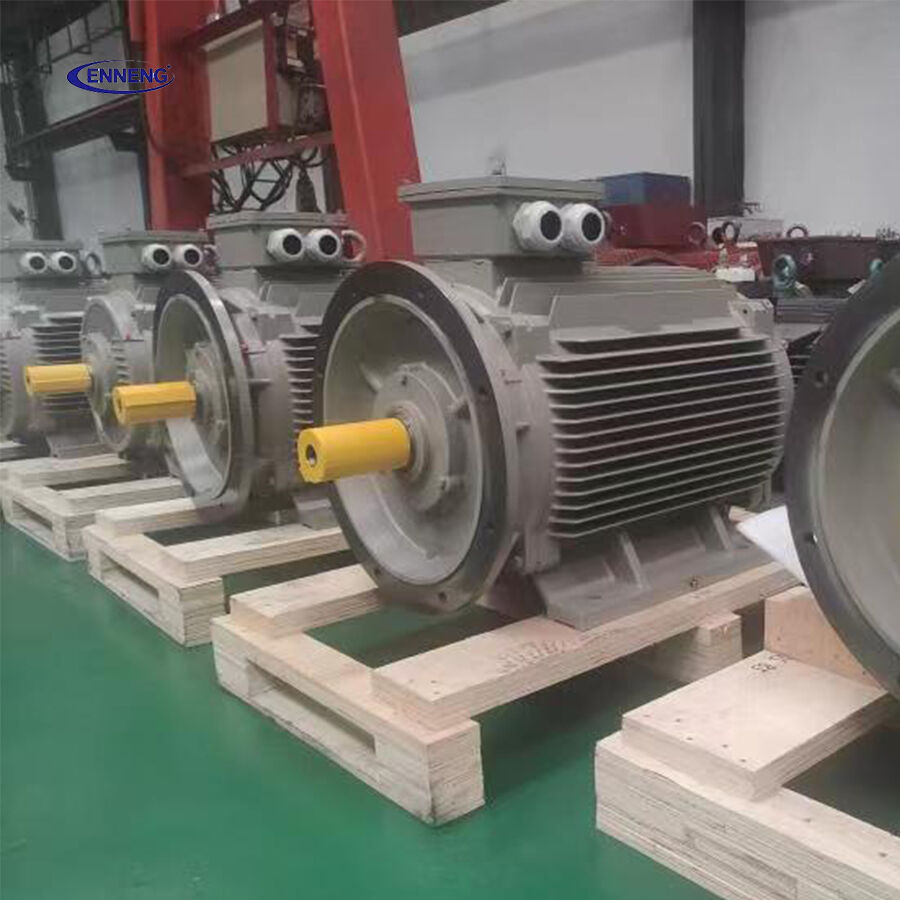
Long-term reliability requires implementing scheduled diagnostic care. Technicians should conduct spectral vibration analysis annually to detect early bearing fatigue or loose mounting feet. Stator winding insulation resistance must be evaluated in accordance with IEEE 43 recommendations. Technicians must regularly inspect encoder cable shielding, ensuring 360-degree ground connections remain intact to prevent high-frequency inverter noise from corrupting delicate sensor feedback signals. Keeping external cooling cowls clear of fibrous lint and airborne textile fly ensures that the textile machinery PM motor maintains maximum convective heat transfer over decades of operation.
Technical Consultation and Commissioning Support
Achieving exceptional energy savings and yarn uniformity requires aligning motor electromagnetic characteristics with precision drive electronics. Deploying a dedicated textile machinery PM motor reduces plant electricity bills, enhances product consistency, and protects mechanical reliability across continuous processing lines. Technical specialists provide comprehensive multi-axis motion planning, electrical parameter validation, and on-site commissioning guidance. Contact the engineering team today to review equipment specifications and optimize plant drive performance.
- WhatsApp: +86 18562780228
- E-Mail: [email protected]
- Phone: +86 532 66000559
FAQ
Q: Why is encoder zero-point calibration essential for a textile machinery PM motor?
A: A textile machinery PM motor relies on permanent magnets inside the rotor to establish excitation flux. The variable frequency drive must know the exact physical orientation of these magnetic poles to inject stator current at the optimal electromagnetic vector angle. Without accurate encoder zero-point calibration, the inverter cannot align current vectors, causing high starting current, excessive rotor vibration, and immediate overcurrent trips upon startup.
Q: How does improper shaft alignment affect a textile machinery PM motor?
A: Because a textile machinery PM motor operates with narrow air gaps and high torque density, shaft misalignment creates asymmetrical radial magnetic pull across the stator core. This mechanical stress elevates bearing temperatures, accelerates grease breakdown, and generates high-frequency rotational vibration. In continuous yarn manufacturing, this excess vibration disrupts bobbin winding tension, creating uneven yarn density and frequent filament breaks.

