
 EN

On a continuous line, a drive is rarely judged by its nameplate alone. It is judged by whether the conveyor, winder, mixer, extruder, or process roll keeps moving predictably through the next shift. A Gearless Motor can help because it couples motor torque to the driven load without an intervening reduction gearbox. In the right application, that simpler mechanical path can reduce routine gearbox work, improve controllability, and remove a source of losses and backlash. The important qualifier is “in the right application”: a gearless design changes the engineering work; it does not make sizing, commissioning, or maintenance disappear.
Why a Gearless Motor changes the production-line conversation
A geared drive is often a sensible, economical solution, but a Gearless Motor comparison should start with the actual production constraint rather than a general preference. It also adds gears, bearings, seals, lubricant, shafts, and alignment interfaces between the motor and the load. On equipment that runs for long periods, each of those elements becomes part of the maintenance plan. Oil condition, seal condition, gear wear, vibration, and temperature all merit attention because a developing gearbox problem may eventually stop the driven section.
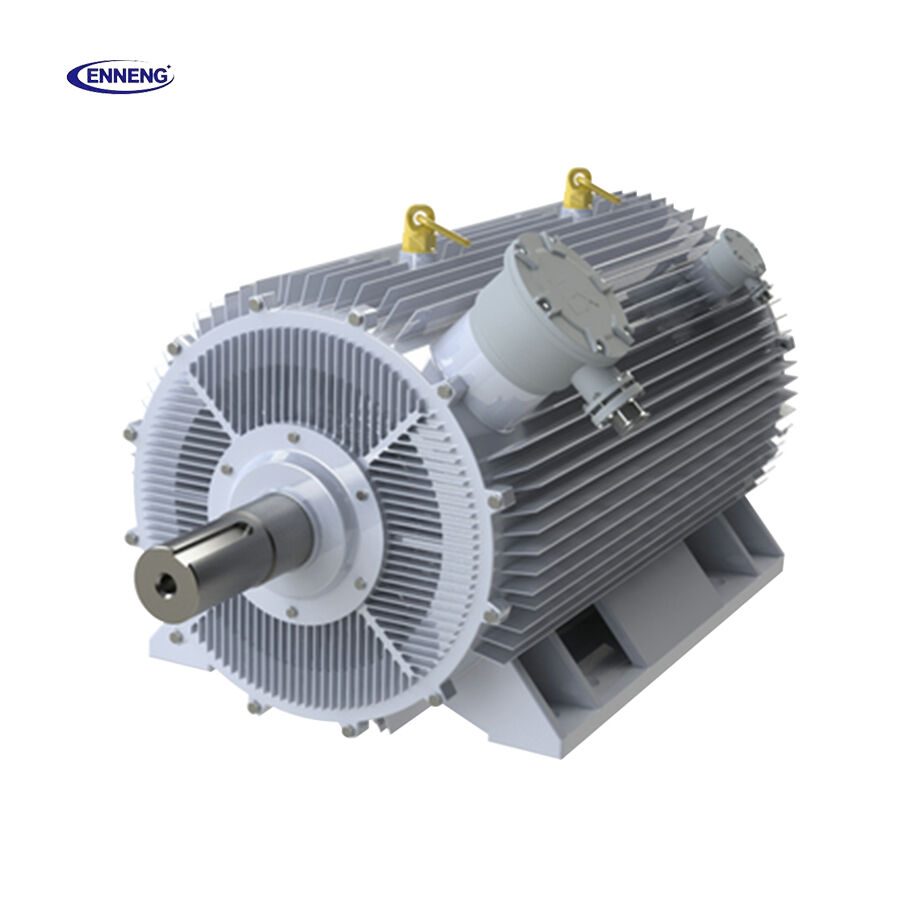
A Gearless Motor removes the reduction stage rather than merely changing its service interval. That can be attractive where access is difficult, planned stoppages are expensive, or speed stability directly affects product quality. It is not a claim that every geared drive is unreliable; it is a decision to eliminate one mechanical subsystem when the process and layout justify it.
1. A Gearless Motor means fewer mechanical interfaces to inspect and maintain
The most direct practical benefit is a shorter mechanical chain. Without gearbox oil, gear meshes, and gearbox seals, maintenance teams have fewer gearbox-specific tasks to schedule. For a continuous operation, that may simplify preventive-maintenance planning and reduce the number of wear-related variables to diagnose when a line begins to run hotter, noisier, or less smoothly.
Maintenance does not become zero. Bearings, couplings where used, cable terminations, cooling paths, mounting hardware, and the drive system still need inspection. In fact, a Direct Drive Motor installation makes mounting rigidity and alignment more visible: vibration attributed to a motor can originate in a flexible base, a resonant frame, or a poorly supported driven roll. Treat the simplified drivetrain as an opportunity to make the remaining checks more disciplined.
2. A Gearless Motor can deliver more direct speed and torque control at the process
Continuous lines often care about what happens at the load, not just at the motor shaft. A Gearless Motor can pair naturally with a variable-frequency drive and feedback device so the control system responds directly to process speed, torque, or tension. With no gear backlash or ratio stage in between, the system can offer a more immediate mechanical response for applications such as winding, unwinding, indexing, traction, and synchronized roll sections.
That does not mean every process automatically becomes more accurate. The controller must still be commissioned around real inertia, acceleration limits, load disturbances, feedback resolution, and process tolerances. Before specifying a Direct Drive Motor, ask a basic question: is the benefit needed at steady speed, during frequent ramps, at low-speed torque, or while controlling tension? The answer determines motor torque, cooling, encoder, and drive requirements.
3. A Gearless Motor can reduce transmission losses—when the duty cycle supports it
Every mechanical transmission stage has losses. Eliminating a gearbox can therefore remove gear-mesh and lubricant-churning losses from the drivetrain. However, it would be misleading to promise a fixed energy saving for every line. The actual result depends on the motor efficiency map, drive losses, operating speed, load profile, thermal conditions, and how much time the equipment spends accelerating, lightly loaded, or near rated torque.
This is where the specification conversation should shift from peak efficiency to the actual duty cycle. If a line runs far below rated load for much of the day, compare efficiency and heat generation in that region instead of relying on one full-load figure. If it runs continuously at a stable condition, calculate energy use across the real operating hours and compare the complete motor-and-drive package with the geared alternative.
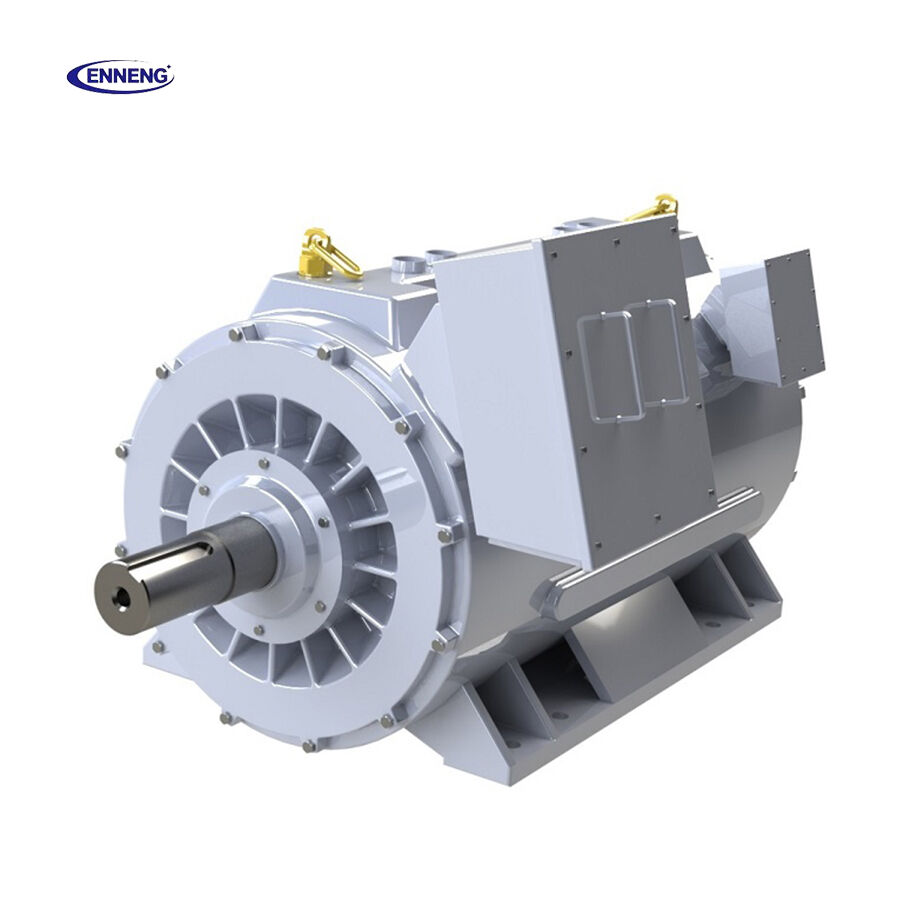
4. A Gearless Motor can support better integration in compact or cleanliness-sensitive layouts
Removing a gearbox can reduce the number of separate drivetrain components and simplify the physical arrangement around a machine. That may help where guarding, access, washdown practices, or space around a roll or drum is constrained. Fewer lubricated gearbox components may also be useful in processes where contamination control and housekeeping are important.
But compactness has a thermal trade-off. A Gearless Motor designed for high torque at low speed may be physically larger in diameter than a conventional motor, and low-speed continuous duty can limit self-cooling. Verify the available envelope, ambient temperature, enclosure rating, cooling method, and continuous torque derating before assuming that a compact mechanical layout produces an easier installation.
5. A Gearless Motor can mean less gear noise and fewer backlash-related effects
Gear meshing is one contributor to a drivetrain’s sound and vibration signature. Removing it can support quieter operation and eliminate gearbox backlash from the motion path. On lines where smooth web handling, gentle starts, or repeatable positioning matter, that can be a useful design advantage.
Still, acoustic results belong to the whole machine. Fans, bearings, couplings, driven equipment, and the mounting structure can dominate what operators hear. Use a site-level noise and vibration assessment rather than assuming that a Gearless Motor alone will determine the final result.
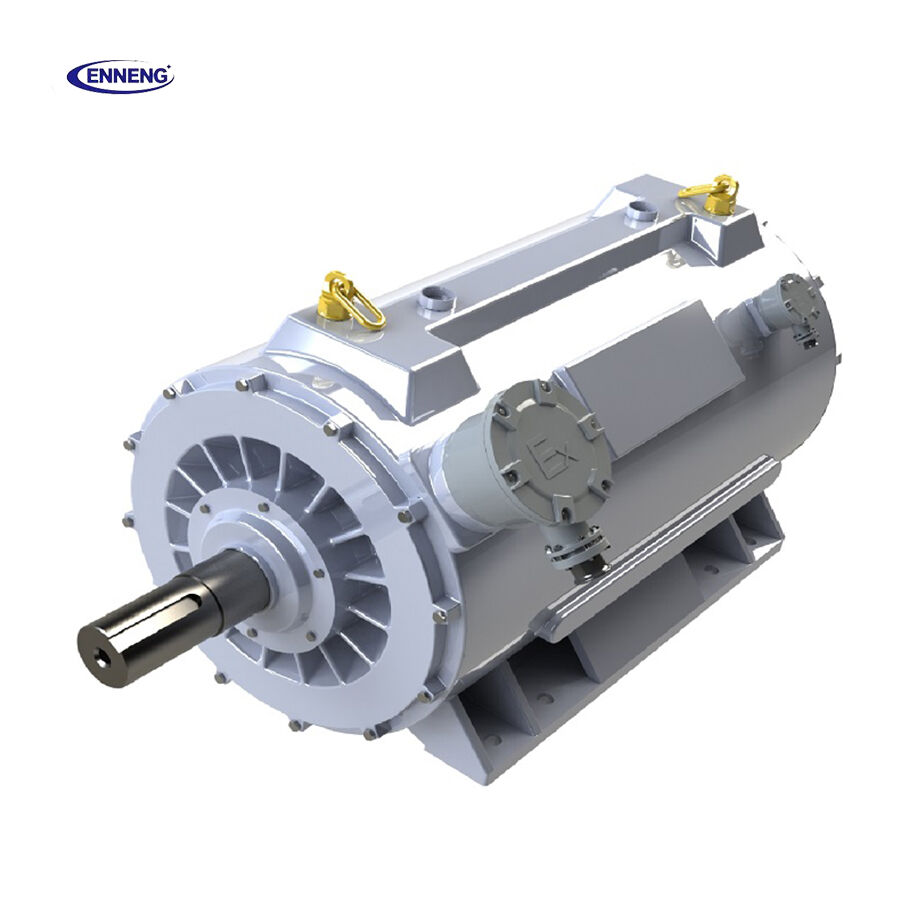
The ENNENG Customisation Advantage
No two industrial facilities share the same spatial or mechanical constraints. ENNENG stands out because we do not just supply off-the-shelf catalogue products; we specialise in delivering a tailor-made permanent magnet motor tailored to your specific application .
Supported by our elite R&D team consisting of engineers from the National Rare Earth Permanent Magnet Engineering Centre, and backed by dozens of patents, we customise high-voltage (6kV/10kV) and low-voltage (380V/660V/1140V) solutions to match your existing footprint. From water treatment facilities and oil wells to explosion-proof mining environments, we deliver optimal performance where general-purpose motors fail .
If you are evaluating commercial permanent magnet motors for sale and need an engineered drive solution that guarantees efficiency and longevity, ENNENG is your trusted partner.Contact ENNENG Today.Speak to our technical engineering team to receive a customised drive proposal.
- WhatsApp: +86 18562780228
- E-Mail: [email protected]
- Phone: +86 532 66000559

