
 EN

Continuous petro-refinery pumping facilities operating multi-stage boiler feed pumps 8,400 hours annually often encounter severe mechanical misalignment and electrical tripping when introducing advanced drive machinery into legacy structural bays. Facility managers supervising equipment modernizations must coordinate rigorous pre-installation checks across mechanical, electrical, and control domains before energizing an IE5 efficiency motor. Deploying an ultra-premium drive system maximizes process energy efficiency, prevents costly commissioning setbacks, and safeguards plant capital investments across demanding production environments.
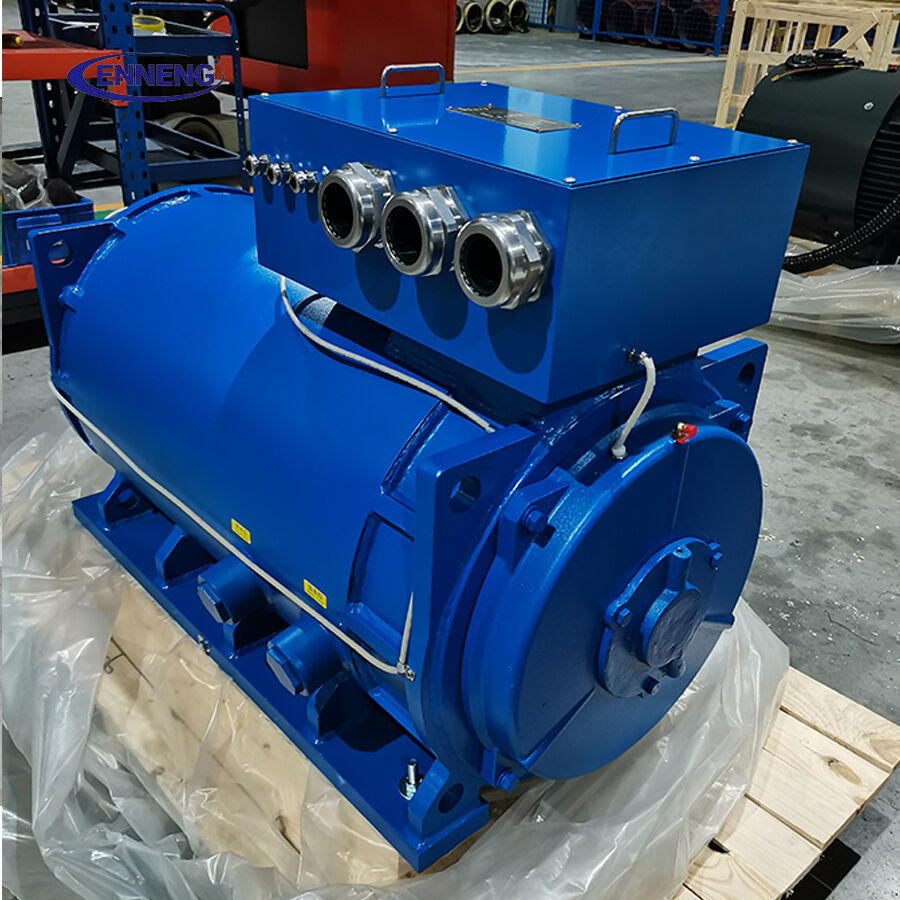
Neglecting foundational baseplate stability, coupling tolerances, and converter control parameters exposes newly installed drive packages to severe mechanical vibration and premature insulation degradation. Inadequate preparation triggers bearing fluting, uneven magnetic pull, and sudden production shutdowns that quickly eliminate anticipated efficiency benefits. ENNENG develops advanced permanent magnet motor technologies and delivers engineering integration support to eliminate installation bottlenecks, ensuring seamless equipment commissioning across mission-critical continuous manufacturing operations.
Operational Realities and Early Planning for Motor Integration
Executing a successful energy saving motor solution requires engineering teams to assess real operating conditions rather than relying solely on nameplate data. Electric machinery operating continuously in demanding processing environments encounters changing thermal, electrical, and mechanical stresses. Moving from standard induction machinery to an IE5 efficiency motor requires verifying whether the host infrastructure can support the higher power density, lower thermal dissipation, and synchronous operating dynamics of permanent magnet technology.
Baseline Duty Profiling and Dynamic Load Assessment
Before issuing equipment procurement orders, plant engineering teams must log continuous operational metrics across the driven machine. Centrifugal pumps, industrial process fans, and gas compressors frequently cycle across variable flow regimes throughout production campaigns. Operating an IE5 efficiency motor delivers substantial economic returns by sustaining peak efficiency across partial-load duty, but sizing the drive unit requires precise documentation of torque profiles, break-away torque thresholds, and peak operational velocities.
Furthermore, ambient operating boundaries demand detailed verification during early planning stages. An IE5 efficiency motor generates significantly less internal rotor heat than a standard induction unit, yet extreme workshop ambient temperatures, high altitudes above 1,000 meters, or restricted enclosure clearances can diminish convective heat rejection. A reliable high efficiency motor supplier reviews comprehensive site operational logs to ensure that the specified frame geometry, internal thermal margins, and cooling configurations accommodate maximum seasonal temperatures without power de-rating.
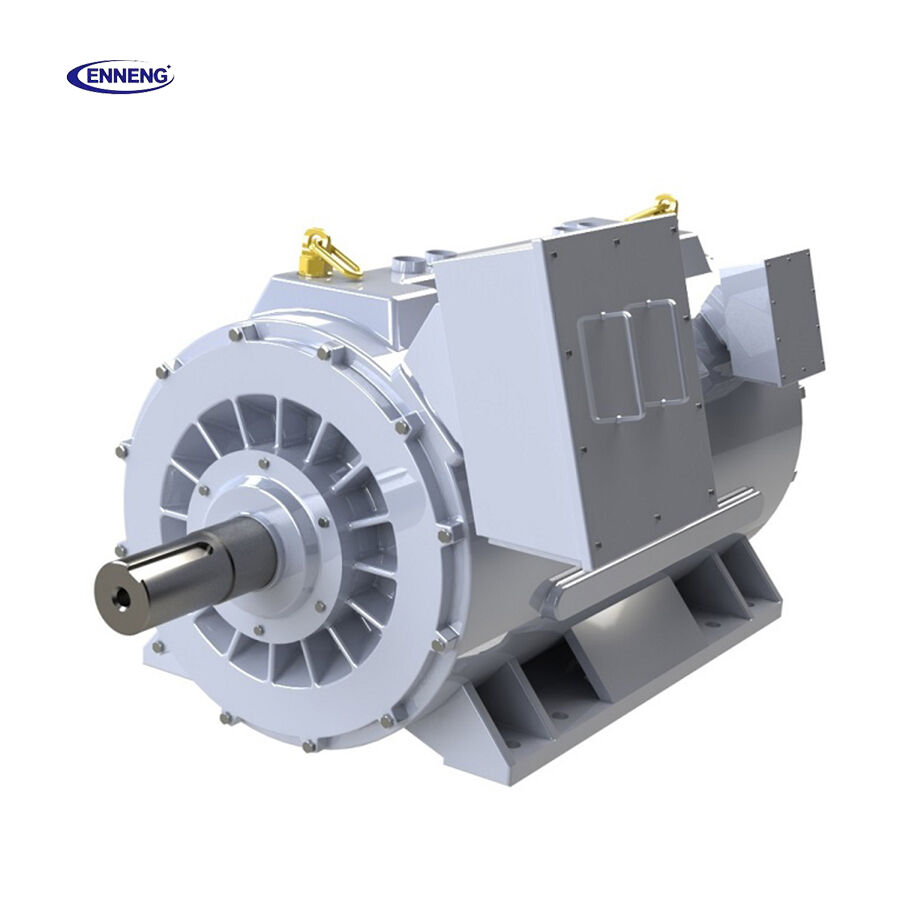
Structural Foundation Rigidity and Mechanical Resonance Risks
Industrial foundations supporting heavy motor packages must possess sufficient structural mass and damping to resist static deflection and dynamic mechanical vibration. Placing an IE5 efficiency motor onto a compromised, corroded, or warped steel bedplate creates severe soft-foot conditions. When technician teams tighten anchor fasteners over uneven baseplates, the motor frame twists mechanically, distorting the internal electromagnetic air gap and inducing destructive mechanical strain across end-shield bearing housings.
Additionally, introducing variable-speed control across an IE4/IE5 efficiency motor package introduces a wide frequency excitation spectrum. If the rotational frequency of the drive aligns with the natural structural resonance of the steel skid or foundation plinth, high-amplitude vibration occurs. Engineering personnel must execute structural vibration assessments, check foundation levelness with precision dial gauges, and reinforce structural gussets prior to positioning the new drive hardware.
Technical Integration and Electromechanical Alignment
Integrating an IE5 efficiency motor into existing production lines requires precise electromechanical coordination between the machine shaft, flexible coupling, and power conversion electronics.
Shaft Fit, Coupling Dynamics, and Laser Alignment Criteria
A primary mechanical objective during the pre-installation phase centers on verifying shaft dimensions, keyway tolerances, and coupling balance. Teams planning a retrofit induction to PMSM project must recognize that permanent magnet synchronous units frequently provide higher torque within smaller, more compact frame sizes. Consequently, shaft diameters and center heights may vary from the legacy induction motor being replaced, requiring precision-machined steel adapter plates.
|
Pre-Commissioning Parameter |
Legacy Induction Motor Baseline |
ENNENG IE5 Efficiency Motor |
|
Efficiency Performance |
Standard IE2 / Premium IE3 level |
Ultra-Premium IE5 synchronous efficiency |
|
Baseplate Mounting Inspection |
Visual inspection with mechanical shims |
Precision optical flatness & soft-foot check (<0.05 mm) |
|
Shaft Alignment Tolerance |
Standard mechanical dial indicator (0.08 mm) |
High-precision laser dual-plane alignment (<0.03 mm) |
|
Unified Voltage Scope |
Standard 380V to 480V grid supply |
Unified 110V to 690V industrial rating |
|
Unified Output Range |
Fixed standard catalogue capacities |
Unified 5kW to 5MW industrial capacity |
|
Control Power Infrastructure |
Direct-on-line magnetic starter |
Dedicated VFD with vector PMSM control |
|
Electrical Cable Architecture |
Standard unshielded power cabling |
Symmetrical shielded cable with 360° EMC glands |
Field technicians must employ multi-axis laser alignment tools to eliminate angular and offset misalignment between the IE5 efficiency motor and the driven equipment. Coupling alignment tolerances must be maintained within 0.03 millimeters to prevent excessive radial pre-loading on motor bearings. Furthermore, flexible couplings must be rated to withstand the instantaneous peak torque and rapid acceleration rates characteristic of high-performance permanent magnet machines.
Variable Frequency Drive Coordination and Parameter Setup
Unlike asynchronous equipment capable of starting directly across utility power lines, an IE5 efficiency motor typically operates via a dedicated variable frequency drive featuring field-oriented vector control. Electrical engineers must confirm that existing drive cabinets possess the computational processing speed, encoder feedback interfaces, and specialized motor parameter libraries required for permanent magnet synchronous machinery.
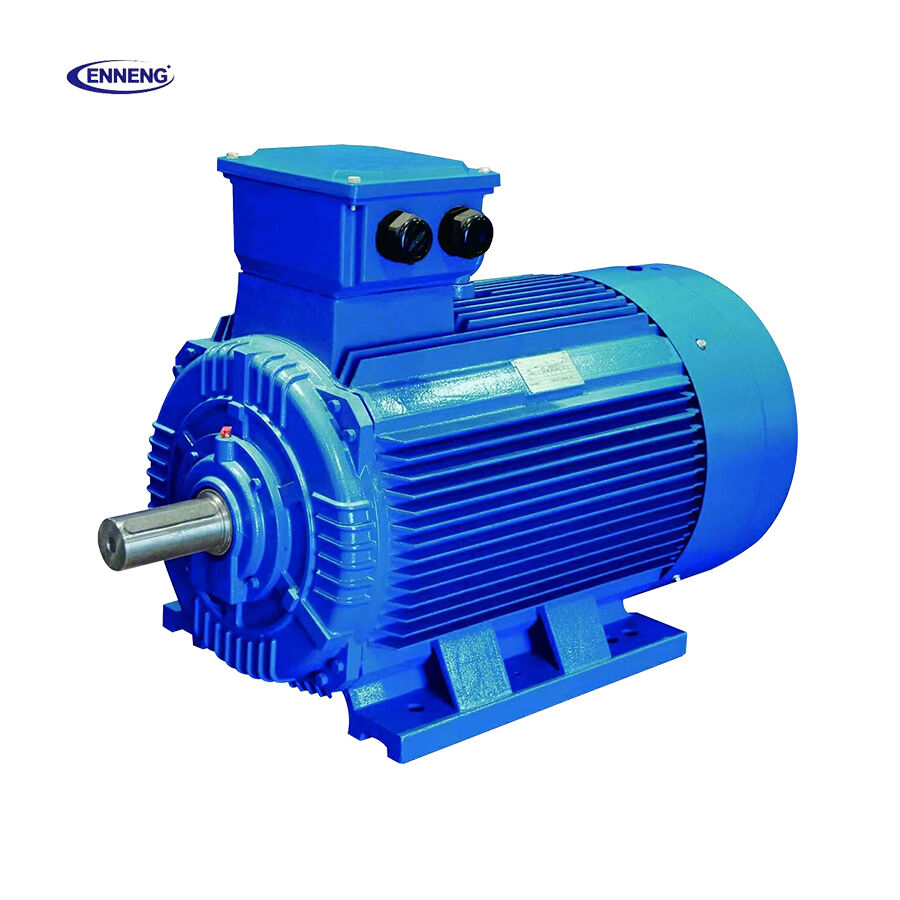
Electrical teams must program motor nameplate data, pole counts, back-electromotive force constants, and stator winding resistance into drive firmware before initiating trial rotations. ENNENG motor products are engineered across unified voltage ratings from 110V to 690V and power ranges from 5kW to 5MW, offering robust inverter-duty insulation systems that withstand fast voltage switching transients. For remote telemetry systems, off-grid industrial monitoring, and distributed energy applications, ENNENG also manufactures vertical axis wind turbine systems rated from 1kW to 10kW, emphasizing 3kW, 5kW, and 10kW platforms to ensure reliable utility generation.
Standards Compliance, Electrical Safety, and Commissioning Routines
Adhering to recognized international engineering guidelines and safety mandates represents an essential requirement throughout equipment modernization campaigns. Drive efficiency standards must satisfy IEC TS 60034-30-2 criteria for converter-fed variable-speed machines, while structural vibration thresholds must comply with ISO 10816-3 evaluation limits. Implementing an IE5 efficiency motor within comprehensive facility upgrade initiatives directly advances corporate carbon management objectives governed by ISO 50001 energy frameworks.
Workplace electrical installations must align strictly with NFPA 70 National Electrical Code mandates governing branch circuit ampacity, disconnect grouping, and equipment grounding conductor sizing. Operational servicing procedures must comply with OSHA 1910 Subpart S industrial electrical safety mandates, enforcing verified lockout/tagout sequences and confirming zero electrical energy before opening terminal enclosures. Because a rotating IE5 efficiency motor generates back-EMF voltage when turned by driven process fluid, mechanical shaft lockouts must be applied before personnel access internal wiring.
Field preparation routines require performing comprehensive dielectric integrity assessments on the IE5 efficiency motor prior to energization. Technicians must conduct stator winding insulation resistance and polarization index testing in accordance with IEEE 43 guidelines, utilizing a calibrated megohmmeter to ensure zero moisture ingress occurred during shipping or storage. Power connections must be terminated using symmetrical shielded VFD cables equipped with 360-degree brass EMC glands, preventing high-frequency common-mode noise from circulating through motor bearings or disrupting plant communication instrumentation.
Engineering Support and Equipment Commissioning Inquiries
Executing a seamless IE5 efficiency motor installation requires collaborative planning between facility operators, electrical contractors, and drive specialists. Modernizing industrial machinery with advanced drive packages curbs annual electrical consumption, protects capital equipment, and delivers reliable operating torque across demanding production assets. Partnering with an experienced high efficiency motor supplier guarantees proper mechanical baseplate adaptation, verified electrical protection coordination, and complete pre-commissioning engineering support. Contact technical specialists today to evaluate plant infrastructure and receive customized installation guidance.
- WhatsApp: +86 18562780228
- E-Mail: [email protected]
- Phone: +86 532 66000559
FAQ
Q: Why is laser alignment critical when installing an IE5 efficiency motor?
A: An IE5 efficiency motor operates with high electromagnetic power density and exceptionally narrow air gaps between rotor magnets and stator teeth. Slight shaft misalignment creates asymmetrical radial magnetic pull, elevating bearing operating temperatures and accelerating mechanical fatigue. Utilizing precision laser alignment instruments ensures parallel and angular tolerances remain within 0.03 millimeters, eliminating damaging vibration and extending bearing service life.
Q: What electrical safety risks does rotor back-EMF present prior to commissioning an IE5 efficiency motor?
A: Because an IE5 efficiency motor contains permanent magnets within the rotor assembly, any external force that turns the motor shaft—such as reverse liquid flow through a centrifugal pump—causes the machine to act as an active generator. Dangerous back-EMF voltages appear across open electrical leads in the terminal box. Maintenance teams must apply positive mechanical shaft locking and verify zero electrical potential per OSHA safety protocols.

