
 EN

A PMSM vs Induction Motor Cost assessment usually begins with two quotations. That is understandable, but it is rarely enough to make a defensible capital decision. A permanent magnet synchronous motor may carry a higher acquisition and drive-integration cost, while an induction motor may look less expensive to buy and simpler to replace. The economic result changes when the motor operates at varying load, starts and stops frequently, runs in hot or dusty conditions, or causes production losses when it is unavailable.
From a procurement standpoint, the right question is not “Which motor costs less?” It is “Which option costs less for this duty cycle, installation, and service model?” That distinction makes measured operating-condition data decisive.
Why a nameplate comparison cannot settle PMSM vs Induction Motor Cost
Nameplate power, rated speed, and nominal efficiency describe a defined operating point. They do not show how a pump, fan, compressor, conveyor, or mixer behaves through an actual shift. Many processes spend considerable time below rated load, have changing torque demand, or include idle periods that do not appear in a quotation comparison.
The U.S. Department of Energy’s motor-load guidance explains that part-load can be estimated from input power, current, or speed measurements. It also notes that motor efficiency can decline substantially at low load, although the exact curve depends on the individual motor. This is why PMSM vs Induction Motor Cost cannot be resolved by subtracting two catalog efficiency figures. The useful comparison is a weighted annual energy model built around measured load intervals.
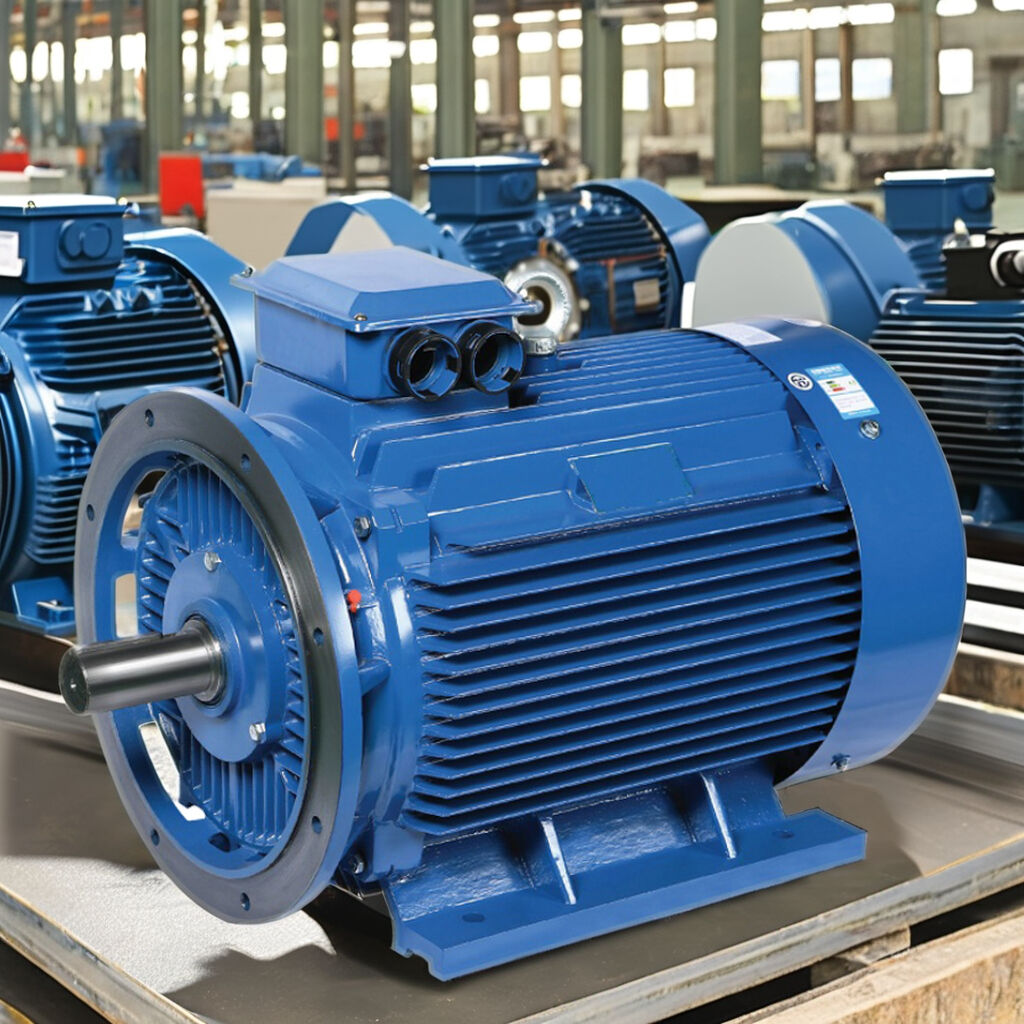
It is true that a PMSM can offer a strong efficiency case in some variable-load applications. But that does not make it the automatic winner. If a motor runs close to a stable rated load for limited hours, has an existing compatible induction drive arrangement, and downtime is inexpensive, the higher initial outlay may not be recovered on the buyer’s required timeline.
Collect the operating data before pricing the replacement
For a credible PMSM vs Induction Motor Cost model, collect data from the existing driven system rather than relying on a single operator estimate. A one- to four-week logging window is often more useful than an idealized nameplate record because it captures production variation.
- Electrical input: log three-phase voltage, current, real kW, power factor, and harmonics where a drive is installed.
- Mechanical duty: record shaft speed, torque proxy, flow, pressure, throughput, or another process variable that shows load changes.
- Time at each condition: separate production, recirculation, standby, start-up, and peak-demand intervals.
- Environment: note ambient temperature, altitude, dust, moisture, enclosure ventilation, and cooling restrictions.
- Reliability history: document repair events, bearing or insulation issues, spare-motor availability, labor time, and production consequences.
- Control architecture: identify the installed VFD, control mode, cable length, filters, bypass needs, and any required compatibility work.
IEC 60034-2-1 establishes methods for determining losses and efficiency from tests. In procurement terms, ask suppliers to state the test basis and operating points behind efficiency data. Like-for-like evidence matters more than a headline number taken from different loading or control conditions.
Build the lifecycle model from measured intervals
A practical PMSM vs Induction Motor Cost calculation has five cost blocks. The initial block includes motor, VFD or controls, coupling or mounting changes, commissioning, and any production outage needed for installation. The energy block uses each measured operating interval, its hours, electricity tariff, and the applicable efficiency for each motor-drive package. The maintenance block includes planned work, likely corrective work, spare parts, and service access. The risk block estimates the cost exposure of an unplanned stop. Finally, include disposal or residual-value assumptions if the organization uses a full asset-lifecycle model.
For each interval, calculate input energy from the required shaft output divided by the relevant motor-and-drive efficiency, then multiply by interval hours and tariff. Add the intervals rather than applying one annual efficiency number. This approach reveals whether a proposed PMSM advantage occurs during the many hours that actually matter or only near a load point the process rarely reaches.
A useful sensitivity table should vary annual run hours, energy price, percentage of time below half load, installation cost, and expected downtime cost. If the conclusion flips after a small change to one assumption, the project needs better field data before approval. That is not a failure of the model; it is the model identifying its most valuable measurement task.
Where the retrofit decision can gain or lose money
A Retrofit Induction to PMSM project is not just a motor purchase. Mechanical fit can require checking frame size, shaft dimensions, flange, coupling alignment, baseplate stiffness, and guard clearance. Electrical fit may require a PMSM-capable VFD control algorithm, parameter commissioning, appropriate cable and filtering, and verification of protective settings. These are real project costs, not incidental items.
At the same time, it is a mistake to treat an induction replacement as zero-cost merely because the motor itself is familiar. Repeated rewinds, oversizing, poor partial-load operation, heat-related failure, or inefficient throttling can create recurring costs. The decision should compare both packages in their installed operating state.
For a PMSM vs Induction Motor Cost decision in a remote or hard-to-service application, downtime and maintenance access can deserve more weight than the energy calculation. In a plant with a stocked spare and a short repair window, those costs may be modest. In a process with a constrained shutdown schedule, they may dominate. Neither result is universal; actual operating conditions decide the weighting.
A decision matrix that procurement and engineering can use together
|
Question |
Why it changes the cost assessment |
Evidence to request |
|
How many hours occur at each load band? |
Determines weighted energy use rather than peak-efficiency value. |
kW and process logs over representative production periods. |
|
What are the ambient and cooling conditions? |
May affect thermal margin, derating, maintenance, and usable output. |
Site survey and supplier application review. |
|
What modifications are required? |
Sets the true installed-cost baseline for both alternatives. |
Mechanical drawing review and VFD compatibility checklist. |
|
What does an unplanned stop cost? |
Separates a low-price replacement from a low-risk lifecycle choice. |
Maintenance records and operations estimate. |
|
What evidence supports the proposed efficiency? |
Prevents dissimilar test conditions from distorting the model. |
Comparable test method, curve, and operating-point data. |
When PMSM or induction is the economically sound choice
A PMSM is often worth evaluating closely when measured logs show many high-hour variable-load intervals, the controls can be integrated properly, and the modeled energy or reliability benefit exceeds the installed premium with a sensible sensitivity margin. An induction motor can remain the sound choice when duty is low, fixed, and predictable; capital is constrained; compatibility changes are disproportionate; or the field data does not support a recoverable premium.
The most reliable PMSM vs Induction Motor Cost conclusion is therefore conditional, not promotional. Start with actual kW, load profile, hours, environment, control requirements, and maintenance exposure. Then compare the two complete motor-drive systems at those conditions. Enneng’s application-consultation approach can help buyers organize the operating data and assess motor specifications against real load profiles rather than a generic rating alone.
If you are evaluating commercial permanent magnet motors for sale and need an engineered drive solution that guarantees efficiency and longevity, ENNENG is your trusted partner.Contact ENNENG Today.Speak to our technical engineering team to receive a customised drive proposal.
- WhatsApp: +86 18562780228
- E-Mail: [email protected]
- Phone: +86 532 66000559

