In deep underground coal shafts, metal ore haulage tunnels, and subterranean dewatering sumps, ambient relative humidity routinely hovers between 90% and 98% while groundwater seepage and wet dust-suppression sprays saturate machinery exteriors. Unlike surface factory equipment that runs at steady ambient conditions, an underground Mining Industrial Motor experiences severe damp-dry and hot-cold alternating cycles every single day. During intense ore-extraction shifts, heavy mechanical loading heats the motor frame and drives out internal moisture; when the conveyor, crusher, or auxiliary pump shuts down between shifts, the motor rapidly cools down inside a water-saturated tunnel—triggering internal condensation and moisture breathing.
Maintenance records from underground mining operations reveal that more than 60% of premature stator winding burnouts are triggered not by simple thermal overload, but by cyclic damp-heat insulation degradation and terminal tracking caused by repeated run-stop temperature swings. If a Mining Industrial Motor lacks vacuum-impregnated moisture barriers and pressure-equalizing seal technology, alternating damp-dry cycles rapidly corrode internal laminations and cause explosive phase-to-ground short circuits. Upgrading to a moisture-fortified Mining Industrial Motor engineered by ENNENG neutralizes cyclic condensation stress and extends underground service life across the most punishing subterranean duty cycles.
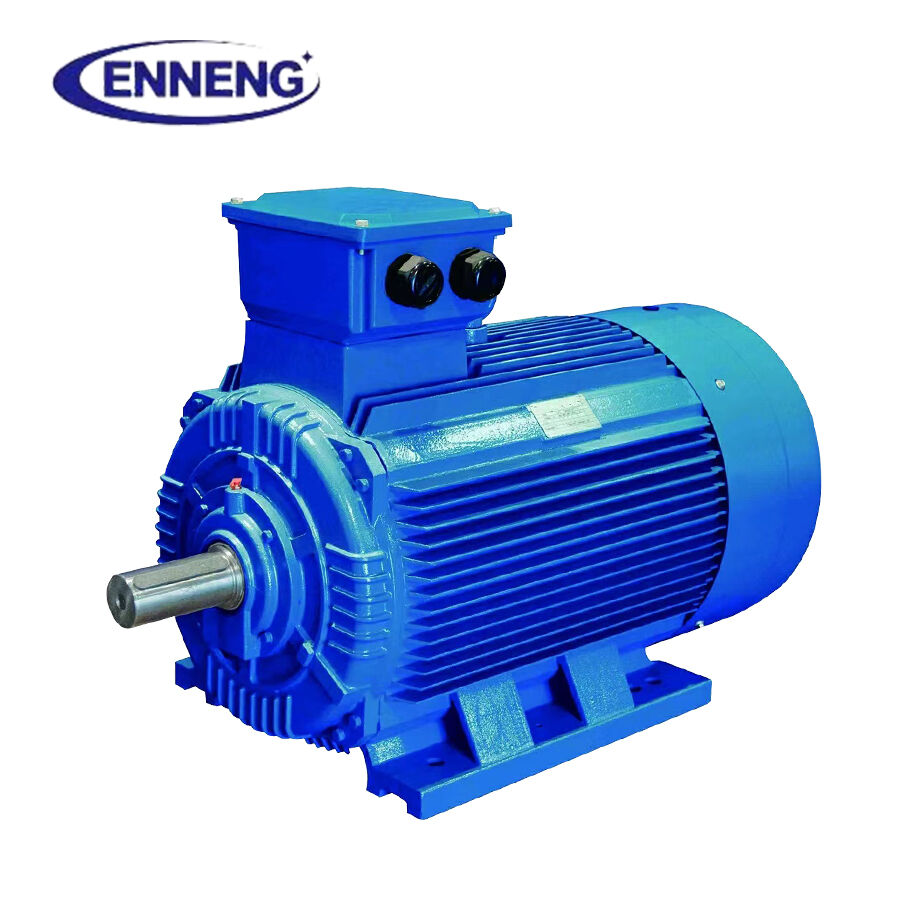
Technical Highlights: How Damp-Dry Alternating Cycles Destroy Standard Mining Motors
The Thermal "Breathing Effect" and Internal Cavity Condensation
When a conventional underground motor operates at full load, air trapped inside the stator cavity heats up, expands, and escapes past standard shaft lip seals. As soon as the shift ends and the motor is de-energized, the internal air cools and contracts, creating a partial vacuum inside the motor housing. This pressure differential sucks humid, dust-laden subterranean air back through microscopic seal gaps and cable glands—a phenomenon known in rotating machinery engineering as the “breathing effect.” As the motor casing drops below the underground dew point, sucked-in water vapor condenses into liquid droplets directly on stator end-windings and bearing raceways.
Micro-Capillary Varnish Cracking and VPI Resilience of ENNENG Mining Motors
Over hundreds of alternating hot-dry operating phases and cold-wet shutdown phases, standard dip-varnished windings suffer differential thermal expansion and moisture absorption. An ENNENG Mining Industrial Motor defeats damp-dry cyclic fatigue through three core electromagnetic and insulation innovations:
-
Lower Operating Temperature Swing (Delta-T): Eliminating rotor excitation copper losses via a synchronous permanent magnet rotor cuts full-load temperature rise significantly—reducing the internal air expansion/contraction pressure differential that drives moisture breathing between shifts.
-
100% Void-Free Vacuum Pressure Impregnation (VPI): Stator windings undergo multi-stage solventless epoxy VPI treatment that fills every microscopic air pocket between copper magnet wires, preventing capillary moisture wicking during damp shutdown cycles.
-
Hydrophobic Anti-Tracking End-Winding Encapsulation: Winding overhangs are sealed with high-dielectric, moisture-repellent conformal coatings that prevent conductive coal or sulfide dust from forming leakage bridges when wet.
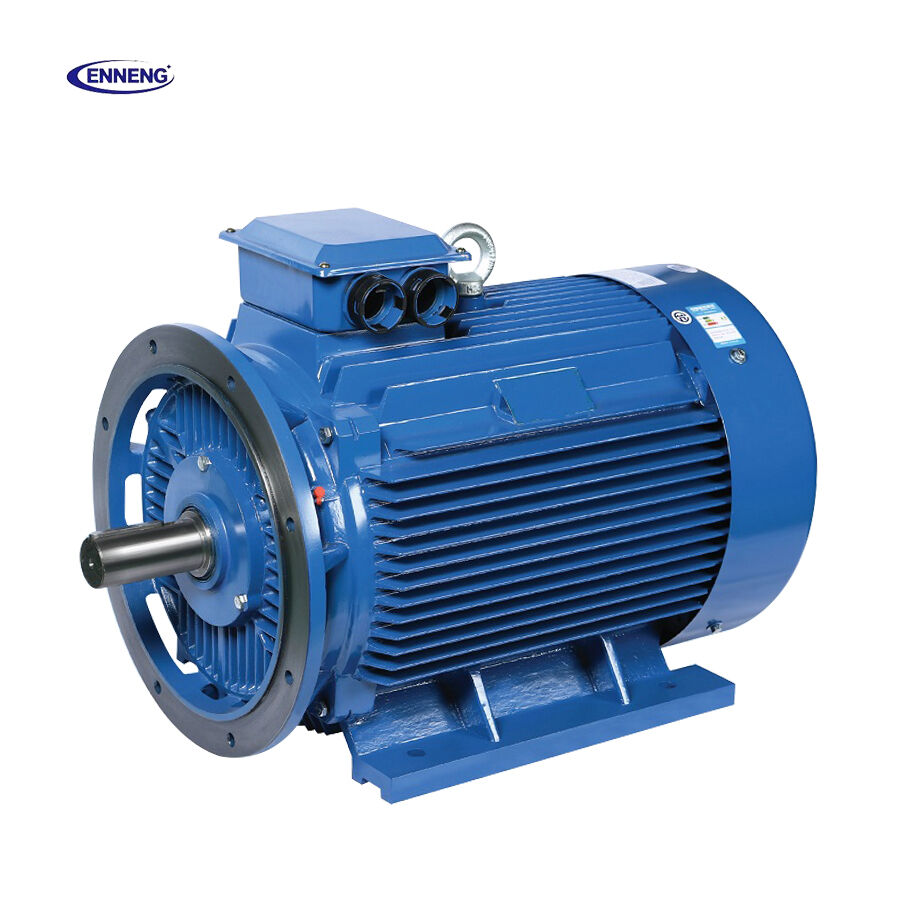
Core Advantages of ENNENG Mining Industrial Motor Systems
Reliable Cold-Wet Startups Across 110V–690V Subterranean Grids
The most dangerous moment for an underground motor is restarting after a prolonged damp shutdown, when surface moisture sits on winding insulation and long trailing cables experience startup voltage drops. Engineered across a unified voltage range of 110V–690V, an ENNENG Mining Industrial Motor maintains high insulation resistance (>500 Megohms even in 95% RH atmospheres) and delivers smooth, high-torque vector startups with low inrush current. Beyond subterranean propulsion drives, ENNENG supports complete mine site power infrastructure with permanent magnet generators across a unified 5kW–5MW power range (110V–690V) and vertical axis wind turbines spanning 1kW–10kW (focusing on 3kW, 5kW, and 10kW models) for surface ventilation monitoring and remote camp microgrids.
Complying with IEC 60068-2-30 (Test Db), IEC 60034-18-31, and IEC 60034-5 Standards
Validating a Mining Industrial Motor for cyclic underground humidity requires adherence to strict international environmental and dielectric standards. ENNENG insulation systems are qualified using IEC 60068-2-30 (Environmental testing – Part 2-30: Test Db: Damp heat, cyclic 12h + 12h cycle), which subjects components to repeated 24-hour cycles oscillating between +25°C and +55°C at >95% relative humidity to intentionally force surface condensation. Furthermore, thermal and environmental endurance complies with IEC 60034-18-31 functional evaluation standards, while multi-labyrinth cast-iron enclosures meet IEC 60034-5 IP65/IP66 water-jet and dust-tight protection classifications.
Industrial Application Scenarios and Engineering Maintenance Guide
1. Intermittent-Duty Mine Dewatering Sump Pumps and Shift-Operated Scraper Conveyors
In deep-level sump dewatering stations and batch haulage drifts, pumps and conveyors cycle on and off automatically according to water inflow or ore bunker levels. Deploying an ENNENG Mining Industrial Motor eliminates condensation-induced ground faults and bearing rust pitting during idle high-humidity standby periods.
2. Practical Selection, Inspection, and Maintenance Protocols
To maximize underground service life when operating a Mining Industrial Motor under severe damp-dry alternating cycles, implement these engineering practices:
-
Install Automatic Anti-Condensation Space Heaters: Specify integrated 110V or 220V stator space heaters interlocked with the motor contactor so heating elements energize immediately upon motor shutdown, maintaining internal cavity temperature 5°C–8°C above tunnel ambient temperature.
-
Utilize Hydrophobic Breather-Drain Valves: Fit sintered stainless-steel breather/drain plugs at the lowest point of the Mining Industrial Motor housing to equalize internal air pressure safely while draining any accumulated condensation outward.
-
Apply Water-Insoluble Synthetic Polyurea or Calcium-Sulfonate Grease: Lubricate multi-labyrinth shaft seals and bearings with hydrophobic grease formulations that resist emulsification and washout when exposed to underground water sprays.
-
Perform Polarization Index (PI) Megohmmeter Audits: During quarterly maintenance, measure the 10-minute to 1-minute insulation resistance ratio (Polarization Index per IEEE 43) to verify zero moisture absorption inside the stator windings.
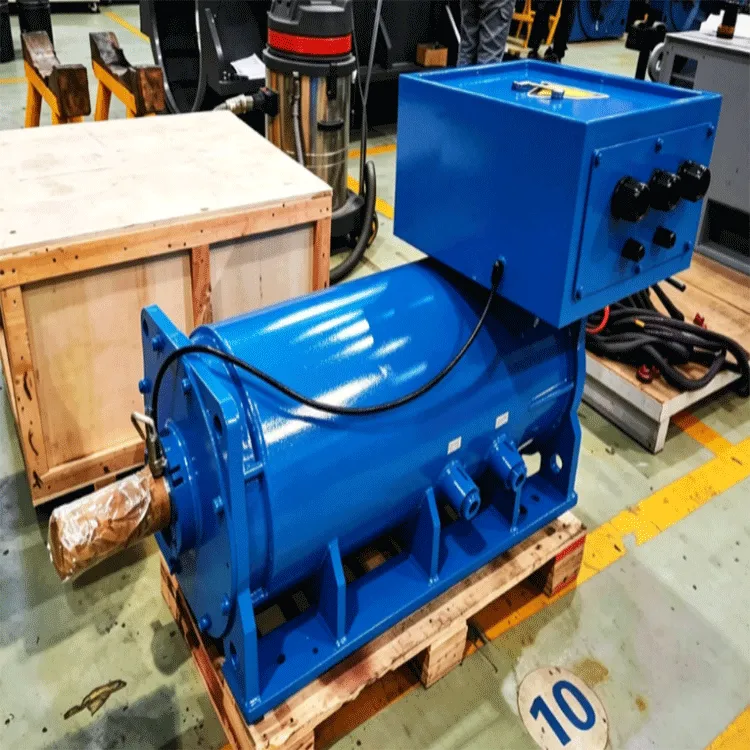
The ENNENG Customisation Advantage
Subterranean mine environments vary dramatically in depth, geothermal rock temperature, groundwater acidity, and tunnel clearance. ENNENG custom-engineers its Mining Industrial Motor series across the unified 110V–690V spectrum—incorporating stainless-steel cooling jackets (IC71W), explosion-proof terminal chambers, integrated PT100/PTC thermal sensors, and custom mounting footprints to survive decades of damp-dry underground cycling.
Contact ENNENG Today.
Consult the ENNENG mining motor engineering team to specify a damp-heat-resilient Mining Industrial Motor tailored to your underground mine conditions.
FAQ
Q: Why are damp-dry alternating cycles more destructive to a Mining Industrial Motor than constant operating heat?
A: When a standard motor runs continuously, internal heat keeps the windings dry. However, when the motor cycles between hot operating shifts and cold, 95%-humidity shutdown periods, cooling internal air contracts and sucks damp tunnel air past the shaft seals. This cyclic breathing condenses liquid water directly onto windings and bearings, causing rapid insulation breakdown in unprotected motors.
Q: How does ENNENG protect a Mining Industrial Motor against IEC 60068-2-30 cyclic damp-heat condensation?
A: ENNENG eliminates rotor copper heat losses to reduce the internal temperature swing that causes moisture breathing, seals the housing with IP65/IP66 multi-labyrinth barriers, and treats stator coils with 100% void-free Vacuum Pressure Impregnation (VPI) epoxy resin. Combined with anti-condensation space heaters, the Mining Industrial Motor maintains high dielectric strength across thousands of damp-dry cycles.
Q: What voltage and power generation capacities does ENNENG supply for comprehensive mining operations?
A: ENNENG manufactures its Mining Industrial Motor series and rotating electrical machines across a unified voltage range of 110V–690V to fit underground transformer networks. For mine surface facilities and remote off-grid power, ENNENG also produces permanent magnet generators across a unified 5kW–5MW power range and vertical axis wind turbines from 1kW–10kW

 EN


