
why-centrifugal-pump-motor-ie5-brings-remarkable-energysaving-gains-for-watertreatment-enterprises, why-centrifugal-pump-motor-ie5-brings-remarkable-energysaving-gains-for-watertreatment-enterprises, /blog
EN

2026/09/16
Water-treatment plants run pumps around the clock, and the Centrifugal Pump Motor IE5 often sits at the heart of the biggest electricity draw on site. A small efficiency gain across thousands of operating hours compounds into a real reduction in the plant's power bill, which is why the motor class matters as much as the pump curve when the duty never stops.
One municipal plant ran a bank of old induction pumps that rarely reached their rated point, because demand swung with the daily inflow. After the plant fitted a Centrifugal Pump Motor IE5 on the main lift, the same duty drew less current at part load, and the annual energy line dropped by a visible margin. The saving came from staying efficient where the pump actually spent its time, not from a bigger nameplate. A Centrifugal Pump Motor IE5 on the main lift drew less current at part load, and the plant tied the annual drop directly to the upgrade rather than to a seasonal dip in demand.
A pump spends most hours below its peak-efficiency point, yet a class IE3 induction motor loses efficiency fastest exactly there. The Centrifugal Pump Motor IE5 holds its curve across the band, so the unit is not punished for running off-peak. Because water treatment is a part-load duty by nature, the class difference shows up every day rather than only at full speed, where the old motor looked fine on paper. The class gap is largest precisely where the pump lives, so the IE5 pays back during the ordinary shift instead of a rare full-speed run the duty rarely reaches.
The loss is quiet but constant, and a Centrifugal Pump Motor IE5 only pays back because the old unit was quietly expensive across the whole operating window.
An induction machine at partial load slips more and heats more, so the wire loss grows while the output stays the same. The Centrifugal Pump Motor IE5 avoids that through the permanent magnet field, keeping copper loss low where the pump lives. Over a season of variable inflow, that gap is the difference between a stable energy budget and a creeping one that nobody can quite explain. Closing that gap protects the operating budget and the carbon target at the same time, because the saved electricity is the cleanest kilowatt the plant can buy.
A variable-speed drive adds switching that can stress the winding and, through pressure ripple, nudge the pump toward cavitation. The Centrifugal Pump Motor IE5 needs a matched converter and correct cabling so the harmonic heating stays within limits. Left unchecked, the same drive that saves energy can shorten the motor and pit the impeller, turning a saving into a maintenance bill. Matching the converter and cabling to the motor keeps the harmonic heating inside the limit, so the drive stays a saving rather than a slow, hidden cost on the winding.
The recovery is structural, not a tuning trick. A Centrifugal Pump Motor IE5 returns efficiency the old unit left on the table through its own physics.
Because the rotor field is fixed, efficiency stays near its peak across most of the speed range. The Centrifugal Pump Motor IE5 therefore delivers the rated saving at the flow the plant runs most, not just at the nameplate point. That flat curve is what makes the investment pay during ordinary duty, which is the only duty a treatment plant can count on through the year. Because the rotor field is fixed, the efficiency stays near its peak across most of the speed range, which is why the unit suits a duty that never holds one point for long.
The biggest gain comes from matching the motor and drive to the real pump curve. A Centrifugal Pump Motor IE5 specified with the control loop set to the duty point avoids overspeed and the associated loss. The plant then runs the pump where it is efficient and lets the class carry the rest of the saving through the variable day, instead of buying headroom it never uses. Setting the control loop to the real duty point avoids overspeed and the loss that comes with it, so the pump earns the class saving through every variable hour of the day.
Specifying the unit means tying the claim to tested efficiency and a proper pump assessment. A Centrifugal Pump Motor IE5 should arrive with numbers a plant can verify before the capital leaves the budget.
IEC 60034-30-1 defines the IE classes, so the IE5 claim is tested across the duty range rather than at a single point. ISO 14414 sets the method for pump energy assessment, so the Centrifugal Pump Motor IE5 is chosen from a measured duty, not a guess. Citing both lets a plant prove the saving before committing funds, instead of trusting a brochure peak figure.
Before quoting, log the flow range, head, and daily profile of the duty. A Centrifugal Pump Motor IE5 should come with the IE5 class and a matched converter on the datasheet. In service, watch winding temperature, current balance, and pressure ripple each month; a drifting current imbalance predicts winding or drive trouble before the pump cavitates and the line stalls.
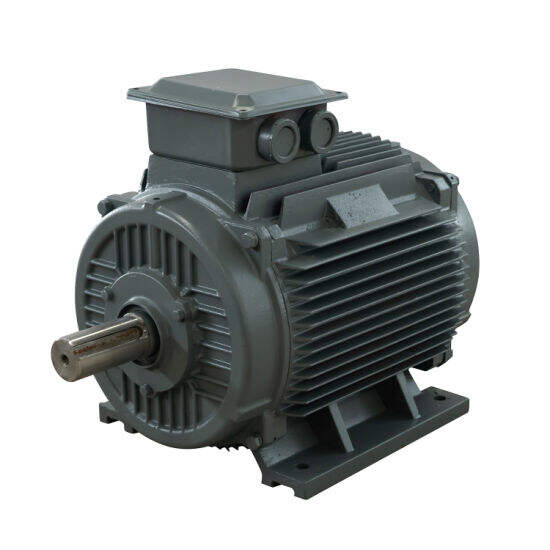
A pump runs most hours below its peak-efficiency point, yet a class IE3 induction motor loses efficiency fastest exactly there through extra slip and heat. The Centrifugal Pump Motor IE5 holds its curve across the band, so the unit is not punished for off-peak running. Because water treatment is a part-load duty by nature, the class gap shows up every day rather than only at full speed.
The IE step from IE3 to IE5 commonly lands in the low-teens percent range for continuous pump duty, and the Centrifugal Pump Motor IE5 keeps that gain at part load where the pump lives. The exact figure depends on the duty profile, so a measured assessment beats a brochure number. Across thousands of operating hours, a few points of efficiency compound into a clear cut in plant power cost.
A variable-speed drive adds switching that heats the winding through harmonics and can ripple the pressure toward cavitation. The Centrifugal Pump Motor IE5 needs a matched converter and correct cabling so the heating stays within limits. Left unchecked, the same drive that saves energy can shorten the motor and pit the impeller, turning a saving into a maintenance bill.
IEC 60034-30-1 defines the IE classes, so the IE5 claim is tested across the duty range rather than at one point. ISO 14414 sets the pump energy assessment method, so the Centrifugal Pump Motor IE5 is chosen from measured data. Citing both lets a plant verify the saving before committing capital, instead of trusting a nameplate peak that the pump rarely reaches.
Log the flow range, head, and daily profile before quoting, then set the control loop to the real duty point. A Centrifugal Pump Motor IE5 specified this way avoids overspeed and the loss that comes with it. Oversizing hides inefficiency, so the match should follow the measured curve, not a rounded-up safety margin the pump never reaches in service.
Monthly checks on winding temperature, current balance, and pressure ripple catch drift early. A drifting current imbalance in a Centrifugal Pump Motor IE5 predicts winding or drive trouble before the pump cavitates. Inspect cooling paths each quarter and review the duty profile against the original assessment so the efficiency gain holds as inflow patterns shift through the year.


 EN