
why-centrifugal-pump-motor-ie5-improves-powerfactor-performance-for-fluidtransport-industrial-systems, why-centrifugal-pump-motor-ie5-improves-powerfactor-performance-for-fluidtransport-industrial-systems, /blog
EN

2026/09/30
A regional water treatment utility operates multi-stage vertical and horizontal centrifugal pumps running round-the-clock to distribute potable water across municipal pipeline networks. Continuous fluid handling requires high electromechanical reliability, yet electrical utility statements frequently arrive with steep penalty surcharges for low plant power factor. In pumping stations dominated by conventional induction motors, massive magnetizing currents create substantial phase displacement between AC voltage and current waveforms.
Poor power-factor performance in continuous fluid transport creates severe system inefficiencies. Inductive current lag increases apparent power (kVA) demand, overloads electrical switchgear, causes voltage drops across long distribution feeders, and forces facilities to install costly external capacitor banks. Furthermore, throttling pump discharge valves to modulate flow drops induction motor power factors into severely degraded territory. To address these operational issues, plant engineers select ENNENG Centrifugal Pump Motor IE5 systems that leverage permanent magnet synchronous rotors to deliver near-unity power-factor performance across all hydraulic operating ranges.
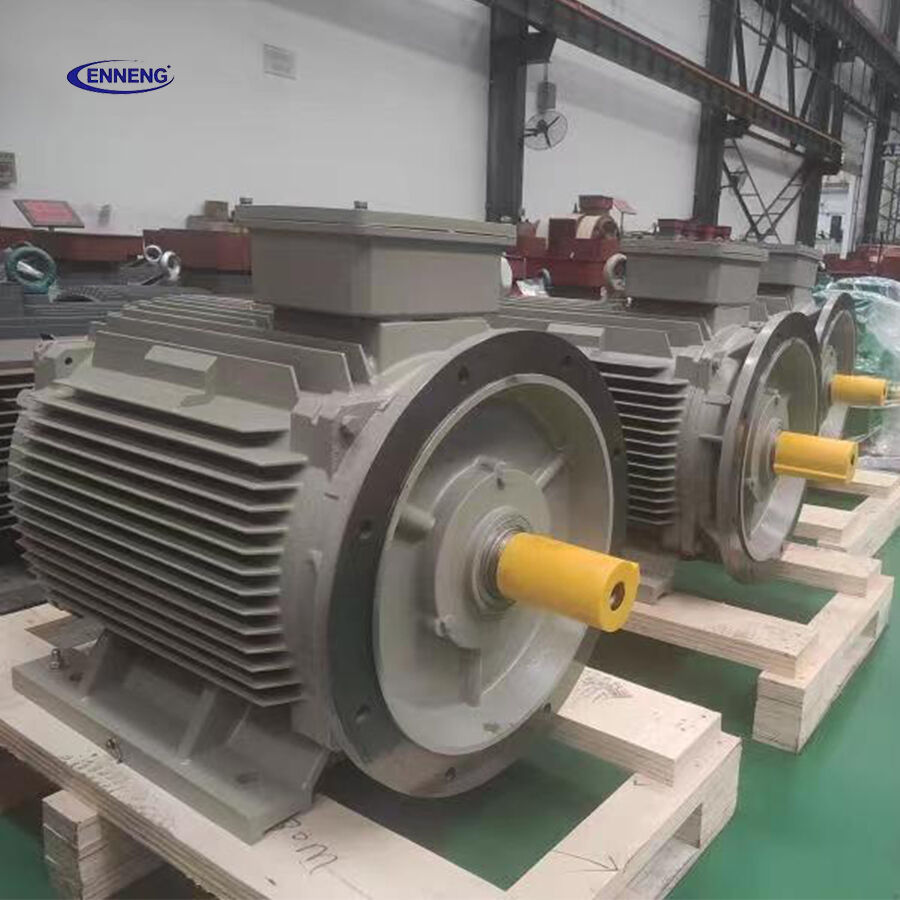
Centrifugal pumps represent one of the largest single consumers of industrial electricity worldwide. When driven by conventional squirrel-cage induction motors, the stator windings must draw continuous reactive current from the utility supply solely to establish and maintain the rotor’s electromagnetic field. This magnetizing current performs no direct mechanical work at the pump impeller, yet it circulates through distribution lines, transforming useful capacity into reactive power (kVAR).
This phase lag between alternating current and voltage depresses the operating power factor to values between 0.80 and 0.86 at full load. When apparent power demand surges, plant transformers, switchboards, and distribution cables operate close to thermal saturation thresholds. The resulting resistive heating within plant distribution infrastructure wastes energy before power even reaches the pump shaft.
Electric utilities impose substantial financial penalties on industrial facilities whose average power factor falls below prescribed benchmarks, typically 0.90 to 0.95. For a high-volume fluid transport facility consuming millions of kilowatt-hours annually, poor power-factor surcharges can add tens of thousands of dollars in unnecessary operating expenses.
Moreover, low power factor causes voltage instability across the facility’s internal power distribution network. Voltage sag during pump startup cycles stresses sensitive automated control systems, causes nuisance tripping of circuit breakers, and necessitates installing dynamic power factor correction (PFC) banks. These capacitor banks introduce harmonic resonance risks, require ongoing maintenance, and fail prematurely when exposed to non-linear inverter loads.
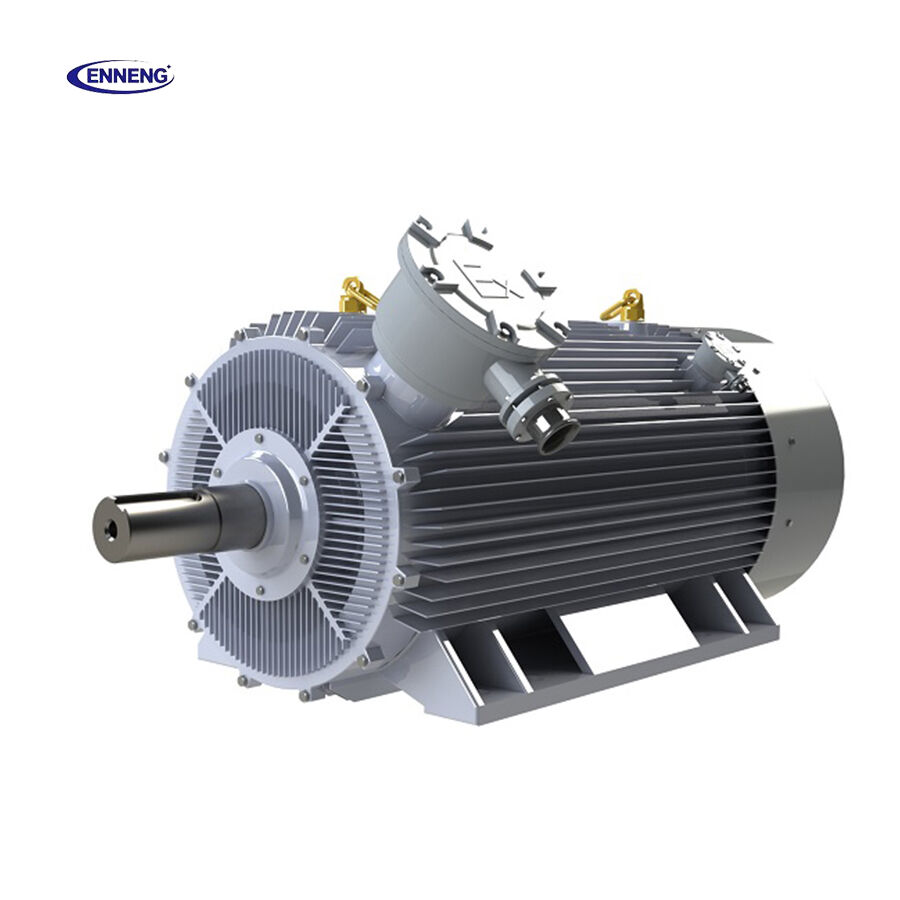
A Centrifugal Pump Motor IE5 built with permanent magnet synchronous technology fundamentally transforms electrical energy conversion. Rather than drawing magnetizing current from the AC supply grid to excite the rotor, the motor integrates high-energy NdFeB permanent magnets directly into the rotor assembly. These permanent magnets supply steady, high-density magnetic flux without consuming electrical power.
Because the stator current is freed from the burden of providing rotor excitation, the current vector aligns closely with the terminal voltage vector. As a result, a Centrifugal Pump Motor IE5 achieves an inherent displacement power factor between 0.95 and 0.99. Eliminating reactive magnetizing current dramatically lowers total input kVA demand for identical shaft hydraulic output, stabilizing the entire electrical infrastructure.
|
Operational Load Level |
Induction Motor (IE3) PF |
Centrifugal Pump Motor IE5 PF |
|
100% Rated Pump Flow |
0.84 - 0.86 |
0.96 - 0.99 |
|
75% Rated Pump Flow |
0.78 - 0.81 |
0.95 - 0.98 |
|
50% Throttled Pump Flow |
0.65 - 0.72 |
0.94 - 0.97 |
|
25% Minimum Circulation Flow |
0.45 - 0.55 |
0.90 - 0.94 |
ENNENG manufactures high-efficiency Centrifugal Pump Motor IE5 units tailored for fluid-transport applications. Built within power ranges from 5kW to 5MW and voltage ratings from 110V to 690V, these permanent magnet synchronous motors deliver industry-leading efficiency and power factor ratings.
ENNENG units feature optimized stator slot geometry and premium-grade, low-loss electrical steel laminations that minimize eddy currents. The motor shafts feature reinforced alloy steel designed to handle hydraulic radial thrust loads, while IP55 or IP66 enclosures protect windings from high-humidity fluid-handling environments.
IEC 60034-30-2 defines efficiency benchmarks for variable-speed AC motors, establishing IE5 (Ultra-Premium Efficiency) as the highest international standard. Under this framework, an IE5 motor must eliminate approximately 20% of the total electrical losses of an equivalent IE4 Super Premium motor, and over 35% of the losses of a standard IE3 unit.
A Centrifugal Pump Motor IE5 complies with these stringent efficiency levels while simultaneously outperforming standard induction machines in power factor. These standardized ratings give industrial fluid operators verifiable third-party criteria to demonstrate energy reductions and qualify for regional carbon-reduction grants and utility energy rebates.
When fluid transport facilities deploy VFDs to control pump speeds, non-linear switching can introduce harmonic distortion into the plant grid. IEEE 519 and IEC 61000 set strict limits on Total Harmonic Distortion for current (THDi) and voltage (THDv) at the point of common coupling.
Operating a Centrifugal Pump Motor IE5 reduces fundamental reactive current demand, decreasing the overall magnitude of rms current processed through VFD rectifiers. This reduced current throughput lowers thermal dissipation across drive components and eases compliance with IEEE 519 harmonic distortion limits, creating a cleaner electrical operating environment.
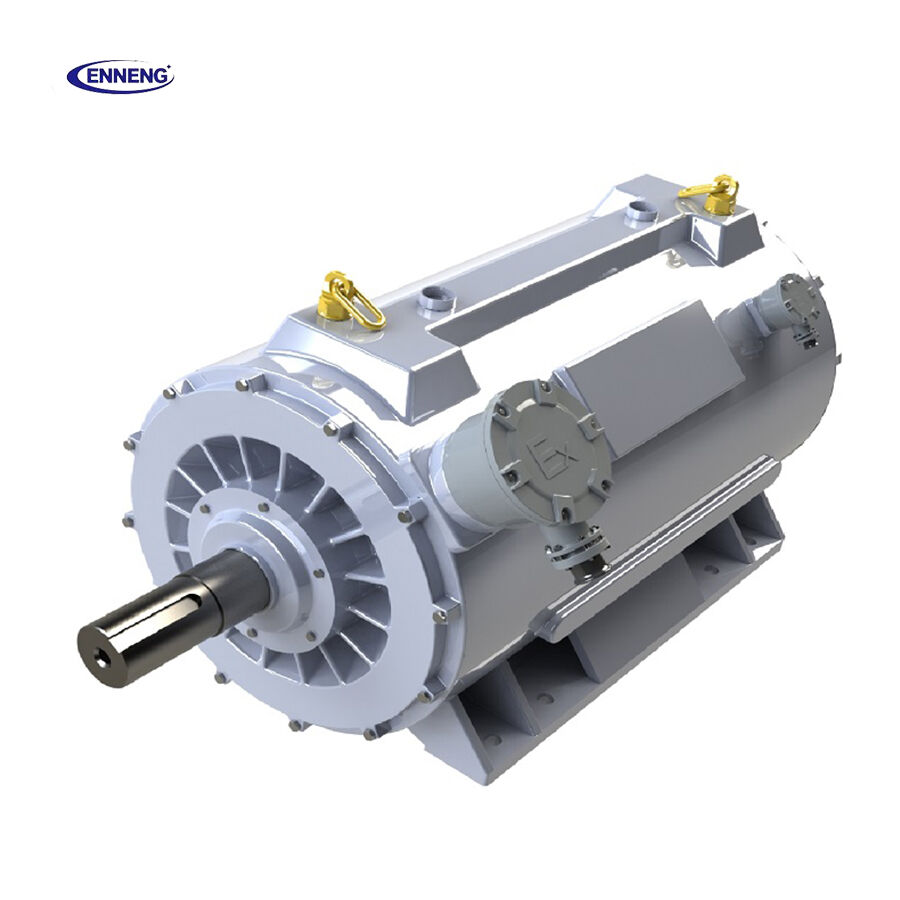
Upgrading existing centrifugal pumping skids to Centrifugal Pump Motor IE5 technology requires careful mechanical and electrical integration:
|
Timeline |
Diagnostic Procedure |
Target Value |
|
Weekly |
Telemetry check on operating power factor and current draw |
Motor power factor > 0.95; balanced line current |
|
Monthly |
Bearing vibration analysis per ISO 10816-7 (Pumps) |
Vibration velocity < 2.3 mm/s RMS |
|
Quarterly |
Visual inspection of mechanical seals and drain ports |
Zero fluid ingress into motor bearing end shields |
|
Annually |
Winding phase resistance and insulation resistance check |
Insulation resistance > 200 MΩ at 1000V DC test |
Upgrading centrifugal pumping networks with ultra-premium permanent magnet synchronous drives secures grid stability, eliminates utility surcharges, and minimizes energy consumption. Discover advanced fluid handling drive options by visiting the ENNENG Contact Page to consult with technical engineering teams.
Q: How does a Centrifugal Pump Motor IE5 achieve a higher power factor than an induction motor?
A: A Centrifugal Pump Motor IE5 utilizes high-grade NdFeB permanent magnets inside the rotor to provide necessary magnetic excitation. Standard induction motors must draw continuous reactive current from the utility grid to induce rotor magnetism, causing significant phase lag. By eliminating the need for AC line magnetization, the permanent magnet motor aligns current and voltage waveforms closely, achieving power factors between 0.95 and 0.99.
Q: What impact does improved power factor have on utility billing in fluid transport plants?
A: Improved power factor eliminates the expensive low-power-factor penalty surcharges regularly levied by electrical utilities when facilities operate below 0.90 to 0.95 power factor. Furthermore, reducing reactive current decreases overall apparent power (kVA) demand. This lower demand reduces monthly peak capacity billing charges, optimizes distribution transformer capacity, and cuts internal resistive electrical losses across facility cabling and switchgear.
Q: Can a Centrifugal Pump Motor IE5 maintain high power factor during throttling or low-demand periods?
A: A Centrifugal Pump Motor IE5 maintains near-unity power factor across dynamic operating ranges, even when pump flows drop to 30% or 50% capacity. In contrast, standard induction motors experience steep power-factor degradation under partial loads. Permanent magnet motors sustain rotor magnetic field intensity independently of line current, ensuring stable electrical efficiency and high power factor during partial-flow pump throttling.


 EN