
 EN

Walk through a reverse-osmosis feed bay, a refinery effluent treatment plant at Sinopec, or an underground dewatering station at Shandong Gold Mine, and the loudest pump skid is usually the one fighting a pinched discharge valve. When operators throttle a globe or butterfly valve to trim flow, backpressure climbs, radial thrust hammers the impeller shaft, mechanical seals weep, and the induction motor bakes under continuous reactive current. Most pump-room callouts start right there—at the intersection of wasted heat and hydraulic shock.
Swapping a standard induction drive for a Centrifugal Pump Motor IE5 paired with a Variable Frequency Drive (VFD) tackles both problems at the root. ENNENG designs and manufactures permanent magnet rotating machines across a unified 5kW-5MW power range and 110V-690V voltage range, alongside 1kW-10kW vertical axis wind turbine generators (centered on 3kW, 5kW, and 10kW models). Instead of inducing heavy current across the air gap into rotor bars, an NdFeB (Neodymium Iron Boron) permanent magnet rotor locks synchronously to stator frequency without slip, cutting internal motor heat and letting the pump track real line demand smoothly.
How IE5 Thermal Behavior Protects Bearings and Stator Insulation
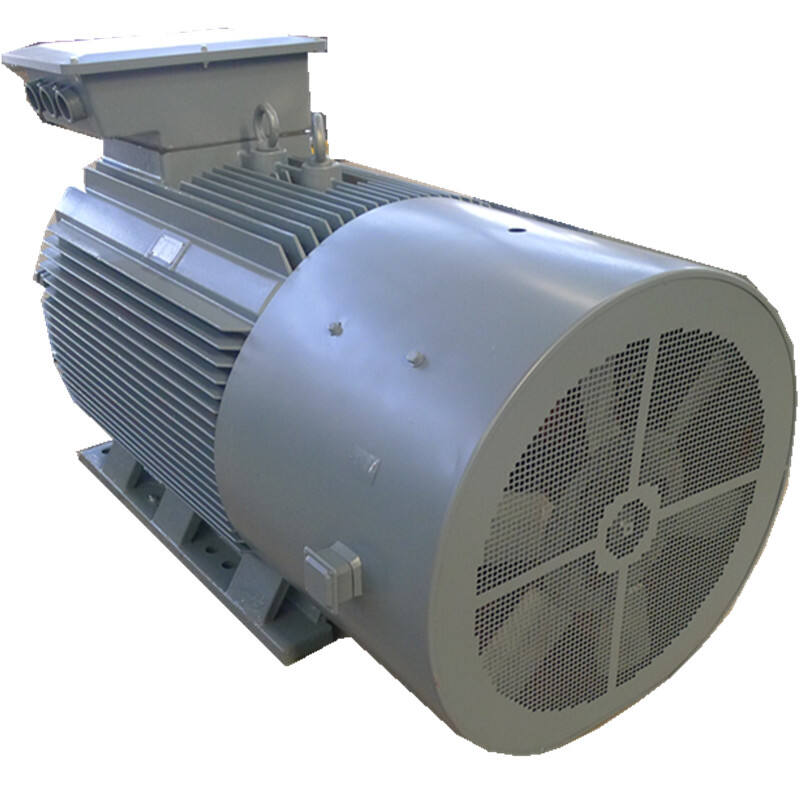
Specifying a Centrifugal Pump Motor IE5 under IEC 60034-30-1 and IEC TS 60034-30-2 cuts internal heat that otherwise bakes bearing grease.
Zero Rotor Copper Loss Means Running 20K Cooler
In a conventional asynchronous motor, continuous induced rotor current generates heavy "rotor copper loss" that conducts straight down the shaft into the front and rear bearings. High bearing temperatures thin out grease, oxidizing lubricant films and triggering premature raceway spalling. Because an ENNENG Permanent Magnet Synchronous Motor carries pre-magnetized NdFeB poles on the rotor, excitation current and rotor copper loss drop to zero. In continuous 24/7 water-treatment service, a Centrifugal Pump Motor IE5 runs with a temperature rise 20K lower than an equivalent induction motor—staying comfortably below 60K. That 20K thermal drop roughly doubles grease relubrication intervals and slows stator varnish aging in warm, humid pump rooms.
Holding Efficiency and Power Factor When Flow Dips
Industrial water-treatment lines rarely pump at 100% capacity around the clock; filtration backwash cycles, clarifier dosing, and cooling make-up loops swing between 40% and 90% flow. Standard induction motors lose efficiency and power factor rapidly below 50% load, pulling high magnetizing current that heats stator coils even when water flow is low. An ENNENG IE4/IE5 Efficiency Motor holds a flat efficiency plateau across 25%-120% load (+2%-5% higher efficiency) and a 0.95 to 1.0 power factor (compared to 0.86 on induction units). Cutting line current by over 10% reduces thermal stress on VFD output transistors, contactors, and feeder cables.
|
Pump-Room Reliability Factor |
ENNENG Centrifugal Pump Motor IE5 (PMSM) |
Standard IE2/IE3 Induction Pump Motor |
|
Rotor Heat & Bearing Temp |
Zero rotor copper loss; runs 20K cooler (<60K) |
Induced rotor heat bakes shaft bearings |
|
Part-Load Efficiency & Amps |
IE5 flat across 25%-120% load; PF 0.95-1.0 (>10% lower amps) |
Efficiency and PF drop below 50% load |
|
Flow Control & Seal Stress |
Smooth VFD speed matching; soft S-curve starts |
Across-the-line water hammer or valve throttling |
|
Frame Footprint & Noise |
1-2 frames smaller; <55 dB; ISO 20816 compliant |
Bulky cast frame; higher cooling-fan noise |
|
Power & Voltage Coverage |
5kW-5MW / 110V-690V (Wind: 1kW-10kW; 3kW, 5kW, 10kW) |
Fixed catalog speeds needing mechanical trim |
Cutting Hydraulic and Mechanical Wear Across the Pump Skid
A Centrifugal Pump Motor IE5 cannot fix a dry-running suction line or a clogged strainer on its own, but pairing synchronous speed control with compact frame geometry removes major mechanical stressors from the skid.
Ditching Throttled Valves to Save Mechanical Seals and Couplings
When a VFD slows a Centrifugal Pump Motor IE5 down by 20% to match clarifier demand, affinity laws cut shaft power nearly in half and lower internal casing pressure. Opening the discharge valve and controlling flow by RPM keeps the impeller near its Best Efficiency Point (BEP), stopping internal recirculation and radial shaft deflection that wipe out mechanical seals and packing glands. Soft S-curve starting ramps also eliminate water-hammer pressure spikes in PVC or stainless header pipes and stop flexible coupling elements from shearing under across-the-line starting torque. Across retrofits at Linglong Tire, Sinopec, and Shandong Gold Mine, ENNENG drives cut machinery power by 7% to 40% and variable-demand fluid and air systems by up to 50%.
Smaller Frames, Stiffer Shafts, and Chemical-Bay Protection
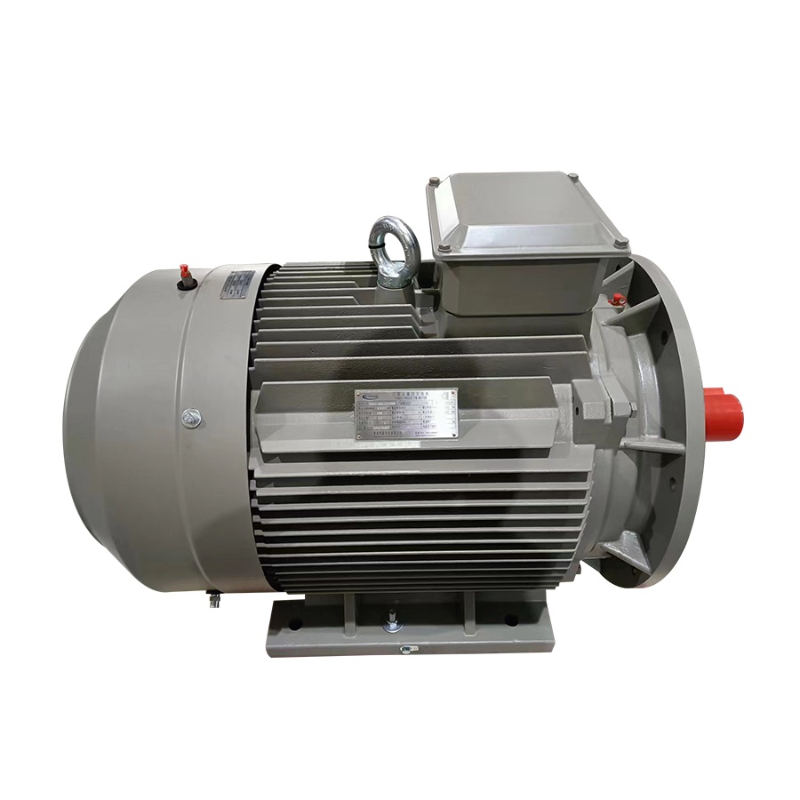
Because zero rotor loss boosts power density, ENNENG builds each Water Treatment Pump Motor one to two frame sizes smaller than a standard induction motor of identical kilowatt output. A shorter, lighter IE4/IE5 Efficiency Motor takes up less room on crowded skid baseplates, raises natural torsional resonance frequencies under ISO 10816 and ISO 20816 vibration standards, and keeps operating noise below 55 dB. Stator windings are built to ANSI/NEMA MG 1 Part 31 inverter-duty dielectric rules to resist pulse-width modulated (PWM) voltage spikes, while coupling guards and grounding follow OSHA 1910.219 and NFPA 70 codes.
Pump-Room Commissioning and Preventive Care Checklist
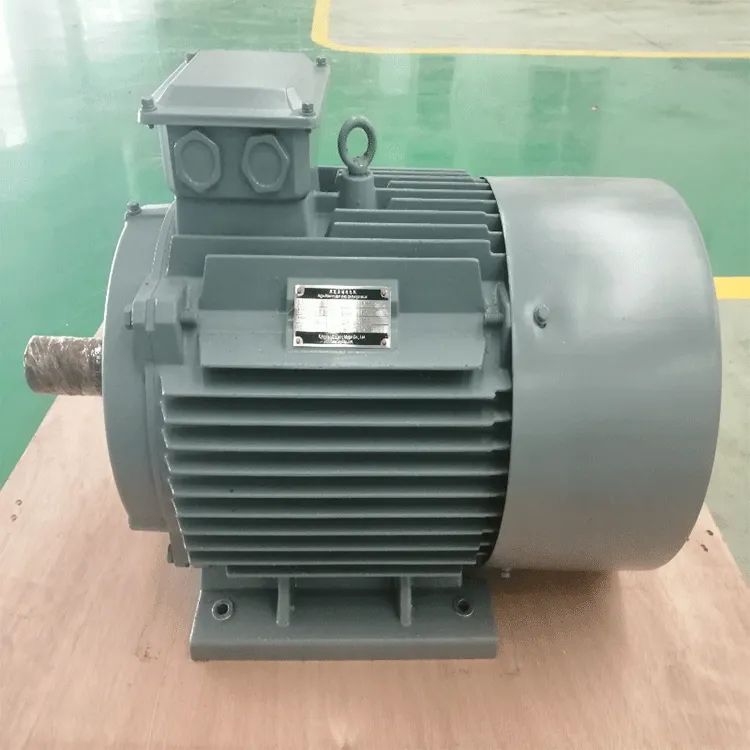
Backed by engineers from the National Rare Earth Permanent Magnet Engineering Centre and dozens of patents, ENNENG customizes each Centrifugal Pump Motor IE5 and IE4/IE5 Efficiency Motor across 110V-690V (380V/660V/1140V) and high-voltage 6kV/10kV ratings for water works and chemical skids. To lock in longer maintenance intervals, crews should verify three field practices:
• Set Minimum Safe-Flow VFD Limits: Program the VFD low-speed floor above the pump's minimum continuous stable flow so the Centrifugal Pump Motor IE5 never dead-heads or starves flush water to mechanical seals.
• Check Laser Alignment & Pipe Strain: Align motor and pump shafts after bolting suction and discharge flanges, and use insulated bearings on VFD-fed skids to block shaft EDM fluting currents.
• Keep Wet-Bay Enclosures Clean: Specify IP55 or IP65 washdown sealing, wipe chemical mist off cooling fins to preserve the <60K temperature rise, and log baseline vibration at commissioning.
Talk with ENNENG Engineering
Reach out to the ENNENG engineering support team with pump head-flow curves and duty logs to get a tailored Centrifugal Pump Motor IE5 specification:
- WhatsApp: +86 18562780228
- E-Mail: [email protected]
- Phone: +86 532 66000559
FAQ
Q: How does a Centrifugal Pump Motor IE5 extend bearing and seal life in water-treatment skids?
A: A Centrifugal Pump Motor IE5 uses an NdFeB permanent magnet rotor that eliminates induced rotor copper losses, allowing the motor to run 20K cooler (below 60K) than standard induction units. Cooler shaft operation prevents bearing grease breakdown, while VFD speed matching eliminates throttled discharge valves, radial impeller thrust, and water-hammer seal damage.
Q: Why is an IE4/IE5 Efficiency Motor better suited for variable-flow water treatment than an IE3 motor?
A: Water-treatment pumps frequently run between 40% and 80% flow where standard IE3 induction motors suffer steep drops in efficiency and power factor. An ENNENG IE4/IE5 Efficiency Motor holds a flat efficiency plateau across 25% to 120% load and a 0.95 to 1.0 power factor, cutting line current by over 10%.
Q: What power, voltage, and enclosure options can ENNENG customize for water-treatment pump motors?
A: ENNENG customizes each Centrifugal Pump Motor IE5 and industrial generator across a unified 5kW-5MW power range and 110V-690V voltage range (plus 380V/660V/1140V and 6kV/10kV options), alongside 1kW-10kW vertical axis wind turbine generators focused on 3kW, 5kW, and 10kW units. Motors include IP55/IP65 sealing and ANSI/NEMA MG 1 Part 31 insulation.

