
 EN

A Centrifugal Pump Motor IE5 can reduce electrical loss, but the important point is where that saving lands in the pumping system. A motor is only one link between the incoming power supply and the fluid delivered at the process. The pump curve, pipework resistance, throttling practice, speed control, and operating schedule determine whether a premium-efficiency motor produces a noticeable system result.
From a technical-sales perspective, the useful question is not “Is IE5 more efficient?” It is: at the plant’s real duty points, how much input power is avoided without sacrificing flow, pressure, or reliability? That distinction matters for water transfer, circulation, chemical process, HVAC, and other industrial fluid-transmission duties that spend much of their time away from a single nameplate condition.
System loss begins before the fluid reaches the pipe
Every centrifugal pumping train has a chain of losses. Electrical input first passes through the drive arrangement, then the motor, coupling or direct connection, pump hydraulics, and finally the piping system. A Centrifugal Pump Motor IE5 addresses losses in the motor portion of that chain. It does not correct an oversized pump, a partly closed throttle valve, excessive pipe friction, or a duty point far from the pump’s preferred operating-efficiency region.
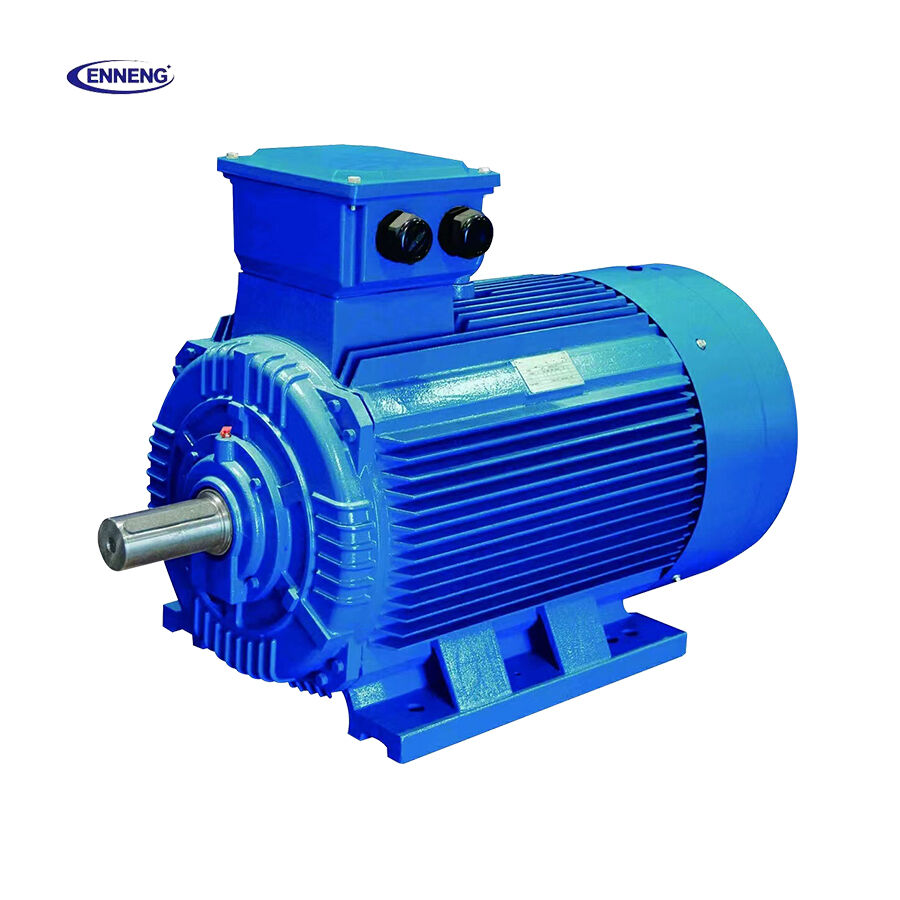
That is not a reason to dismiss the motor upgrade. It is a reason to specify it as part of a system review. The U.S. Department of Energy frames pump savings around both energy-management practice and efficient equipment. In practical terms, a lower-loss motor gives the system a better electrical starting point; controls and hydraulics decide how much of that benefit survives in operation.
- Motor loss: heat generated in electromagnetic, copper, mechanical, and ventilation processes.
- Drive and control loss: losses associated with the converter, cabling, filtering, and control setup where a variable-frequency drive is used.
- Hydraulic loss: pump internal losses, recirculation, friction, and mismatch between pump and system curve.
- Operational loss: energy spent maintaining unnecessary flow or head through throttling, bypassing, or poor sequencing.
What an IE5 efficiency class changes—and what it does not
An IE4/IE5 Efficiency Motor is intended to reduce motor losses compared with lower efficiency classes at comparable rated conditions. For a centrifugal pump, that means less electrical input is required for the same shaft output, subject to the actual load, temperature, voltage quality, and selected configuration. IEC TS 60034-30-2 also provides context for efficiency classes in variable-speed motor-and-converter applications; the selected motor and drive should therefore be evaluated as a pair rather than as unrelated catalog items.
The caveat is important. An efficiency class is not a universal annual-energy guarantee. If a pump runs continuously at one stable and well-matched duty point, the motor-loss reduction may be the main available improvement. If demand changes widely through the day, the larger system opportunity may come from matching speed to demand. A Centrifugal Pump Motor IE5 supports that strategy, but it cannot replace a correct pump selection or a properly configured VFD.
Why variable speed can amplify the system benefit
Centrifugal-pump affinity laws are a useful planning model in the applicable operating region: flow changes roughly with speed, head changes roughly with the square of speed, and required power changes roughly with the cube of speed. The last relationship is why avoiding excess speed can matter so much. A modest speed reduction can reduce power demand materially, provided the process still receives the required flow and head.
Here is the practical sequence. First, identify the real demand profile instead of assuming rated flow is needed at all times. Next, verify the system curve and the acceptable pressure range. Then select the pump, VFD, and Centrifugal Pump Motor IE5 together. This approach prevents a common mistake: improving motor efficiency while leaving a throttled, oversized pump to consume avoidable hydraulic power.
It is tempting to treat the cube relationship as a universal savings calculator. It is not. Static lift, control limits, minimum-flow requirements, changing fluid properties, and the pump curve all affect the result. Still, it explains why a pump system deserves more than a motor-only comparison.
Partial-load performance is often the deciding condition
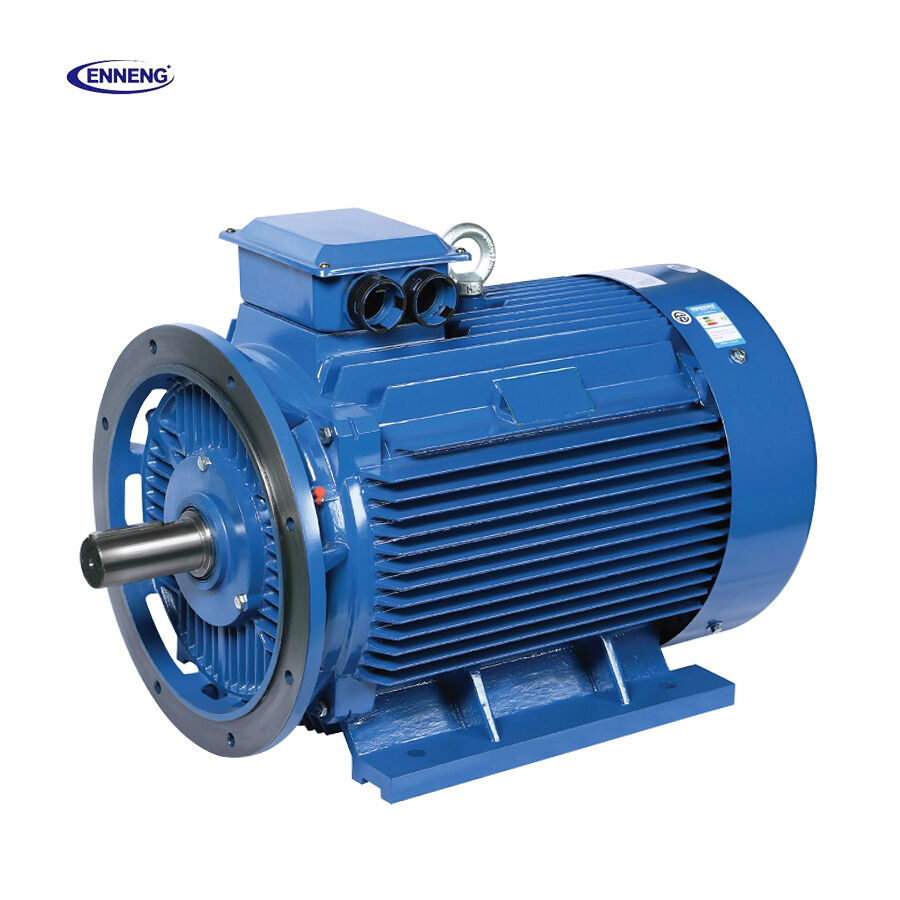
Many industrial pumps do not operate at a single rated point for their entire service life. Cooling loops change with weather and production load; transfer systems see batch variation; booster systems respond to pressure demand. This partial-load reality is where a Centrifugal Pump Motor IE5 should be assessed carefully. Ask for efficiency information at the operating points that dominate annual runtime, not only at nominal output.
For an IE4/IE5 Efficiency Motor project, the engineering review should also examine torque capability, speed range, thermal margin, insulation system, bearing-current mitigation where applicable, harmonic compatibility, enclosure, and ambient conditions. A high efficiency figure has limited value if the motor is derated unexpectedly or the control system cannot maintain stable operation.
A practical loss-reduction workflow
- Measure the duty profile. Record flow, pressure, speed, input power, run hours, and control position across representative operating periods.
- Plot pump and system behavior. Confirm whether the existing operating point is near a suitable efficiency region and identify throttling, bypassing, or persistent excess head.
- Compare the complete drive train. Evaluate the motor, VFD, cables, filters, and commissioning requirements as one package.
- Select for the required operating envelope. A Centrifugal Pump Motor IE5 should satisfy the actual torque, temperature, ingress-protection, and speed requirements—not merely a catalogue power rating.
- Commission against measured values. Validate flow and pressure setpoints, check motor temperature and vibration, and confirm that control logic avoids unnecessary high-speed operation.
Where the business case is strongest
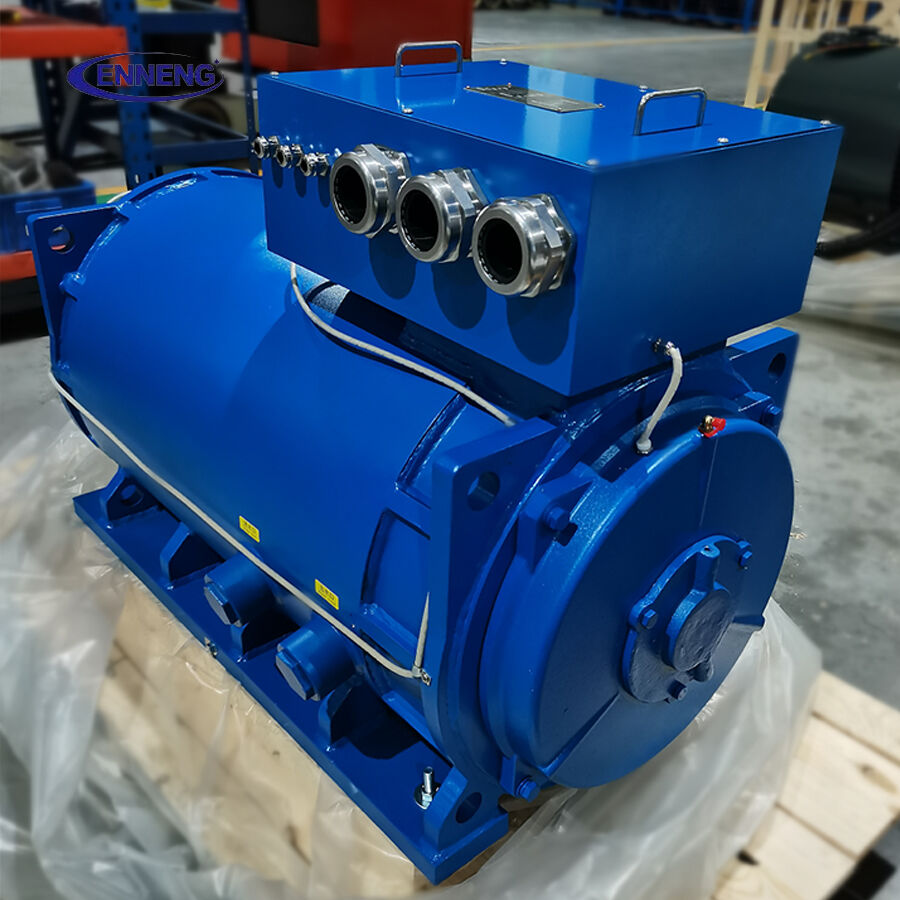
Strong candidates are often systems with long annual operating hours, a credible gap between actual and required flow, and a control strategy that can safely vary speed. In those cases, lower motor loss from a Centrifugal Pump Motor IE5 combines with lower hydraulic demand to improve the overall energy picture. Applications with constant demand can still benefit, but their case should be calculated from the measured motor-load profile rather than from a generic percentage claim.
For OEMs and plant teams, supplier evaluation should focus on application fit. Qingdao Enneng Motor specializes in permanent-magnet motors and generators and supports application-specific motor discussions. The relevant technical conversation should cover the duty cycle, pump type, VFD arrangement, site conditions, and verification plan before an efficiency claim is converted into a project forecast.
Conclusion: treat IE5 as a system component, not a standalone promise
A Centrifugal Pump Motor IE5 lowers one important source of electrical loss. Its greatest value appears when it is combined with a correctly sized pump, a suitable variable-speed strategy, and commissioning based on measured demand. The result is not simply a more efficient motor; it is a better-controlled fluid-transmission system with fewer avoidable losses across the full energy path.

