
 EN

Automated manufacturing plants deploying continuous web-handling slitter rewinders and precision rotary packaging lines 8,400 hours annually demand exact dynamic tension control and minimal thermal dissipation. Original equipment manufacturers engineering specialized machinery often struggle to deliver distinctive performance advantages when relying on generic off-the-shelf motors. Investing in a targeted custom PM motor design allows machinery builders to achieve superior torque density, compact packaging, and tailored operational efficiency that generic drives cannot match.
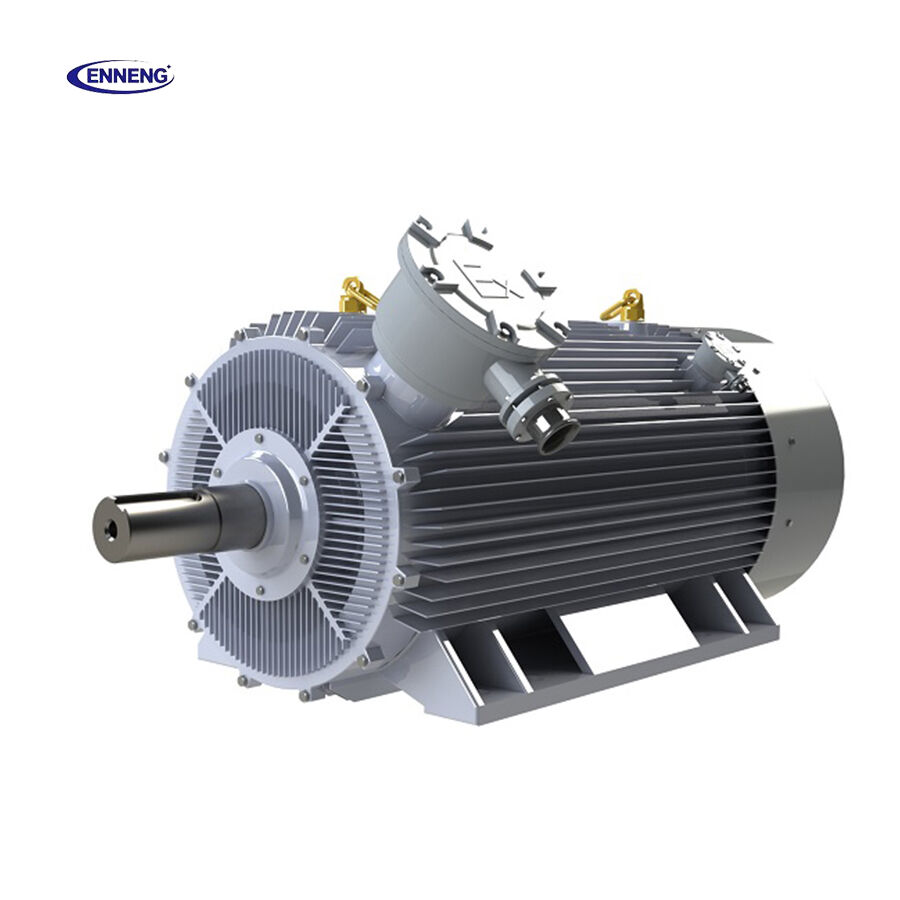
Standard catalog electric machinery forces equipment builders to compromise on shaft geometry, mounting dimensions, and baseline thermal ratings. These compromises result in oversized drive cabinets, parasitic transmission losses through intermediate gearboxes, and elevated mechanical failure rates across industrial production lines. ENNENG operates as an established rare earth motor manufacturer and engineering partner, delivering a specialized custom PM motor design that resolves mechanical layout bottlenecks, optimizes energy efficiency, and strengthens the market position of original equipment builders.
Overcoming Catalog Motor Constraints in Modern Machinery
Standard catalog electric machinery is designed to satisfy broad median operating boundaries across general industries, prioritizing mass warehousing rather than application-specific performance. When mechanical equipment builders incorporate these generic drives into specialized machinery, they inevitably encounter structural and operational compromises. Implementing a custom PM motor design enables equipment builders to eliminate these compromises, replacing generic catalog units with optimized drive solutions tailored to exact process requirements.
Structural Packaging Penalties and Transmission Backlash
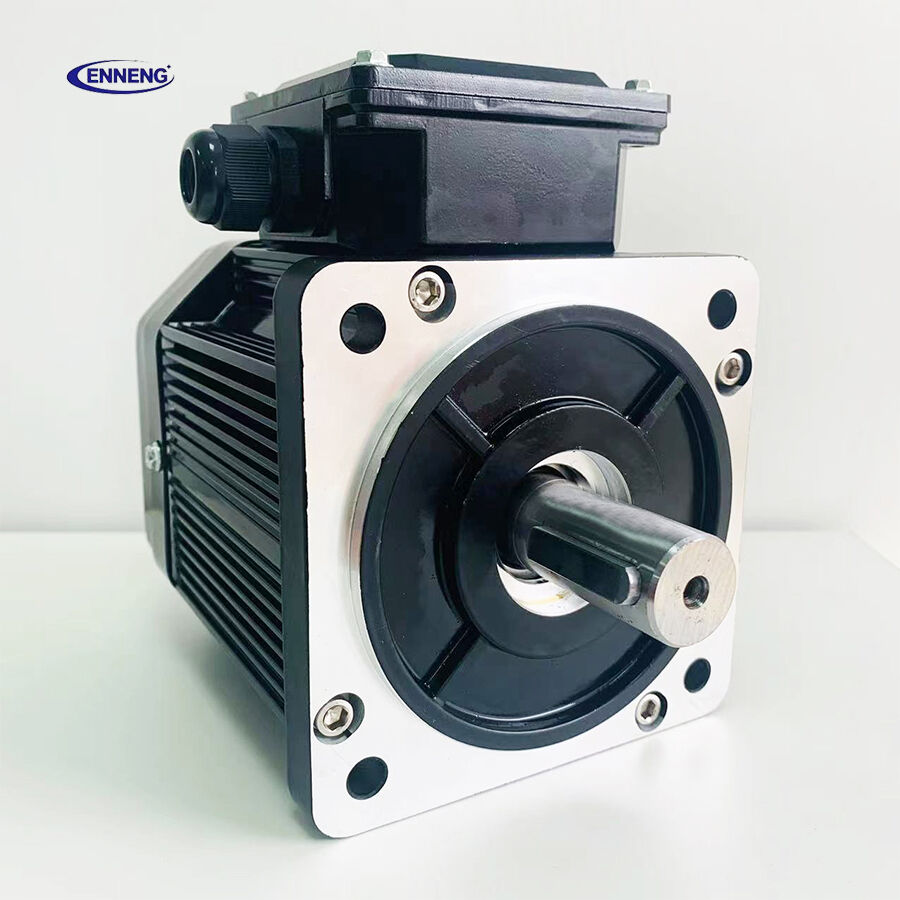
Standard induction machinery and off-the-shelf synchronous packages utilize rigid dimensional standards that frequently exceed the physical boundaries of specialized industrial machinery. To adapt catalog motors to proprietary gearboxes or driven rollers, equipment builders must incorporate intermediate adapter plates, shaft sleeves, and flexible couplings. These mechanical adaptations add rotating mass, introduce torsional compliance, and increase the overall footprint of the machine. Implementing a dedicated custom PM motor design eliminates auxiliary mounting hardware by tailoring shaft extensions, flange pilot diameters, and mounting bolt patterns directly to the host equipment.
Operating Speed Profiles and Thermal Ceilings
Standard catalog motors exhibit peak operating efficiency within a narrow band near full rated load and base speed. In real-world processing applications, automated equipment frequently operates across variable speed ranges, cycling between forty and seventy percent of nominal capacity. A standard motor running outside its optimal design zone experiences elevated core and copper losses, generating excessive frame heat. This thermal accumulation elevates internal operating temperatures, demanding auxiliary cooling blowers and accelerating bearing grease breakdown.
Tailored Electromagnetic Engineering in Custom PM Motors
Achieving decisive competitive differentiation requires engineering the internal electromagnetic circuit around the specific performance requirements of the driven application. Controlling magnet material properties, winding configurations, and air-gap geometry allows equipment manufacturers to achieve performance metrics that standard catalog motors cannot provide.
Permanent Magnet Metallurgy and Rotor Flux Optimization
Magnetic circuit optimization begins with the selection of permanent magnet materials. An advanced rare earth motor manufacturer evaluates rare-earth neodymium-iron-boron magnet grades against the localized thermal profile of the machine. Utilizing high-coercivity UH and EH series NdFeB magnets ensures that rotor assemblies maintain high magnetic remanence without risking irreversible demagnetization under severe operational overloads or ambient temperatures exceeding 150°C.
|
Engineering Parameter |
Standard Catalog PM Motor |
ENNENG Custom PM Motor Design |
|
Efficiency Classification |
Standard IE3 / IE4 baseline |
Tailored Ultra-Premium IE5 performance |
|
Magnet Metallurgy |
Standard commercial N-grade NdFeB |
High-coercivity UH / EH rare-earth alloys |
|
Shaft & Flange Geometry |
Fixed IEC or NEMA catalog dimensions |
Precision custom shaft, flange, and piloting |
|
Cogging Torque Profile |
Standard 2.0% to 3.5% of rated torque |
Ultra-low <0.5% through skewed slot geometry |
|
Standard Voltage Scope |
Standard commercial voltages |
Unified 110V to 690V industrial range |
|
Standard Output Scope |
Standard commercial sizes |
Unified 5kW to 5MW industrial capacity |
|
Direct Drive Integration |
Requires external mechanical reducer |
Integrated low-speed direct drive architecture |
Customized Stator Windings and Harmonic Voltage Suppression
Stator winding geometry directly governs the operational torque-speed curve of a PM synchronous motor. Engineering teams can adjust turn counts, conductor cross-sections, and winding pitch to match the exact DC bus voltage and current output of the host variable frequency drive. Implementing precision-wound concentrated or distributed windings optimizes slot fill factors, lowering phase resistance and eliminating internal I²R copper losses.
Furthermore, custom winding layouts suppress spatial harmonics within the air gap. Reducing spatial harmonic flux diminishes high-frequency iron core losses and attenuates acoustic noise, creating quiet drive systems essential for medical processing, cleanroom manufacturing, and printing machinery. Equipment built with a specialized permanent magnet motor PMSM delivers smooth velocity regulation without the audible whine common to catalog drive packages, demonstrating the clear value of a custom PM motor design.
Skewed Slot Geometry and Cogging Torque Elimination
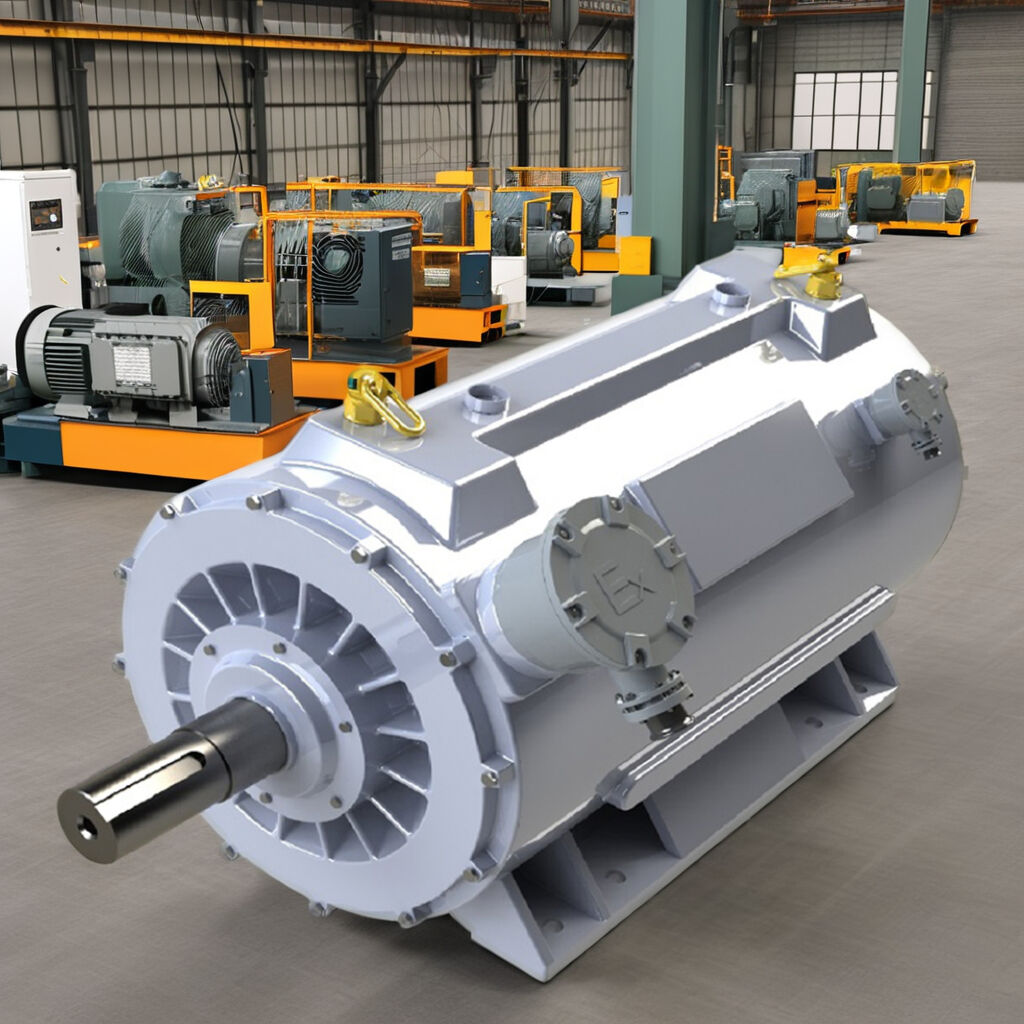
Cogging torque caused by magnetic attraction between rotor permanent magnets and stator teeth produces rotational velocity ripple, particularly at low operational speeds. For precision automation equipment, high cogging torque degrades surface finish quality in metal processing and creates tension disturbances in continuous film manufacturing. Catalog motors rarely prioritize cogging reduction due to manufacturing cost constraints.
A specialized custom PM motor design incorporates skewed stator slots or segmented, stepped-skew rotor magnets to neutralize magnetic detent forces. Optimizing air-gap geometry and stator tooth tip profiles limits cogging torque to less than 0.5% of nominal torque. This level of rotational smoothness allows a PM synchronous motor to maintain stable low-speed operation down to fractional RPMs without mechanical hesitation.
Industrial drive solutions developed at ENNENG motor products cover unified voltage ratings from 110V to 690V and power ranges from 5kW to 5MW to satisfy demanding industrial machinery specifications. For decentralized plant power generation and remote monitoring facilities, ENNENG also provides vertical axis wind turbine systems rated from 1kW to 10kW, emphasizing 3kW, 5kW, and 10kW platforms to ensure reliable utility supply.
Standards Compliance, System Integration, and Maintenance
Developing a custom PM motor design requires adhering to international technical guidelines and industrial safety mandates. Motor efficiency verification must comply with IEC TS 60034-30-2 standards for converter-fed variable-speed machines, validating the Ultra-Premium performance delivered by an advanced custom PM motor design. Equipment compliance with ISO 50001 energy management frameworks assists original equipment builders in certifying measurable carbon reductions for international export markets.
Electrical connections and enclosure grounding must satisfy NFPA 70 National Electrical Code mandates, while manufacturing safety protocols must comply strictly with OSHA 1910 Subpart S industrial electrical safety mandates. Rotating assemblies in a custom PM motor design must undergo multi-plane dynamic balancing per ISO 1940 Grade G1.0 standards to eliminate destructive mechanical vibration.
Ensuring long-term reliability in the field demands structured preventive maintenance procedures. Technicians should conduct baseline vibration spectral analysis according to ISO 10816 standards during initial commissioning to establish baseline mechanical health. Stator insulation resistance and polarization index values must be verified annually using a megohmmeter per IEEE 43 recommendations. Routine inspections should verify that cooling fins remain free of dust accumulation and that shaft grounding rings maintain clean contact with the motor shaft to prevent high-frequency bearing fluting in every custom PM motor design.
Engineering Collaboration and Custom Motor Inquiries
Transforming machinery performance begins by moving beyond generic catalog limitations. A purpose-built custom PM motor design enhances equipment energy efficiency, reduces physical dimensions, and eliminates mechanical maintenance headaches, establishing an enduring market advantage for machinery builders. Partnering with a dedicated high efficiency motor supplier ensures comprehensive finite element electromagnetic modeling, verified thermal management, and rapid prototyping workflows. Inquire today to evaluate equipment requirements and begin developing custom drive solutions.
- WhatsApp: +86 18562780228
- E-Mail: [email protected]
- Phone: +86 532 66000559
FAQ
Q: How does a custom PM motor design improve the energy efficiency of mechanical equipment?
A: Standard catalog motors are optimized for peak efficiency at full rated load, whereas a custom PM motor design tailors stator windings and magnetic flux paths to peak precisely at the dominant operating duty point of the machine. This application-specific tuning eliminates excessive electrical losses during continuous partial-load operation. Operating with tailored electromagnetic geometry reduces total energy consumption by ten to twenty percent compared to generic induction motors.
Q: Why is cogging torque mitigation critical in custom PM motor engineering?
A: Cogging torque arises from magnetic attraction between rotor magnets and stator teeth, causing torque ripple and velocity variations at low rotational speeds. In precision machinery such as web winders or robotic manipulators, torque ripple causes product defects and surface chatter. Incorporating skewed stator slots and optimized air-gap profiles in a custom PM motor design reduces cogging torque below 0.5%, ensuring ultra-smooth rotation.
Q: What advantages does a rare earth motor manufacturer offer over standard catalog assemblers?
A: An authentic rare earth motor manufacturer manages the complete engineering process, from custom NdFeB magnet grading and thermal demagnetization modeling to in-house stator winding and dynamic balancing. Unlike third-party catalog assemblers who modify external housings, a specialized manufacturer customizes internal electromagnetic circuits, providing higher torque density, better thermal safety margins, and complete quality traceability across every production batch.

