
 EN

Why High-Strength Mechanical Structure Is Necessary for Mining Industrial Motor Under Rock-Impact Mine-Site Conditions
For a Mining Industrial Motor, electrical performance is only part of the specification. At a mine site, a rock strike, a blast-related ground disturbance, a conveyor upset, or repeated material impacts can send transient loads through the equipment foundation and into the motor feet, frame, end shields, terminal box, bearings, and coupling. The motor may still be correctly sized for torque and power, yet its service life can be shortened if the mechanical load path is not considered.
From a maintenance-engineering perspective, the useful question is not simply whether a motor has a heavy enclosure. It is whether the complete Mining Industrial Motor installation can preserve alignment, bearing support, electrical clearances, and safe attachment when the surrounding structure is exposed to impact and vibration. That distinction affects selection, installation, and condition monitoring.
Rock impact is a structural load, not just a vibration reading
Rock handling equipment creates more than steady-state rotating vibration. A sudden impact may introduce a short, high-amplitude force into a chute, transfer conveyor, crusher support, mill foundation, or skid. The force can be transmitted through steelwork and concrete as structure-borne vibration. Its effect on a Mining Industrial Motor depends on the route it takes, the stiffness of the support, the frequency content of the event, and whether any part of the assembly is close to resonance.
That is why a single no-load vibration value cannot describe the entire risk. A motor can run smoothly during acceptance testing but experience loosened fasteners, shifting shims, fatigue at mounting interfaces, or bearing misalignment after repeated site events. NEMA MG 1 material notes that bearing-housing or support vibration is influenced by bearing installation, bearing function, bearing design, and rotor uniformity. In practical terms, the bearing housing deserves attention because it is where rotating forces and external structural forces meet.
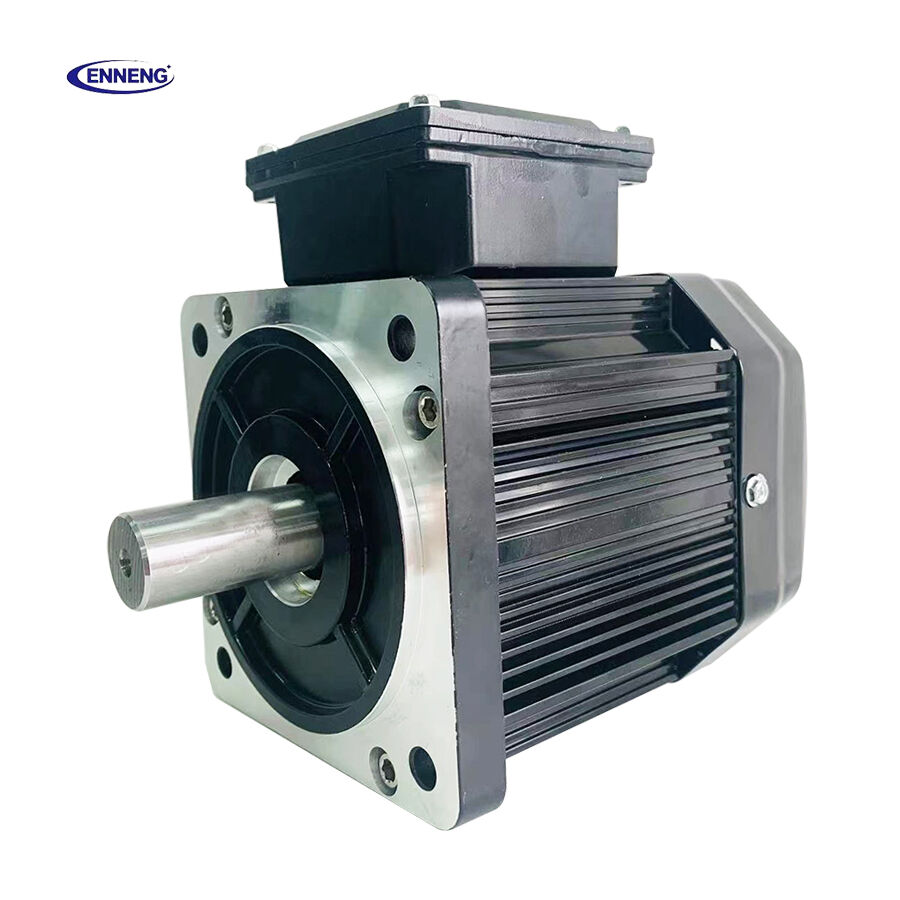
Where a strong Mining Industrial Motor earns its value
1. The frame and mounting feet keep the machine aligned
The frame of a Mining Industrial Motor must do more than hold components together. It provides a reference structure for the stator, bearing supports, terminal box, and mounting feet. If the base flexes or a foot interface settles, shaft alignment at the coupling can change. That change can add radial or axial load to bearings, increase vibration, and accelerate wear in both the motor and driven machine.
Specify the mounting arrangement together with the baseplate, grout, hold-down hardware, shims, and coupling method. A well-built motor on a flexible or poorly maintained base remains vulnerable. During installation, check soft foot, flatness, bolt preload, and alignment after the train has reached operating temperature where the application requires it.
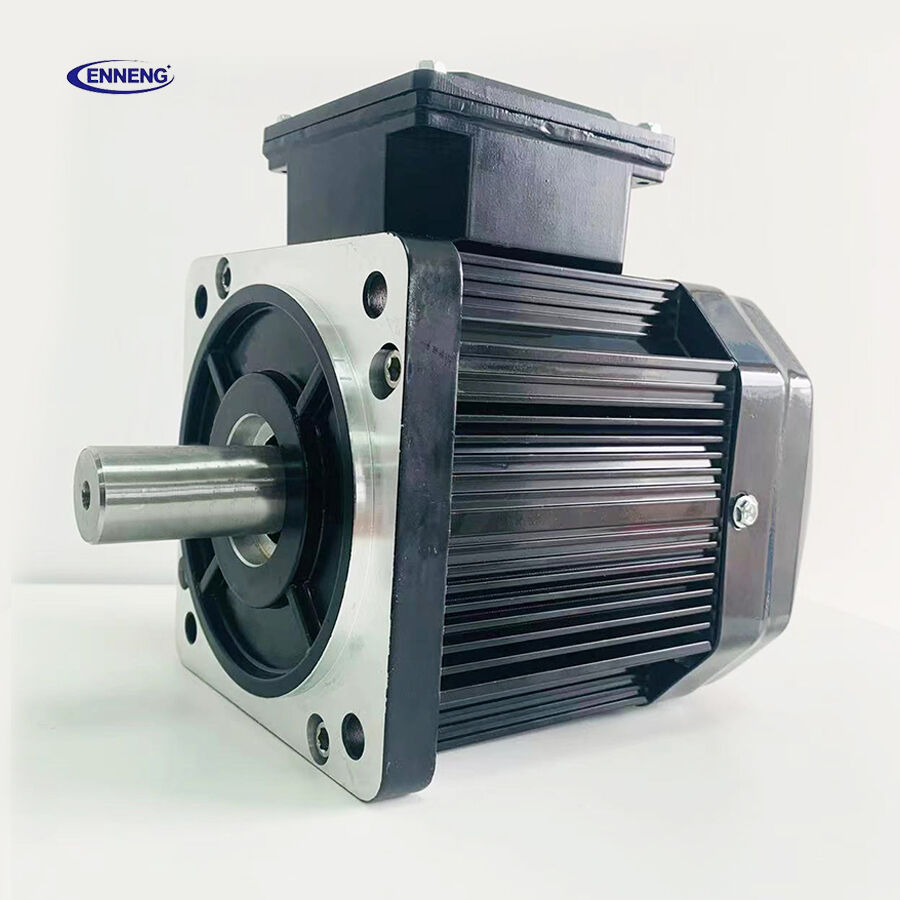
2. Bearing supports protect the air gap and the shaft line
In a Mining Industrial Motor, end shields and bearing housings maintain the rotor-to-stator relationship. Repeated shock can contribute to loss of bearing-seat integrity, distorted support geometry, or conditions that make lubricant retention and sealing more difficult. The consequence is not limited to noise. Changes in the shaft line can increase bearing load and, in severe cases, reduce the clearance margin that the electrical machine needs for reliable rotation.
A high-strength mechanical design should therefore be evaluated as an assembly: housing stiffness, end-shield support, bearing arrangement, shaft extension, coupling load, and the driven equipment’s movement under impact. Ask suppliers how these interfaces are designed for the declared duty rather than assuming that a large frame size alone proves suitability.
3. Fasteners and terminal-box details prevent secondary failures
Impact exposure also tests the smaller interfaces. Loose terminal-box hardware, unsupported cable entries, degraded seals, or poorly restrained cables can create electrical and safety problems after mechanical movement. For a Mining Industrial Motor, cable support and gland selection should account for site movement, dust control, and service access. The goal is to prevent repeated vibration from being converted into damaged conductors, compromised ingress protection, or time-consuming troubleshooting.
How Permanent Magnet Motor PMSM designs fit the question
A Permanent Magnet Motor PMSM can be selected for its operating characteristics, including efficient performance in an appropriate duty cycle, but its electromagnetic advantages do not replace a site-specific mechanical review. A Permanent Magnet Motor PMSM used near crushers, feeders, or transfer points still needs its frame, bearings, mounting, coupling, and cable system assessed against the actual environment.
The useful comparison is not “standard motor versus Permanent Magnet Motor PMSM” in the abstract. It is whether the chosen machine and installation together can tolerate the application’s torque demand, start/stop pattern, ambient conditions, contamination, vibration exposure, and impact transmission. If the design uses a drive, coordinate motor, drive, cable, grounding, and mechanical constraints rather than treating them as separate purchases.
Turn a ruggedness claim into a verification plan
Before buying a Mining Industrial Motor, convert broad words such as “heavy-duty” or “robust” into reviewable requirements. IEC 60068-2-64 is associated with broadband random-vibration testing, while IEC 60068-2-27 addresses shock testing. These references do not automatically apply to every motor or prove a particular product has passed a mine-specific test, but they provide a useful way to frame a discussion of test method, direction, severity, duration, mounting condition, and acceptance criteria.
- Describe the equipment location and the source of impact: crusher, chute, conveyor transfer, mill, or mobile support.
- Provide available vibration or event data from the base, not only a motor nameplate requirement.
- Review frame mounting, base stiffness, anchor bolts, shims, and coupling alignment as one system.
- Ask how bearing supports, end shields, cable entries, and fasteners are retained for the stated duty.
- Agree on inspection points: bolt torque, alignment, bearing-housing vibration trend, cable restraint, and visible cracking or fretting.
Maintenance signals that should not be ignored
For a Mining Industrial Motor, an increase in vibration is a prompt to investigate the load path, not merely to balance the rotor. Compare bearing-housing readings, inspect the base and hold-down hardware, look for fretting around feet or shims, verify alignment, and review whether operating events have changed. Trending is especially valuable because a single reading may miss a short impact-related event.
It is also reasonable to revise the initial specification after commissioning. If the site shows higher impact transmission than expected, the corrective action may involve the support structure, isolation approach, coupling choice, or inspection interval rather than replacing the motor alone. Put differently, reliability depends on correcting the weakest interface in the train.
Contact US
If you are evaluating commercial permanent magnet motors for sale and need an engineered drive solution that guarantees efficiency and longevity, ENNENG is your trusted partner.Contact ENNENG Today.Speak to our technical engineering team to receive a customised drive proposal.
- WhatsApp: +86 18562780228
- E-Mail: [email protected]
- Phone: +86 532 66000559
Conclusion: mechanical strength preserves electrical reliability
A Mining Industrial Motor works in a mechanical system before it works as an electrical machine. Under rock-impact conditions, high-strength construction helps preserve alignment, bearing support, attachment security, cable integrity, and maintainability. The right decision is not based on weight or marketing language. It comes from documenting the site loads, reviewing the full installation path, and verifying the design and test requirements with the supplier before the motor reaches the mine.

