The Carbon Reduction Imperative in Modern Manufacturing
Heavy industrial facilities face rigorous regulatory mandates to curtail greenhouse gas emissions while sustaining elevated production throughput. In an energy-intensive metallurgical plant operating round-the-clock roll-forming machinery, electrical motor drives accounted for roughly eighty percent of total plant electrical consumption. Implementing a plant-wide transition toward the IE4 Efficiency Motor standard transformed baseline energy dynamics, immediately curbing Scope 2 greenhouse gas emissions. Upgrading primary electric drives offers the most direct pathway for industrial enterprises to lower operational carbon footprints without compromising mechanical reliability.
|
Efficiency Classification
|
Average Losses (%)
|
Annual Carbon Reduction Impact
|
|
IE1 Standard Efficiency
|
12% - 15%
|
Benchmark Baseline Emission Level
|
|
IE2 High Efficiency
|
9% - 11%
|
Approximately 8% Carbon Reduction
|
|
IE3 Premium Efficiency
|
6% - 8%
|
Approximately 14% Carbon Reduction
|
|
IE4 Super Premium Efficiency
|
3% - 5%
|
Up to 22% Carbon Reduction
|
Global manufacturing operations encounter escalating electricity tariffs and tight industrial carbon caps. Traditional induction drives waste considerable energy through rotor resistance and continuous excitation currents, generating excess heat that requires secondary cooling loads. By contrast, the architectural framework of an IE4 Efficiency Motor eliminates rotor copper losses entirely through permanent magnet excitation, unlocking superior efficiency profiles even across variable operating loads.
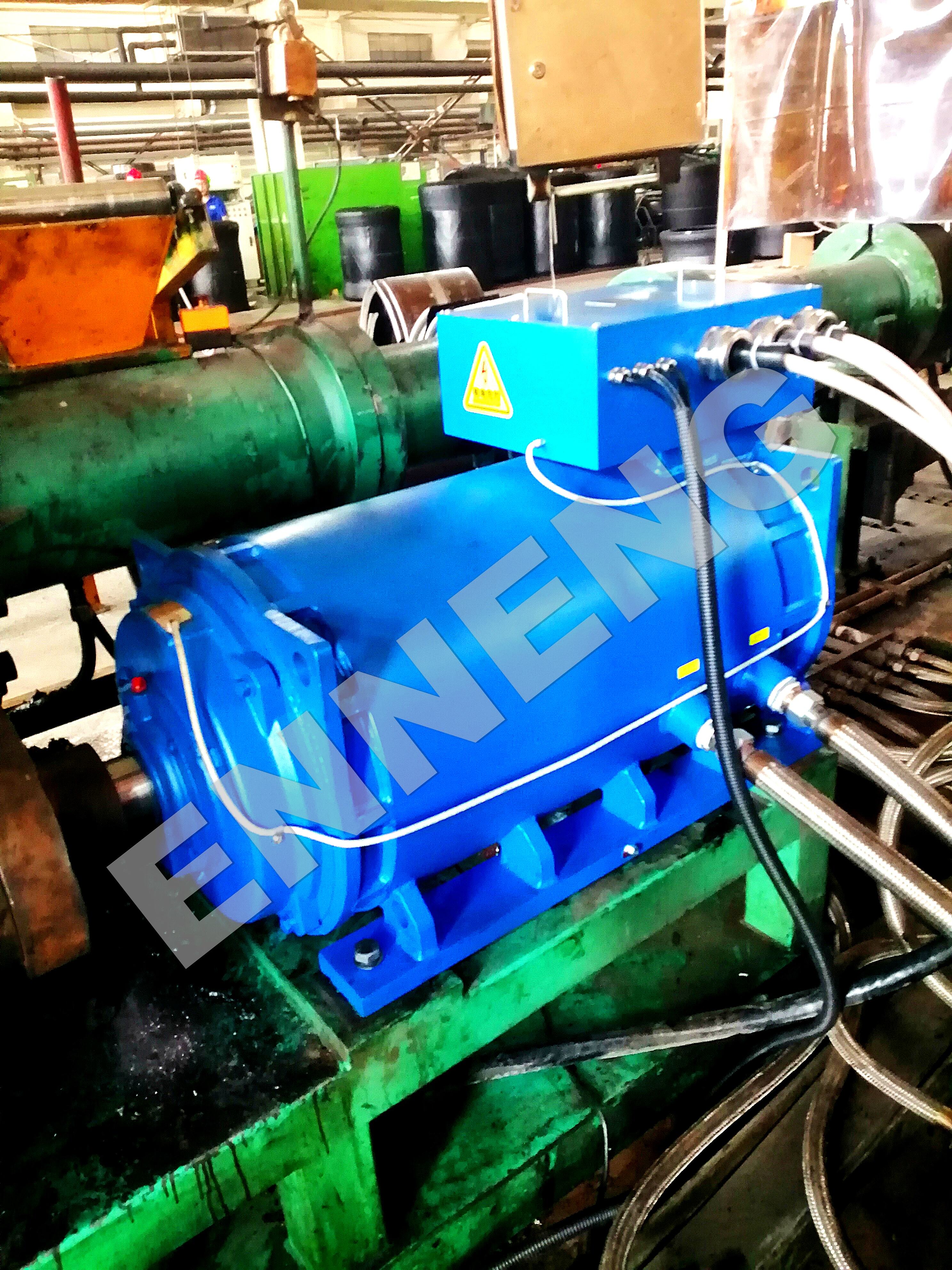
Rotor Loss Elimination via Permanent Magnet Physics
Asynchronous motors depend on induced electromagnetic currents in the rotor cage to develop rotational torque. These induced currents generate substantial internal electrical resistance losses (I2R), releasing thermal energy directly into the motor core. An IE4 Efficiency Motor utilizing permanent magnet architecture creates synchronous torque without secondary induced currents. By eliminating rotor copper dissipation, thermal rise decreases by 10 to 20 degrees Celsius, boosting electrical-to-mechanical conversion efficiency across all load states.
Superior Partial-Load Performance Characteristics
Industrial manufacturing equipment rarely operates under steady 100 percent load conditions throughout practical production cycles. Standard induction units experience precipitous efficiency drops when operating below 50 percent capacity. An IE4 Efficiency Motor preserves its peak efficiency profile across a remarkably wide operational bandwidth ranging from 25 percent to 125 percent load. This sustained operational performance ensures manufacturing machinery conserves substantial kilowatt-hours during process variations and idling periods.
Harmonic Suppression and Power Factor Optimization
Low electrical power factor strains plant transformers, necessitating oversized power distribution equipment and contributing to indirect grid-level carbon emissions. Standard induction machinery frequently presents power factors below 0.85 when lightly loaded. Conversely, the advanced stator design of an IE4 Efficiency Motor delivers an operating power factor between 0.95 and 0.99, reducing reactive current draw and transmission line dissipation throughout industrial facilities.
Technical Superiority and Decarbonization with ENNENG Motors
High-energy-consumption manufacturing facilities require dependable drive equipment capable of continuous operation in rigorous environments. ENNENG provides state-of-the-art synchronous drive systems engineered to satisfy super-premium energy standards. Adopting an ENNENG IE4 Efficiency Motor allows industrial operators to reduce power consumption by 10 to 40 percent compared with aging induction hardware.
|
Operational Metric
|
Conventional IE2 Induction Motor
|
ENNENG IE4 Efficiency Motor
|
|
System Conversion Efficiency
|
~89.5%
|
Up to 96.5%
|
|
Voltage Range Flexibility
|
380V - 415V Rigid
|
110V - 690V Unified
|
|
Temperature Rise Limit
|
Class B (80K)
|
Lower than 60K
|
|
Dynamic Torque Delivery
|
Standard Starting Torque
|
High Synchronous Continuous Torque
|
The core parameter framework developed by ENNENG covers broad industrial power capacities from 5kW up to 5MW multi-megawatt systems, with complete voltage versatility ranging from 110V to 690V. Maintaining an operating temperature rise lower than 60K extends motor insulation longevity and drastically minimizes parasitic cooling expenses in confined electrical plant rooms.
Thermal Management and Reduced Cooling Energy
Lower internal heat generation inside the motor carcass directly reduces surrounding ambient ventilation burdens. In massive manufacturing cleanrooms and sealed production spaces, excessive motor heat requires oversized air conditioning chillers. Deploying an IE4 Efficiency Motor slashes radiant thermal loads, multiplying overall facility energy savings and trimming total corporate energy expenditure.
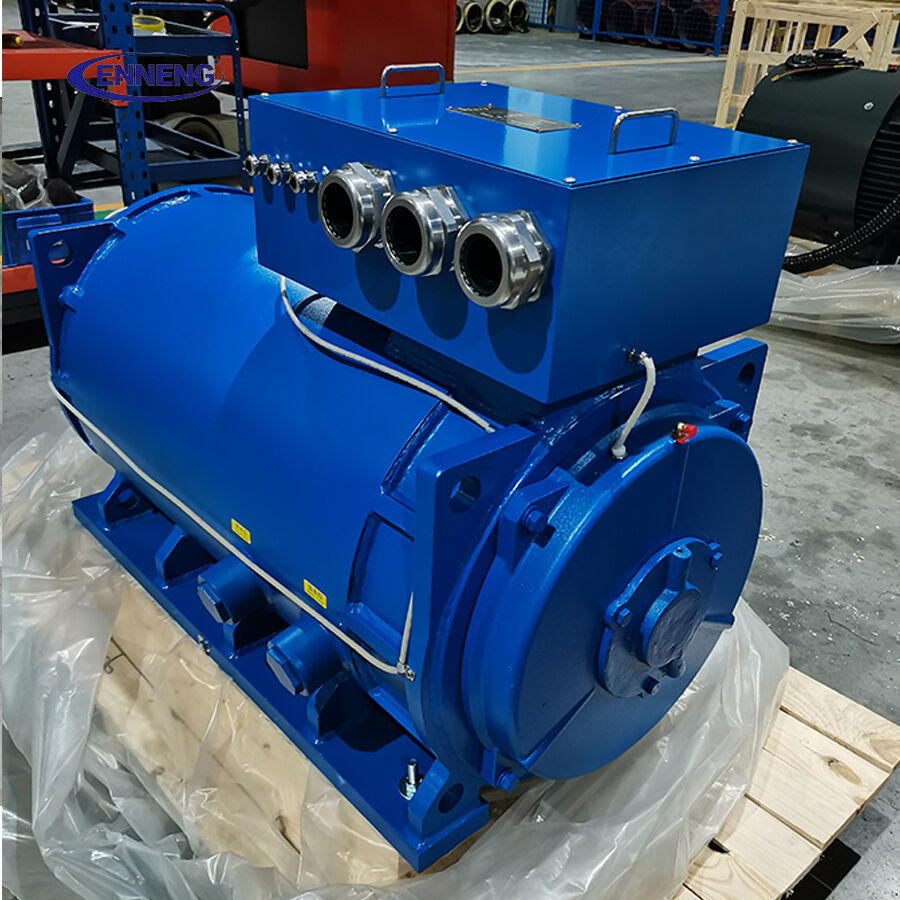
Direct-Drive Architecture Eliminates Gearbox Carbon Overhead
Traditional motor drivetrains integrate intermediate gear reducers, pulleys, and friction couplings to match load speed requirements. Mechanical transmission components typically sacrifice between 5 and 20 percent of total shaft energy through frictional dissipation and oil churning. Pairing an IE4 Efficiency Motor directly with driven loads eliminates these mechanical linkages entirely, capturing massive efficiency gains and eradicating gear oil contamination risks.
Authoritative Standards and Decarbonization Frameworks
Industrial decarbonization programs derive measurable benchmarks from rigorous international standards. The International Electrotechnical Commission outlines motor efficiency classes through IEC 60034-30-1, establishing super-premium thresholds designated under the IE4 classification. Efficiency testing and verification methodologies must comply with IEC 60034-2-1, utilizing precision torque transducers and calibrated electrical analyzers to guarantee authentic performance metrics.
Corporate carbon tracking adheres to the Greenhouse Gas Protocol and ISO 14064 guidelines, which govern corporate carbon accounting. Industrial enterprises utilizing an IE4 Efficiency Motor directly lower Scope 2 market-based and location-based emissions through reduced megawatt-hour procurement from local electrical grids. Additionally, adhering to ISO 50001 energy management protocols allows manufacturing plants to document continuous energy performance improvements and secure certification compliance during corporate sustainability audits.
Comprehensive Implementation Guide for High-Efficiency Motor Retransformation
Plant Auditing and Baseline Power Measurement
Begin by deploying three-phase digital power analyzers on all critical continuous-duty motor circuits. Record continuous active power (kW), apparent power (kVA), power factor, and load fluctuation profiles across full weekly operating cycles. Prioritize drives displaying running loads below 60 percent of nameplate capacity, where existing induction units demonstrate inferior operating efficiency.
Selecting Proper Frame Sizes and Vector Drive Compatibility
Verify that existing mounting skids and mechanical shaft connections accommodate modern metric frame dimensions. When selecting an IE4 Efficiency Motor, determine whether line-start permanent magnet capability or dedicated variable frequency drive control best matches process dynamics. Permanent magnet synchronous units running on precision vector drives unlock precise speed modulation, matching operational power draw to dynamic manufacturing throughput.
Predictive Condition Monitoring and Insulation Assurance
Establish periodic insulation resistance testing using 1000V DC megohmmeters to monitor winding integrity over multi-year duty cycles. Schedule non-destructive vibration assessments following ISO 10816 standards to ensure mechanical alignment remains within pristine parameters. Regularly check motor cooling airways to maintain natural convective thermal dissipation.
For comprehensive specifications regarding super-premium motor hardware, explore the ENNENG Products Catalog or review complete systems via the ENNENG Portal.
-
Facility managers seeking detailed plant energy audits and tailored carbon reduction roadmaps are encouraged to contact our specialized technical application division.WhatsApp: +86 18562780228
-
E-Mail: [email protected]
-
Phone: +86 532 66000559
-
Address: Haichuang New Energy & New Materials Industrial Park, No. 1 Guiding Road, Licang District, Qingdao, Shandong, China
FAQ
Q: How much carbon dioxide does an IE4 Efficiency Motor eliminate annually?
A: A standard 90 kW drive operating continuously for 8,000 hours per year achieves roughly a 4 to 6 percent efficiency gain over older IE2 units. This performance gap conserves approximately 30,000 to 45,000 kWh of electricity each year. Depending on regional grid carbon intensity, a single IE4 Efficiency Motor reduces indirect carbon dioxide emissions by 20 to 35 metric tons annually.
Q: Can an IE4 Efficiency Motor start directly from an industrial electrical grid?
A: Certain permanent magnet configurations incorporate squirrel-cage starting bars within the permanent magnet rotor structure, enabling direct line-start capabilities without mandatory variable frequency drives. These self-starting motors smoothly synchronize with line frequencies while delivering super-premium operating efficiency. For complex variable-torque tasks, pairing the motor with a dedicated inverter provides superior operational control.
Q: Why do permanent magnets maintain efficiency over extended industrial service life?
A: Modern permanent magnet synchronous designs utilize high-grade rare-earth neodymium materials engineered to resist thermal demagnetization up to specified insulation class limits. Operating well below maximum thermal saturation limits prevents magnetic field degradation. The permanent rotor flux remains stable indefinitely, ensuring the IE4 Efficiency Motor sustains its nameplate efficiency across decades of manufacturing operations.

 EN


