
 EN

Continuous rubber tire internal mixers at Linglong Tire, 24-hour mine ventilation fans and conveyors at Shandong Gold Mine, and high-pressure fluid pumps at Sinopec consume thousands of megawatt-hours annually. When factory managers face mandates to cut electricity budgets, legacy asynchronous induction motors quickly emerge as primary operational bottlenecks. Relying on outdated induction drivetrains exposes plants to persistent hidden dangers: severe rotor copper heat losses, steep efficiency drops during partial-load shifts, low power factor penalties, and frequent gearbox breakdowns.
ENNENG addresses these plant-wide energy challenges directly through engineered permanent magnet technology. As an established High Efficiency Motor Supplier specialising in the R&D, design, and manufacturing of permanent magnet synchronous systems, ENNENG eliminates rotor excitation losses through advanced NdFeB (Neodymium Iron Boron) rotor architectures. Across a unified generator and motor power range of 5kW-5MW and a unified voltage range of 110V-690V—alongside vertical axis wind turbine applications rated at 1kW-10kW (focusing on 3kW, 5kW, and 10kW models)—ENNENG empowers factory managers to replace energy-wasting induction drives with verified IE4/IE5 Efficiency Motor technology.
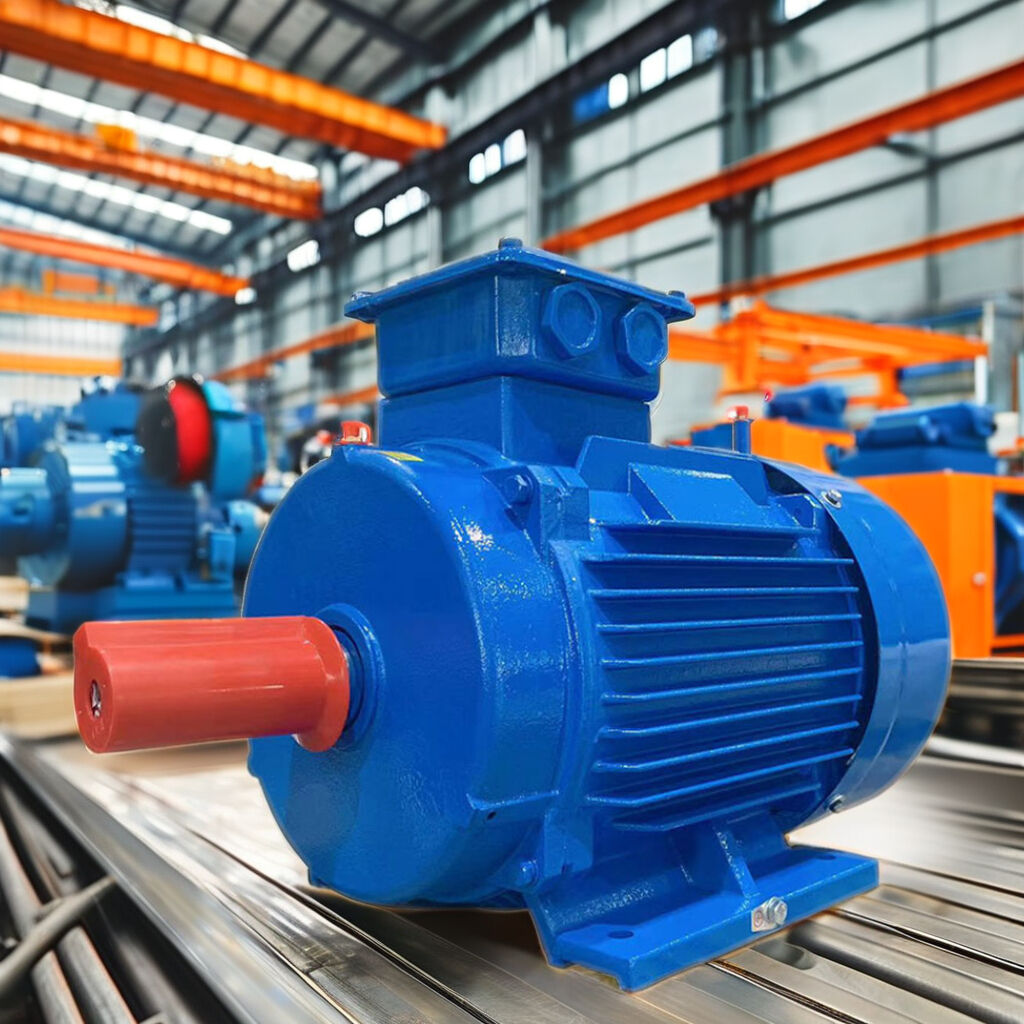
Technical Highlights: Why Efficiency Class Is Now a Boardroom Priority
Evaluating an IE4/IE5 Efficiency Motor has shifted from an isolated maintenance detail to a core capital-allocation strategy driven by utility tariffs and international compliance.
1. IEC 60034-30-1 Benchmarks and Eliminating Rotor Copper Losses
Under the IEC 60034-30-1 and IEC TS 60034-30-2 standards framework, IE4 represents Super Premium Efficiency while IE5 defines Ultra-Premium Efficiency. Furthermore, European Ecodesign Regulation (EU) 2019/1781 expanded mandatory IE4 compliance to specific three-phase motors between 75 kW and 200 kW, accelerating global adoption. In a conventional asynchronous induction motor, current is continuously induced into rotor bars, creating "slip" and heavy rotor copper heat loss. Conversely, an ENNENG Permanent Magnet Synchronous Motor locks rotor speed synchronously to stator frequency without slip, eliminating rotor copper losses entirely and raising rated efficiency by 2% to 5% over induction equivalents.
2. Quantifying Annual kWh Savings Across Partial-Load Duty Cycles
Industrial conveyors, compressors, and mixers rarely operate at 100% nameplate load all day. While asynchronous motor efficiency falls sharply below 50% load, an ENNENG IE4/IE5 Efficiency Motor maintains a flat efficiency plateau across 25% to 120% of rated load. Factory managers can model annual utility reductions using a transparent engineering formula:
• Annual Energy Cost Savings: Input Power Reduction (kW) × Annual Operating Hours × Electricity Tariff ($/kWh).
• Power Factor & Line Current Gain: Operating at a power factor of 0.95 to 1.0 (versus 0.86 for induction motors) reduces system line current by over 10%, cutting cable losses and removing reactive power compensation capacitors.
• Compact Thermal Footprint: Zero rotor copper loss reduces temperature rise in the IE4/IE5 Efficiency Motor by 20K (staying below 60K), allowing frame sizes one to two steps smaller for tight plant retrofits.
|
Plant Evaluation Metric |
ENNENG IE4/IE5 Efficiency Motor (PMSM) |
Legacy Asynchronous Induction Motor |
|
Efficiency Standard & Plateau |
IE4/IE5 (IEC 60034-30-1); flat across 25%-120% load |
IE2/IE3; efficiency drops sharply below 50% load |
|
Unified Power & Voltage Scope |
5kW-5MW / 110V-690V (Wind: 1kW-10kW; 3kW, 5kW, 10kW) |
Standard catalog ratings requiring step-down reducers |
|
Power Factor & Line Current |
0.95 to 1.0; >10% operating current reduction |
Peaks near 0.86; high reactive current draw |
|
Thermal Rise & Frame Size |
20K lower temperature rise (<60K); 1-2 frames smaller |
High rotor copper heat; bulky installation footprint |
|
Acoustic Noise & Vibration |
Below 55 dB; compliant with ISO 20816 vibration limits |
Elevated fan and gearbox mesh noise |
Four Practical Checks Before Approving a Factory Motor Upgrade
Working with a qualified High Efficiency Motor Supplier ensures that an IE4/IE5 Efficiency Motor upgrade delivers measurable payback without commissioning delays.
1. Auditing Driven Load Profiles and Eliminating Mechanical Reducers
Factory managers should begin by logging actual kW draw, load fluctuations, and annual running hours from motor control centers. For low-speed, high-torque machinery, increasing permanent magnet rotor pole counts allows an ENNENG Industrial Energy Saving Motor to couple directly to the driven shaft without a gearbox. Removing the reducer eliminates gear-mesh losses, oil leaks, and OSHA 1910.219 guarding overhead. In rubber tire processing plants, this direct-drive IE4/IE5 Efficiency Motor architecture delivers verified electricity savings of 7% to 40%, while variable-speed rotary air compressor retrofits achieve up to 50% energy savings.
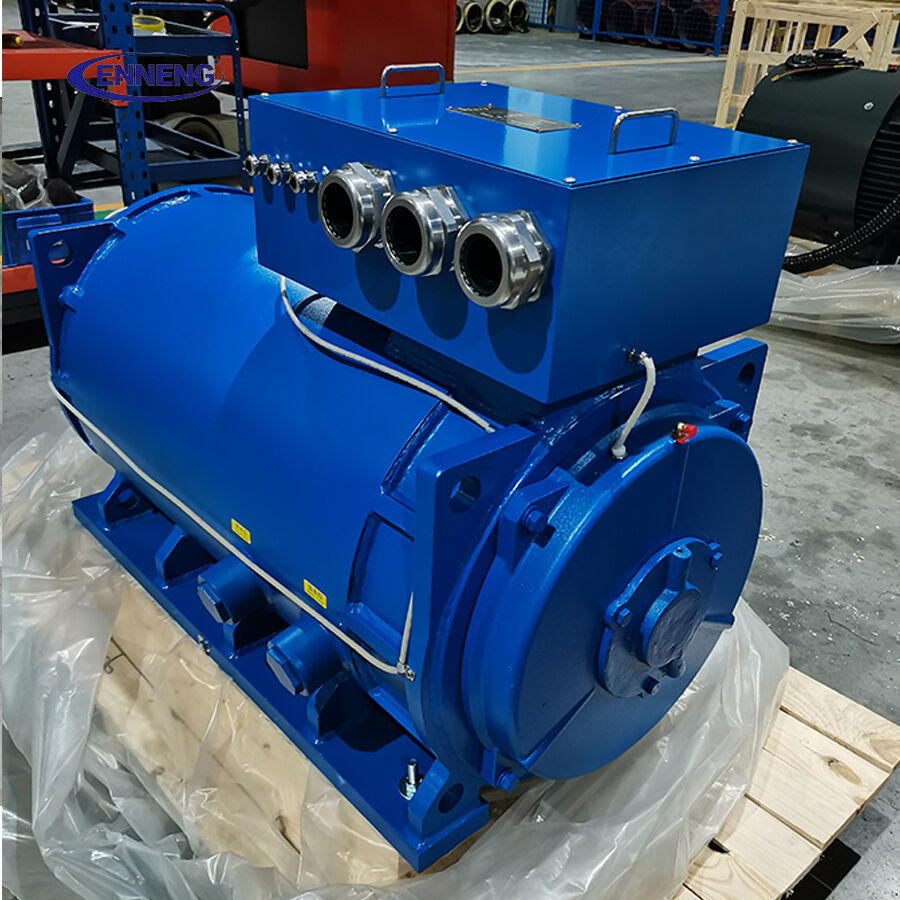
2. Verifying VFD Compatibility, Mechanical Fit, and Safety Standards
Because a Permanent Magnet Synchronous Motor requires a Variable Frequency Drive (VFD) to synchronise starting torque and rotational speed, retrofit plans must include inverter sizing, EMC filtering, and cable shielding. Stator windings must comply with ANSI/NEMA MG 1 Part 31 pulse-width modulated (PWM) dielectric standards and NFPA 70 electrical codes, while shaft vibration must satisfy ISO 10816 and ISO 20816 limits. Universal mounting dimensions allow ENNENG units to drop directly into existing motor foundations during scheduled shutdown windows.
The ENNENG Customisation Advantage and Procurement Checklist
Supported by engineers from the National Rare Earth Permanent Magnet Engineering Centre and dozens of patents, ENNENG operates as a dedicated High Efficiency Motor Supplier tailoring high-voltage (6kV/10kV) and low-voltage (110V-690V, including 380V/660V/1140V) drives for water treatment, oilfields, and mining plants. Before releasing a purchase order, factory managers should verify three lifecycle items:
• Baseline vs. Part-Load Curve Verification: Compare measured motor control center kW logs against certified IE4/IE5 Efficiency Motor efficiency curves at 25%, 50%, 75%, and 100% load.
• Environmental & Thermal Derating Check: Confirm IP55/IP65 ingress protection, ambient altitude derating, and insulated bearing configurations for VFD operation.
• Routine Preventative Care Schedule: Establish annual inspection intervals for cooling air paths, bearing lubrication, and encoder terminals to preserve <60K thermal operation.
Contact ENNENG Today
Speak to the ENNENG technical engineering team to request a customized IE4/IE5 Efficiency Motor energy-saving audit and proposal:
• WhatsApp: +86 18562780228
• E-Mail: [email protected]
• Phone: +86 532 66000559
FAQ
Q: How much electricity can an IE4/IE5 Efficiency Motor save in continuous factory operations?
A: An ENNENG IE4/IE5 Efficiency Motor delivers rated efficiency 2% to 5% higher than standard asynchronous motors while maintaining a flat efficiency plateau from 25% to 120% load. In demanding industrial applications, factory managers achieve verified electricity savings of 7% to 40% in rubber tire machinery and up to 50% in variable-speed air compressor systems.
Q: What should factory managers evaluate when selecting a High Efficiency Motor Supplier?
A: Factory managers should verify that a High Efficiency Motor Supplier provides IEC 60034-30-1 IE5 dynamometer test reports across partial loads, custom mounting dimensions, and ANSI/NEMA MG 1 Part 31 inverter-duty insulation. ENNENG supports unified 5kW-5MW power ratings, 110V-690V voltages, and 1kW-10kW vertical axis wind turbine generators focusing on 3kW, 5kW, and 10kW units.
Q: Can an ENNENG IE4/IE5 Efficiency Motor replace an existing induction motor without frame modifications?
A: Yes. Standard ENNENG Permanent Magnet Synchronous Motor series adopt universal IEC and NEMA mounting dimensions that match legacy asynchronous motors directly during plant retrofits. Furthermore, because zero rotor copper loss lowers operating temperature rise by 20K, custom IE4/IE5 Efficiency Motor designs can reduce frame size by one to two steps to fit restricted factory layouts.

