
 EN

Why IE4 IE5 Efficiency Motor Fits Frequent Variable-Load Industrial Production Working Conditions
In plants where demand rises and falls through a shift, the useful question is not simply which motor has the highest nameplate figure. It is whether the motor, drive, and driven machine keep losses under control across the load points that actually dominate production. An IE4/IE5 Efficiency Motor can be a strong candidate for that conversation when its characteristics are matched to the duty cycle rather than treated as a stand-alone badge.
That distinction matters in pumping, ventilation, conveying, mixing, and process lines with changing throughput. A motor that spends most of its time away from rated load needs to be assessed at those operating points. In practical selection work, load-curve analysis, VFD settings, thermal conditions, and the mechanical load are more informative than one headline efficiency number.
Variable load changes the motor-selection question
Frequent variable-load production means torque, speed, or both move during normal operation. A fan may follow air-demand changes; a pump may respond to process flow; a conveyor may see intermittent product; and a mixer may face changing material resistance. In each case, the electrical input is shaped by the whole system, not just by the motor at full load.
An IE4/IE5 Efficiency Motor is attractive because higher efficiency classes are designed to reduce losses, but the expected benefit should be reviewed across the realistic operating envelope. IEC 60034-30-1 provides the familiar efficiency-class context for certain single-speed motors, while variable-speed applications may require consideration of the separate variable-speed-machine framework as well. The class alone does not confirm inverter suitability, a safe speed range, or acceptable temperature rise.
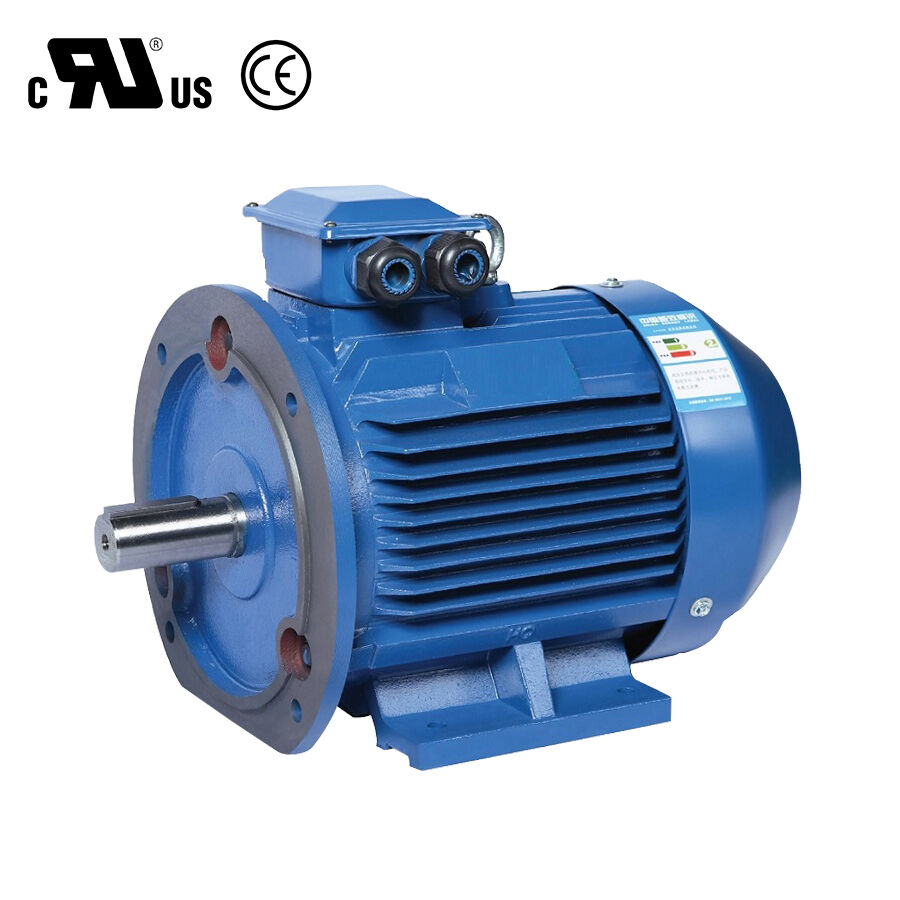
This is often misread as a simple IE4-versus-IE5 purchasing decision. It is really a duty-cycle decision. If a line rarely reaches rated output, the selection team should ask for part-load efficiency information and examine the load histogram before choosing an IE4/IE5 Efficiency Motor.
Why partial-load behavior deserves attention
Motor losses do not all change in the same way as load falls. Copper loss, magnetic loss, mechanical loss, and losses introduced by the drive have different relationships to speed and torque. That is why a motor with a favorable rated-load value should not be assumed to have the lowest operating cost at every partial-load point.
For centrifugal pumps and fans without significant static lift, the affinity relationships are especially relevant: flow changes broadly with speed, while required power changes approximately with the cube of speed. Reducing speed can therefore reduce demand far more effectively than throttling or damping in suitable systems. An IE4/IE5 Efficiency Motor paired with a correctly selected variable-frequency drive can support this approach, but the motor, VFD, and pump or fan curves must be evaluated together.
The system view prevents two common mistakes. First, do not credit all savings to the motor class when most of the change comes from speed control. Second, do not ignore VFD losses at low output. Total efficiency is the combined result of driven equipment, motor, and drive at the operating point.
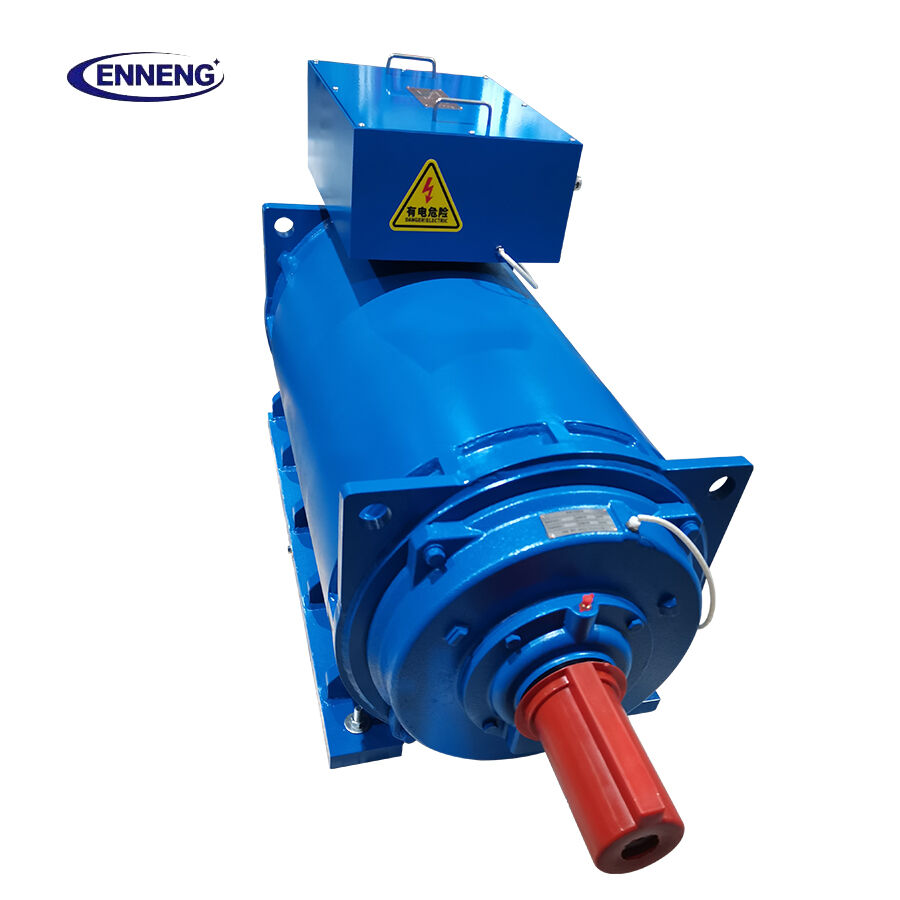
What makes an IE4/IE5 choice practical in a fluctuating process
1. A load profile shows where the hours go
Start with measured or estimated time at each speed and torque point. A useful profile includes start-stop frequency, low-load dwell time, peak-load duration, ambient temperature, and any overload requirement. This lets an engineer compare an IE4/IE5 Efficiency Motor on the conditions that consume most annual energy, not just on a catalog test point.
2. The motor and VFD are specified as a pair
Frequent speed changes can affect cooling, insulation stress, bearing behavior, harmonics, and low-speed torque margin. Confirm the manufacturer’s inverter-duty guidance, permissible speed range, cooling method, cable arrangement, and any filter requirements. An IE4/IE5 Efficiency Motor should be selected with the actual drive parameters in mind, especially when it will operate for long periods below base speed.
3. The driven machine is allowed to lead the calculation
In a variable-torque pump or fan application, the process curve is central. In a constant-torque conveyor or extruder application, the decision emphasis changes toward torque capability and stable control at lower speed. The same IE4/IE5 Efficiency Motor label does not remove those application differences.
Where an Energy Saving Motor Solution delivers value
An Energy Saving Motor Solution is more credible when it begins with operating data: production schedule, load curve, present controls, maintenance history, and process constraints. For example, a plant may have a high-efficiency motor but still waste energy through an oversized pump, restrictive valve control, or a poorly tuned drive. Conversely, a carefully matched IE4/IE5 Efficiency Motor and speed-control strategy can reduce avoidable losses while giving operators finer process control.
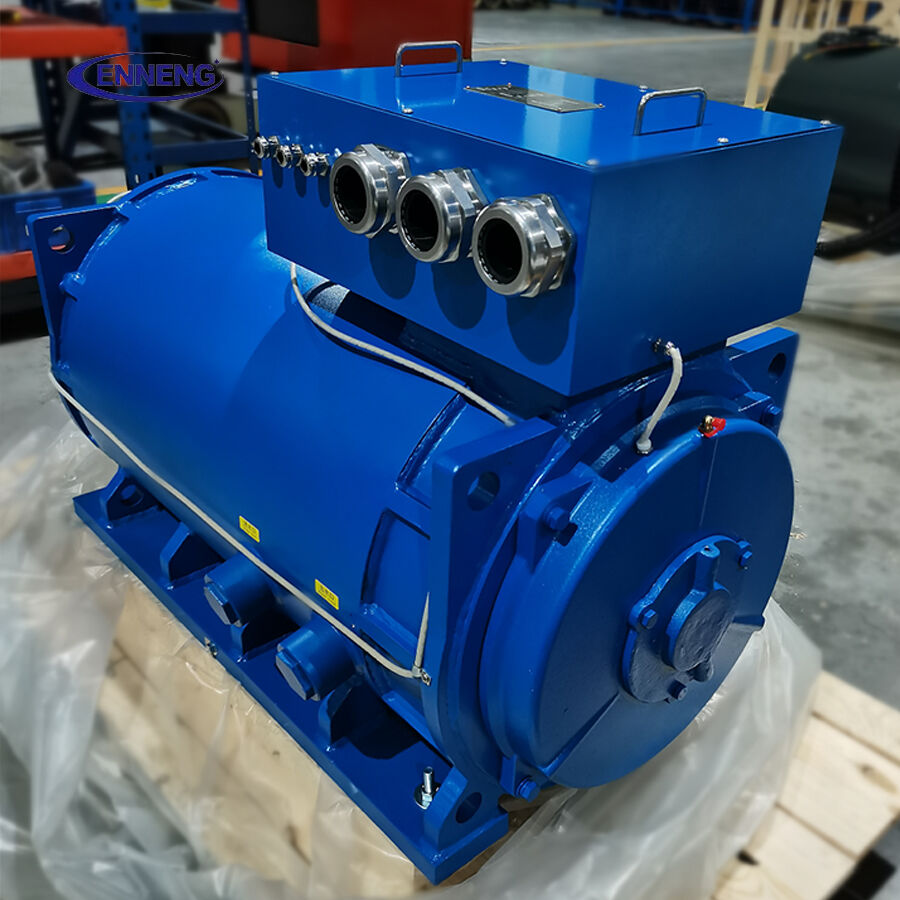
For buyers evaluating permanent-magnet designs, it is sensible to request performance curves, torque-speed information, efficiency data at relevant operating points, and documentation for the proposed drive combination. Qingdao Enneng Motor focuses on permanent-magnet motors and new-energy generation equipment, and application-specific winding or design discussion can help align a proposed motor with the load profile. Those discussions should result in documented application parameters, not a generic promise of savings.
A field-oriented selection checklist
- Map actual operating hours by speed, torque, and production state.
- Identify whether the load is variable torque, constant torque, or a combination.
- Compare the expected IE4/IE5 Efficiency Motor performance at relevant part-load points, not only rated load.
- Check VFD compatibility, cooling method, cable length, filters, and low-speed torque requirements.
- Review starting, overload, and restart demands caused by frequent process changes.
- Confirm the pump, fan, gearbox, or machine curve so that system efficiency is evaluated rather than motor efficiency alone.
- Plan commissioning measurements to validate current, speed, temperature, vibration, and process output after installation.
When a higher efficiency class is not the whole answer
An IE4/IE5 Efficiency Motor may not be the automatic choice if duty is nearly fixed, the process is poorly sized, the VFD is unsuitable, or operating conditions exceed the motor’s thermal and mechanical limits. Likewise, a premium class cannot compensate for inaccurate sizing. An oversized motor may operate too lightly loaded, and a too-small motor can run hot or lack transient torque.
The point is not that a higher class is less useful; it is that the value of an IE4/IE5 Efficiency Motor becomes clearer when the application is defined precisely. Peak efficiency matters, but for a variable-load line, the hours at partial load, the quality of speed control, and the condition of the driven equipment usually decide the outcome.
The ENNENG Customisation Advantage
Supported by our elite R&D team consisting of engineers from the National Rare Earth Permanent Magnet Engineering Centre, and backed by dozens of patents, we customise high-voltage (6kV/10kV) and low-voltage (380V/660V/1140V) solutions to match your existing footprint. From water treatment facilities and oil wells to explosion-proof mining environments, we deliver optimal performance where general-purpose motors fail .
If you are evaluating commercial permanent magnet motors for sale and need an engineered drive solution that guarantees efficiency and longevity, ENNENG is your trusted partner.Contact ENNENG Today.Speak to our technical engineering team to receive a customised drive proposal.
- WhatsApp: +86 18562780228
- E-Mail: [email protected]
- Phone: +86 532 66000559
Conclusion
For industrial production with frequent load changes, an IE4/IE5 Efficiency Motor fits well when it is evaluated as part of a motor-drive-machine system. Use the duty cycle to select the motor, verify inverter operation and low-speed thermal behavior, and validate the result with measured commissioning data. That approach turns an efficiency class into an engineering decision rather than a catalog comparison.

