
 EN

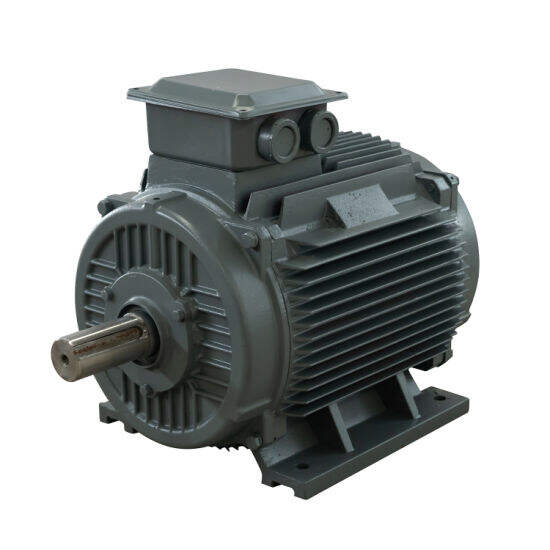
For a plant manager, replacing a motor is rarely just a maintenance decision. It can become an energy-project decision involving operations, procurement, finance, and a program administrator. An IE4/IE5 Efficiency Motor can make that conversation more credible because it gives the project team a recognized efficiency classification to document. It does not, however, make an incentive automatic. The useful question is whether the proposed IE4/IE5 Efficiency Motor, its application, and its measurement plan fit the rules of the specific program.
From a procurement standpoint, the strongest application is built before the purchase order is issued. A High Efficiency Motor Supplier can contribute equipment documentation, but the manufacturer still needs to establish the existing baseline, the duty cycle, and the expected method for verifying savings. That distinction matters: a premium motor specification is evidence, while policy eligibility is a decision made under local program terms.
Start with the distinction between an efficiency class and an incentive approval
IEC efficiency classes provide a technical vocabulary for comparing many AC motor designs. In common industry usage, IE3 is Premium Efficiency, IE4 is Super Premium Efficiency, and IE5 is Ultra Premium Efficiency. IEC materials also illustrate that efficiency requirements can differ by jurisdiction and motor power range; for example, the cited EU context applies an IE4 requirement to certain 75–200 kW motors. That is a reason to read the local rule closely, not a reason to assume that every IE4/IE5 Efficiency Motor receives a rebate.
Most industrial incentive policies examine a broader chain of evidence. They may define eligible motor types, require pre-approval, exclude like-for-like replacements after failure, set a minimum operating-hour threshold, or calculate incentives from verified rather than modeled savings. An IE4/IE5 Efficiency Motor supports the technical portion of that chain when its nameplate, test evidence, voltage, speed, and application are clearly documented.
Why higher-efficiency motors strengthen an incentive case
Motor systems often run for long periods in pumps, fans, blowers, compressors, conveyors, and process equipment. At that point, a small difference in electrical losses can matter across many operating hours. The case for an IE4/IE5 Efficiency Motor is strongest where the plant can show a defined existing motor, a stable load profile, and a reasonable estimate of annual operating time.
There is an important qualification. Nameplate efficiency is measured under stated conditions; it is not a universal prediction of site savings. Ambient temperature, loading, controls, voltage quality, and maintenance condition can all change the result. The shift that improves a project application is moving from a peak-efficiency comparison to a duty-cycle comparison. An IE4/IE5 Efficiency Motor should be evaluated at the loads where the driven equipment actually operates, especially for variable-duty applications.
That approach also makes internal approval easier. Engineering can explain the technical fit, finance can review avoided energy cost assumptions, and compliance personnel can map the project to policy language. Rather than claiming that an IE4/IE5 Efficiency Motor will deliver a fixed saving percentage, the team can present transparent assumptions and identify which values must be measured after installation.
A practical documentation checklist for incentive readiness
Before ordering equipment, assemble the documents that connect the motor upgrade to the relevant policy. A capable High Efficiency Motor Supplier should be able to clarify the product configuration and provide the documents it actually holds; it should not promise approval on behalf of a utility or government agency.
- Program rule and deadline. Confirm the jurisdiction, eligible technology list, application timing, pre-approval requirement, and any approved-equipment database. If the policy names a particular standard edition or test method, use that wording in the project file.
- Baseline record. Capture the existing motor’s nameplate, rated power, speed, age where known, repair history, operating schedule, and the driven equipment. Photographs and maintenance records can make the baseline easier to audit.
- Load and operating-hour evidence. Record production shifts, control logic, seasonal variation, and typical loading. If a pump or fan changes duty substantially, document that rather than applying a full-load assumption to every hour.
- New motor specification. Keep the quotation, datasheet, nameplate information, efficiency-class statement, rated voltage, frequency, enclosure, mounting, speed, and control compatibility. These are the facts that identify the proposed IE4/IE5 Efficiency Motor.
- Test and conformity evidence. Ask what test report, declaration, or conformity documentation is available for the offered configuration. Verify that the model and rating on the evidence match the purchase specification.
- Installation and commissioning record. Retain invoices, serial numbers, commissioning date, wiring or drive settings where relevant, and post-installation measurements requested by the program.
One common mistake is to collect these records only after installation. By then, a program may not accept the project, or the baseline may be harder to reconstruct. A well-specified IE4/IE5 Efficiency Motor improves the evidence trail only if the records tie it to the actual replacement project.
Choose between IE4 and IE5 based on the application, not the label alone
IE5 is not automatically the right choice for every line. The right selection depends on the equipment’s operating profile, available controls, physical constraints, and the incentive’s eligible-measure rules. For a continuously operated system with substantial annual energy use, the extra efficiency of an IE4/IE5 Efficiency Motor may warrant a closer lifecycle-cost analysis. For equipment with limited annual hours, a plant should test whether the incremental capital cost, installation work, and program payment make a sound project together.
You might be thinking that any higher class must be better. It is better to ask: at what load does the equipment run, how will the motor interact with a variable-frequency drive if one is used, and what efficiency evidence does the specific program recognize? This is where a High Efficiency Motor Supplier can be useful as a technical-information source, while the plant retains responsibility for confirming policy interpretation.
Build a measurement and verification plan early
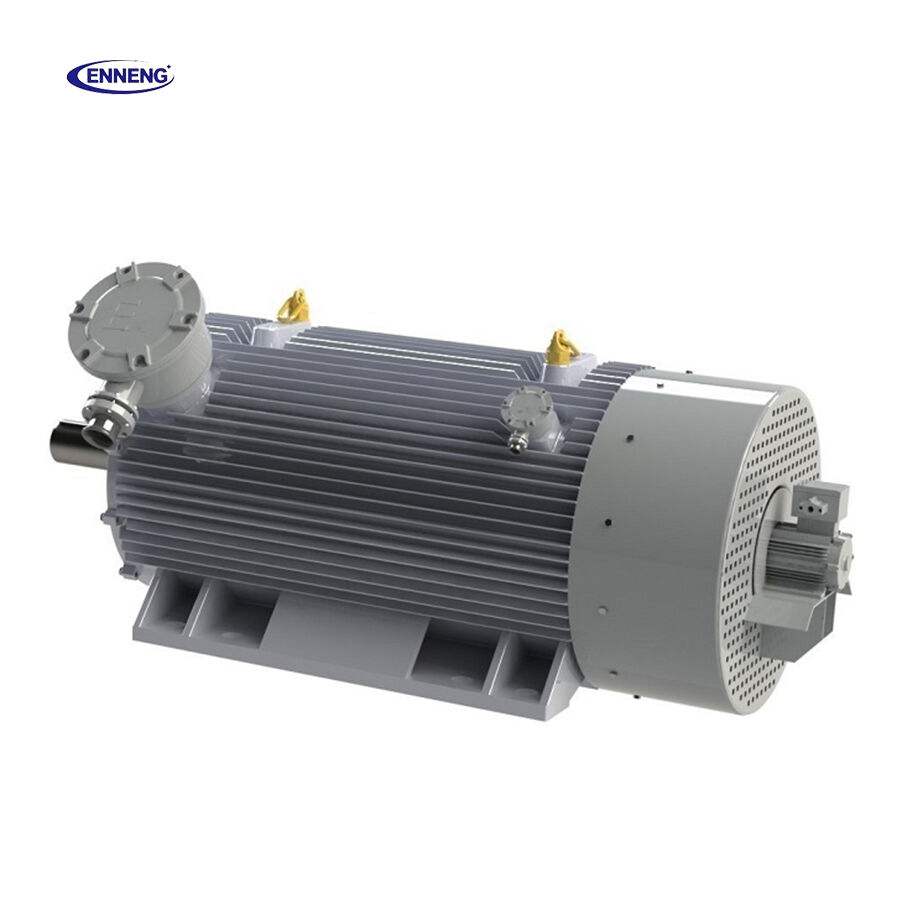
Many incentive mechanisms release payment only after a project is installed and savings are verified. A credible plan identifies the baseline period, energy variables to measure, production or weather adjustments if applicable, meter locations, and who will retain the records. This does not need to be unnecessarily elaborate for every project, but it should match the administrator’s required method.
For a direct replacement, compare like with like: the existing motor and the new IE4/IE5 Efficiency Motor should serve the same process duty whenever possible. If the project also changes a pump impeller, fan control strategy, or production throughput, separate those changes in the calculation. Clear boundaries protect the incentive claim and help the plant understand which measure created the savings.
Questions to ask before issuing the purchase order
- Does the policy explicitly recognize the proposed IE4/IE5 Efficiency Motor class, rating range, and motor type?
- Is pre-approval required before equipment is purchased, shipped, or installed?
- Can the supplier provide configuration-specific nameplate, test, and conformity documents?
- Will the motor’s voltage, frequency, mounting, enclosure, and speed match the process and the approved application?
- What baseline evidence and post-installation records will the administrator require?
- Who owns the savings calculation, and what assumptions will be documented rather than guessed?
The ENNENG Customisation Advantage
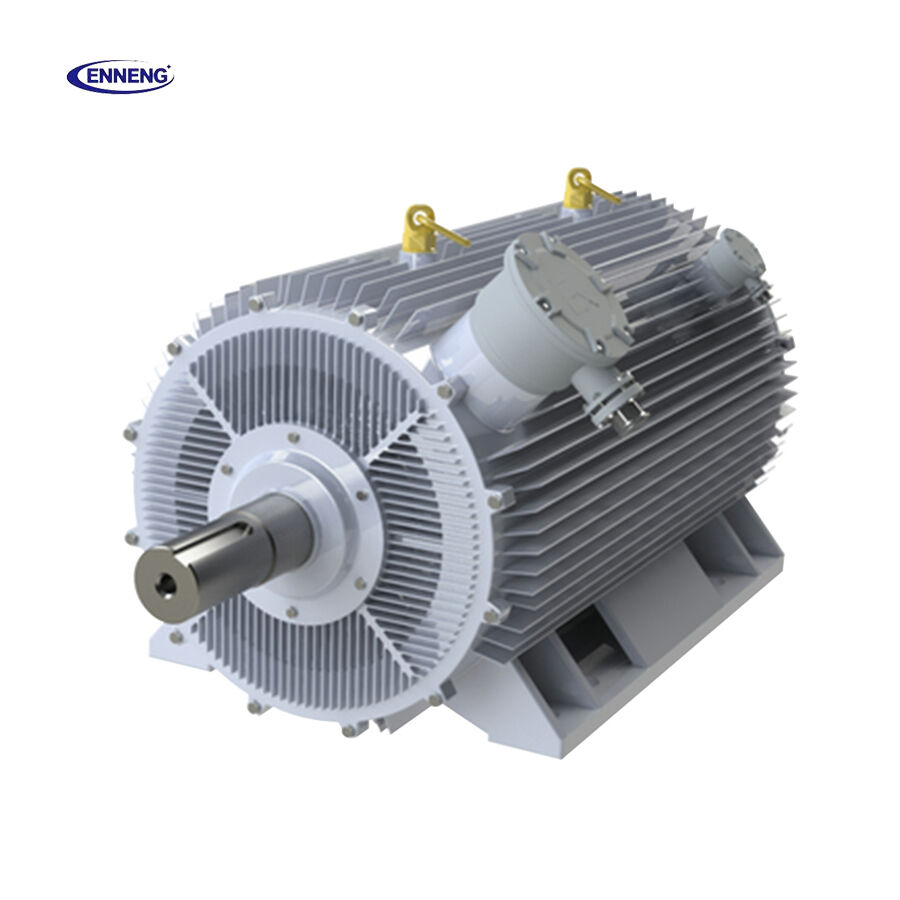
No two industrial facilities share the same spatial or mechanical constraints. ENNENG stands out because we do not just supply off-the-shelf catalogue products; we specialise in delivering a tailor-made permanent magnet motor tailored to your specific application .
Supported by our elite R&D team consisting of engineers from the National Rare Earth Permanent Magnet Engineering Centre, and backed by dozens of patents, we customise high-voltage (6kV/10kV) and low-voltage (380V/660V/1140V) solutions to match your existing footprint. From water treatment facilities and oil wells to explosion-proof mining environments, we deliver optimal performance where general-purpose motors fail .
If you are evaluating commercial permanent magnet motors for sale and need an engineered drive solution that guarantees efficiency and longevity, ENNENG is your trusted partner.Contact ENNENG Today.Speak to our technical engineering team to receive a customised drive proposal.
- WhatsApp: +86 18562780228
- E-Mail: [email protected]
- Phone: +86 532 66000559
Turn a motor upgrade into a defensible energy project
The value of an IE4/IE5 Efficiency Motor in an incentive application is not a marketing claim. It is the ability to connect a recognized efficiency class with an accurately defined replacement, a realistic duty cycle, and a traceable record set. For manufacturers, that discipline can reduce uncertainty whether or not a particular incentive is ultimately awarded.
Begin with the local program, document the baseline before work begins, specify the motor precisely, and plan verification alongside installation. When a High Efficiency Motor Supplier provides clear configuration evidence and the factory preserves its own operating records, an IE4/IE5 Efficiency Motor becomes a stronger foundation for an energy-saving application—and a more informed capital decision.

