
why-ie4/ie5-efficiency-motor-becomes-vital-equipment-for-factory-carbonreduction-transformation, why-ie4/ie5-efficiency-motor-becomes-vital-equipment-for-factory-carbonreduction-transformation, /blog
EN

2026/09/14
Most factories now answer to a carbon baseline the finance team watches as closely as the production plan. Motors consume roughly half of global industrial electricity, so an IE4/IE5 Efficiency Motor turns that load into an advantage: the same shaft work leaves the grid with less loss, and the carbon ledger shrinks without cutting output. A textile mill in east China reached that view after a 14-month audit showed compressor and pump drives made up 61 percent of site electricity, and the mill treated the drive train as the first place to act.
The mill replaced 120 older drives across blowers, pumps, and winding machines with an IE4/IE5 Efficiency Motor package for variable load. Field meters showed an 18 percent drop in electricity on those loads within the first quarter. The lead noted quieter operation and steadier temperature let the team extend inspection intervals. The case shows carbon reduction and cost moving together, and the IE4/IE5 Efficiency Motor delivered both from one decision, so the mill later extended the spec to the dye-house circulating loop.
Older IE2 and IE3 units hide waste in heat that never reaches the shaft. Over thousands of running hours a few points of loss become a larger bill and a heavier emission factor. An IE4/IE5 Efficiency Motor closes that gap by cutting copper and iron losses in the stator and rotor design. Plants that skip this often buy offsets later at higher lifetime cost. The lesson is plain: efficiency at the drive pays back on the same meter that reports emissions, so the IE4/IE5 Efficiency Motor and the carbon target reinforce each other instead of competing for budget.
Efficiency class is the share of grid energy that becomes motion rather than heat. A small gain at every machine multiplies across a plant because an IE4/IE5 Efficiency Motor runs for long, repeated cycles. The IE4/IE5 Efficiency Motor sits at the top of the international scale, so each unit removes more loss than the class below it, and the difference grows with every extra hour of operation.
Loss splits into stator and rotor copper, core, friction, and stray parts. Moving from IE3 to an IE4/IE5 Efficiency Motor typically cuts total loss by a fifth to a third by frame size and speed. Gains come from better lamination steel, tighter air gaps, and refined windings, not exotic materials. Because loss scales with load and runtime, a three-shift plant sees a larger saving than a single-shift one with the same count, which is why the class matters most under heavy, continuous duty.
Put one class into carbon terms. A 75 kW drive at 6,000 hours a year that drops grid draw by 3 percent saves thousands of kilowatt-hours, and the cut follows the local grid factor. An IE4/IE5 Efficiency Motor often beats that step versus an IE2 baseline. Multiply by dozens of identical drives and the reduction becomes reportable under a management standard. The math is why buyers now put the class on the order instead of leaving it to the supplier.
Carbon programs rest on documented energy management and minimum performance rules. The IE4/IE5 Efficiency Motor aligns with both and protects the spend from later change, and specifying the IE4/IE5 Efficiency Motor also simplifies the audit trail.
ISO 50001 asks a site to set an energy baseline and track gains with measured data. A documented swap to an IE4/IE5 Efficiency Motor is a clean, auditable action auditors check against meters. The standard rewards permanent, measurable change, which a replacement provides. Sites that keep the baseline defend their carbon report to customers and lenders with hardware and logs, and the IE4/IE5 Efficiency Motor supports that proof in every review cycle.
The EU Ecodesign Regulation sets minimum performance that phases out lower classes, and IEC 60034-30-1 defines the IE classes and the test method. Specifying an IE4/IE5 Efficiency Motor keeps a plant ahead of those limits instead of racing to meet them late. Export buyers increasingly treat the IE class as a qualifier, so the choice protects market access. Reading the rule with the nameplate avoids buying a cheaper unit that fails a future audit and costs more than the saving.
The right unit needs more than the top class; the system must let it deliver the rating, and the IE4/IE5 Efficiency Motor performs best when matched to the load it actually serves each day.
List every load with power, duty, and current class, then rank by run hours, not size. Match an IE4/IE5 Efficiency Motor to loads above a clear threshold, since those return cost fastest. Check voltage, enclosure, and cooling against the footprint so the swap needs no civil work. Confirm control method: variable-speed drives add saving when load varies. Keep a one-page record per machine with old and new nameplate data, which makes the claim provable and keeps the IE4/IE5 Efficiency Motor accountable to its rating.
Efficiency won at purchase erodes without care. Clean cooling paths, check bearings, and hold alignment so the IE4/IE5 Efficiency Motor runs at its designed loss instead of fighting drag. Thermal scans at planned stops catch early wear before it raises loss. Track power per unit of output each quarter; a rise signals a service need. Plants that fold these into the plan keep the saving for the full life rather than losing part to neglect, which protects the business case and the IE4/IE5 Efficiency Motor investment.
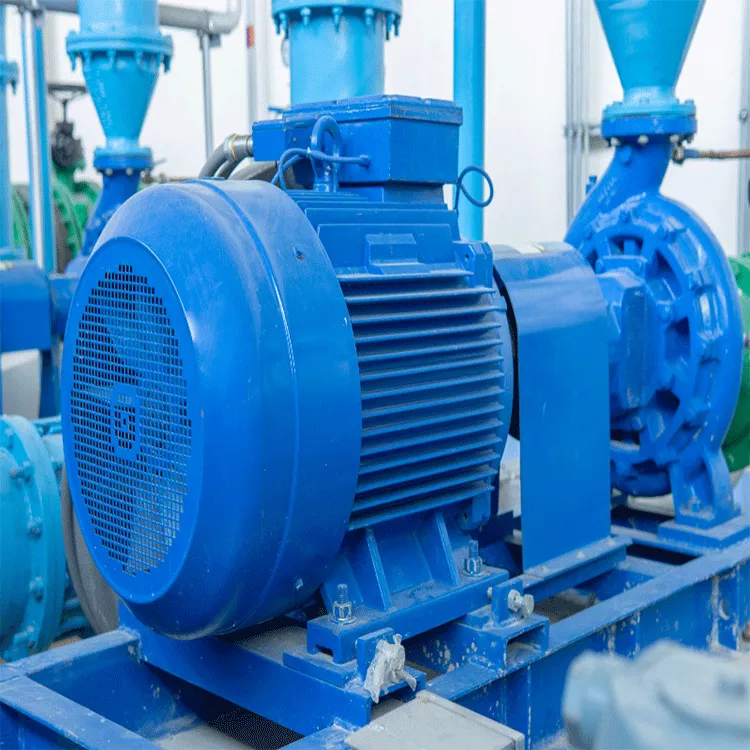
An IE4/IE5 Efficiency Motor converts more grid electricity into shaft work and loses less as heat, so the same production draws less power. Because grid electricity carries a carbon factor, lower draw means lower emissions for identical output. The saving repeats every running hour and compounds across many machines, which is why the class shows up directly in a plant carbon report and supports measured reduction claims under energy management standards.
IE5 sits above IE4 on the international scale and removes more loss, so the payback depends on run hours and local power price. For continuous three-shift duty the extra saving often recovers the premium within the motor life, while for light duty the gap may not justify the cost. A simple lifetime energy calculation per machine shows the break-even, and export buyers may require the higher class regardless of payback for market access.
In many cases an IE4/IE5 Efficiency Motor fits the same mounting and shaft as the unit it replaces, but the supply voltage, frequency, enclosure, and cooling must match the site. Variable-speed drives may need setting changes or replacement to pair correctly. A site survey before purchase avoids civil rework and downtime. Where the load profile changed since installation, resizing during the swap captures further saving beyond the class gain.
IEC 60034-30-1 defines the IE efficiency classes from IE1 through IE5 and the test method behind the nameplate. Ecodesign regulations in several regions then set minimum classes that may be sold or installed. Specifying the class by the IEC standard keeps procurement language precise and comparable across suppliers, which prevents confusion between a tested rating and a marketing claim.
No special regime is required, but the saving depends on keeping the unit close to its designed loss. Clean cooling fins, correct bearing lubrication, good alignment, and periodic thermal checks preserve efficiency and prevent early failure. Tracking power per unit of output flags drift. These steps fit an existing plan and cost little, yet they protect the carbon and cost saving across the full service life of the motor.
Rank driven loads by annual run hours and current class, then replace the heaviest continuous users first because they return the cost fastest and cut the most carbon. A phased plan that targets the top quartile of run hours often delivers most of the site saving with a fraction of the units. Keeping a nameplate record per machine makes the result measurable and defensible for audits and customer reports.


 EN