
why-ie4/ie5-efficiency-motor-can-keep-highefficiency-output-under-variableload-conditions, why-ie4/ie5-efficiency-motor-can-keep-highefficiency-output-under-variableload-conditions, /blog
EN

2026/09/10
A municipal water plant ran its aeration blowers on IE2 motors driven by variable frequency drives, and the flow swung from 40% to 100% as the basin load shifted through the day. The plant engineer measured the blower power and found the old motors fell to barely 80% of their nameplate efficiency at the low end, so most of the day the units ran in their worst band. After swapping to an IE4/IE5 Efficiency Motor on the same drives, the part-load curve stayed flat and the monthly kWh dropped by a visible margin that the meter confirmed on the bill.
A pump or blower rarely sits at its rated point, and a standard motor tuned for that single point loses efficiency everywhere else. An IE4/IE5 Efficiency Motor is designed so the loss stays low across the working range, which matters most when the load never settles. The plant that measures only the nameplate rating misses the real saving, because the duty point is where the money is actually spent each shift.
A conventional induction motor carries fixed magnetizing loss whether it is moving air or idling, so as load drops the loss becomes a larger share of the smaller output. An IE4/IE5 Efficiency Motor uses permanent magnets or reluctance design that removes most of that constant loss, so the efficiency line stays high from half load upward. The difference is largest precisely where most plants actually operate their machines.
The flat curve is the whole point, and it comes from the machine design rather than from the drive alone. An IE4/IE5 Efficiency Motor paired with a VFD reaches its best result when both are rated as a system, not as separate boxes on the spec sheet.
The IE4/IE5 Efficiency Motor classes in IEC 60034-30-1 are reached with low-loss laminations, better cooling, and magnet or reluctance rotors that cut rotor loss to near zero. An IE4/IE5 Efficiency Motor built this way keeps its efficiency because there is little internal loss left to grow as the speed changes. The design trades copper for magnet, and the magnet does not waste energy at part load.
A VFD matches speed to demand, but if the motor behind it sags at part load the system still wastes power. An IE4/IE5 Efficiency Motor holds its efficiency through the speed range, so the drive and motor together deliver the saving the nameplate promises. Specifying both to a system standard avoids buying a premium motor and losing the gain in a weak drive that sags under load.
An IE4/IE5 Efficiency Motor must be judged by the same efficiency codes as any motor, and the system around it by the drive standard. The rating sheet and the system class are what survive an audit at the plant and satisfy the procurement file.
IEC 60034-30-1 defines the IE1 to IE5 classes by loss level, and an IE4/IE5 Efficiency Motor sits at the top of the scale. The class is measured at several load points, which is why the part-load behavior is documented, not assumed by the supplier. The plant reads the class to compare units on equal terms across the duty range it actually runs.
IEC 61800-9-2 rates the motor-plus-drive as a system, which is the number that counts for variable load. An IE4/IE5 Efficiency Motor paired with a compliant drive earns a system efficiency class that the motor alone cannot claim. The standard keeps the plant from crediting a motor saving that the drive then gives back as loss in the field.
Selection starts with the load profile, not the catalogue, because the duty shape decides the payback. An IE4/IE5 Efficiency Motor pays back fastest where the load swings and the hours are long on the line.
Record the load against time for a week, then size the IE4/IE5 Efficiency Motor to the band it will actually hold, not the peak it rarely reaches. Oversizing puts the unit in a low-efficiency corner, while right-sizing keeps it in the flat part of its curve. The plant recovers the premium through the hours the motor spends away from full load each day.
Commission the drive to the motor's rating, then trend power at the duty points and compare with the baseline. An IE4/IE5 Efficiency Motor should hold its efficiency on the meter, not just on the sheet from the factory. Enneng Motor provides the loss data at part load so the plant confirms the curve before sign-off and tracks it after commissioning on the floor.
Before specifying, the plant should also weigh the drive settings, because a poorly tuned VFD can erase the IE4/IE5 Efficiency Motor advantage through extra harmonic loss. Commissioning the drive to the motor's rated flux and switching frequency keeps the rotor cool and the curve flat across the speed band. An IE4/IE5 Efficiency Motor also benefits from a logging meter at the panel, so the part-load saving is visible month to month rather than claimed once at purchase. The plant that closes the loop between measurement and setting recovers the premium fastest where the duty never settles.
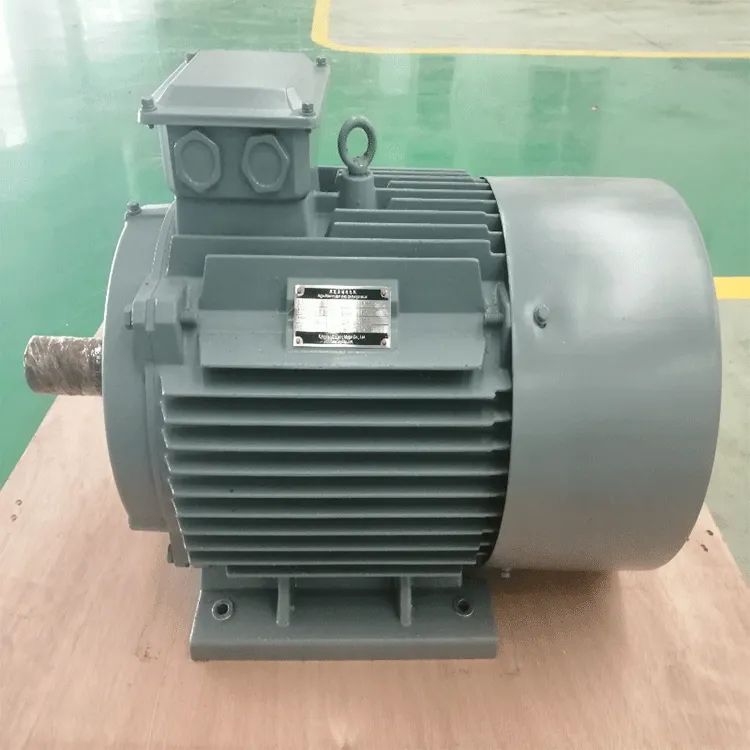
The IE4/IE5 Efficiency Motor removes most fixed magnetizing loss through permanent-magnet or reluctance rotors, so efficiency stays high as load falls. A standard motor wastes a constant share of loss on idling current, which grows as a percentage at low output. The flat curve is why the premium class pays back where loads swing.
A VFD is not strictly required, but the IE4/IE5 Efficiency Motor reaches its full potential when speed matches demand. Without a drive the motor still beats an IE2 unit at the rated point, yet the part-load gain is left on the table. Pairing both to IEC 61800-9-2 captures the system saving the nameplate implies.
IEC 60034-30-1 sets the IE classes by measured loss at several load points, so the part-load figure is tested, not estimated. An IE4/IE5 Efficiency Motor carries a class on its rating sheet that the plant can audit. Independent test data protects the buyer from a label that looks good only at full load.
Oversizing usually hurts. A motor sized above its real band runs in a low-efficiency corner, and an IE4/IE5 Efficiency Motor loses its advantage there. Right-sizing to the duty profile keeps the unit in its flat region, which is where the saving lives. Measure the load first, then choose the frame.
Loads that swing across the day and run long hours gain most, such as blowers, pumps, and compressors on variable demand. An IE4/IE5 Efficiency Motor holds efficiency through those swings, so the kWh drop shows on the monthly bill. Constant full-load duty sees less part-load benefit but still gains from the lower loss.
Payback follows the load factor and electricity tariff, often a few years where hours are high and the duty swings. An IE4/IE5 Efficiency Motor paired with a VFD shortens it further through system efficiency. The plant should rank candidates by measured saving per IEC 60034-30-1 rather than by class alone.


 EN