
why-ie4/ie5-efficiency-motor-keeps-outstanding-efficiency-under-fluctuatingload-industrial-working-modes, why-ie4/ie5-efficiency-motor-keeps-outstanding-efficiency-under-fluctuatingload-industrial-working-modes, /blog
EN

2026/10/09
Industrial manufacturing processes rarely operate under continuous, unvarying full-load operating conditions. In an industrial metal recycling plant operating heavy hydraulic scrap shredders, electric drive loads fluctuated wildly between 15 percent during material feeding and 110 percent during dense structural shearing. The facility’s legacy asynchronous induction motors suffered catastrophic efficiency collapses during low-load intervals, consuming vast amounts of unproductive reactive power and elevating monthly utility costs. Upgrading the shredder drivetrain to an advanced IE4/IE5 Efficiency Motor stabilized operating performance, capturing an immediate 22.6 percent reduction in total electrical energy consumption. Manufacturing enterprises operating variable-duty machinery require electrical drive systems engineered to sustain super-premium efficiency across broad operational bandwidths.
|
Operating Load Level |
Standard Induction (IE2) |
Premium Induction (IE3) |
ENNENG IE4/IE5 Efficiency Motor |
|
100% Full Load |
89.5% Efficiency |
93.6% Efficiency |
Up to 96.8% Super Premium |
|
75% Partial Load |
88.2% Efficiency |
92.8% Efficiency |
96.5% Sustained Efficiency |
|
50% Partial Load |
84.1% Efficiency |
89.5% Efficiency |
95.8% High Efficiency |
|
25% Light Load |
72.4% (Severe Loss) |
79.2% (Steep Drop) |
93.4% Flat Curve |
Conventional induction motors are designed and electromagnetically optimized to achieve peak efficiency within a narrow operating corridor centered between 75 percent and 100 percent of rated nameplate capacity. In practical manufacturing environments, conveyor batching, pump throttling, crane hoisting, and cyclical stamping force motors to spend up to sixty percent of their operational lifespan running below half load. In this partial-load regime, asynchronous motors maintain continuous magnetizing current, leading to poor electrical conversion efficiency and depressed power factor. By contrast, an IE4/IE5 Efficiency Motor utilizing permanent magnet synchronous technology maintains superior efficiency from 25 percent to beyond full load.
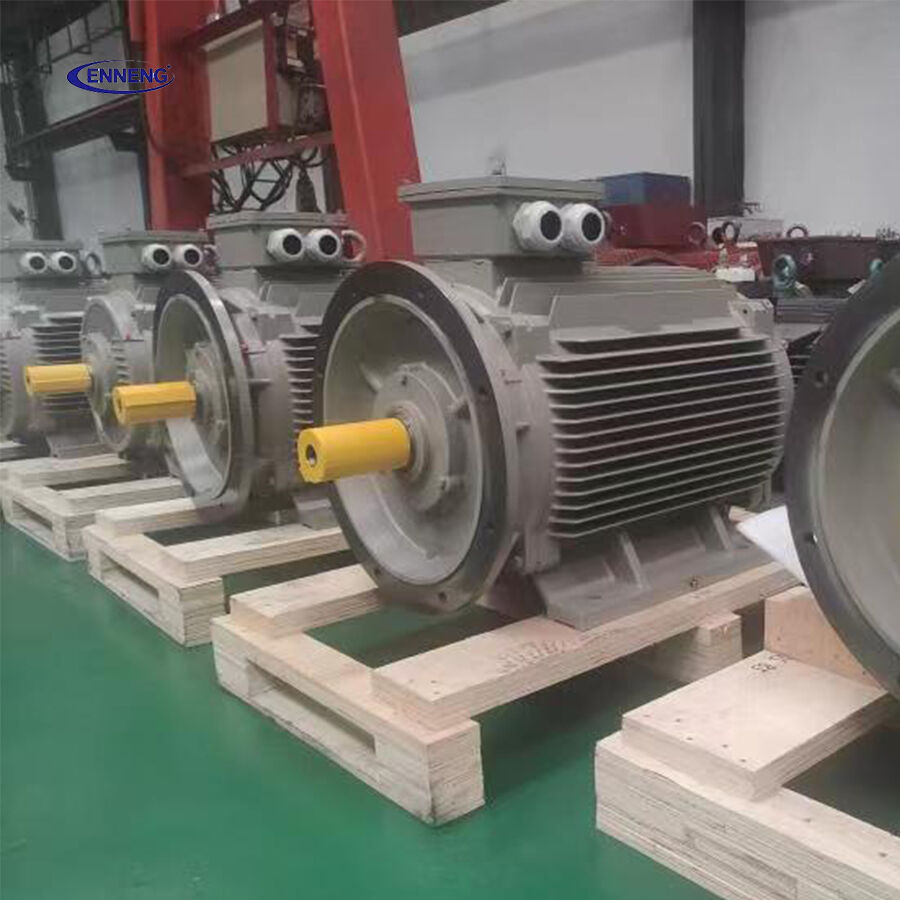
Asynchronous motors depend entirely on induced electrical current in the rotor cage to develop rotational torque. Because the magnetizing current remains essentially constant regardless of shaft load, rotor copper losses (I2R) consume a disproportionate percentage of total input power when operating at light loads. An IE4/IE5 Efficiency Motor utilizes permanent magnets that supply full magnetic excitation intrinsically. By eliminating rotor copper dissipation entirely, base electrical losses drop dramatically, allowing the motor to sustain super-premium efficiency even when mechanical load drops to a fraction of nominal capacity.
Standard induction motors suffer from elevated core iron losses and stray load losses under fluctuating mechanical loads, particularly when driven by variable frequency controllers. Load changes induce magnetic flux distortion, creating harmonic eddy currents within stator lamination packs. An advanced IE4/IE5 Efficiency Motor features ultra-thin silicon steel laminations with optimized stator slot geometry, suppressing high-frequency iron dissipation. This advanced electromagnetic design ensures minimal thermal rise during rapid load transitions.
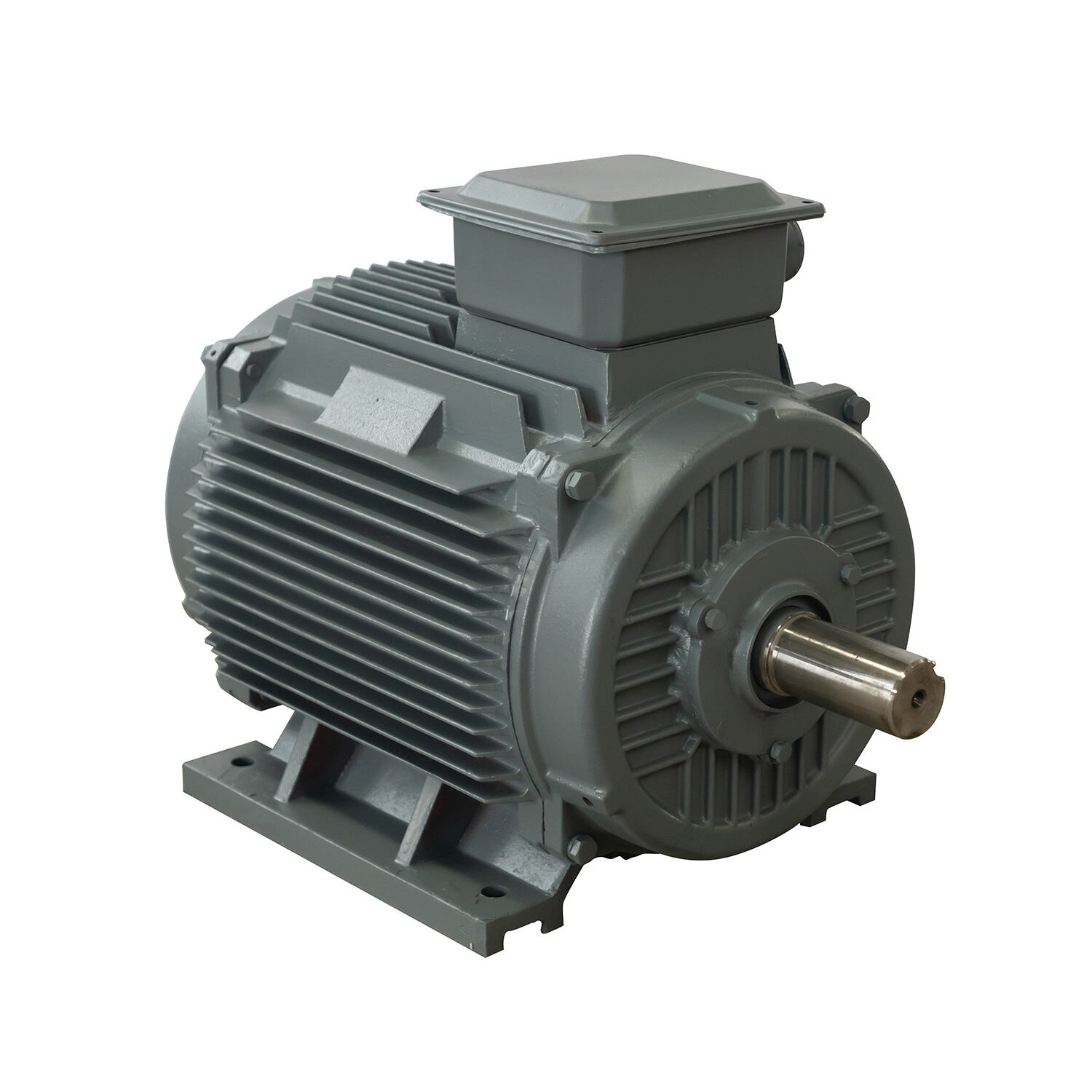
When conventional induction motors operate at light loads, their power factor deteriorates precipitously, often falling below 0.60. Depressed power factor draws heavy reactive current through factory distribution networks, causing resistive heating in switchgear and triggering severe utility penalty surcharges. An IE4/IE5 Efficiency Motor maintains a near-unity power factor between 0.96 and 0.99 across its entire operational envelope. Sustaining high power factor unburdens plant distribution transformers and eliminates the need for expensive external capacitor banks.
Operating variable-duty industrial machinery demands robust electrical drives that combine exceptional energy efficiency with high dynamic torque response. ENNENG manufactures cutting-edge permanent magnet synchronous motors engineered to exceed international IE4 Super Premium and IE5 Ultra Premium efficiency benchmarks. Integrating an ENNENG IE4/IE5 Efficiency Motor into fluctuating-load operations unlocks active electrical energy savings between 10 and 40 percent.
|
Performance Attribute |
Conventional Asynchronous Drive |
ENNENG IE4/IE5 PM Motor |
|
Efficiency Classification |
IE2 / IE3 Standard |
IE4 / IE5 Ultra-Premium Standards |
|
Unified Operating Voltage Span |
380V - 440V Rigid |
110V to 690V Dynamic Matching |
|
Industrial Power Capability Matrix |
Segmented Small Frames |
5kW to 5MW Unified Platform |
|
Thermal Rise Rating |
Class B (80K) |
Lower than 60K |
ENNENG provides a comprehensive product matrix covering industrial power capacities from 5kW up to 5MW, with complete voltage versatility ranging from 110V to 690V. Operating with an internal temperature rise below 60K extends motor insulation life, protects bearing lubrication grease, and ensures continuous reliability under severe fluctuating duty cycles.
Fluctuating-load machinery such as shredders, crushers, and rolling mills requires high starting and breakdown torque to overcome sudden mechanical jams. Standard induction motors struggle with sluggish torque response, drawing massive current spikes that cause voltage dips across factory busbars. An ENNENG IE4/IE5 Efficiency Motor develops high synchronous torque instantly, delivering overload torque capabilities exceeding 200 to 250 percent of nominal ratings without slipping poles or stalling.
In many heavy industrial applications, induction motors connect to driven machinery through speed-reducing gearboxes to multiply output torque. Gear reducers waste substantial energy through friction and require frequent oil maintenance. ENNENG manufactures low-speed, high-torque direct-drive configurations that connect directly to driven shafts, eliminating intermediate gearboxes, fluid couplings, and drive belts entirely. Removing mechanical transmissions eliminates mechanical drag and boosts system efficiency.
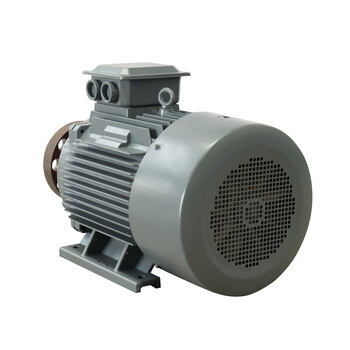
Industrial motor efficiency classifications and test procedures are governed by strict international standards. The International Electrotechnical Commission outlines international efficiency classes for line-fed and inverter-duty motors through IEC 60034-30-1 and IEC 60034-30-2, defining the super-premium IE4 and ultra-premium IE5 performance criteria.
Testing protocols and loss-segregation methods must adhere strictly to IEC 60034-2-1 and IEC 60034-2-2 standards, utilizing calibrated dynamometers to measure losses under full and partial load conditions. Field vibration thresholds must comply with ISO 10816-3 Zone A guidelines, confirming that vibration velocities remain below 1.4 mm/s RMS. In North America, motor branch circuit protection, thermal overload safeguarding, and disconnect switchgear must comply with NFPA 70 National Electrical Code rules. Furthermore, industrial energy audits evaluating motor upgrades must follow ISO 50001 energy management frameworks to guarantee transparent verification of energy conservation.
Achieving maximum financial return from high-efficiency motor upgrades requires structured engineering planning and disciplined commissioning practices.
Never select motor replacements based solely on legacy nameplate power ratings. Deploy portable three-phase power quality analyzers on existing motor feeder lines for at least one full continuous operating week. Capture continuous kilowatt demand, current unbalance, and running load percentage histograms across all production shifts to establish an accurate weighted duty cycle profile.
Permanent magnet synchronous motors operating on variable loads require dedicated variable frequency drives equipped with permanent magnet field-oriented vector control. During commissioning, perform static and dynamic motor parameter autotuning to identify stator winding resistance and d-axis/q-axis inductances precisely. Optimize velocity loop and current loop proportional-integral (PI) gains to ensure rapid torque response during sudden load impacts without current overshoot.
Take advantage of direct-drive simplicity to streamline routine maintenance. Establish quarterly vibration monitoring routines to track bearing raceway frequencies. Measure winding insulation resistance annually using a 1000V DC megohmmeter. Because high-efficiency permanent magnet motors operate cooler than induction counterparts, bearing lubricant degradation slows significantly, extending regreasing intervals and lowering maintenance labor costs.
To explore complete super-premium motor models and dimensional drawings, visit the ENNENG Products Catalog and review solutions via ENNENG Drive Technology.
For technical evaluations regarding motor efficiency retrofits and fluctuating-load energy calculations, contact ENNENG:
A: Induction motors require continuous reactive magnetizing current to establish rotor magnetic flux regardless of mechanical load. When operating at 25 to 50 percent load, this fixed magnetizing current and its associated core losses represent a large percentage of total power draw, causing electrical efficiency to collapse and power factor to drop.
A: An IE4/IE5 Efficiency Motor utilizes permanent magnets that provide rotor excitation without drawing electrical current. Because rotor I2R copper losses are completely eliminated, the motor maintains super-premium conversion efficiency across an exceptionally broad 25 to 120 percent load range, capturing massive energy savings on variable-duty machinery.
A: Yes. Modern permanent magnet synchronous motors deliver high dynamic torque response and continuous synchronous operation without slip. Paired with field-oriented vector drives, an IE4/IE5 Efficiency Motor provides momentary overload torque capabilities exceeding 200 to 250 percent, smoothly powering through dense shock loads without stalling.


 EN