
why-mining-industrial-motor-needs-highgrade-antiimpact-design-for-underground-mining-environments, why-mining-industrial-motor-needs-highgrade-antiimpact-design-for-underground-mining-environments, /blog
EN

2026/09/15
Underground mines crush ore at the face to cut haulage cost, and that work lands hard on the drive. A Mining Industrial Motor on a sizer, feeder breaker, or underground crusher meets impact that surface plants never see: tramp metal, uneven feed, and the sudden jam when a boulder jams the rolls. Standard industrial units built for smooth loads fail early here, because the duty is not steady power but a series of violent torque and thrust shocks the nameplate never lists. The Mining Industrial Motor therefore lives or dies by its shock rating, not by the steady figure on the plate.
One underground crushing station lost a primary drive when a broken bit and a steel cap entered the feed together. The Mining Industrial Motor took the jam as a massive torque spike, then ran with a bent shaft and a failing bearing for a week before it tripped. Teardown showed the impact had shifted the rotor and cracked the bearing seat, while the frame had deflected enough to throw the coupling out of line. The station lost production for two days, and the rebuild cost more than a properly rated replacement, because the damage was mechanical, not electrical.
Impact from a jam enters through the coupling and travels as torque and thrust into the shaft and bearings. A Mining Industrial Motor with a flexible or under-sized coupling lets that shock reach the winding and the bearing race, where false brinelling and rub begin. Each boulder that jams adds a hard pulse that bends the shaft and loosens the feet. Even without a full jam, the constant surge of uneven feed feeds the same path, so the Mining Industrial Motor must absorb and isolate the shock instead of passing it into the parts that spin.
A high-grade rating is engineered, not claimed: a stiff shaft, heavy-duty bearings, and a frame that limits deflection under shock. A Mining Industrial Motor earns its rating through mechanical margin in every load path, so the impact lands somewhere safe instead of in the rotor.
A Mining Industrial Motor needs a rigid shaft and locked rotor retention so a jam cannot shift mass and start an imbalance. Units built for crushing carry spherical roller bearings sized for shock load, with seats that will not crack under the pulse. The winding bracing resists the axial jolt, and the air gap stays stable because the frame does not flex. A Mining Industrial Motor that holds its geometry after a jam keeps running, while a lightly built one drifts into failure over the following shifts.
The coupling is the first line against shock, so a Mining Industrial Motor for this duty uses a torsionally soft or shear-element coupling that absorbs the jam instead of transmitting it. The frame must stay rigid under the thrust, so reinforced feet and a deflection-limited housing beat a thin shell. Resilient mounts can take the high-frequency rattle without letting the assembly creep out of line, and the Mining Industrial Motor benefits most when the frame and the coupling share the load. Underground the same machine sees the shock as a daily event, not a rare one.
Mine and machine codes turn shock and balance into numbers a site can verify. A Mining Industrial Motor that meets them satisfies both the OEM spec and the daily reality, so the requirement should start from the test, not the catalog.
ISO 1940-1 sets balance grades for rotating machines, and a tight grade holds up better after a jam because it begins from a low imbalance baseline. IEC 60034-14 covers mechanical vibration, giving the limits and measurements that show a Mining Industrial Motor drifting after an impact. ISO 10816 adds machine vibration evaluation for the coupled set, so the site can watch the whole train. Together these standards turn post-shock checks into a reading rather than a guess.
Mine OEM specifications often require a shock or overload proof test before the drive ships, because a Mining Industrial Motor rated only at steady load will not survive the jam. The site should ask for that test data and repeat a vibration reading at commissioning, then log it each quarter. A Mining Industrial Motor accepted this way is proven for the knock, not assumed, and the records show drift before a failure, not after.
Getting value from the equipment depends as much on the crusher as on the nameplate. The Mining Industrial Motor only reaches its rating when the specification and the service both fit the duty, and those two steps share one checklist.
Before asking for quotes, define the impact: feed size, tramp risk, jam torque, and coupling type. A Mining Industrial Motor should ship with heavy-duty bearings, a recorded balance grade, and a deflection-limited frame. Confirm the coupling is shock-rated and the feet are reinforced, and request the impact test data from the maker. When required this way, the site gets a unit proven for the jam, not merely for the speed on its plate.
Plan the checks around what fails on shock duty: bearing temperature, foot cracks, coupling condition, and vibration trend. A Mining Industrial Motor deserves a reading after any reported jam or tramp event, not only on the fixed route. Record balance and vibration each quarter, since a climbing trend warns of trouble before a trip. Re-torque feet and inspect the coupling at the interval the duty demands, because underground the same machine loses alignment far faster than it would on a clean surface floor.
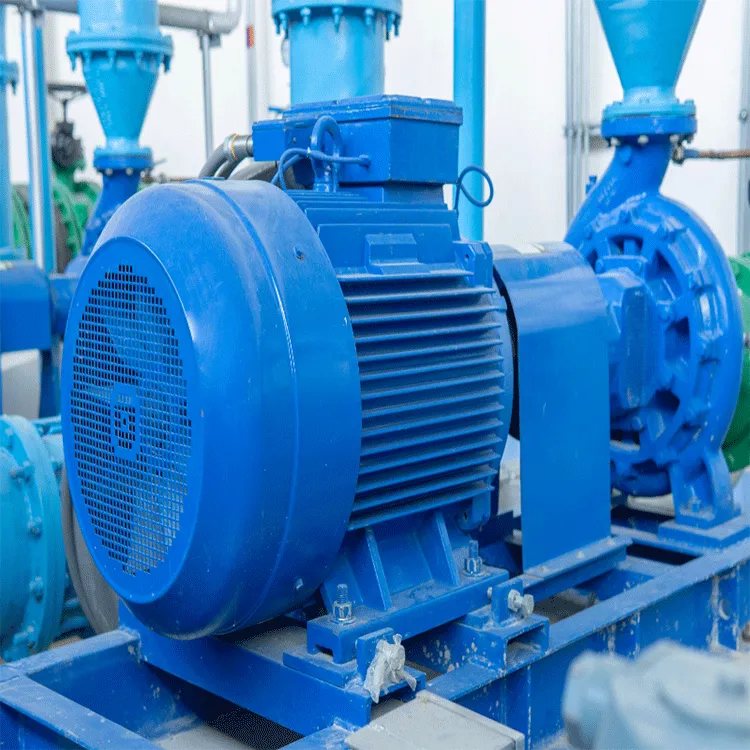
Underground crushers meet tramp metal, uneven feed, and sudden jams that surface drives never face. Without shock-rated construction the torque spike travels into the shaft and bearings, where false brinelling and rub begin. Anti-impact design with a soft coupling and heavy bearings absorbs the jam so the spinning parts stay true. The duty is a series of violent shocks, not steady load, and a steady rating cannot describe that hazard alone.
The coupling and the bearing seat usually take the first blow, then the shock reaches the shaft. A weak coupling transmits the spike into the bearing race, causing false brinelling, while a thin frame deflects and throws the coupling out of line. Electrical parts often survive the jam while the mechanical core fails, so a check after a jam must inspect the structure and the bearing, not only the winding.
ISO 1940-1 defines balance grades for rotating machines, IEC 60034-14 sets vibration limits and tests for motors, and ISO 10816 evaluates vibration of the coupled set. Against all three, the drive gives a clear reading after a shock instead of a guess. These rules let a site confirm the machine still runs true, and they make trend tracking useful because the baseline and the limit both come from a test.
Only where the feed is controlled and tramp risk is low, and even then the shock of a jam beats most surface ratings. The right unit brings heavy-duty bearings, a shock-rated coupling, and a deflection-limited frame that a standard machine lacks. Fitting a catalog motor to save cost usually fails inspection and service, because the jam tests every joint the datasheet never considered under real mine load.
Checks should follow the jam events, not only the calendar. A reading after any reported tramp or jam, plus a logged review each quarter, catches trouble early. Watch bearing temperature, foot cracks, and coupling condition, since these give way before the winding. A rising trend predicts failure, and the underground setting shortens the safe gap compared with a clean surface installation.
It does, because it prevents the mechanical faults that stop a crusher for days. Heavy bearings and a shock-rated coupling keep the unit clear of the bent-shaft and walking-drive failures that idle a whole station. Less unplanned downtime and fewer rebuilds beat a lower purchase price, since the real loss underground is the ore that sits unmoved while the crusher waits for a replacement.


 EN