
why-mining-industrial-motor-requires-multilayer-protection-for-damp-and-dusty-underground-tunnels, why-mining-industrial-motor-requires-multilayer-protection-for-damp-and-dusty-underground-tunnels, /blog
EN

2026/09/14
Underground tunnels expose rotating equipment to a mix that surface plants never see: standing water, conductive dust, methane pockets, and grit that finds every opening. A Mining Industrial Motor in that setting cannot rely on the cooling and sealing that works above ground, because the threat arrives from several directions at once. One underground coal operation learned this when three conveyor drives failed inside a single winter, and each failure traced back to a different path of ingress that one protective layer had not covered.
The operation ran belt conveyors on a Mining Industrial Motor rated for the load but sealed only to a basic enclosure. After heavy seepage, water reached the terminal box through a worn gland, and the drive tripped on earth fault during a production shift. The stoppage idled two headings and cost more in lost ore than the motor itself. The Mining Industrial Motor on the second level later failed from dust packing the cooling fins until the winding overheated, and the two faults shared one root cause: protection built for a single hazard, not the layered hazard profile of the tunnel.
Water lowers insulation resistance and invites tracking across terminals, while fine coal dust holds moisture against the frame and shortens the path to failure. A Mining Industrial Motor in this duty also breathes through temperature cycles, drawing damp air inward as it cools. Dust adds abrasive wear to seals and blocks heat escape, so the winding runs hotter than its rating allows. The two mechanisms compound, so the Mining Industrial Motor needs stacked barriers rather than a single seal or coating that cannot carry the whole load underground.
Real protection stacks independent barriers so that if one is breached, the next still holds. A Mining Industrial Motor built for mining couples mechanical sealing, material choice, and thermal design into one package instead of bolting them on after the fact.
Enclosure selection starts with the atmosphere. For methane risk, flameproof construction contains an internal arc so it cannot ignite the surrounding gas, and increased safety reduces ignition sources at the terminals. A Mining Industrial Motor for wet tunnels also needs high ingress protection so water and dust stay out of the live parts. Cable glands, drain plugs, and sight windows are part of the same barrier, not accessories, because the Mining Industrial Motor sees each as a known entry point that the tunnel will test.
Even with seals, heat must leave the frame without letting contaminants in. Insulation systems rated for the duty resist moisture and tracking, and a Mining Industrial Motor with class F or H insulation keeps margin when fin blockage raises temperature. Thermal sensors embedded in the winding give early warning before damage, and space heaters prevent condensation during idle periods, where the Mining Industrial Motor sits cold and most vulnerable to moisture forming inside.
Mining authorities and equipment rules turn the hazard profile into mandatory design points. A Mining Industrial Motor that meets them passes both the inspector and the operating reality, which is why specification should start from the code, not from the catalog.
IEC 60079 defines the equipment protection methods for explosive atmospheres, including flameproof and increased-safety construction, and it sets the tests a Mining Industrial Motor must pass before it carries an Ex marking. The ATEX directive in the EU applies the same logic to placed equipment, so before a Mining Industrial Motor ships, the maker proves containment and surface-temperature limits by test. Specifying to these standards prevents fitting a standard industrial unit underground and hoping the risk stays low, a choice that fails both law and duty.
ISO 12944 guides corrosion protection of steel structures and applies directly to the motor frame and hardware in corrosive, wet tunnels. A Mining Industrial Motor with a coating matched to the corrosivity class survives longer than one with generic paint, and for the Mining Industrial Motor frame the right pretreatment decides how many years pass before a major strip-down. Pairing the standard with a documented inspection plan lets the site prove the protection level to auditors and catch coating breakdown before it reaches the metal.
Choosing and keeping the unit is as much about the tunnel as about the nameplate. A Mining Industrial Motor performs to its rating only when selection and care match the site, and the two steps share one checklist.
List the atmosphere class, water exposure, dust type, and temperature swing before requesting quotes, then confirm each maps to a protection method on the motor. A Mining Industrial Motor should arrive with the correct Ex marking, ingress rating, and drainage points for the level. Verify cable glands and seals are supplied as a set, not sourced later, and when the Mining Industrial Motor is specified this way, spare seals are stocked for the first planned service from day one.
Plan checks around the failure modes seen underground: gland tightness, drain plug condition, fin cleanliness, and insulation resistance trend. A Mining Industrial Motor should get a thermal scan each planned stop so blocked cooling shows before a trip. Log insulation readings every quarter; a falling trend predicts trouble better than a single pass or fail test. Replace seals at the interval the atmosphere demands, not when they leak, because the Mining Industrial Motor underground fails faster from small ingress than the same unit on the surface.
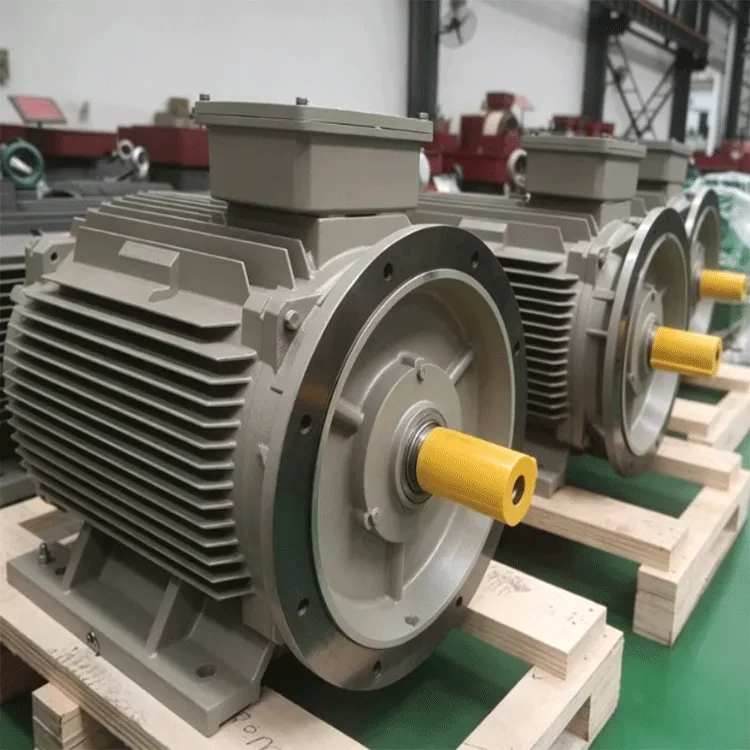
A tunnel attacks from several sides at once: water, dust, gas, and corrosion. One seal may stop water but not condensation, and one coating may resist rust but not abrasion. A Mining Industrial Motor lasts only when sealing, insulation, and enclosure ratings work together, so a breach in one layer still leaves the next intact. Stacked barriers match the layered hazard profile that a single measure cannot cover underground.
Flameproof construction contains an internal arc or explosion inside the enclosure so it cannot ignite a surrounding flammable atmosphere. The method is defined under IEC 60079 and marked as Ex d, with strict flange gap and strength tests. It does not stop gas entry; it stops the motor from becoming the ignition source. For methane-prone tunnels this rating is often mandatory, and it pairs with increased safety at the terminals to remove other ignition paths.
Fine coal dust packs into cooling fins and blocks heat escape, so the winding runs above its rated temperature and ages faster. Dust also holds moisture against the frame, lowering insulation resistance and inviting tracking across terminals. A Mining Industrial Motor in this duty needs fin clearance and sealed live parts, because the dust load underground is constant and abrasive, wearing seals that would last for years in a clean plant.
ISO 12944 sets the framework for corrosion protection of steel, including the motor frame and hardware, by defining corrosivity classes and coating systems. A Mining Industrial Motor specified to the right class lasts longer in wet, chemical-laden tunnels than one with generic paint. The standard also supports a documented inspection plan, so the site can prove protection level to auditors and replace coating before breakdown reaches the base metal.
Inspection should follow the failure modes: check gland tightness, drain plugs, fin cleanliness, and insulation resistance each planned stop, with a thermal scan to catch blocked cooling. Log insulation readings quarterly so a falling trend predicts trouble. A Mining Industrial Motor in heavy damp duty may need seal replacement on a shorter interval than the catalog suggests, because small ingress underground becomes a stoppage far faster than on the surface.
Only where the atmosphere and exposure are proven non-hazardous, and even then the ingress and corrosion load exceed most surface ratings. A Mining Industrial Motor carries the Ex marking, ingress rating, and coating matched to the tunnel, which a standard unit lacks. Fitting a standard motor underground to save cost usually fails inspection and fails in service, because the tunnel tests every opening the catalog never had to consider.


 EN