
why-pm-synchronous-motor-becomes-core-driving-component-for-modern-lowcarbon-industrial-transformation-progress, why-pm-synchronous-motor-becomes-core-driving-component-for-modern-lowcarbon-industrial-transformation-progress, /blog
EN

2026/10/16
Across global steelworks, chemical processing complexes, cement plants, and automated manufacturing parks, electric motor-driven systems account for roughly 65% to 70% of total industrial electricity consumption. As multinational supply chains enforce strict Scope 2 greenhouse gas (GHG) emission disclosures and carbon border adjustment taxes, industrial enterprises can no longer meet decarbonization targets while operating millions of legacy squirrel-cage asynchronous motors. Every kilowatt-hour wasted as rotor slip heat and reactive magnetizing current inside outdated induction drives translates directly into excess power-plant coal or gas combustion and inflated corporate carbon liabilities.
While incremental tweaks to asynchronous motor laminations have hit a physical ceiling near the IE3 and IE4 efficiency boundaries, deep industrial decarbonization demands a fundamental shift in electromagnetic energy conversion. Upgrading core production machinery—such as pumps, compressors, fans, and conveyors—to an ultra-efficient PM Synchronous Motor from ENNENG eliminates rotor excitation losses at the source, serving as the foundational driving component for modern low-carbon industrial transformation.
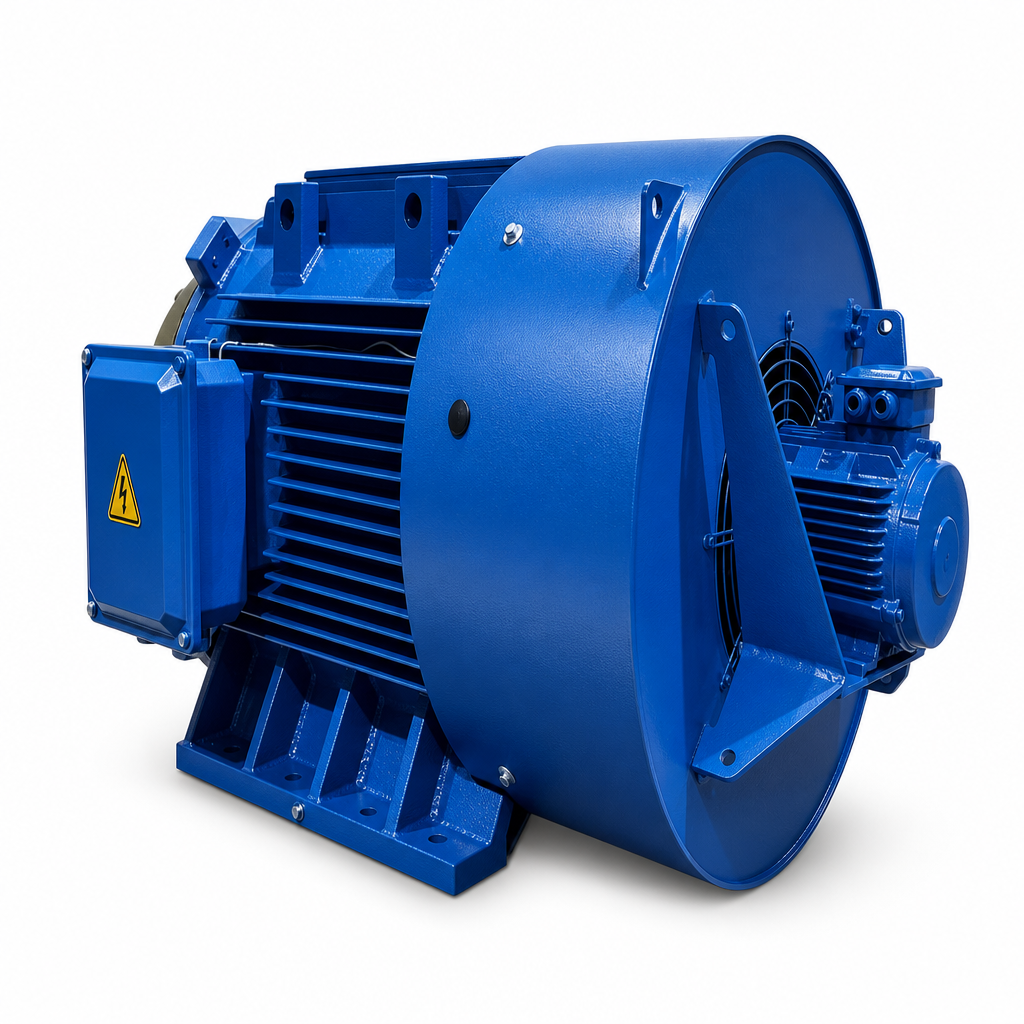
In a conventional asynchronous induction motor, electrical energy must cross the air gap twice: first to magnetize the core, and second to induce heavy alternating currents inside the squirrel-cage rotor bars. These induced rotor currents generate continuous resistive heat (I2R losses) that accounts for up to 25%–35% of total motor energy losses. Even worse, when factory machinery operates at partial loads between 30% and 60% capacity, an induction motor continues drawing high fixed reactive magnetizing current—causing its power factor to plunge, increasing upstream transformer and cable heat losses, and inflating the facility’s Scope 2 carbon intensity per ton of product.
An ENNENG PM Synchronous Motor accelerates low-carbon transformation across both operational carbon (electricity use) and embodied carbon (raw material consumption):
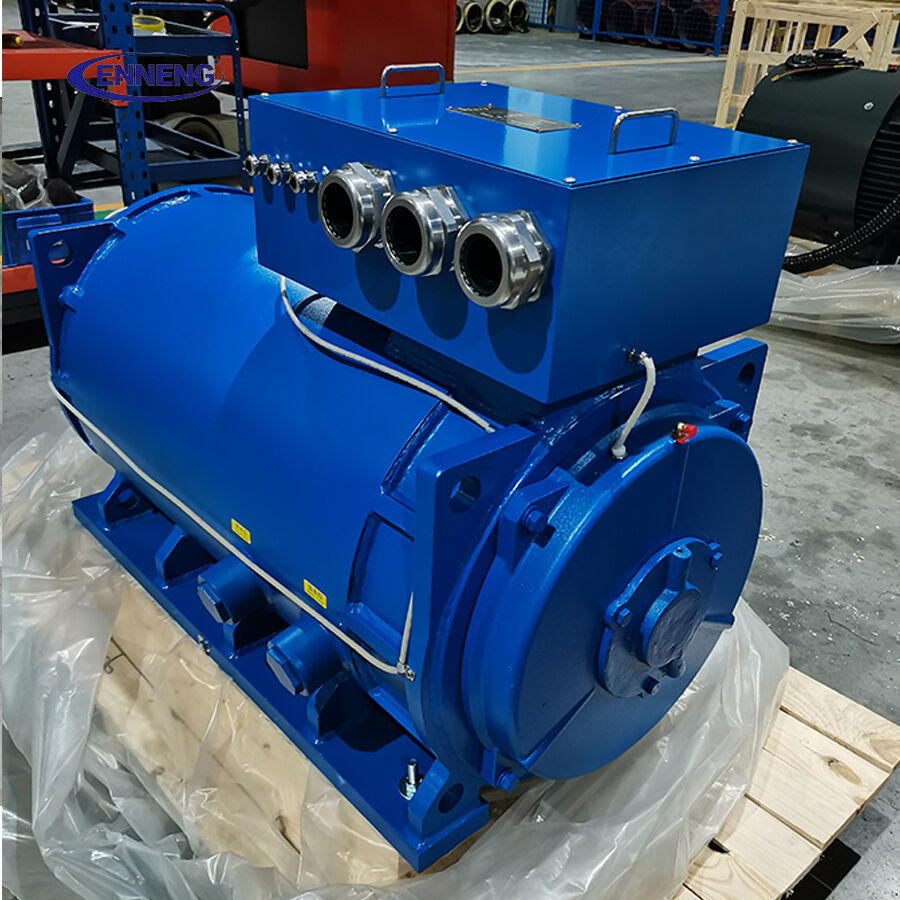
True low-carbon factory transformation requires optimizing the entire plant electrical distribution network, not just individual machine shafts. Operating across a unified voltage range of 110V–690V, an ENNENG PM Synchronous Motor maintains a near-unity power factor (0.95 to 1.00) across variable speeds and loads. Lowering stator line current by over 10% compared to asynchronous equivalents reduces I2R thermal dissipation across miles of factory feeder cables and step-down transformers. Beyond low-carbon industrial drive motors, ENNENG powers clean energy generation directly by manufacturing permanent magnet generators across a unified 5kW–5MW power range (110V–690V) for waste-heat and hydro recovery, alongside vertical axis wind turbines spanning 1kW–10kW (focusing on 3kW, 5kW, and 10kW models) for zero-emission factory microgrids.
Global regulatory frameworks increasingly mandate ultra-premium motor efficiency and auditable carbon accounting. Every ENNENG PM Synchronous Motor is designed to meet or exceed IEC TS 60034-30-2 IE5 ultra-premium efficiency classifications, verified through rigorous IEC 60034-2-1 loss-segregation testing. Deploying IE5-verified synchronous drives provides enterprise sustainability officers with documented kilowatt-hour reduction metrics required for ISO 50001 energy management certification, ISO 14064-1 corporate greenhouse gas inventories, and European Union Ecodesign regulatory compliance.
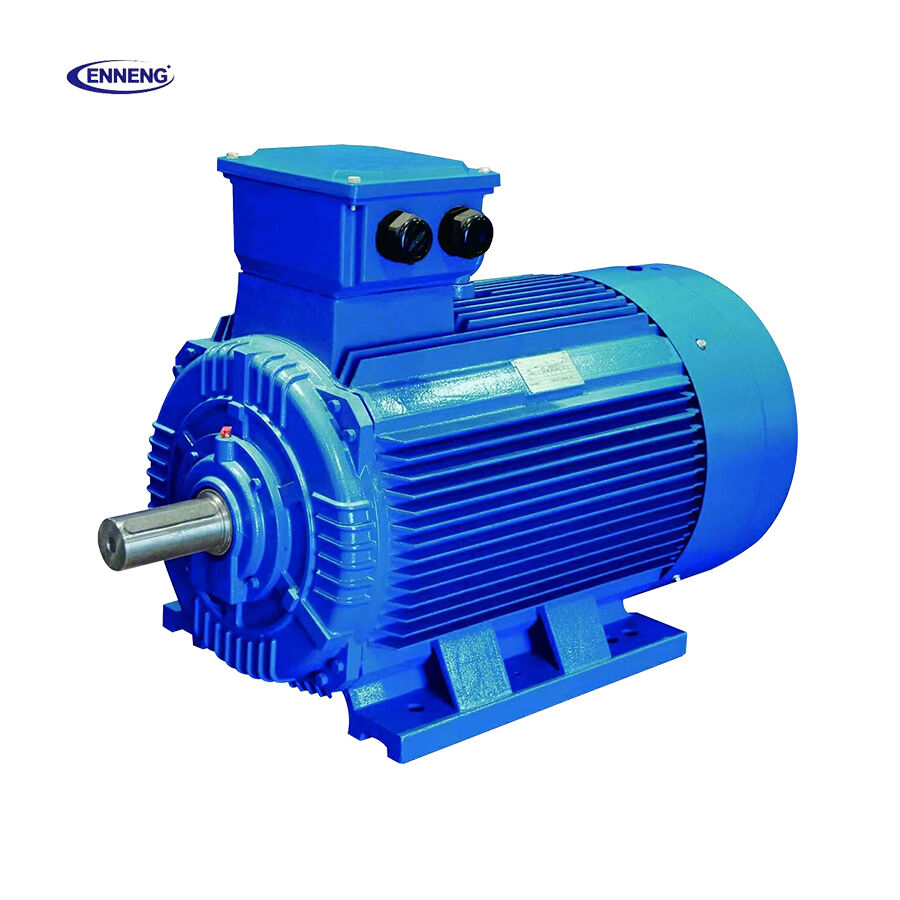
In continuous-process chemical, paper, and metallurgical facilities, compressed air stations and cooling water loops operate 8,000+ hours annually. Retrofitting these high-hour assets with an ENNENG PM Synchronous Motor coupled to a variable frequency drive delivers immediate double-digit reductions in plant electricity demand and annual metric tons of CO2 emissions.
To maximize carbon abatement and equipment longevity when deploying a PM Synchronous Motor in green factory upgrades, follow these engineering guidelines:
Transitioning diverse industrial sectors to low-carbon propulsion requires flexible mechanical and electrical engineering. ENNENG custom-designs its PM Synchronous Motor portfolio across the unified 110V–690V spectrum—offering standard IEC drop-in replacement frames as well as custom gearless direct-drive topologies that eliminate mechanical gearbox losses altogether.
Contact ENNENG Today.
Consult the ENNENG decarbonization engineering team to calculate your facility’s carbon abatement potential and receive a customised PM Synchronous Motor proposal.
A: An IE3 asynchronous induction motor still suffers from continuous rotor cage copper losses and high reactive magnetizing current, especially when operating below full load. An ENNENG PM Synchronous Motor uses permanent magnets to excite the rotor without electrical loss, achieving IE5 ultra-premium efficiency across wide partial-load ranges and significantly reducing Scope 2 electricity emissions.
A: Asynchronous motors draw substantial reactive current, resulting in a lagging power factor of 0.70 to 0.86 that overloads plant feeder cables and transformers. Because an ENNENG PM Synchronous Motor operates at a near-unity power factor (0.95 to 1.00), total line current drops by over 10%, cutting upstream cable heating losses across the entire factory grid.
A: Alongside its 110V–690V PM Synchronous Motor series, ENNENG supports industrial renewable energy transition by manufacturing permanent magnet generators across a unified power range of 5kW–5MW (110V–690V) for waste-heat and hydro power, as well as vertical axis wind turbines spanning 1kW–10kW


 EN