
 EN

Why PM Synchronous Motor reduces impact‑load damage to upstream and downstream industrial mechanical equipment
When a conveyor jams, a mixer starts against a heavy batch, or a pump train sees a sudden process upset, the damage rarely stays at one component. Torque reversals and rapid acceleration can travel through shafts, couplings, gearboxes, belts, bearings, and the driven machine. A PM Synchronous Motor can help reduce that exposure because it gives the drive system accurate torque and speed control. The important qualification is that a motor is not a standalone shock absorber. The benefit appears when the PM Synchronous Motor, inverter, coupling, and mechanical protection settings are designed as one system.
From an application-engineering perspective, the first question is not “Is this motor efficient?” It is “What does the load do during starts, stops, jams, and reversals?” That shift matters because impact damage is usually caused by transient torque, not by steady-state power alone. A properly applied PM Synchronous Motor can shape those transients before they become damaging impulses in connected equipment.
How impact loads damage an industrial drive train
Impact loading occurs when transmitted torque changes faster than the mechanical system can absorb or redistribute it. A sudden command, a seized downstream mechanism, backlash take-up, or a poorly tuned speed loop can create a torque spike. The motor shaft reacts first, then the coupling and gearbox see torsional acceleration, and the driven machine may receive the disturbance after a short delay. Repeated events can contribute to fretting, loose fasteners, tooth damage, bearing distress, and misalignment.
A PM Synchronous Motor does not erase inertia or make a rigid train flexible. What it can do is provide a controllable electromagnetic torque source. With suitable vector control, the drive can limit torque demand, ramp speed predictably, and respond to an overload signal without immediately applying the maximum available torque. That distinction is central: controlled torque reduces the severity of an event; mechanical design still determines what the train can survive.
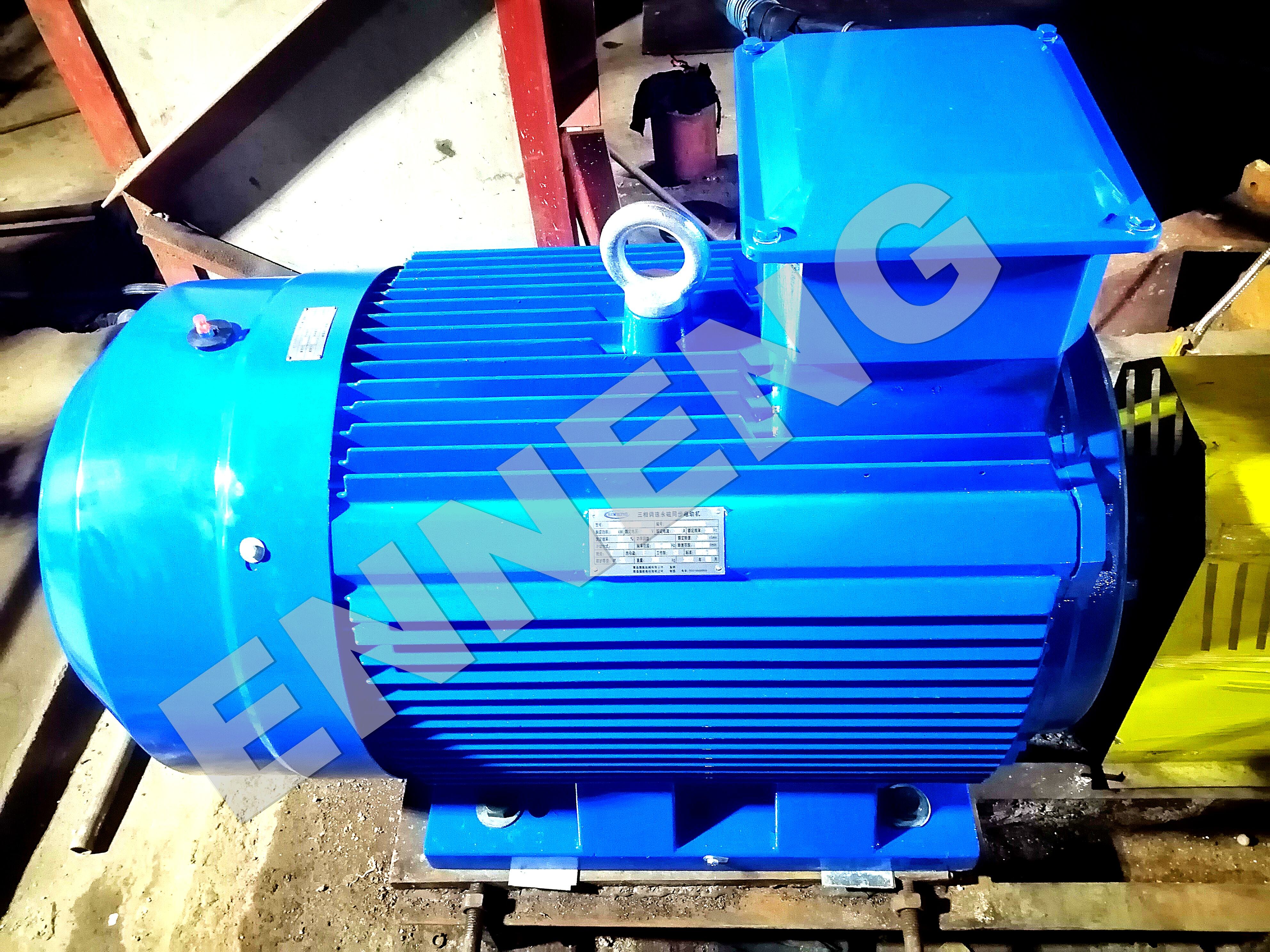
Why PM Synchronous Motor control can soften transient torque
1. Torque can be managed independently of a fixed line-speed response
A PM Synchronous Motor operated with a compatible variable-frequency drive can regulate torque-producing current and speed together. In practical terms, an engineer can set acceleration, deceleration, torque limits, current limits, and fault responses around the real duty cycle. Rather than allowing a sudden speed correction to become a full mechanical hit, the PM Synchronous Motor system can make the correction over a controlled interval.
This is especially useful where a process has frequent starts, varying material loads, or occasional obstruction. The right interval is not universal. A ramp that protects a light belt conveyor may be too slow for a tension-sensitive line, while a fast ramp that meets throughput targets may overstress a high-inertia mixer. The application needs a torque-versus-time review, not a generic setting copied from another machine.
2. Fast feedback can detect a disturbance before it becomes repeated shock
A PM Synchronous Motor drive typically works from speed or position feedback and estimates or measures torque-related variables. If actual speed falls away from the command during a jam, the control logic can reduce demand, hold a safe torque threshold, or trip according to the protection philosophy. This does not guarantee zero damage during a blockage, but it can avoid the repeated “push harder” behaviour that amplifies stress in upstream and downstream equipment.
For that reason, a Permanent Magnet Motor PMSM solution should be specified alongside the drive’s stall, overload, and restart logic. An automatic restart may be useful for a benign process interruption, but it is the wrong response where an operator, product buildup, or a mechanically locked load must be investigated first.
3. Smooth low-speed torque can reduce backlash take-up events
Many impact problems are most visible near zero speed: a geared conveyor takes up clearance, a hoist settles into load, or a pump train passes through a low-flow condition. A PM Synchronous Motor can deliver controlled torque at low speed when the control system and motor selection are suitable for that duty. Smooth torque application can reduce abrupt backlash take-up, which helps protect couplings and gear meshes from repeated contact shocks.
That said, low-speed operation changes cooling and thermal conditions. The motor’s duty rating, enclosure, cooling arrangement, and inverter compatibility must be checked. IEC 60034-1 provides the general rating-and-performance context for rotating electrical machines; it is a useful starting point for confirming duty rather than a substitute for a transient mechanical assessment.
Where the protection benefit is most credible
The case for a PM Synchronous Motor is strongest when impact loading is linked to controllable speed or torque changes. Typical examples include conveyors with varying loads, mixers with high breakaway torque, crushers or feeders with intermittent obstruction, pumps subject to abrupt process changes, and machinery that must reverse without slamming a gearbox. In these cases, the PM Synchronous Motor can be part of a coordinated strategy that reduces acceleration shock and limits torque during abnormal conditions.
The benefit is less direct when the event is purely external: a falling load, a pipe hammer event, a collision, or a mechanical failure downstream. A PM Synchronous Motor may still be programmed to react quickly, but it cannot replace a torque limiter, safety clutch, hydraulic damper, compliant coupling, shear pin, or correctly rated gearbox where those items are required.
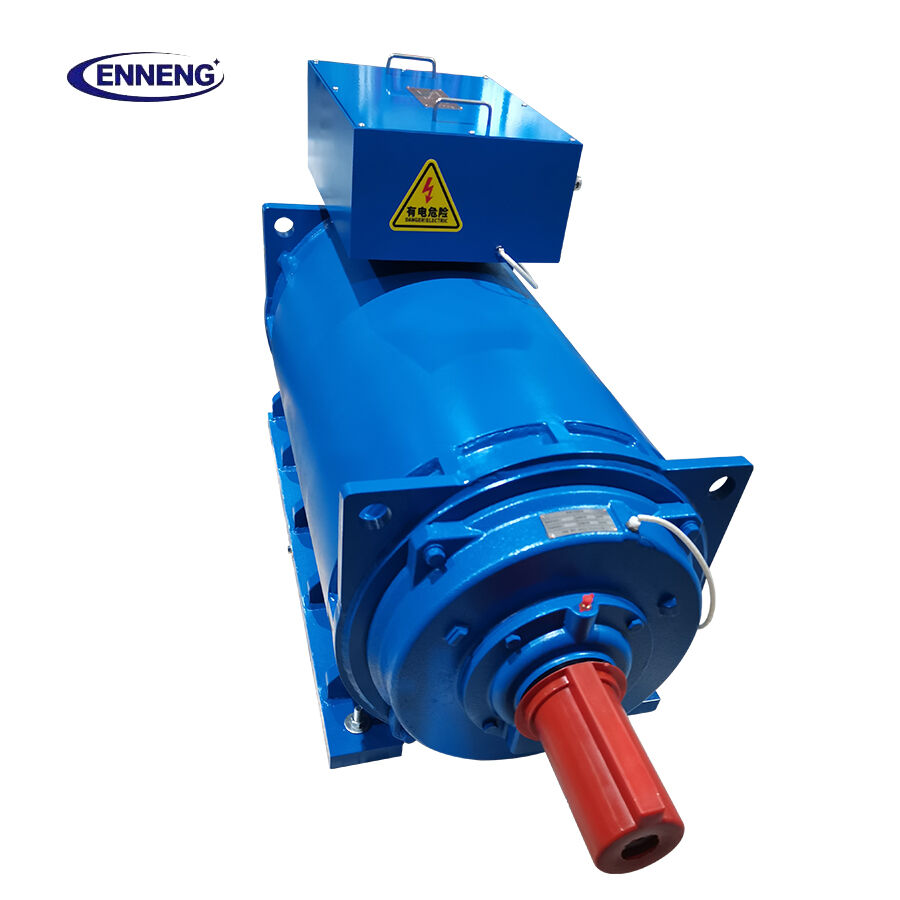
Design the motor, drive, and mechanics as one protection system
The most reliable approach is to map the complete load path. Start at the supply and drive, continue through the PM Synchronous Motor, shaft, coupling, gearbox, and driven machine, then identify where a transient can start and where it can be safely limited. Consider reflected inertia, torsional stiffness, backlash, service factor, coupling misalignment tolerance, and the time required for a protective command to take effect.
- Define normal and abnormal torque envelopes. Include start-up, stopping, reversing, plugged conditions, and credible jam scenarios.
- Set torque and current limits deliberately. Do not assume a high available torque reserve is automatically beneficial to the machine.
- Coordinate acceleration and deceleration ramps. A controlled PM Synchronous Motor ramp should match the process and the drivetrain’s torsional limits.
- Select mechanical protection separately. Use compliant couplings or torque-limiting devices where the consequence of a shock warrants them.
- Validate supply and cooling conditions. NEMA guidance highlights the importance of terminal voltage balance and temperature-rise considerations; electrical quality can affect the margin available during demanding duty.
Commissioning checks that prevent a good design from causing damage
A PM Synchronous Motor installation should be commissioned with evidence, not only with a successful no-load run. Record the speed command, actual speed, current or torque trend, and vibration response through the most demanding permitted transitions. Check that torque-limit behaviour is stable, that the drive does not hunt around a speed setpoint, and that fault recovery cannot restart into an unsafe obstruction.
Datasheets cannot settle several boundary conditions on their own, so check: ambient temperature, low-speed cooling, shaft alignment, coupling condition, gearbox backlash, and the stiffness of the base. A PM Synchronous Motor may be highly responsive, but a loose foundation or worn coupling can turn even a modest command change into a mechanical event.
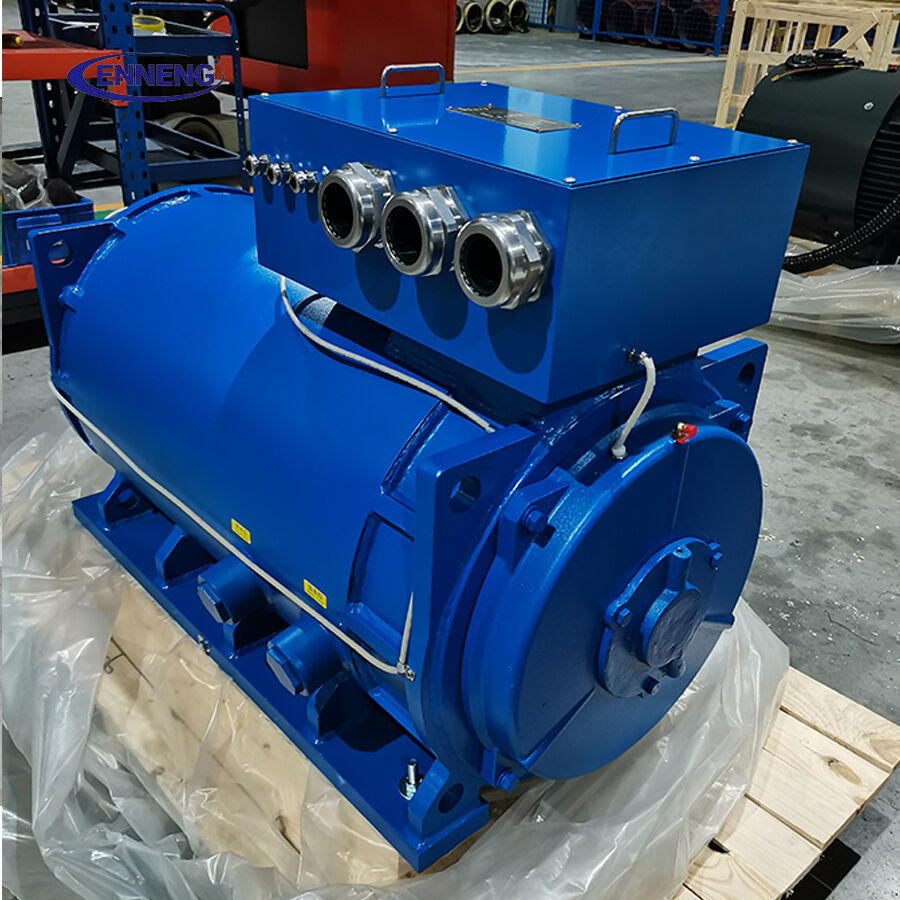
Contact US
If you are evaluating commercial permanent magnet motors for sale and need an engineered drive solution that guarantees efficiency and longevity, ENNENG is your trusted partner.Contact ENNENG Today.Speak to our technical engineering team to receive a customised drive proposal.
- WhatsApp: +86 18562780228
- E-Mail: [email protected]
- Phone: +86 532 66000559
A practical selection conclusion
A PM Synchronous Motor reduces impact-load damage most effectively when its controllable torque is used to manage the cause of the shock: aggressive starting, abrupt stopping, jam response, or backlash take-up. The engineering value is not simply that the motor is permanent-magnet based. It comes from pairing the PM Synchronous Motor with correctly tuned control, appropriate duty verification, and mechanical safeguards that handle the loads electronics cannot absorb.
Before selecting a PM Synchronous Motor, ask for the load cycle, inertia data, expected abnormal events, required restart behaviour, and the limits of every component in the power path. With that information, the team can specify a PM Synchronous Motor system that protects production equipment rather than merely delivering rotation.

