
 EN

Why PMSM for Industrial Fans Cuts Manual Maintenance Costs in Large-Scale Factory Ventilation Systems
In a large factory, ventilation maintenance is rarely one dramatic breakdown. It is the accumulation of small jobs across many fan points: checking belts, correcting tension, lubricating bearings, listening for abnormal noise, replacing worn drive components, and documenting every intervention. That is why the case for PMSM for Industrial Fans should be assessed as a maintenance-workflow decision as well as an energy decision.
From a procurement perspective, the useful question is not whether a Permanent Magnet Motor PMSM has a higher purchase price. It is whether the ventilation design removes recurring manual tasks without transferring risk elsewhere. For variable-airflow applications, a direct-drive PMSM arrangement can do that by eliminating the belt-drive stage and making speed control part of normal operation. It does not make a fan maintenance-free; blades, guards, mounting hardware, bearings, electrical connections, and controls still require inspection. But it can reduce the number of labor-intensive drive-train interventions that multiply across a large installation.
Where the Manual Maintenance Time Comes From
Traditional factory ventilation often pairs an induction motor with a belt-and-pulley transmission. That configuration is familiar and serviceable, but it creates a second mechanical system to maintain between the motor and fan. Belts stretch and wear; pulley alignment needs checking; tension can become too loose or too high; and failed belts can turn a routine task into an urgent callout. Industry guidance on fan systems identifies belt tightening and replacement, along with bearing lubrication and replacement, as common maintenance work.
The labor effect becomes more visible at scale. A single belt inspection may be brief, but a site with dozens of exhaust, supply, process-cooling, or HVLS fans has many inspection points. Access can add time as well: elevated fans, guarded drives, hot production areas, and shutdown coordination make a simple adjustment less simple in practice. The shift that changes the specification conversation is moving from motor price to the number of repeatable maintenance touches required over the equipment life.
How PMSM for Industrial Fans Changes the Maintenance Map
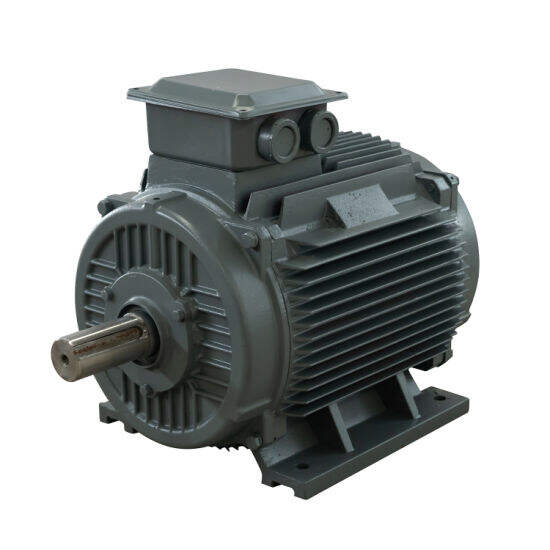
A PMSM for Industrial Fans is commonly paired with electronic speed control and can be arranged as a direct drive, with the motor connected to the fan hub or shaft rather than through belts and pulleys. When direct drive is appropriate for the fan design, the maintenance consequence is straightforward: no belts to inspect, tension, align, or replace, and no pulleys whose condition must be checked as part of a belt transmission.
That matters because belt work is both scheduled and reactive. Scheduled rounds consume technician time. Reactive work can require access equipment, a stopped ventilation zone, and coordination with operations. Removing the belt-drive stage reduces the number of components that can need those particular interventions. It also removes belt slip as a cause of lost speed or noise. This is a component-count advantage, not a promise that every fan failure disappears.
Direct drive reduces tasks; it does not cancel preventive maintenance
The maintenance plan should become shorter and more targeted, not vanish. A PMSM for Industrial Fans still needs electrical checks, cleanliness checks, vibration and noise observation, fastener inspection, and confirmation that the controller is operating as intended. Bearings and the fan assembly remain physical assets. If the ambient temperature, dust load, moisture, or duty cycle is demanding, the inspection interval should reflect those conditions rather than a generic calendar.
That distinction is important. A maintenance proposal that says “zero maintenance” is not credible. A better proposal states which recurring tasks are removed, which tasks remain, who owns the controller settings, and what signals will trigger inspection. For a Permanent Magnet Motor PMSM, the practical benefit is often fewer mechanical adjustments—not an exemption from asset management.
Why Variable Speed Can Also Lower Hands-On Work
Many ventilation systems do not need peak airflow all day. Production shifts, weather, heat loads, occupancy, and process conditions change. With a PMSM for Industrial Fans, speed can be adjusted through the drive rather than by relying on belt-ratio changes or continuous throttling. That supports a more repeatable operating setup: maintenance personnel can focus on verifying setpoints, airflow response, and alarms instead of repeatedly altering mechanical transmission settings.
The benefit is conditional. Speed control only reduces interventions when the controls are commissioned clearly and operators know how to use them. Poor sensor placement, undocumented setpoints, or unrestricted manual overrides can create new troubleshooting work. Before approving a conversion, define the ventilation zones, the required minimum airflow, the normal speed schedule, and the person authorized to change it.
A Practical Labor-Cost Comparison Framework
Do not try to justify a conversion with an assumed dollar saving copied from another plant. Labor rates, access time, fan quantity, and failure history vary too much. Instead, build a site-specific maintenance baseline and compare tasks.
| Maintenance question | Belt-driven arrangement | Direct-drive PMSM arrangement |
|---|---|---|
| Routine belt inspection and tensioning | Required where belts are installed | Removed with no belt transmission |
| Pulley alignment and wear checks | Required | Removed with no pulley transmission |
| Motor/fan mechanical inspection | Required | Required |
| Electrical and control checks | Motor starter or drive checks as fitted | Motor controller and settings checks are required |
| Fan, bearing, guard, and mounting inspection | Required | Required |
For each fan group, record the number of planned belt-related visits, average technician time, access preparation, replacement parts, and unplanned callouts from the previous year. Then identify what disappears in a direct-drive design and what new controller inspection or spare-part coverage is needed. The real cost question is not what a motor costs today, but what the ventilation system asks a maintenance team to do repeatedly during its service life.
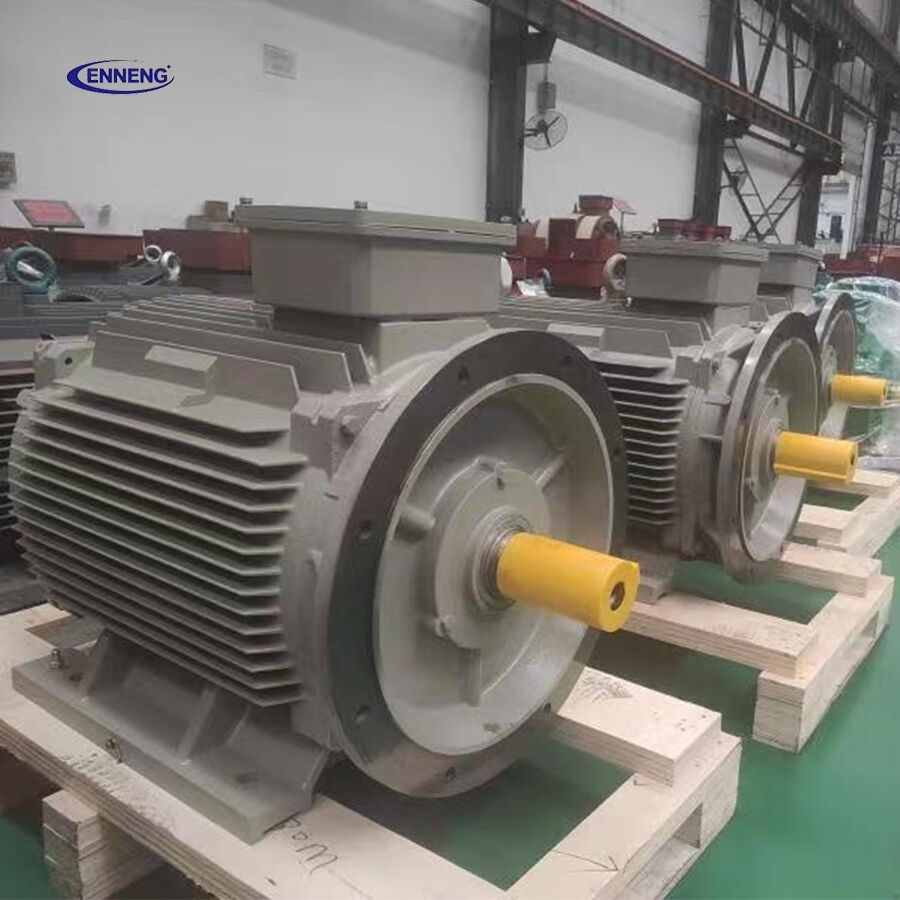
Selection Checks Before Specifying PMSM Fan Motors
- Confirm the fan duty cycle. Capture airflow, static pressure, speed range, starts, ambient conditions, and operating hours. Partial-load operation is where the efficiency and control behavior need the closest review.
- Verify direct-drive suitability. Check the required fan speed, torque, shaft arrangement, mounting, and service access. Direct drive must suit the fan rather than be assumed from the motor type.
- Plan controller ownership. Define control inputs, safe minimum speed, fault response, parameter access, and the documentation maintenance staff will receive.
- Review the remaining mechanical work. Include bearings, impeller cleanliness, vibration, structural fastening, guards, and electrical terminations in the preventive-maintenance plan.
- Set an outage plan. Decide whether critical zones need redundancy, spare drives, or a staged retrofit so ventilation capacity is protected during conversion.
When a PMSM Upgrade Is Most Likely to Help
The strongest case for PMSM for Industrial Fans usually appears where a facility has many similar fans, recurring belt-related work, variable airflow demand, and meaningful labor or downtime exposure. A pilot group is often more useful than a blanket claim: document the baseline maintenance tasks, convert a representative zone, and compare actual work orders after a defined operating period.
No motor arrangement fits every application. A Permanent Magnet Motor PMSM and direct drive should be evaluated against application fit, controls capability, service support, and the remaining mechanical risks. When those details are handled well, the result is not merely a quieter or more controllable fan. It is a ventilation asset with fewer routine mechanical tasks for a maintenance team to chase.
Contact US
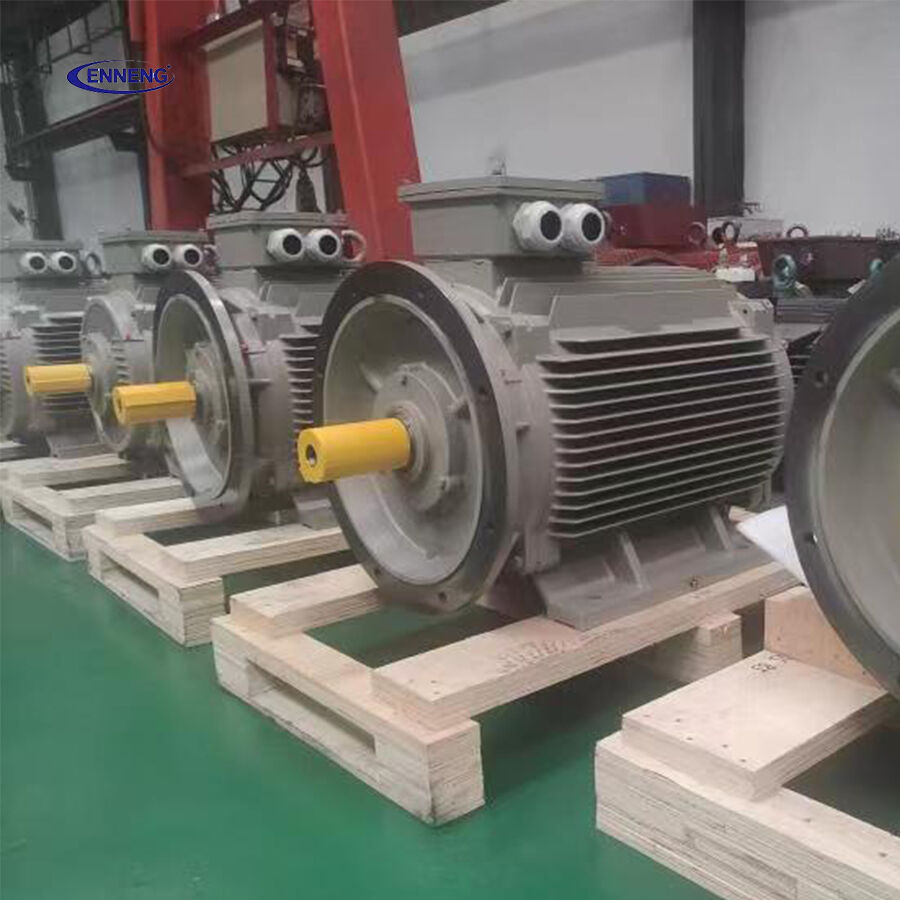
If you are evaluating commercial permanent magnet motors for sale and need an engineered drive solution that guarantees efficiency and longevity, ENNENG is your trusted partner.Contact ENNENG Today.Speak to our technical engineering team to receive a customised drive proposal.
- WhatsApp: +86 18562780228
- E-Mail: [email protected]
- Phone: +86 532 66000559
Conclusion
For large-scale factory ventilation, PMSM for Industrial Fans can cut manual maintenance costs by removing belt- and pulley-related work from suitable direct-drive fan installations. The savings come from fewer inspection points, fewer adjustment tasks, and fewer opportunities for belt-driven faults—not from a claim that the system needs no maintenance. Start with the current work-order history, define the duty cycle and control plan, and specify the fan-motor package around the maintenance tasks you can genuinely eliminate.

